The open highway stretches ahead, a ribbon of asphalt slicing through the landscape, promising freedom and motion. Yet, for most commuters, the experience is a paradox—endless miles of focus, hands glued to the wheel, eyes darting between lanes and mirrors. What if the road could do more than just carry you? What if it could share the burden of driving? Tesla’s Autopilot isn’t just another feature; it’s a quiet revolution in how we perceive the act of commuting. It doesn’t merely assist—it redefines the relationship between human and machine, transforming the mundane into the extraordinary. This is not a futuristic fantasy; it’s a present-day reality that reshapes every mile of your daily drive.
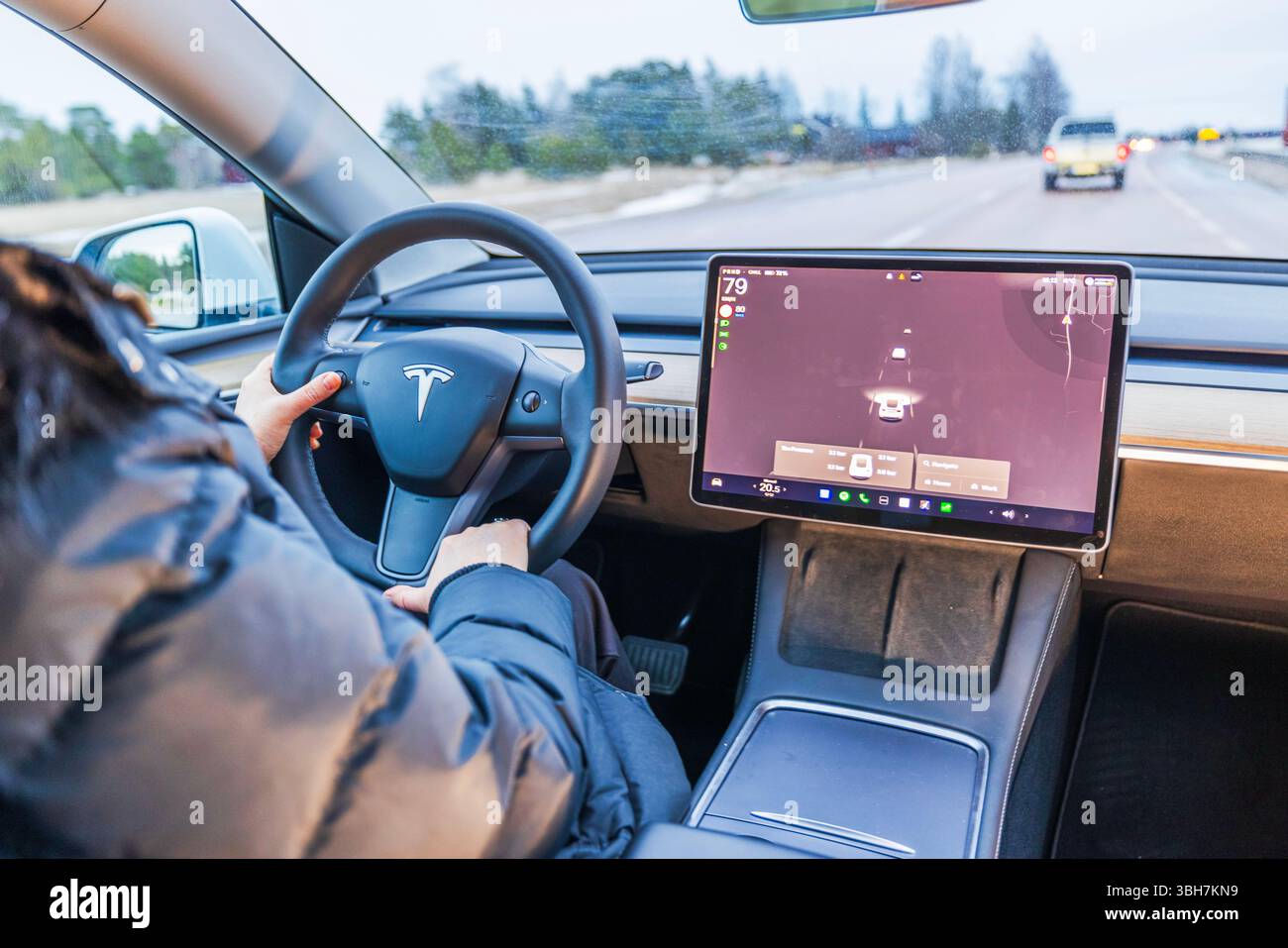
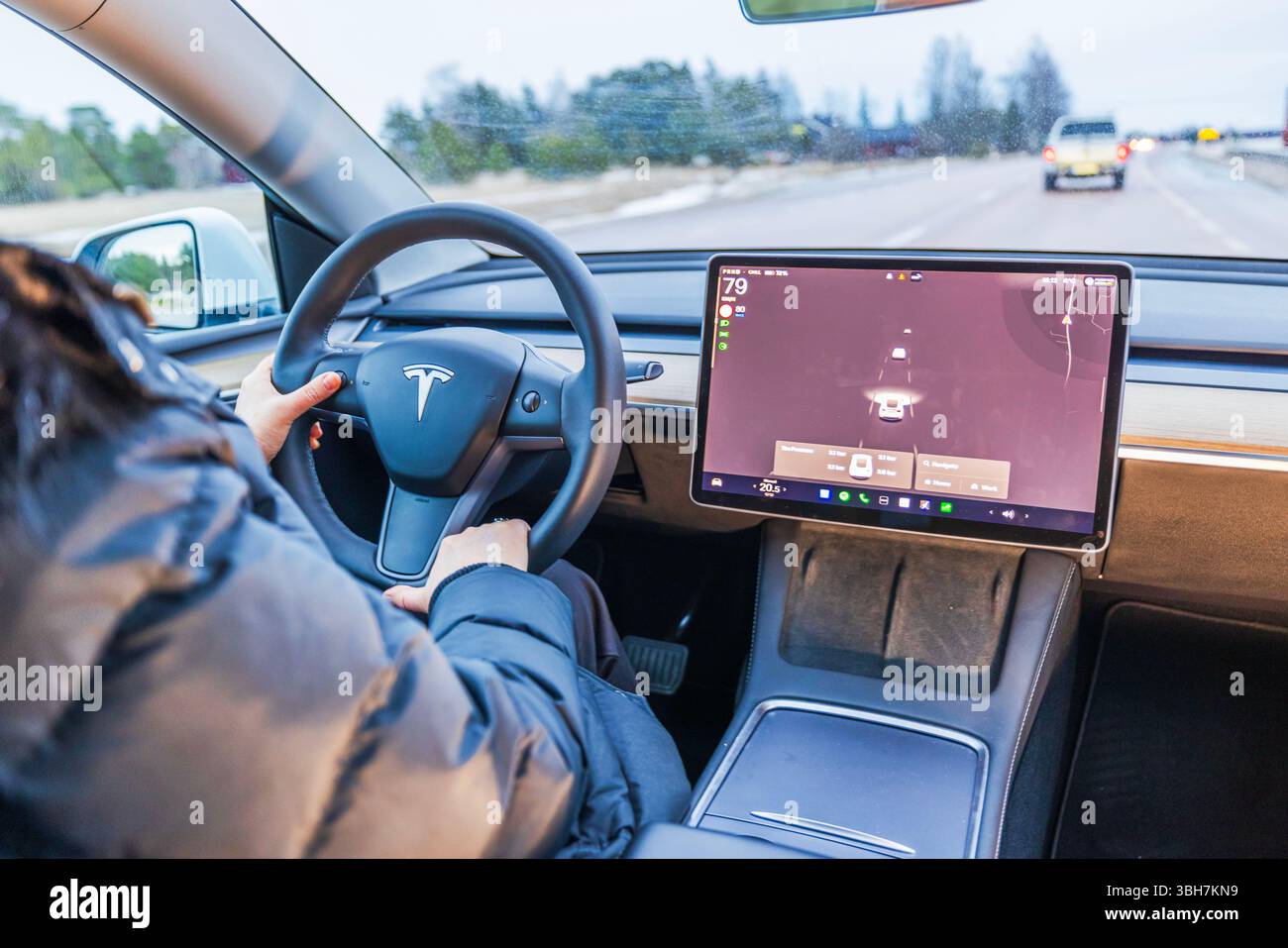
Imagine gliding down the highway at 70 mph, your hands resting lightly on the steering wheel, your mind free to wander, to plan, to simply exist. The car adjusts its speed with the fluidity of a dancer, maintaining a perfect distance from the vehicle ahead. Lane changes are executed with precision, the turn signal flashing like a metronome counting the seconds until the maneuver is complete. Traffic jams become less of a chore and more of a collaborative dance, where the car anticipates the ebb and flow of congestion. This is the promise of Tesla Autopilot—a shift from the driver’s seat to the passenger’s seat, even when you’re the one in control.
The Promise of Effortless Motion
At the heart of Autopilot lies a deceptively simple premise: the car should do the heavy lifting. Tesla’s suite of advanced driver-assistance systems (ADAS) leverages a trifecta of cameras, ultrasonic sensors, and a neural net trained on millions of real-world miles. The result? A driving experience that feels less like a task and more like a partnership. On the highway, the system’s adaptive cruise control maintains a set speed while dynamically adjusting to traffic, ensuring a smooth, uninterrupted journey. The lane-keeping assist doesn’t just nudge the wheel—it anticipates curves and corrections, making the car feel like an extension of your own reflexes.
But Autopilot’s magic isn’t just in its precision; it’s in its adaptability. The system learns. It recognizes patterns in your driving habits, from your preferred following distance to the way you navigate merges. Over time, the car becomes attuned to your rhythm, making adjustments that feel almost intuitive. This is where the shift in perspective begins. Instead of viewing the highway as a gauntlet of potential hazards, you start to see it as a stage where man and machine perform a seamless duet.
The Illusion of Control (And Why It’s Liberating)
Critics often bristle at the idea of relinquishing control, but Autopilot doesn’t strip away your agency—it enhances it. The system is designed to be a co-pilot, not a replacement. Your hands remain on the wheel, your feet poised above the pedals, ready to intervene at a moment’s notice. The key difference? You’re no longer the sole source of vigilance. The car watches the road with a relentless focus that human eyes simply can’t sustain. It detects obstacles, tracks vehicles, and even predicts erratic behavior from other drivers, all while you sip your coffee or adjust the climate control.
This shared responsibility is liberating. Long commutes, once a drain on mental energy, become opportunities for reflection or productivity. The constant vigilance of highway driving—scanning for brake lights, checking blind spots, adjusting speed—fades into the background. Autopilot handles the minutiae, allowing you to reclaim mental bandwidth. It’s not about trusting the machine blindly; it’s about trusting the synergy between human intuition and artificial intelligence. The road becomes less of a challenge and more of a canvas for exploration.
Navigating the Nuances: When Autopilot Shines (And When It Stumbles)
Of course, no technology is without its limitations. Autopilot excels in structured environments—highways with clear lane markings, predictable traffic patterns, and minimal pedestrian interference. In these conditions, the system’s performance is nothing short of remarkable. It handles merges with the grace of a seasoned driver, maintains safe distances with the precision of a Swiss watch, and even navigates toll booths and construction zones with relative ease.
But the real world is messy. Autopilot’s Achilles’ heel lies in its struggle with ambiguity. Heavy rain, snow, or poor lighting can obscure its cameras, forcing it to rely on less reliable data. Complex urban interchanges, where lanes split and merge unpredictably, can confuse even the most advanced algorithms. And then there are the human factors—drivers who weave unpredictably, cyclists who dart into blind spots, or construction zones that seem to appear overnight. In these moments, Autopilot’s limitations become glaringly apparent, and the driver must be ready to take the reins.
Yet, these stumbles are not failures; they’re reminders of the system’s evolving nature. Tesla’s over-the-air updates continuously refine Autopilot’s capabilities, addressing edge cases and expanding its repertoire. What was once a novelty becomes a staple, and what was once a challenge becomes a learning opportunity. The key is to approach Autopilot with a balanced mindset—appreciating its strengths while remaining acutely aware of its weaknesses.
The Psychological Shift: From Driver to Co-Pilot
The most profound impact of Autopilot isn’t technical—it’s psychological. For decades, driving has been synonymous with control, a ritual of dominance over the machine. Autopilot challenges this paradigm. It invites you to step back, to trust, to collaborate. This shift doesn’t happen overnight. There’s an initial unease, a subconscious tightening of the grip on the wheel, a readiness to intervene at the slightest provocation. But over time, that unease fades. The car’s movements become predictable, its decisions transparent. You begin to see it not as a tool, but as a partner.
This psychological transformation extends beyond the act of driving. It seeps into how you perceive technology as a whole. If a car can navigate the chaos of the highway with such aplomb, what else can machines do? The answer, of course, is limitless. Autopilot becomes a metaphor for the future—a future where collaboration with machines isn’t just possible, but preferable. It’s a future where the boundaries between human and artificial intelligence blur, and the result is something greater than the sum of its parts.
The Road Ahead: What’s Next for Autopilot?
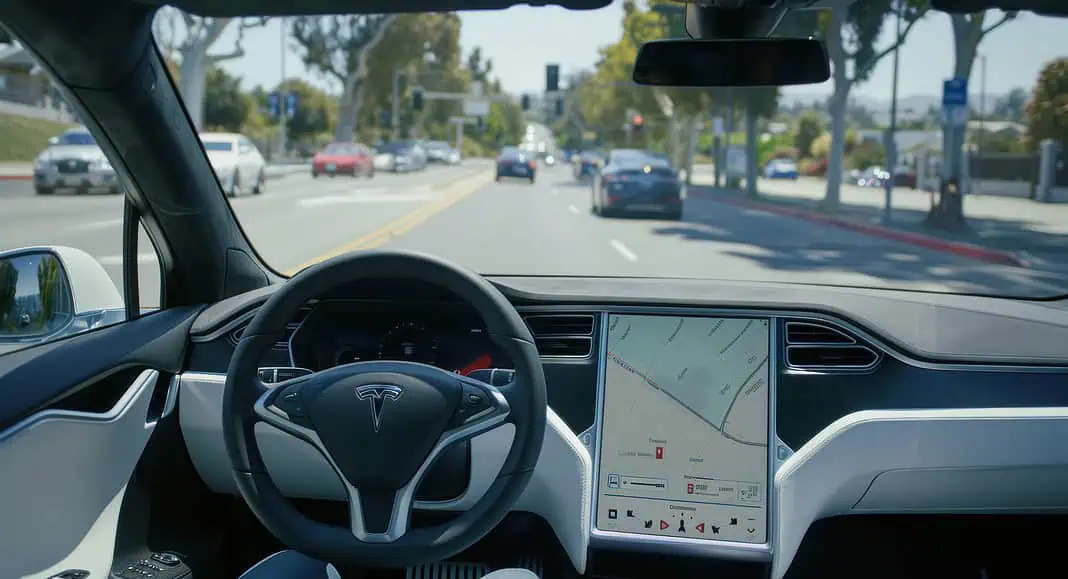
Tesla’s vision for Autopilot doesn’t end with the highway. The company’s Full Self-Driving (FSD) beta is already pushing the boundaries of what’s possible, with features like automatic lane changes, traffic light recognition, and even summoning the car to your doorstep. While these capabilities are still in their infancy, they hint at a future where the driver’s role is increasingly passive. The question isn’t whether this future is coming—it’s how soon it will arrive.
For now, Autopilot remains a glimpse into that future. It’s a testament to Tesla’s audacity, a bold experiment in human-machine collaboration. It’s also a reminder that progress isn’t linear. There will be setbacks, false starts, and moments of doubt. But with each passing mile, Autopilot inches closer to realizing its full potential. And with it, so does our understanding of what it means to drive.
The open highway stretches ahead, no longer a solitary path but a shared journey. The road is no longer just a route—it’s a conversation between you and the machine. And the most remarkable part? You’re just getting started.