In an era where electric vehicles (EVs) are reshaping the automotive landscape, the Tesla Model 3 has emerged as a benchmark for range efficiency and real-world performance. But how far do these sleek, battery-powered machines truly go when subjected to the unpredictability of daily driving? Beyond the manufacturer’s optimistic estimates, real-world range tests reveal the nuances of battery degradation, driving conditions, and human behavior. This exploration dives into the intricacies of Tesla’s real-world range, dissecting the factors that influence it and the insights drivers can glean from independent evaluations.
For prospective buyers and current owners alike, understanding the gap between advertised and actual range is crucial. It’s not merely about the numbers on a spec sheet; it’s about the confidence to embark on a weekend getaway without fretting over charging stops or the anxiety of misjudging a battery’s endurance. The Tesla Model 3, with its dual variants—the Standard Range and the Long Range—offers a compelling case study in how different configurations perform under real-world scrutiny. From highway cruising to urban stop-and-go traffic, each scenario presents unique challenges to a vehicle’s range, demanding a closer look at what drivers can realistically expect.
The Allure of the Standard Range: Balancing Affordability and Practicality
The Tesla Model 3 Standard Range, often the entry point for budget-conscious EV enthusiasts, promises an enticing blend of affordability and efficiency. However, its real-world range is a dance between battery capacity and energy consumption, heavily influenced by driving habits and environmental conditions. Independent tests reveal that under ideal conditions—moderate temperatures, smooth highways, and minimal accessory usage—the Standard Range can exceed its EPA-estimated 272 miles. Yet, the moment the thermometer dips or aggressive acceleration becomes the norm, the range begins to wane.
One of the most revealing aspects of these tests is the stark contrast between city and highway driving. In stop-and-go traffic, the Model 3’s regenerative braking system shines, recapturing energy that would otherwise be lost. This regenerative prowess allows the Standard Range to stretch its legs, often surpassing 300 miles in urban environments where speeds are lower and braking is frequent. Conversely, highway driving at sustained speeds of 70 mph or more forces the vehicle to work harder, drawing more power from the battery and trimming range to as low as 220 miles in colder climates. The lesson here is clear: the Standard Range thrives in the city but demands strategic planning for long-distance travel.
The role of auxiliary systems cannot be overstated. Heating, ventilation, and air conditioning (HVAC) are the silent range killers, particularly in extreme weather. A cold winter morning might prompt the use of seat heaters and cabin pre-conditioning, both of which sap the battery’s reserves before the journey even begins. Similarly, high-speed driving with the climate control set to maximum can reduce range by 15-20%, a trade-off that drivers must weigh against comfort. These variables underscore the importance of pre-conditioning the vehicle while it’s still plugged in, a feature Tesla owners can leverage to mitigate range anxiety.
The Long Range Advantage: Unlocking the Potential of Extended Journeys
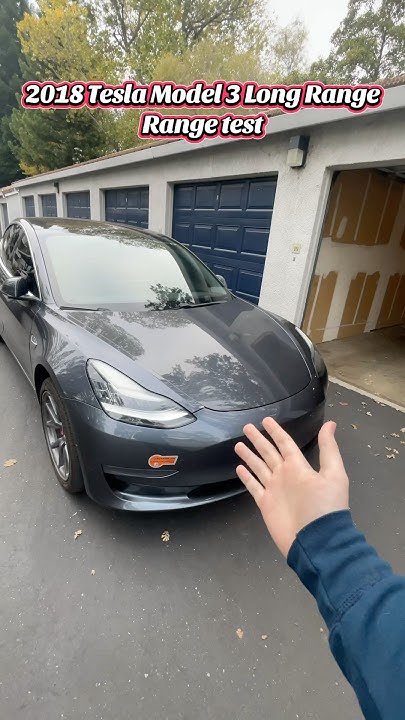
For those who prioritize versatility, the Tesla Model 3 Long Range variant offers a compelling proposition. With an EPA-estimated 358 miles, it promises a buffer that can absorb the unpredictability of real-world driving. Yet, even this robust figure is subject to the same environmental and behavioral factors that plague the Standard Range. The key difference lies in the margin for error—the Long Range’s larger battery provides a cushion that allows drivers to indulge in higher speeds, extreme temperatures, or prolonged accessory use without immediate repercussions.
Highway endurance tests are where the Long Range truly flexes its muscles. At a steady 75 mph, the Model 3 Long Range can maintain a range of approximately 300 miles, a figure that remains impressively consistent across varying conditions. This endurance is a boon for road trippers, enabling them to cover vast distances between charging stops. However, the Long Range is not immune to the laws of physics. Aggressive acceleration, frequent rapid charging, and payload weight all contribute to incremental range reductions. The takeaway is that while the Long Range is more forgiving, it is not a panacea for poor driving habits or neglectful charging practices.
The psychological benefit of the Long Range cannot be overlooked. Knowing that the battery can absorb the slings and arrows of real-world driving fosters a sense of confidence. Drivers are less likely to micromanage their energy consumption, opting instead to enjoy the journey. This psychological comfort is a subtle yet powerful advantage, one that aligns with Tesla’s ethos of seamless, stress-free mobility. Whether navigating the sprawling highways of the American West or the congested streets of a European metropolis, the Long Range Model 3 offers a reassuring blend of capability and convenience.
Charging Dynamics: The Hidden Variables in Range Calculations
Range is not an isolated metric; it is inextricably linked to the charging ecosystem. The speed and efficiency of charging infrastructure play a pivotal role in determining how far a Tesla can truly go. DC fast charging, while convenient, is not without its drawbacks. The rapid influx of energy generates heat, which can temporarily reduce battery efficiency and, over time, contribute to long-term degradation. Independent tests have shown that frequent use of high-power charging stations can shave off 5-10% of a battery’s total capacity after several years of ownership.
Moreover, the charging curve of a Tesla Model 3 reveals a nuanced reality. The vehicle’s ability to accept high amperage diminishes as the battery approaches full capacity. This means that the final 20% of a charge, while convenient for overnight top-ups, is less efficient than the initial 80%. Drivers who rely on fast charging for long-distance travel must account for this inefficiency, often planning additional stops to maintain optimal energy levels. The art of efficient charging lies in balancing speed with longevity, a delicate dance that seasoned EV owners master over time.
Home charging presents its own set of considerations. A Level 2 charger, while slower than a DC fast charger, is gentler on the battery and more cost-effective in the long run. Owners who invest in home charging infrastructure can mitigate the wear and tear associated with frequent fast charging, preserving their vehicle’s range for years to come. The synergy between home and public charging is the cornerstone of a sustainable EV ownership experience, one that prioritizes both convenience and battery health.
Beyond the Numbers: The Human Element in Range Realities
Ultimately, the real-world range of a Tesla Model 3 is as much about the driver as it is about the vehicle. Human behavior introduces a layer of unpredictability that no algorithm can fully account for. The decision to take a detour, the temptation to push the accelerator, or the impulse to blast the heater on a frigid morning—all these choices ripple through the battery’s endurance. The most accurate range tests are those that simulate the chaos of daily life, where variables are not controlled but embraced as part of the journey.
For new EV owners, the learning curve can be steep. The transition from internal combustion engines to electric propulsion demands a shift in mindset. Drivers must become attuned to the subtle cues of their vehicle, interpreting range estimates with a critical eye and adjusting their habits accordingly. The Tesla’s regenerative braking system, for instance, rewards anticipation and smooth acceleration, while punishing abrupt inputs. Mastery of these nuances transforms range anxiety into a manageable aspect of ownership, one that fades into the background as confidence grows.
The community of Tesla enthusiasts plays an invaluable role in this evolution. Online forums, social media groups, and real-world meetups provide a platform for sharing experiences, tips, and cautionary tales. From the seasoned road warrior who has logged 100,000 miles to the first-time owner grappling with range estimates, the collective wisdom of the Tesla community offers a lifeline. It is within these spaces that the true range of a Model 3 is revealed—not as a static number, but as a dynamic, ever-evolving story shaped by countless individual choices.
The Tesla Model 3’s real-world range is a testament to the brand’s commitment to innovation, but it is also a reflection of the driver’s adaptability. Whether navigating the urban jungle or the open road, the Model 3 adapts, offering a glimpse into a future where electric mobility is not just a promise, but a reality. The journey is as important as the destination, and with each mile, drivers redefine what it means to go the distance.