Walk into any car conversation and you’ll hear the same refrain: “BMWs are brilliant… but can they take the long road?” The question sounds simple, almost conversational. Yet it hides a deeper fascination—one that draws enthusiasts back again and again. Reliability is not merely about survival. It is about character, engineering intent, and the quiet satisfaction of a machine that keeps its promises when the novelty fades.
So let’s address the common observation first: BMW reliability is often discussed in absolutes—either a legend endures forever, or it becomes a cautionary tale. Reality is far more nuanced. Engines that seem “bulletproof” in one decade can stumble in another. The same displacement badge can behave differently depending on cooling strategy, emissions calibration, oil selection, and even how the vehicle was treated between oil changes. In other words, the ranking is never only about the engine. It’s about the whole ecosystem around it.
What follows is a reliability-focused lens: BMW engines most likely to endure, the reasons they earn their reputations, and the circumstances that quietly determine whether they thrive.
Why “Which Engine Lasts?” Is Never Just One Answer
When people ask which BMW engines last, they’re usually hoping for a clean hierarchy. But engines age like living systems, not like stamped steel parts. Two cars built with the same engine code can diverge dramatically over time.
Short term, the difference is driving style and maintenance discipline. Long term, it’s materials, thermal stress cycles, and how robustly the design tolerates neglect. A sophisticated powerplant can still fail early if coolant is neglected, if oil viscosity drifts out of spec, or if heat is allowed to accumulate where it shouldn’t.
There is also an emotional layer. BMW enthusiasts don’t just want longevity; they want continuity of performance. That is why some engines become fan favorites beyond mere durability—they offer predictable behavior, consistent response, and a feeling of mechanical honesty.
The Engines With the Strongest Reputation for Longevity
Across BMW’s engine families, certain designs tend to attract the “built to last” reputation. In practice, these are typically engines known for conservative thermal management, balanced component tolerances, and widespread parts availability—meaning repairs are less of an unknown gamble.
Enthusiasts often point toward long-running inline-sixes and select diesel architectures when discussing endurance. Why? A common pattern emerges: smoother combustion, lower inherent vibration, and a layout that—when maintained correctly—can keep wear surfaces working within their intended window.
That doesn’t mean perfection. It means the design leaves more room for real-world variation.
Inline-Six Gasoline: The Romance of Smooth Longevity
BMW’s inline-six era has become almost mythic for a reason. Many inline-six engines are engineered with a kind of mechanical equilibrium—reduced stress on mounts, smoother operation, and fewer “hot spots” that accelerate degradation.
Over time, that translates into fewer surprises. The engine doesn’t feel like it’s constantly fighting itself. The result is a powerplant that can log substantial mileage, particularly when owners stay disciplined about oil quality and scheduled servicing.
Still, the deeper twist is fascination: BMW inline-sixes don’t just last; they age with a recognizable personality. Valve train components and cooling systems may wear, but they often do so gradually, giving owners time to notice early symptoms rather than facing sudden failure. That predictability fuels the loyalty.
M57 and Other Diesel Workhorses: Durability Under Compression
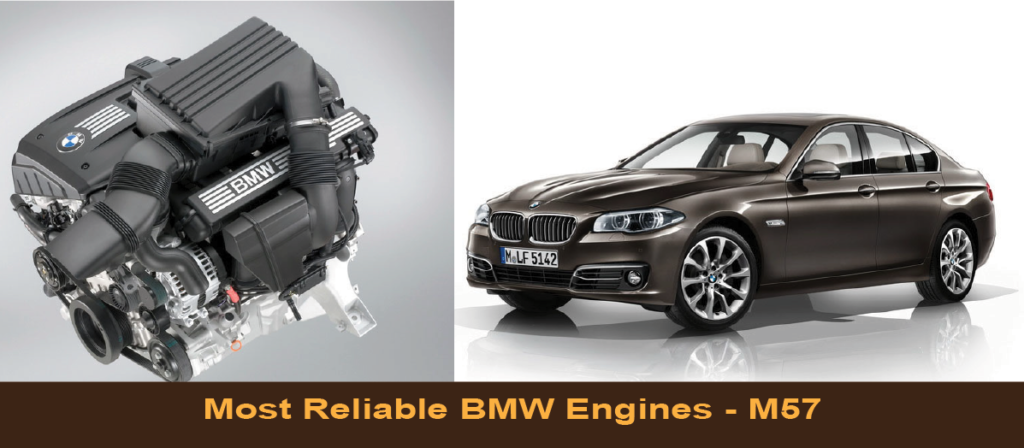
Diesel BMW engines, especially those in the M57 family, often earn a reputation for durability because compression-ignition designs can be inherently robust when run within normal parameters. When paired with sensible oil change intervals and clean fuel, these engines can rack up miles with a calm persistence that gasoline owners only sometimes experience.
The deeper reason involves operating conditions. Diesel combustion characteristics can produce a different wear profile—one where certain components don’t get hammered in the same way as higher-revving gasoline cycles. Add in conservative calibration and the tendency for these engines to spend their lives at modest RPM, and the wear rate can remain surprisingly polite.
However, longevity isn’t automatic. Fuel quality, injector health, intake cleanliness, and turbo maintenance can determine whether the engine feels like a long-term ally—or an expensive lesson. Reliability rankings are therefore as much about system stewardship as about the engine’s baseline design.
Cooling Systems and Heat Management: The Unsung Reliability Architects
If there is a single invisible factor that decides whether an engine becomes legendary or merely “good,” it’s heat management. Cooling systems, thermostats, coolant quality, and water pump health can dictate bearing life, gasket stability, and long-term corrosion resistance.
Engines don’t wear out only because they run; they wear out because they cycle through temperature extremes. A design that tolerates those cycles gracefully earns trust. A design that is sensitive to coolant neglect becomes a ticking metronome.
Enthusiasts often overlook this because the symptoms can be indirect—slow expansion of plastic parts, subtle changes in operating temperature, or occasional coolant loss that seems “minor” until it isn’t. The engines that survive tend to be the ones whose thermal ecosystems stayed healthy long enough to prevent cascading wear.
Timing Chains, Valvetrain Wear, and “Time Under Load”
Reliability rankings also hinge on internal timing components and valvetrain durability. Timing chains represent a particularly telling metric: they reveal how well lubrication systems maintain pressure and how resistant the engine’s design is to stretched tolerances.
Valvetrain wear depends heavily on oil quality and viscosity stability. The phrase “use the correct oil” can feel repetitive, but the reason is mechanical. Oil is not only lubrication; it is a thermal carrier and a protective film. When owners choose cheaper or incorrect viscosity oils—or extend intervals too far—the engine may run, but it can slowly erode its margins.
Time under load matters too. Repeated short trips can prevent proper oil temperature from being reached. Conversely, steady cruising at moderate loads often allows the engine to operate more consistently, reducing condensation buildup and stabilizing lubrication behavior.
Turbochargers and Intake Systems: Reliability’s Hidden Complexity
BMW engines often rely on forced induction. That brings efficiency and performance, but it also introduces a new reliability variable: oil cleanliness and intake tract integrity. Turbochargers are not just “parts.” They are small, high-speed thermal systems that depend on consistent oil supply and temperature control.
As miles accumulate, the intake system can trap grime. EGR-related deposits (where applicable) can alter airflow characteristics. These changes can create stress that isn’t obvious at first. The engine still starts. It still pulls. But it may begin to work outside its most efficient thermal and combustion window.
Engines that last tend to be those where the owner treated maintenance as a form of prevention rather than a reaction to symptoms.
Fuel Quality, Emissions Calibration, and Real-World Fueling Choices
Emissions systems can be politically debated, but mechanically they shape reliability. Sensors, catalysts, and exhaust aftertreatment components are designed to operate within narrow ranges. Fuel quality—particularly with diesels—can influence injector performance and combustion cleanliness.
Some owners experience a mismatch between what the engine expects and what the fuel provides. Over time, that mismatch can lead to carbon accumulation, sensor drift, and accelerated wear. The engine might still feel “fine,” yet the reliability path starts to bend away from the ideal.
This is one reason certain engines appear “invincible” in community stories. Their owners often lived in regions with more consistent fuel standards and maintained their vehicles with high attention to detail.
How to Read a Reliability Ranking Like an Enthusiast
When you see a reliability ranking, don’t treat it as a verdict. Treat it as a map with contour lines. Look for patterns: engine families that repeat in positive stories, designs that have long production runs, and powertrains with abundant documentation and parts support.
Also consider the vehicle context. A naturally aspirated configuration in a lighter chassis might spend its life at calmer operating points than a heavy wagon used for constant towing. A diesel driven primarily on highway miles may outlast the same engine used for frequent short urban trips.
Reliability is not only engineering. It is the meeting point between design and daily behavior.
Practical Guidance: Choosing the Most Likely-to-Last BMW Engine
If the goal is longevity, start with maintenance confidence. A good engine with uncertain service history can be riskier than a less legendary engine that has meticulous records.
Prioritize these signals before purchase: evidence of regular oil changes with correct specification, clean coolant maintenance, and documentation of cooling components and major wear items. Listen for abnormal valvetrain noise, watch for temperature instability, and inspect intake cleanliness when possible.
Then ask the quiet question: has the car been treated like a long-term relationship, or like a short-term fling? Engines reveal the truth in their wear patterns, and owners reveal it in their records.
Outro: Why We Keep Chasing “The One That Lasts”
BMW reliability rankings are never just about numbers. They’re about hope—about finding a mechanical partner that can keep its composure through time, weather, traffic, and the unpredictable chaos of daily life. The fascination runs deeper than durability; it’s the pursuit of continuity, the desire to know that the next thousand miles will feel familiar rather than foreign.
Some BMW engines are more likely to earn that trust than others—especially those with proven architectures and a history of real-world endurance. But the final outcome is always a blend of design, maintenance, and how faithfully the machine is cared for. Choose wisely, maintain precisely, and the engine that “lasts” will do more than survive. It will feel, for a long time, like it was built for you.