The compact performance sedan has always been a paradox wrapped in horsepower. Small enough to slip between city streets, sharp enough to bite into open-road horizons, yet refined enough to pass for daily comfort. In 2026, that paradox sharpens into a duel: the Mercedes-AMG C63 and the BMW M3. They don’t simply compete; they argue in public. Each is a narrative of engineering confidence, written with different alphabets of speed—one inked in muscular drama, the other in disciplined precision.
Think of the C63 as a velvet hammer. It’s ceremonial in its presence, theatrical in its voice, and relentless in its intent. The M3, by contrast, is a scalpel disguised as a sport suit—precise, communicative, and eager to carve consistent results lap after lap. Together, they form a “compact sedan war” where victory isn’t just acceleration; it’s how the car makes you feel while chasing the same horizon from opposite directions.
Here’s how the conflict unfolds—across design, power delivery, driving feel, technology, practicality, and the intangible allure that lingers after the engine is shut off.

Two Personas, One Shape: The Philosophy of Aggression
Both cars wear the sedan body style like a promise: everyday usability, but with performance intent stitched into every seam. Yet their silhouettes tell different stories.
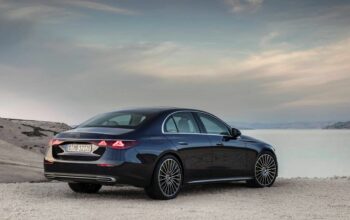
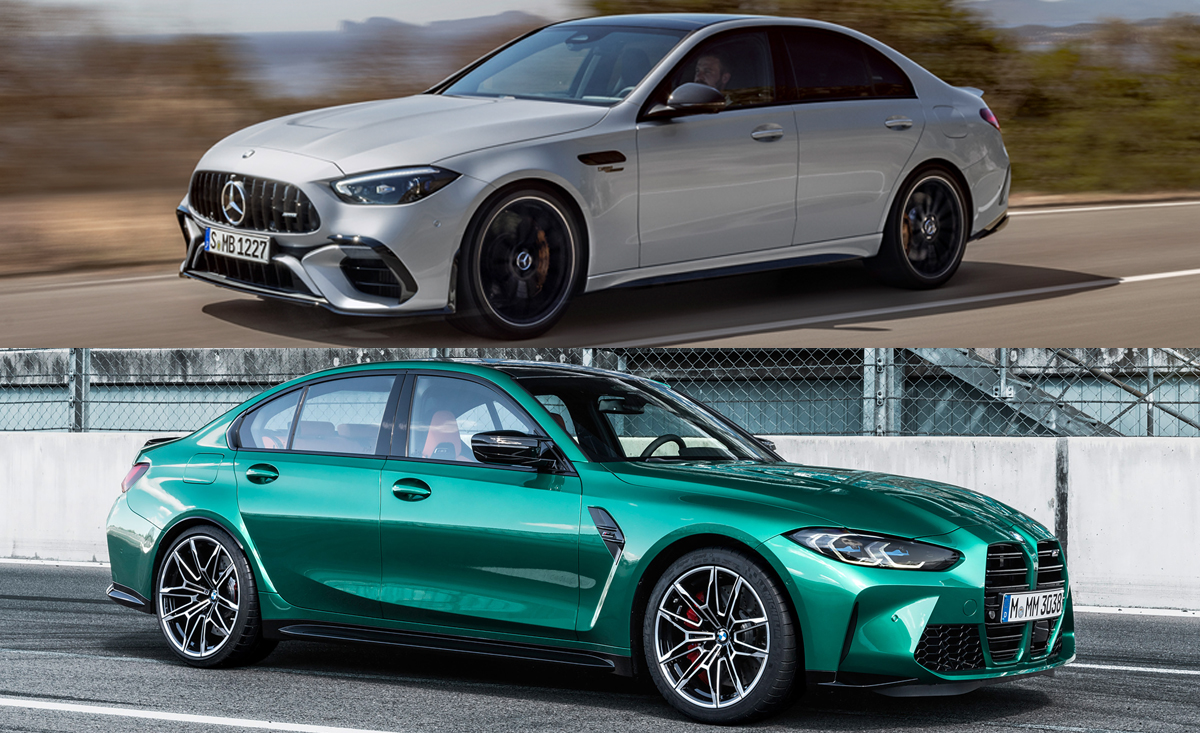
The Mercedes-AMG C63 tends to arrive with a kind of cinematic authority. Its stance is planted, its lines are confident, and its visual language leans toward exuberance. It looks like it belongs at the center of attention—like a boxer who knows the crowd is watching, even when you’re standing still. The grilles, lighting signatures, and muscular proportions create an impression of controlled chaos. Not wild—alive.
The BMW M3 feels more architectural, more intentional. Its design communicates restraint with a readiness to explode. The angles look calculated, the proportions feel engineered rather than merely sculpted. Even when parked, it suggests that the next corner is already being considered. That’s the M3’s seduction: it never feels accidental.
In this duel, the cars are metaphors for personality. The C63 is kinetic flamboyance. The M3 is methodical intensity.
Powertrains and Character: How They Breathe, How They Roar
Under the hood, the rivalry becomes more than numbers. It becomes temperament.
The Mercedes-AMG C63’s appeal is rooted in “thrust with theatre.” Power arrives with weight and consequence, often feeling like it pushes you forward rather than simply dragging speed behind it. The throttle response is typically eager, and the engine’s presence carries a kind of industrial poetry—throaty, urgent, and unmistakably AMG in attitude.
The BMW M3’s power delivery, meanwhile, feels like a conversation. It’s often crisp, linear enough to be predictable yet charged enough to feel spontaneous. Where the C63 can feel like a surge, the M3 can feel like a steady climb that suddenly reveals a higher gear of emotion. You don’t just accelerate—you orchestrate.
Listen closely and you’ll notice the difference in “how the speed is framed.” The C63 frames acceleration as an event. The M3 frames it as a skill.
Transmission and Traction: The Battle for Control
On paper, both cars can be quick. On the road, the details decide who feels dominant.
The C63’s transmission behavior often emphasizes momentum. It favors bold downshifts, crisp engagement, and a cadence that feels performance-oriented rather than merely mechanical. There’s a sense that the drivetrain is eager to participate in your decisions, as if it’s always one step ahead of your right foot. Traction management tends to be confidence-building, allowing power to be used without turning the tires into a bargaining table with gravity.
The M3’s drivetrain approach is generally defined by composure. It’s engineered to keep the car settled even as the speed rises. That composure isn’t dull; it’s a form of precision. The system tends to deliver traction with a disciplined calm, enabling quick changes of direction without drama overwhelming the chassis.
In short: the C63 tries to overwhelm the moment. The M3 tries to master it.
Handling and Chassis: The Tightrope of a Compact Giant
Compact performance sedans are tightrope walkers. Too soft, and they blur. Too stiff, and they punish. Both the C63 and M3 aim to strike a balance—yet their philosophies differ.
In the Mercedes-AMG C63, the chassis often feels fluid, with a sense of planted grip that grows as you ask harder questions. Turn-in can feel bold, and once loaded, the car may feel eager to complete the arc. The ride can carry a performance sheen without always becoming punishing. It’s the kind of suspension behavior that makes spirited driving feel expressive, almost lyrical.
The BMW M3’s chassis tends to emphasize communication. The steering often feels direct and informative—less “mood” and more data. The front end typically responds with authority, and the car can feel especially capable when pushed repeatedly. It’s a car that encourages commitment, rewarding driver input rather than demanding perfection.
One car speaks like a poet. The other speaks like an engineer who also loves speed.
Braking and Stability: Confidence You Can Feel
Braking is where fantasies become physics. In this duel, both cars aim for strong pedal feel, consistent stopping performance, and stability at the limits.
The C63 often delivers braking confidence with a strong, urgent pedal response. It can feel like the car is preparing for your impatience. Stability under deceleration tends to remain composed, reducing the sense of unpredictability that haunts lesser performance sedans.
The M3 typically emphasizes repeatability. The braking system is meant to remain steadfast when the driver turns up the tempo—less fade, more resilience, and a pedal that stays communicative even after enthusiastic driving. In prolonged spirited sessions, that “stay-the-course” characteristic matters more than people expect.
When the race stops being about speed and becomes about control, both cars reveal their professionalism.
Interior Atmosphere: Luxury Meets Weaponry
These sedans aren’t simply fast machines; they’re mobile sanctuaries designed to accommodate ambition.
The C63 interior often feels like a stage set for performance. Materials, ambient details, and the overall layout push you toward the driver-focused experience. The cabin tends to feel richly styled, with an emphasis on tactile solidity. You don’t sit in it—you inhabit it. Even when you’re cruising, it can feel like you’re in a rehearsal for the next acceleration run.
The M3 interior typically leans into driver-centric clarity. Controls are often arranged with purposeful ergonomics, and the cockpit can feel like a cockpit—functional, focused, and ready. The visual hierarchy tends to make it easier to stay immersed. It’s the difference between a concert and a cockpit mission: both exhilarating, but one theatrical, the other disciplined.
In this area, the C63 charms with presence. The M3 persuades with usability.
Technology and Driver Assistance: Intelligence Without the Distraction
The 2026 landscape of performance cars is increasingly digital. But raw horsepower is still the headline; technology is the supporting cast that either enhances the story or breaks immersion.
Mercedes-AMG’s approach often blends performance with a more luxurious layer of refinement. Driver assistance can be a helpful safety net, and infotainment experiences generally aim for smooth integration. The best versions of these systems don’t steal attention—they quietly reduce workload, letting the driver remain the protagonist.
BMW’s technology typically highlights readability and control. The infotainment system and driver interfaces often prioritize quick comprehension. That matters when the road thickens with traffic or when you flick into a more aggressive driving mode and want the car’s settings to respond instantly.
The real question isn’t whether the tech is present. It’s whether the tech disappears when you need the car to feel like an extension of your intention.
Daily Practicality: The “Compact” Part of the War
A performance sedan lives a double life. It has to be swift, but it also has to carry groceries, meet deadlines, and survive commutes. This is where the duel turns less romantic and more relevant.
Both cars can be comfortable for everyday use, but their temperaments differ. The C63 usually feels more suited to those who want the daily drive to remain emotional—even when the speed stays modest. The M3 tends to feel ideal for drivers who want efficiency of movement: quick transitions, confident handling in traffic, and an overall sense that the car is always ready to accelerate when it makes sense.
Space, visibility, and ease of maneuvering are critical. In tight urban environments, both cars remain fundamentally manageable. Yet the character of each makes the daily routine feel different. The C63 makes commuting feel like an overture. The M3 makes commuting feel like a well-planned route.
Ownership Choice: Which War Story Fits Your Life?
Every buyer chooses not just a machine, but a mythology.
If you want a compact performance sedan that feels like a dramatic heartbeat—muscular, expressive, and unmistakably alive—the Mercedes-AMG C63 fits that craving. It’s for drivers who enjoy presence, who want a car that feels larger than its size and louder than its silence.
If you want a compact performance sedan that feels like a precision tool—sharp, communicative, and engineered for repeatable excellence—the BMW M3 is the more persuasive partner. It’s for drivers who treat driving as a craft, who enjoy control as much as speed.
In the end, the “war” isn’t about who is objectively faster in every scenario. It’s about which metaphor you want strapped to your daily life. The C63 offers velvet violence. The M3 offers surgical intensity.
Outro: The Winner Is the Driver’s Definition of Fun
2026’s Mercedes-AMG C63 and BMW M3 stand at the intersection of luxury and aggression, each with a distinct signature. One pulls you in with charisma and theatrical momentum. The other pulls you in with composure and disciplined excitement. Either way, the compact performance sedan war remains mesmerizing—not because it’s inevitable, but because it’s personal.
When you finally park and step away, you realize something: both cars have done their job. They turned ordinary motion into a story worth remembering. In a world full of transportation, these sedans insist on being experiences—machines that don’t merely move you forward, but move you to feel.