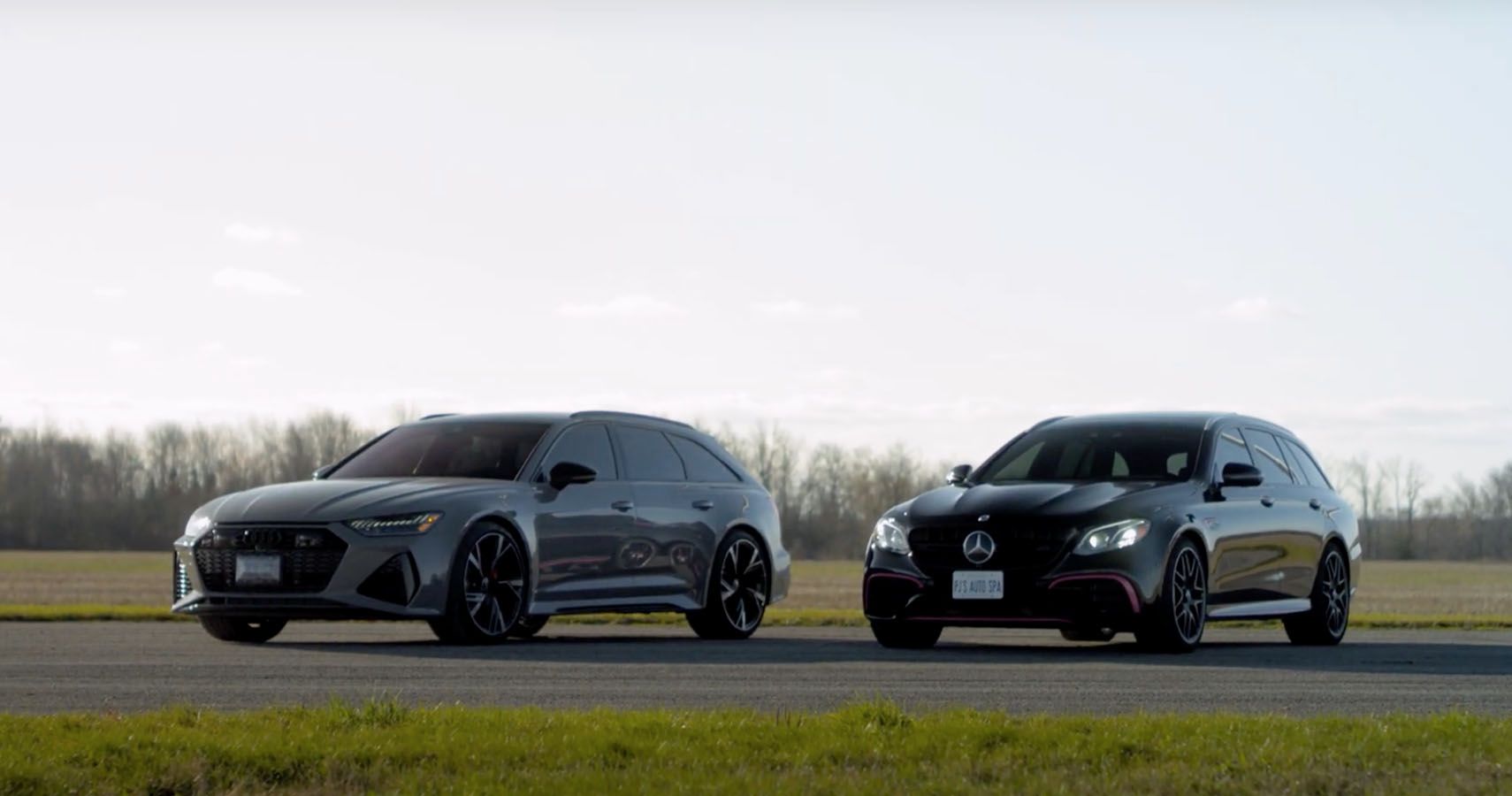
The idea of a super wagon or a super sedan used to feel like a contradiction—like chasing efficiency with horsepower, or comfort with provocation. Yet the modern performance landscape keeps bending those rules. In this clash of titans, the 2026 Mercedes-AMG E63 and the Audi RS6 Avant stand as two distinct philosophies of speed: one dressed in executive menace, the other wrapped in long-roof practicality. Both promise more than fast driving. They promise theater.
Even before the numbers enter the conversation, you can sense how differently each machine will behave in real life. The E63 tends to arrive like a sharp suit with a hidden blade—refined at idle, electrically alert under load. The RS6 Avant, by contrast, feels like a thoroughbred that also happens to carry groceries without complaint. It’s flamboyant in a quieter, more purposeful way. Together, they form a duel that’s as much about identity as it is about acceleration.
Let’s unpack what readers can expect when choosing between these performance icons: how they look, how they move, how they sound, how they manage traction, and how they interpret luxury. Along the way, the differences in platform, chassis tuning, power delivery, and everyday usability will become the real plot twist.
Street Presence: The Visual Argument Before the Go Pedal
First impressions matter. The Mercedes-AMG E63 brings an unmistakable “performance-luxury” silhouette. That means crisp aero detailing, purposeful stance, and a front fascia that feels sculpted rather than merely styled. The cabin cues follow suit—everything appears intentional, like the interior designers collaborated with the engineers instead of negotiating separate priorities.
The Audi RS6 Avant is more versatile visually. It carries aggression with a wagon’s natural practicality. The long roofline and wide stance give it a planted, road-hugging attitude. But it isn’t just about proportions. The RS6 Avant looks engineered for daily motion—an appearance that says “track day” and “family road trip” without needing to change outfit.
There’s also the matter of how each model photographs. The E63’s lines tend to pop in low light, while the RS6 Avant’s surfacing and wheel arches deliver stronger highlights in daylight.

Powertrain Personality: How the Engines Speak
On paper, many super wagons and super sedans share the same broad goal: effortless acceleration with a signature that doesn’t feel generic. In practice, the personality of the powertrain becomes the deciding factor for enthusiasts.
The Mercedes-AMG approach often leans into immediacy. The E63’s power delivery typically feels like it’s waiting just a moment—then delivering a surge that feels both linear and forceful. There’s a certain “availability” to the torque, like it’s always within reach. That trait matters most in real traffic, where you’re not always sprinting from a stoplight; you’re frequently passing, merging, or re-staging speed mid-corner exit.
The Audi RS6 Avant, meanwhile, tends to project a different kind of authority. It often feels more like a long pull than a short punch—strong across a wide band, with a rhythmic insistence that rewards steady throttle inputs. That makes it especially engaging for drivers who like to modulate, not just attack.
Both machines deliver drama, but the drama arrives differently: AMG often sounds like a high-voltage orchestra switching themes quickly, while Audi can feel like a deep, sustained note that grows more insistent as the revs climb.
All-Wheel Drive and Traction: The Hidden Advantage
In the modern performance world, power is rarely the issue. Traction is. Both the E63 and the RS6 Avant are equipped to manage grip with confidence, but the feel can differ dramatically.
Mercedes-AMG typically emphasizes composure—keeping the car settled when the throttle interrupts the balance. The steering response often feels like it’s communicating tire loading in real time, and that feedback becomes addictive. When you place the car into a corner, the E63 often behaves with a disciplined predictability that makes aggressive driving feel safer than it should.
Audi’s all-wheel-drive philosophy often highlights traction as a lever for speed. The RS6 Avant can feel eager to translate power into motion with minimal drama, especially when the surface is less cooperative. Wet roads, uneven tarmac, even early-morning cold-start conditions tend to reveal the Audi’s ability to stay composed while maintaining momentum.
For readers, traction behavior is one of the most practical “seat-of-the-pants” comparisons. It influences confidence, braking performance, and even how hard it feels to be smooth.
Chassis Dynamics: Steering Feel, Body Control, and the Art of Rhythm
Fast cars aren’t just fast; they’re coherent. The Mercedes-AMG E63 tends to offer a confident, high-resolution steering feel. The chassis usually communicates through the wheel and seat in a way that helps the driver anticipate weight transfer. In other words, the car often feels like it’s speaking a language you can learn quickly.
The RS6 Avant fights the cliché that wagons are soft. Its handling character often turns the wagon format into an advantage: more stability, a confident stance, and a sense of planted intent. Body control tends to feel composed, and roll management can be impressive when the driving becomes spirited rather than merely quick.
Both cars can feel theatrical on twisty roads, but the theatricality differs. The E63 may feel more “commanding,” while the RS6 Avant may feel more “hooked,” like the tires are constantly trying to help you write a cleaner line.
Braking and Pedal Confidence: Stopping Power as a Trust Exercise
Braking isn’t glamorous, but it’s where trust is built. In spirited driving, the quality of the pedal and the consistency of deceleration matter more than headline specs.
Mercedes-AMG typically aims for a braking feel that doesn’t surprise you. The pedal often feels firm under pressure, and the car generally maintains composure when the stop is urgent—like it’s already planned the next action.
Audis RS performance tradition frequently emphasizes braking stability and modulation. That means you can brake hard, fine-tune pressure, and trail braking with confidence. On repeated runs, the confidence isn’t just about stopping power; it’s about consistent behavior when components heat up.
If you’re the type who enjoys connecting braking to corner entry timing, this is where the comparison becomes especially meaningful.
Interior Luxury: Executive Calm vs Audi Tech Flex
Step inside and the duel becomes philosophical. The E63 cabin typically leans into executive calm with a performance edge. Materials, fitment, and ergonomic logic tend to feel cohesive, with a driver-focused arrangement that reduces friction between thought and action. The ambiance often feels deliberately premium—less “gadget store,” more “cockpit.”
The RS6 Avant interior can feel more tech-forward, with a sense of modularity and modern interface design. Audi often treats usability as a design philosophy, and the way controls integrate into the dashboard can be both intuitive and satisfying. It’s the kind of cabin that encourages exploration—features feel discoverable rather than hidden.
Either way, both interiors aim to deliver luxury without muting performance. The real question for readers: do you prefer serene authority or tech-forward expressiveness?
Practicality and Daily Usability: Wagon Gravity vs Sedan Authority
Here is where the RS6 Avant can turn the argument sideways. A wagon’s mission is simple: carry more, stress less. With the right configuration, the RS6 Avant becomes a legitimate all-errands machine that doesn’t require compromises in speed. Rear access, cargo utility, and flexible load space are not just conveniences—they are lifestyle multipliers.
The E63 sedan, on the other hand, excels in effortless daily elegance. It can feel more streamlined for commuters, easier to park in tight spaces, and slightly more aligned with a “leave it polished” mentality. Sedans also tend to deliver a certain composure in urban motion—especially when maneuvering through dense traffic corridors.
Readers who travel frequently—guitars, equipment, or children who somehow bring three bags and a trampoline worth of possessions—often find wagons reduce stress permanently. Drivers who value simplicity and a refined silhouette often prefer the sedan’s clarity.
Sound and Sensory Impact: The Unofficial Specification
Every performance car has a soundtrack, but not every soundtrack feels intentional. The AMG E63 often delivers a crisp, high-energy vocal signature. It can feel sharp and reactive, like it’s responding to emotion, not just throttle position. Even at low speed, the presence can be apparent.
The RS6 Avant can be equally dramatic—yet often in a more layered way. It tends to sound authoritative as the revs build, with an emphasis on depth and resonance. The wagon format can even change how sound feels, especially with rear load dynamics and cabin acoustics.
When choosing between them, consider the “sensory commute.” The best super car is the one you enjoy even when you’re not chasing lap times.
Technology and Driver Assistance: Convenience With a Performance Backbone
Modern supercars are no longer just mechanical. They’re software-defined experiences. The E63 typically offers a driver-assistance suite that aims to keep the journey calm—lane support, adaptive behavior, and intelligent cruise functionality designed for long stretches of highway.
Audi’s systems often emphasize integration and anticipatory responsiveness. The RS6 Avant can feel like it’s constantly organizing the drive—keeping comfort intact while supporting performance modes in a way that doesn’t feel fragile.
For readers, these systems matter most in real ownership. Not everyone spends weekends at the limit. But everyone spends time in traffic. A strong driver-assistance system reduces fatigue, improves focus, and makes the car feel more “complete.”
How to Choose: A Duel With No Single Winner
Choosing between the 2026 Mercedes-AMG E63 and the Audi RS6 Avant comes down to your priorities and your rhythm of life.
Pick the E63 if you want executive aggression, crisp steering communication, and a sedan that feels purpose-built for fast commuting. Choose it if you prefer a cockpit atmosphere that feels calm, deliberate, and confident under pressure.
Pick the RS6 Avant if you crave versatility without surrendering speed. Choose it if you value wagon practicality, traction confidence that feels effortless, and a driving experience that rewards smooth, continuous momentum.
Either choice is a commitment to intensity. But the real differentiation is how you want that intensity to express itself: as commanding sedan power, or as long-roof super practicality.
Final Verdict: Two Super Wagons/Sedans, One Shared Promise
In the end, the 2026 Mercedes-AMG E63 and the Audi RS6 Avant are united by a single, compelling promise: performance that doesn’t feel exclusive to perfect roads or perfect weekends. Each car blends speed with an appropriate level of luxury and composure. One may win your heart with its poised aggression; the other may win your daily life by carrying more while still feeling unreasonably fast.
So whether you’re drawn to the E63’s refined menace or the RS6 Avant’s versatile theater, the duel isn’t really about which is better. It’s about which one matches your taste for motion—your preferred cadence of acceleration, your tolerance for drama, and your definition of what “super” should mean.