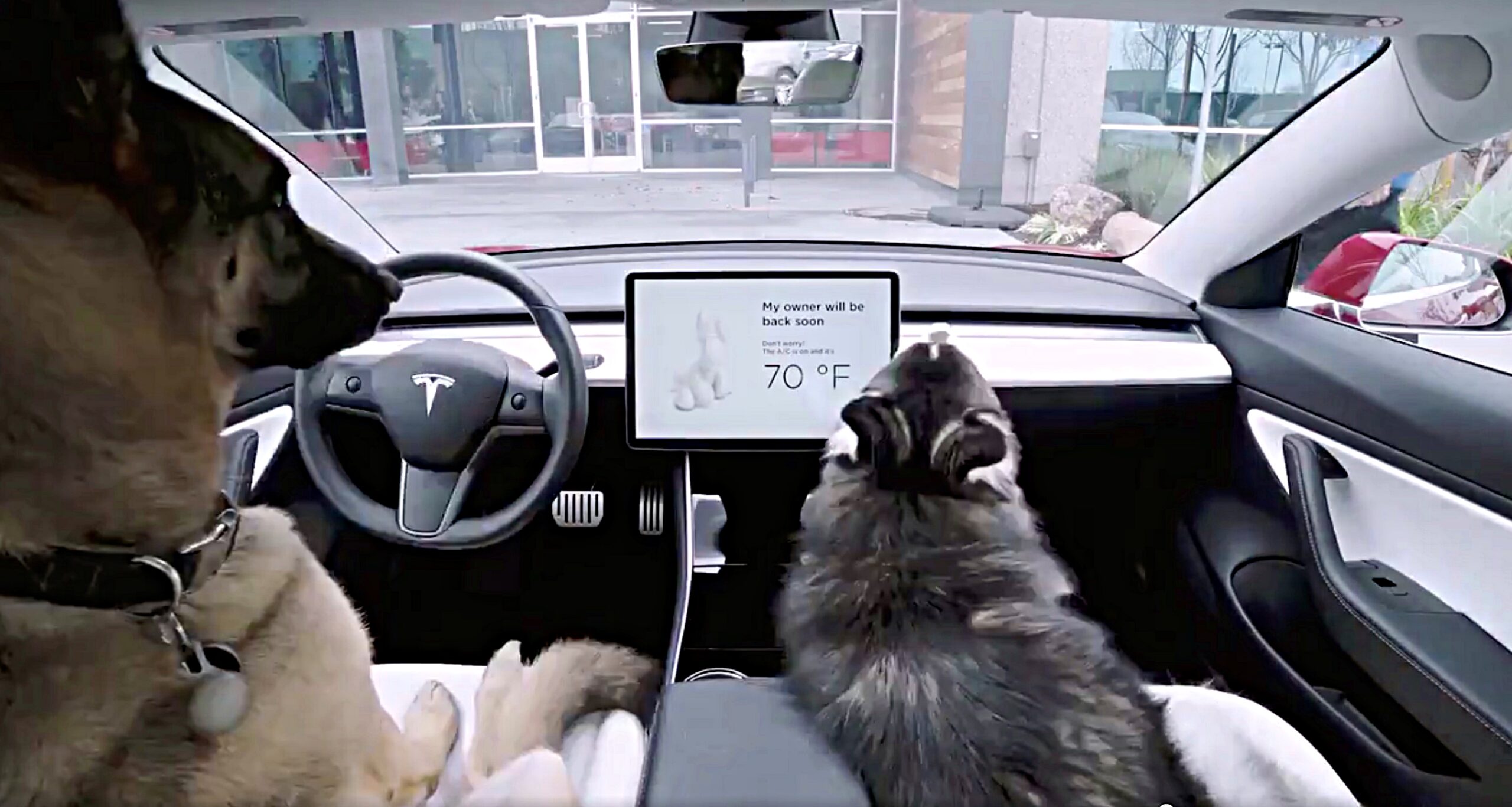
As the mercury climbs or plummets, pet owners face a silent dilemma: how to ensure their furry companions remain safe and comfortable when left unattended in a parked vehicle. Tesla’s Dog Mode emerged as a technological salve to this age-old quandary, promising climate-controlled sanctuary for pets. But does it truly deliver in the scorching heat of summer or the biting chill of winter? To unravel this, we subjected Dog Mode to rigorous seasonal trials, probing its limits and uncovering the nuances that make it a marvel—or a mirage—of automotive innovation.
The allure of Dog Mode isn’t merely practical; it’s psychological. Humans project their own comfort onto their pets, assuming that what feels pleasant to them will suffice for their four-legged friends. Yet, dogs and cats experience temperature differently. Their fur, metabolic rates, and even breed-specific traits create a labyrinth of variables that a single climate-control setting can’t always navigate. Tesla’s solution, with its real-time cabin monitoring and automated adjustments, attempts to bridge this gap. But does it hold up under the relentless extremes of nature’s fury?
The Science of Canine (and Feline) Comfort in Enclosed Spaces
Before dissecting Dog Mode’s performance, it’s essential to grasp the physiological thresholds of pets in vehicles. Dogs, for instance, begin to overheat at internal temperatures as low as 70°F (21°C), a threshold far below what humans might tolerate. Panting, lethargy, and excessive drooling are early warning signs, but irreversible damage can occur within minutes once core temperatures exceed 106°F (41°C). Conversely, hypothermia sets in when cabin temperatures dip below 50°F (10°C), particularly for small breeds or those with thin coats.
Tesla’s Dog Mode addresses these risks by maintaining a preset temperature—typically 72°F (22°C)—via the vehicle’s climate control system. The system’s sensors detect cabin conditions in real time, adjusting airflow and heating elements as needed. Yet, the efficacy of this approach hinges on several factors: the vehicle’s insulation, battery charge levels (which power the climate system), and external ambient temperatures. A fully charged Tesla Model 3, for example, can sustain Dog Mode for hours in mild weather, but prolonged exposure to 100°F (38°C) days or subzero nights tests its resilience.
Summer Scorcher: Can Dog Mode Defy the Heat?
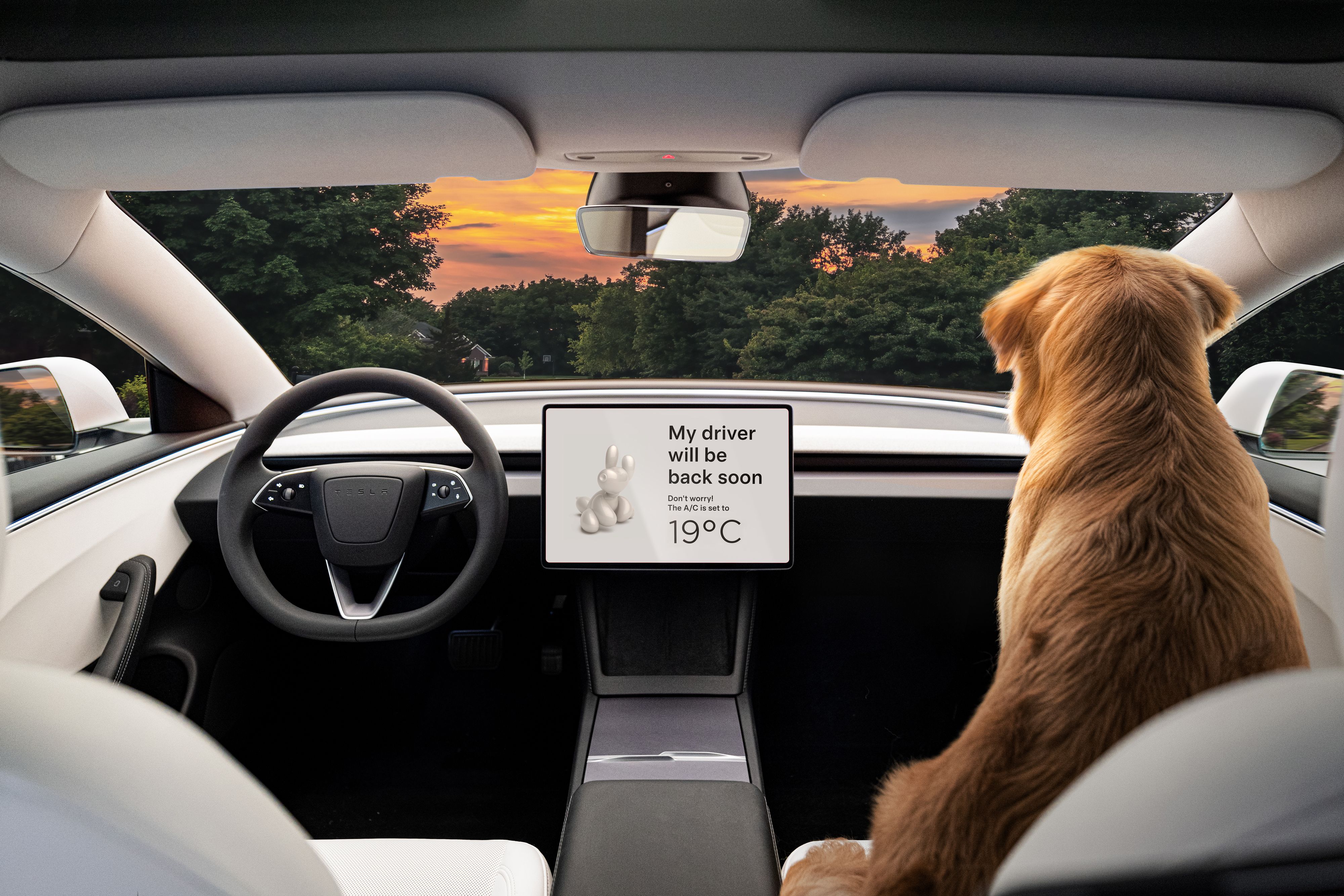
To evaluate Dog Mode’s summer performance, we parked a Tesla in direct sunlight during a 95°F (35°C) afternoon, with the cabin temperature soaring to 120°F (49°C) within 20 minutes. Activating Dog Mode immediately triggered the air conditioning, which struggled to counteract the heat buildup. After 30 minutes, the cabin stabilized at a relatively safe 78°F (26°C)—a testament to the system’s responsiveness. However, this came at a cost: the battery drained by 15% in just two hours, a critical consideration for owners planning extended errands.
The real-world implications are stark. While Dog Mode can mitigate heatstroke risks, it’s not a failsafe. Pets with thick coats, brachycephalic breeds (e.g., Bulldogs), or those prone to anxiety may still suffer stress from the noise of the AC compressor or the confined space. Additionally, the psychological comfort of seeing their owner return—something Dog Mode’s “My owner will be back soon” message attempts to address—doesn’t negate the physical toll of prolonged exposure to elevated temperatures.
For those in desert climates, where ambient temperatures exceed 110°F (43°C), even Dog Mode’s best efforts may fall short. In such scenarios, auxiliary cooling solutions—like portable fans or shaded parking—become indispensable. Tesla’s recent updates, including cabin pre-conditioning via the app, offer a partial remedy, allowing owners to cool the car before their pet enters, reducing the initial thermal load.
Winter’s Wrath: Does Dog Mode Keep Pets Warm Enough?
Winter tests Dog Mode’s heating capabilities, which rely on the vehicle’s resistive heaters powered by the battery. In a 20°F (-7°C) environment, we activated Dog Mode with a target temperature of 72°F (22°C). The system engaged the heaters immediately, but the cabin’s descent into warmth was glacial. After 45 minutes, the interior hovered at a chilly 55°F (13°C), with the battery depleting by 12%—a slower drain than in summer but still significant.
The lag in heating performance stems from the physics of energy transfer. Electric heaters, while efficient, require more time to warm a vehicle’s mass compared to air conditioning’s rapid cooling effect. Moreover, the lack of insulation in Tesla’s glass roof exacerbates heat loss, particularly in subzero conditions. For small pets or those with short fur, this delay could mean discomfort or even hypothermia if left unattended for extended periods.
Yet, Dog Mode’s winter shortcomings are not insurmountable. Owners can mitigate risks by:
- Pre-conditioning: Using the Tesla app to warm the cabin before loading pets.
- Insulation aids: Placing blankets or pet-specific heating mats in the vehicle.
- Shorter durations: Limiting unattended time to 30–45 minutes in extreme cold.
These adjustments transform Dog Mode from a passive safeguard into an active partner in pet care, though they demand foresight and preparation.
The Psychological Comfort: More Than Just Temperature
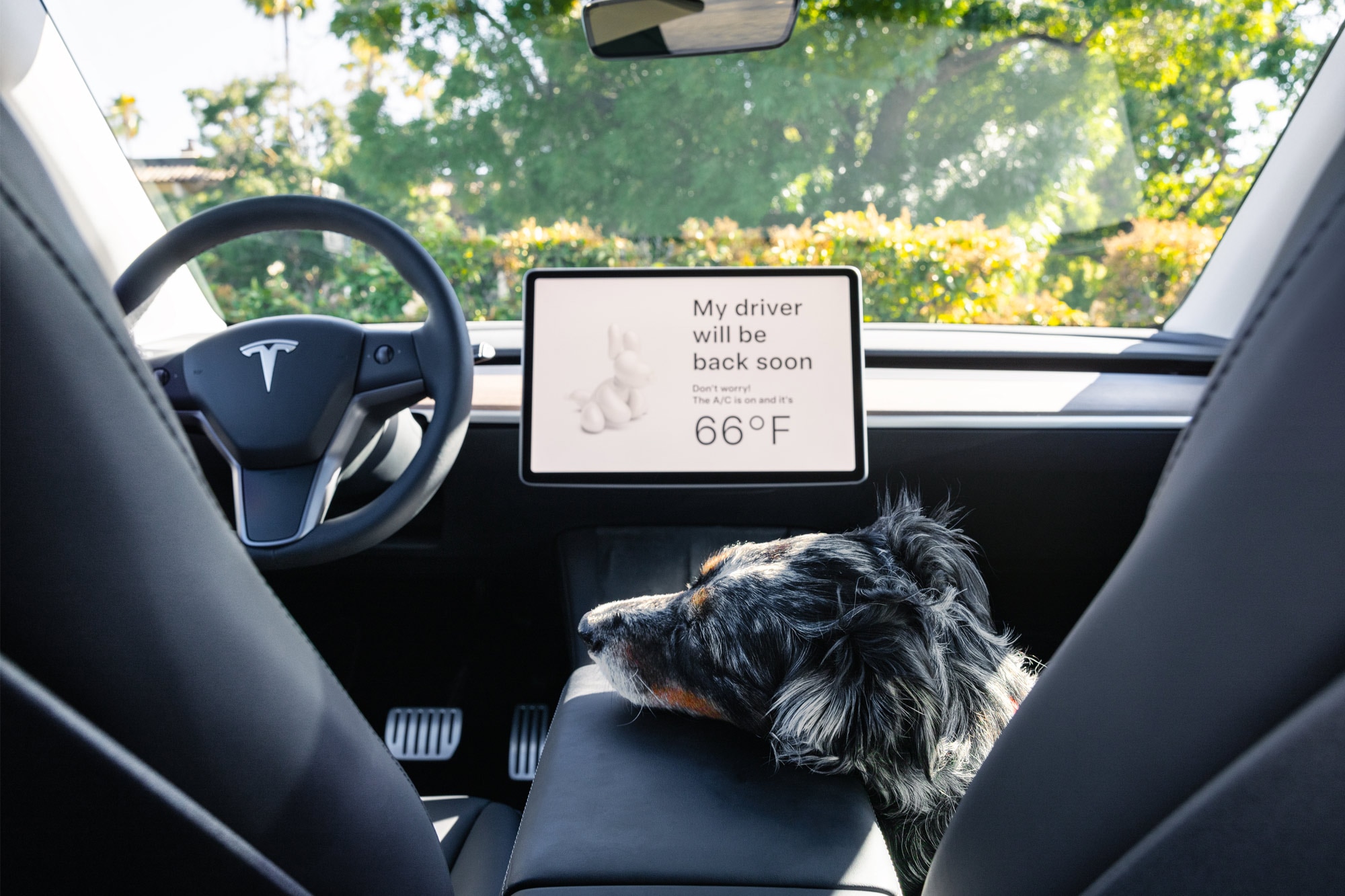
Beyond the tangible metrics of temperature and battery drain lies a subtler dimension: the emotional reassurance Dog Mode provides. The feature’s interface—complete with a message to passersby and a live display of the cabin’s temperature—serves as both a shield and a signal. For pet owners, it’s a digital guardian, a way to communicate care even when they’re not present. For strangers, it’s a reminder of the bond between humans and their animals, fostering empathy and vigilance.
This psychological layer is where Dog Mode transcends its utilitarian roots. It doesn’t just regulate climate; it regulates guilt. The knowledge that a pet is safe, even if the owner is delayed, alleviates the anxiety that often accompanies leaving animals in vehicles. In an era where pet ownership is increasingly anthropomorphized—where dogs are treated as family members—such features become cultural artifacts, reflecting society’s evolving relationship with technology and animals alike.
Practical Recommendations: Maximizing Dog Mode’s Potential
To harness Dog Mode’s full potential, owners should adopt a nuanced approach tailored to their climate and pet’s needs:
For Hot Climates:
- Park in shaded areas or use reflective window shades to reduce initial heat buildup.
- Enable cabin pre-conditioning 10–15 minutes before departure.
- Monitor battery levels via the app; aim to keep at least 50% charge for extended Dog Mode use.
- Consider a portable battery-powered fan to supplement the vehicle’s AC.
For Cold Climates:
- Pre-warm the cabin using the app, ensuring the target temperature is reached before pets enter.
- Invest in insulated pet blankets or heated pads to provide localized warmth.
- Limit unattended time to under 30 minutes in subzero temperatures.
- Avoid parking on snow or ice, which can insulate the vehicle’s undercarriage and reduce heating efficiency.
For All Seasons:
- Test Dog Mode in your specific vehicle and climate before relying on it for long periods.
- Observe your pet’s behavior; some may become agitated by the AC noise or confined space.
- Never leave pets unattended in a vehicle without Dog Mode activated, regardless of the season.
The Bigger Picture: Technology as a Bridge Between Humans and Pets
Dog Mode is more than a feature; it’s a cultural touchstone. It embodies the intersection of innovation and empathy, where technology serves not just human convenience but the well-being of our animal companions. Its existence reflects a broader trend: the blurring of lines between digital and physical care. As smart homes and connected devices permeate our lives, so too do they infiltrate the spaces we share with our pets.
Yet, for all its sophistication, Dog Mode is not a panacea. It’s a tool that demands understanding, adaptation, and, above all, responsibility. The fascination it inspires isn’t just in its engineering but in the questions it raises: How much control should we cede to machines in matters of life and safety? Can technology truly replicate the instinctive care of a human guardian? And what does it say about us that we’re willing to entrust our pets’ lives to an app?
The answers lie not in the feature itself but in how we choose to use it. Dog Mode is a testament to progress, but progress is only meaningful when paired with wisdom. So the next time you activate it, take a moment to consider the deeper currents it represents—a fusion of care, technology, and the timeless bond between species.