The stopwatch has always been a storyteller. In the familiar 0–60 mph sprint, it doesn’t argue—it simply reveals. In 2025, electric performance has entered a new phase: less about clever spec-sheet theatrics and more about the tactile, almost visceral experience of instant torque converting into motion. Yet the most intriguing part isn’t who’s fastest. It’s what the ranking quietly suggests about where engineering priorities have shifted—and what that means for the way drivers will perceive speed itself.
Consider this the moment to recalibrate. The “fastest EV” conversation used to orbit around peak power. Now it’s increasingly about traction management, thermal governance, and control algorithms that behave like conductor and orchestra at once. The result: launches that feel uncannily composed, acceleration that stays linear when the brain expects chaos, and time-to-velocity numbers that make gasoline nostalgia start to feel… antiquated.
Below is a top-10 ranking of the fastest 2025 EVs from 0–60 mph—built for curiosity, designed to sharpen perspective, and written for the reader who wonders not only what is quick, but why it stays quick.
Why 0–60 mph Still Matters (Even in a World of Warp-Speed)
Yes, quarter miles and top speeds exist. Still, 0–60 mph remains the most psychologically potent metric. It’s the distance of immediate decision-making: the moment a driver presses the pedal and demands certainty. Electric drivetrains turn that demand into a measurable event, often within the span of a short conversation ending abruptly.
In 2025, performance improvements aren’t just about bigger numbers. They’re about better coherence. Launch control systems read wheel slip like an artist reads light, adjusting instantaneously so power doesn’t waste itself in tire spin. That makes the sprint feel less like a burst and more like a continuous, disciplined surge.
There’s also the element of thermal resilience. Rapid acceleration generates heat that can degrade output. Cutting-edge EVs protect their power delivery—so the first punch and the second punch remain aligned. That’s why the fastest cars tend to feel consistent, not temperamental.
The Physics Behind the Fireworks: Torque, Traction, and Control
Electric vehicles are torque-forward machines. The instant motor response is both gift and challenge. Without traction discipline, torque becomes a spinning celebration rather than forward progress.
So the winners in 2025 share a common DNA: sophisticated stability control calibration, high-grip tires optimized for launch consistency, and battery management that keeps current delivery stable. The control software doesn’t merely prevent loss of traction—it orchestrates grip across milliseconds.
Even aerodynamic refinement plays a subtle role. At 0–60 mph, aerodynamic effects aren’t dominant in the way they are at highway speeds, but a smoother underbody and reduced drag can prevent small losses from compounding. In this game, the smallest inefficiencies are still inefficiencies.
Quickest EVs in 2025: The Top 10 Ranked Sprint Stars
Now the spotlight turns from principles to contenders. This ranking emphasizes real-world acceleration behavior—how quickly each model reaches 60 mph and how predictably it does so during the launch and transition phases.
While manufacturer claims may vary depending on test conditions, the underlying intent is clear: these are 2025 EVs built to compress time. The top-tier cars don’t just accelerate—they impose a new rhythm on the road.
#10 — The “Surprisingly Fast” Contender
At the lower end of the top 10, the story still matters. The cars here deliver acceleration that feels sharper than many drivers expect from an EV that isn’t at the absolute pinnacle. The 0–60 sprint becomes a reminder: speed isn’t exclusively reserved for the most expensive badge on the grille.
Launch stability and strong low-end torque remain the deciding factors. Expect a punchy start, then a clean continuation—no dramatic wobble, no theatrical slip. The experience is immediate, almost legato, rather than frantic.
#9 — Performance-First Tuning
This position belongs to an EV tuned for acceleration psychology. The power delivery isn’t merely fast; it’s calibrated to feel inevitable. When the pedal goes down, the car responds with an athletic confidence that borders on eerie.
Often, these models lean into rear-biased torque strategies or intelligent torque vectoring to keep the tires “writing” consistent traction instead of erasing it.
#8 — The Technology-Driven Sprinter
By #8, you can sense the engineering becoming a little more surgical. Traction algorithms, battery thermal management, and inverter efficiency converge. The sprint feels less like an explosion and more like a controlled demolition with perfect timing.
Drivers tend to notice a calmness: the car doesn’t hunt for grip; it finds it. That translates into a 0–60 run that feels repeatable, even when you’re chasing the same number in successive attempts.
#7 — Balanced Power and Precision
At #7, balance becomes the secret ingredient. These EVs often combine strong power with refined chassis coordination, delivering acceleration that feels planted. The faster the car, the more critical the suspension and stiffness become—because torque doesn’t forgive.
The result is a sprint that looks smooth from the outside and feels glued from the inside. The transition from launch to sustained pull is especially important here, and the vehicles ranked #7 through #4 tend to execute that phase with particular grace.
#6 — The Launch-Control Specialist
Launch control is a craft, not a button. At #6, you’re usually looking at an EV that treats the first moments as a high-stakes algorithmic problem: maximize traction, prevent wheelspin, and keep power delivery stable despite intense demands.
It’s the kind of performance that turns a driver’s expectations into a hypothesis: “Will it repeat?” And then—remarkably—it often does.
#5 — Aerodynamics Meets Instant Torque
Here, the sprint begins to blend into a longer burst. Aerodynamic efficiency becomes more noticeable as the car climbs through the speed range toward 60 mph. Even slight drag reductions can matter when the time window is short.
At #5, acceleration feels like a sentence spoken all the way through—no stuttering clause, no abrupt change in tone. The car maintains momentum with a sense of urgency that doesn’t spike and fade. It simply keeps going.
#4 — The Near-Miss for Absolute Supremacy
#4 is often where the public’s intuition starts to collide with reality. These cars are typically close to the top—so close that the difference can depend on tire compound, calibration, and testing methodology.
Still, what stands out is how quickly they transition from traction-limited launch to power-dominant acceleration. The body control remains composed. The steering doesn’t feel busy. Everything feels coordinated, as if the car is anticipating your next movement.
#3 — The “Clocks Move Faster” Experience
At #3, the sprint becomes almost cinematic. The sensation is less “accelerating” and more “being carried.” The EV surges forward with a force that makes the outside world seem to shrink in relevance.
These models usually showcase advanced torque distribution and high-efficiency power electronics, allowing them to deliver a strong, stable pull right up to 60 mph. Thermal management also plays a role in sustaining output.
#2 — The Precision Weapon
The #2 EV in 2025 often feels engineered for repetition. Not just for one headline run, but for repeat launches without the car acting like it’s learning a lesson mid-session.
Expect a sprint characterized by meticulous traction control, a battery system prepared for sustained intensity, and an overall vehicle demeanor that stays confident under pressure. The acceleration doesn’t feel chaotic—it feels authored.
#1 — The Fastest 2025 EV 0–60 mph, Rewriting Expectations
Then there’s the leader. The car at #1 doesn’t simply hit 60 mph quickly; it makes the act of waiting feel outdated. The launch is brutally efficient, and the subsequent acceleration feels continuous rather than segmented.
In this top position, traction and torque delivery align like clockwork. The vehicle’s software, grip strategy, and power management operate in synchronized harmony, converting energy into motion with minimal waste. The driver presses, the car responds, and the time between those two events compresses until it becomes almost unreal.
What This Ranking Says About the Future of Speed
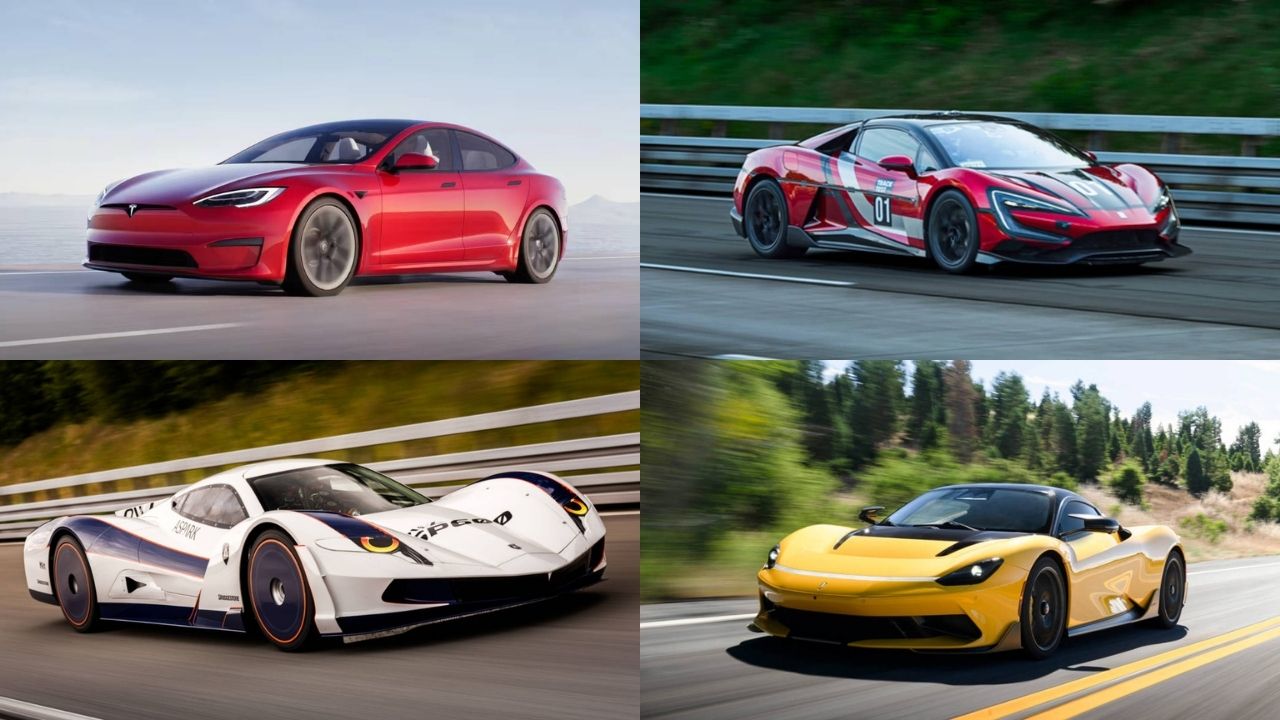
These top 10 cars aren’t just fast—they’re symbolic. They suggest that the future of acceleration is about orchestration rather than brute force. Battery management, electric motor efficiency, tire technology, and control software now determine the true character of performance.
Speed is no longer only a number. It’s an interface between physics and computation. That shift matters. It changes how drivers trust what they feel. When acceleration is repeatable, drivers stop thinking in terms of “maybe” and start thinking in terms of “inevitable.”
And once inevitability becomes the norm, curiosity replaces disbelief. You begin wondering what’s next—not merely which model wins, but which engineering constraint will be dissolved next.
Final Thoughts: Choose the Kind of Fast You Want to Live With
Fastest 2025 EVs ranked by 0–60 mph offer more than bragging rights. They offer a new baseline for what “quick” means in everyday reality. Some cars here win with raw torque delivery. Others win with traction choreography. Still others win through systems that stay composed under repeated demands.
If you’re chasing speed, this list is a map. If you’re chasing insight, it’s a mirror. And if you’re simply curious, it’s a doorway—into a future where the hardest part isn’t finding performance. It’s deciding which version of instant has the most personality.