Picture this: the morning is crisp, the windshield wears a thin glaze of sleet, and your neighborhood parking lot looks like a skating rink with potholes. You reach for the key fob, feel that familiar hum of anticipation, and then—right when you’d like the road to behave—your tires meet that slick, whispery layer of snow. So here’s the playful question: if your commute demands bravery, why should your car be the one to squeak, slip, and hesitate?
Welcome to the world of Best 2026 AWD Sports Cars for Daily Driving in Snow States. This is not about showroom drama. It’s about everyday competence: predictable traction, confident steering response, and the kind of stability that makes you forget the weather is even trying to bully you. And yes, there’s a potential challenge lurking in the shadows—stopping distance. In snow country, acceleration is flashy, but braking is the real plot twist.
Let’s march through the decision landscape like experienced navigators—because the right AWD sports car can turn frosty commutes into something almost joyful.
Why AWD Sports Cars Feel Different in Snow
All-wheel drive can be a lifesaver, but it’s not magic dust. In snow, the “how” matters as much as the “what.” A well-tuned AWD system helps distribute torque to the wheels that actually have grip, reducing wheelspin when the road turns treacherous. That means fewer moments of traction control yanking the brakes or cutting power like a stern referee.
Yet snow brings nuance. One corner might be glazed, another might be granular. A modern AWD setup—especially one that can manage torque dynamically—can react faster than a human can modulate throttle. That responsiveness often translates to a calmer throttle feel and more confidence when merging into packed roadways after a storm.
But remember: a sports car’s character can be a double-edged sword. Low-profile tires, aggressive alignments, and sporty dampers can either help you slice through slush or make the car fussy when the snow gets deep. The best choices for daily driving balance athleticism with resilience.
Key Snow-Ready Traits to Look for in 2026 Models
Before you fall for horsepower reverie, run a checklist. You want traction not just at launch, but throughout the entire drive cycle—especially when temperatures drop and the road surface goes from wet to icy.
Here are the traits that matter most:
1) Intelligent AWD with torque vectoring: Look for systems that can shift power between axles—and ideally between left/right wheels—to improve balance.
2) Stable traction control calibration: You want interventions that are seamless, not jolting.
3) Strong braking hardware: In snow, brakes are the anchor. Consider models with robust brake feel, good ABS logic, and consistent pedal modulation.
4) Winter-friendly tire compatibility: Some cars are happiest with specific tire sizes. Choose models that allow practical winter setups without forcing awkward fitment.
5) Heated seats, steering wheel, and mirrors: Comfort isn’t cosmetic. It keeps your focus sharp and your hands confident.
This is also where those short sentences sneak in—because your best friend in snow is clarity, not complication.
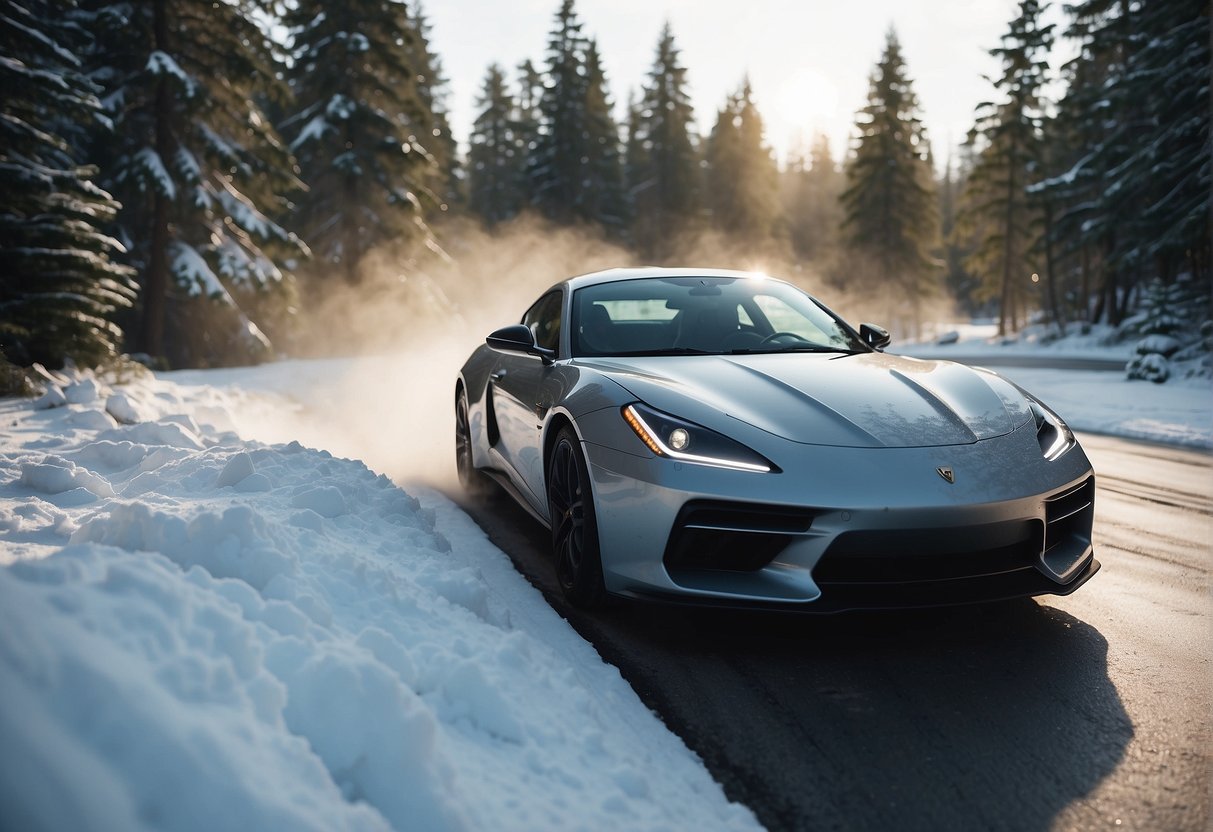
Performance That Doesn’t Panic: AWD Sports Cars for Daily Commutes
A daily driver in snow needs a particular kind of composure. You want crisp response on cleared sections, but you also want calm authority when the commute turns into an obstacle course of packed snow and hidden ice beneath slush.
The best 2026 AWD sports cars typically excel in three “everyday” moments:
• Cold starts and early throttle: The drivetrain should feel predictable rather than jumpy. A good system will learn traction quickly and keep you from second-guessing every pedal press.
• Corner entry at low speed: In parking lots and tight turns, stability matters more than lateral glory. Look for cars that keep steering angle and yaw behavior in sync.
• Long stops from speed: Snow punishes optimism. A car with consistent ABS and strong brake modulation can shorten the time you spend “hoping” the car will slow smoothly.
And here’s the playful challenge again: what happens when you’re running late and the snowplow hasn’t arrived? The right AWD sports car helps you stay in control rather than improvising.
Snow-Friendly Driving Modes: The “Winter Command Center”
Modern sports cars often offer drive modes like “Snow,” “Ice,” or “Weather.” The names can vary, but the underlying goal is the same: tame throttle mapping, adjust traction control thresholds, and refine stability programming.
A genuinely helpful snow mode reduces sudden torque delivery. That’s crucial because slick surfaces don’t forgive rapid wheelspin. Also, it can alter shift logic in automatic transmissions so the car avoids unnecessary rev spikes that might lose traction.
Don’t ignore steering settings either. In some cars, “Sport” steering can feel too quick for low-friction conditions, amplifying your inputs faster than the tires can respond. A calmer steering response in winter modes can make the entire drive feel more “connected,” like the car is listening rather than arguing.
Short and sweet: experiment with modes on an empty stretch, then lock in your preferred behavior before winter traffic makes decisions for you.
Braking Reality: How AWD Helps—and How It Doesn’t
AWD can help you go. It doesn’t automatically help you stop. That distinction matters. When braking on ice, the limiting factor is tire-road friction, not which wheels receive power.
Still, AWD can contribute indirectly. By maintaining traction during deceleration—especially during transitional phases—it can help stability systems avoid overcorrecting. But you should still prioritize tires, brake health, and driving technique.
Practical tactics:
• Increase following distance: Snowy roads turn time into an asset. Take it.
• Brake earlier and more gently: Smooth inputs keep the ABS from cycling too aggressively.
• Avoid last-moment panic braking: That’s when traction is most likely to vanish.
It’s not dramatic. It’s simply physics with a stern personality.
Winter Tires: The Secret Sauce Beneath the Spoiler
If there’s one rule that consistently separates “great on paper” from “great in real snow,” it’s winter tires. All-wheel drive plus all-season tires can feel like wearing a helmet to a swimming contest. You’ll be safer, but you won’t be unstoppable.
Dedicated winter tires are engineered with softer rubber compounds and tread patterns designed for slush and cold temperatures. That helps maintain grip during the exact conditions that make commuters dread their steering wheel.
Also consider tire pressures. Many drivers keep pressure at a summertime setting out of habit. In winter, the correct pressure supports contact patch stability and helps ensure your traction control works with the tires rather than against them.
Want a smooth, confident winter feel? Pair a good AWD sports car with proper winter rubber and you’ll feel the difference almost immediately.
Comfort, Heat, and Visibility: The Hidden Advantages
Snow driving is exhausting when the car fights you. Frosty glass steals attention. Fogged windows interrupt momentum. Seat heating and windshield defrost speed can decide whether you arrive calm or clenched.
Look for:
• Fast cabin warm-up: A quick heating system keeps your hands steady and your mind clear.
• Heated steering wheel: Small detail, big comfort multiplier.
• Efficient defogging: Visibility is safety, and safety is speed control.
Long commutes in cold weather are a test of endurance. The best 2026 AWD sports cars help you endure like a professional—quietly, smoothly, without theatrics.
Choosing the Right One: Match Your Lifestyle to the Machine
Not every snow-ready sports car fits every driver. Choose based on your daily route and habits:
If your commute involves frequent stop-and-go: prioritize predictable torque control and smooth throttle mapping.
If you tackle winding routes: prioritize stability and steering balance, not just acceleration.
If you park outside overnight: prioritize cold-start behavior, quick defrosting, and reliable traction systems.
Also consider practicality. Storage for ice scrapers, gloves, and emergency supplies isn’t glamorous, but it’s profoundly useful. Snow states can be unpredictable, and it’s better to be prepared than impressed.
Maintenance for Winter Longevity
Snow isn’t just a driving condition—it’s a corrosion and wear event. Salted roads attack brakes, suspension components, and underbody surfaces.
To keep your sports car sharp:
• Wash more frequently: Especially after storms.
• Inspect brakes and suspension: Winter can accelerate wear.
• Check tire tread depth and wear patterns: Uneven wear can indicate alignment issues that worsen traction behavior.
Maintenance is the quiet hero. Like a good co-pilot, it doesn’t grab the spotlight, but it keeps the mission running.
Outro: Turn Winter Into an Advantage
So, are you ready to take on snow states with a sports car that doesn’t merely survive the season, but actually thrives in it? The best 2026 AWD sports cars for daily driving offer confidence where it counts: controlled torque, stable handling, trustworthy braking behavior, and comfort features that protect your focus.
And if you remember one final thing, make it this: traction is a team sport. AWD is a strong teammate, but winter tires, correct pressures, and smooth driving are the chemistry that makes the team win.
Go ahead—start the commute with optimism. Winter can be challenging, yes. But with the right AWD sports car, it can also be strangely exhilarating.