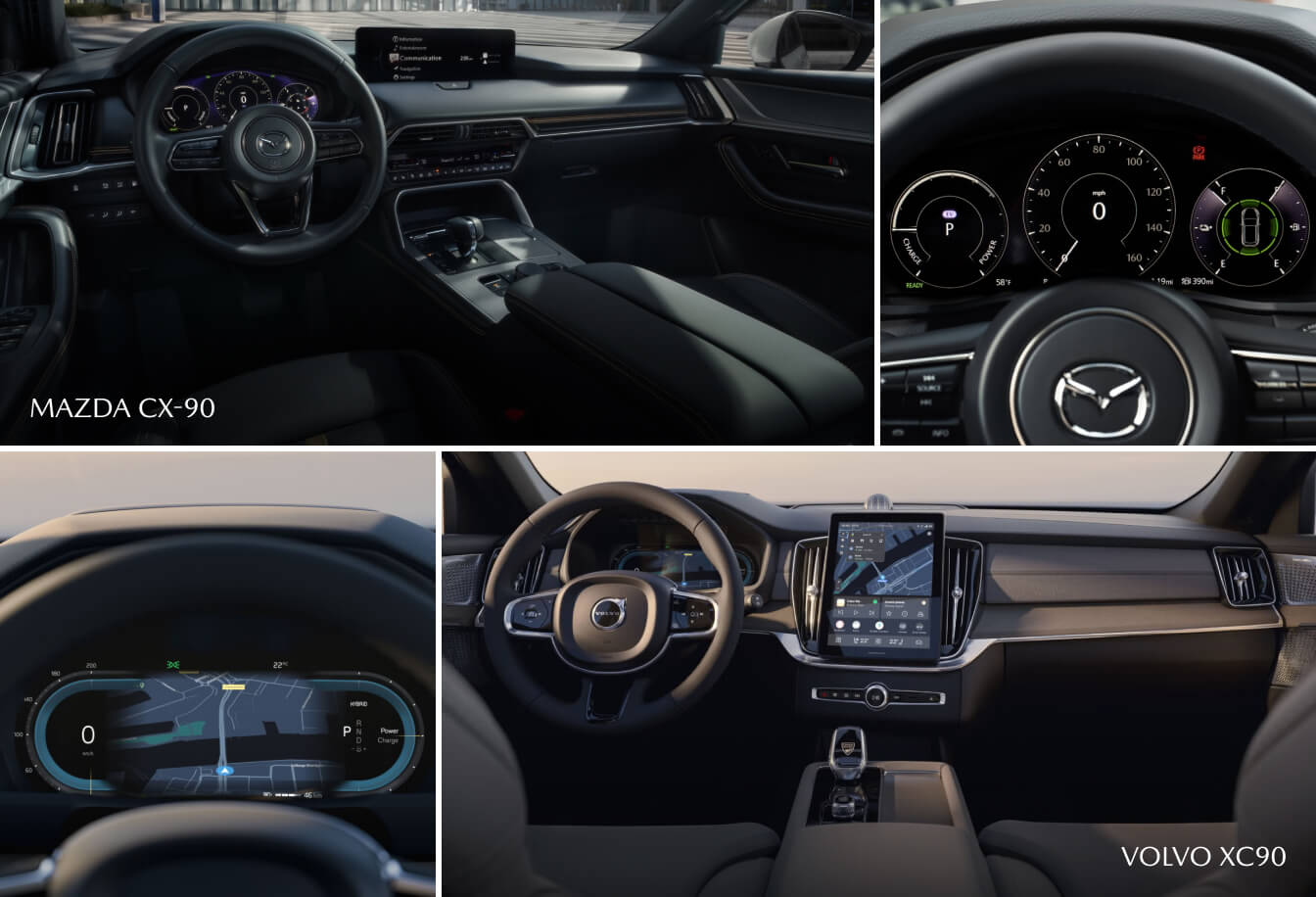
The modern three-row plug-in hybrid is no longer a curiosity; it is a quiet revolution. Families want the calm, composure, and comfort of a premium midsize SUV, yet they also want the electricity-powered thrift that feels almost like a cheat code. That is why the 2025 Mazda CX‑90 PHEV and the Volvo XC90 Recharge keep appearing in the same conversations. Both promise the best of two worlds—gas confidence for the long haul and electric torque for the daily commute. And yet, the resemblance ends sooner than many shoppers expect.
On paper, these SUVs share the same mission: carry a family, shoulder weekend gear, and still make short trips feel effortless. But the fascination runs deeper. People aren’t only comparing horsepower numbers. They’re comparing how a vehicle translates intent: how it softens traffic stress, how it treats passengers, and how it makes a driver feel confident when the road gets complicated.
So, let’s walk through the real contrasts—powertrain behavior, driving character, interior atmosphere, safety philosophy, charging reality, and long-term ownership considerations—until the choice stops being a tug-of-war and becomes a personal fit.
Why “3‑Row PHEV” Feels Like a New Category
Three rows used to mean compromises. Larger bodies often sacrificed efficiency, handling finesse, or refinement. Plug-in hybrid technology changed the rules by introducing an electric-first rhythm. The vehicle becomes a partner for errands, commuting, and suburban loops. Meanwhile, the engine remains the safety net—an antidote to range anxiety.
Commonly, shoppers observe that both the CX‑90 PHEV and XC90 Recharge are “premium family machines.” That’s true, but it’s also superficial. Premium is a tapestry, not a single thread. The deeper fascination is in how each brand engineers that tapestry: Mazda leans toward a driver-centric cadence, while Volvo leans toward a sanctuary-like, safety-forward ethos.
Powertrain Personality: Electric Torque vs. Electric Philosophy
PHEVs can feel similar at a glance—electric propulsion at low speeds, engine assist when needed. Yet the feel is where the personality emerges. The CX‑90 PHEV is designed to deliver a responsive, immediate sensation from a stop. The transition from electric to gas assistance is intended to be seamless, reducing the “gear-change drama” that some drivers dislike.
Volvo’s XC90 Recharge also aims for smoothness, but it tends to emphasize a controlled, deliberate power delivery. The sensation often feels more like guided motion than raw snap. In practice, that can matter on family drives. A vehicle that blends propulsion quietly can make the second-row and third-row passengers forget the technology exists.
In short: both approaches can be compelling. The CX‑90 PHEV often appeals to drivers who want a lively connection. The XC90 Recharge often appeals to drivers who want a composed, almost cocooned flow of energy.
Three-Row Practicality: Space Is Not Just Dimensions
A three-row SUV is more than measurements. It’s about how access works, how comfort sustains across longer trips, and how the vehicle manages daily logistics. The CX‑90’s layout is typically described as driver-aware—everything feels arranged to reduce friction. That translates to easier navigation of controls and a more intuitive sense of cabin space.
Volvo’s XC90 approach often feels Scandinavian in spirit: thoughtful surfaces, natural sightlines, and a premium calm. The third row, especially, benefits from a design philosophy focused on minimizing awkwardness. For families who occasionally seat older kids or guests, the XC90 tends to feel like a place where people can settle rather than endure.
In a real-world comparison, these differences show up during the “small annoyances” that build up over time—seat access, legroom usability, and the ease of moving between rows without turning the cabin into a wrestling match.
Interior Atmosphere: Mazda’s Engagement vs. Volvo’s Sanctuary
The cabin is where ownership becomes an emotion. Mazda’s CX‑90 PHEV usually leans into tactile confidence—materials that feel solid, controls that feel purposeful, and a cockpit that supports a driver’s sense of direction. Even on long highways, the cabin often maintains a subtly athletic posture. It’s not loud. It’s just intent.
Volvo’s XC90 Recharge is built around the idea of comfortable vigilance. The design frequently prioritizes visibility, a sense of safety, and a calming environment that makes road noise feel less threatening. The result can feel like a modern living room—comfortable, composed, and quietly reassuring.
For many buyers, this is the “aha” moment: two PHEVs with similar family utility can deliver dramatically different moods. And mood matters more than enthusiasts admit. A vehicle is a moving microclimate for years.
Driving Dynamics: Handling, Comfort, and the Subtle Art of Confidence
When a three-row SUV is also a PHEV, the engineering challenge is enormous. Weight increases. Drivetrain packaging changes. The suspension must still manage everyday potholes, crosswinds, and temperature fluctuations from city commutes to interstate stretches.
Mazda’s strength is often its drive feel—steering response and overall balance that makes the SUV feel less like a barge and more like a controlled system. That can be energizing on winding on-ramps or simply reassuring during lane changes while towing a mental checklist of family needs.
Volvo tends to prioritize stability and composure. The XC90 Recharge can feel planted, especially when the road gets restless. That plantedness is not just comfort; it’s a form of trust. When the car communicates predictability, passengers relax, and the driver stops micro-correcting.
The observation many shoppers make—that both are “comfortable”—is correct. But the reason fascination endures is that “comfortable” has multiple faces: one is lively composure, the other is sanctuary composure.
Safety and Driver Assistance: Two Philosophies of Protection
In the family segment, safety is not a feature; it’s a worldview. Volvo’s reputation suggests an emphasis on accident avoidance, mitigation, and driver-support systems that aim to reduce cognitive load. The brand’s approach frequently feels proactive—like the car is watching the road and nudging the driver toward safer decisions.
Mazda’s safety engineering often highlights a structured, driver-centered integration of active features. The goal is to provide assistance without making the vehicle feel intrusive. For many drivers, that balance is crucial: helpful technology should be present, not performative.
The deeper difference is emotional. Volvo’s system design can feel like reassurance. Mazda’s can feel like partnership. Both can be effective—yet the preference is personal.
Charging Reality: Convenience Determines How Much “PHEV” You Actually Use
Owning a PHEV is partly about technology, and partly about routine. Home charging availability shapes your daily experience more than most spec sheets admit. If you can plug in overnight, the electric portion becomes a default behavior. Short trips become nearly silent. Startup energy feels immediate and frictionless.
Public charging is the fallback. It can be convenient, but it also introduces uncertainty—availability, pricing, and time windows. The fascinating part is how charging habits redefine the car. Some owners become electricity maximizers, while others treat PHEV mode as an occasional advantage. That determines whether the vehicle feels like a commuter EV with a gasoline backup, or a hybrid with electrical seasoning.
So when comparing the CX‑90 PHEV and XC90 Recharge, the right question is not only “what is the range?” It’s “what will my parking situation and schedule allow me to do every week?”
Infotainment and Usability: The Interface Between You and the Road
Three-row SUVs require clarity. Drivers need navigation that doesn’t distract, media that’s easy to access, and controls that work quickly while passengers climb in and out. Volvo often emphasizes an interface designed to feel intuitive and calm, with a focus on accessibility and straightforward operation.
Mazda tends to focus on a driver workflow—controls that feel logically placed, with attention to what you need while driving rather than burying functions in menus.
In practice, the most satisfying infotainment system is the one that disappears. When the interface supports smooth operation, the cabin becomes quieter, not just in noise but in mental effort.
Ownership Considerations: The Hidden Costs People Should Actually Plan For
Beyond the purchase price, PHEV ownership invites questions about tires, brakes, maintenance schedules, insurance considerations, and eventual battery health. While modern systems are designed for long-term reliability, usage patterns still matter. Frequent electric driving can reduce wear on certain components, while prolonged charging habits can shift maintenance emphasis.
There is also the reality of ecosystem fit—how well the vehicle integrates charging management, how service networks handle PHEV-specific work, and how software updates are managed. These factors rarely dominate headlines, but they shape day-to-day satisfaction.
The deeper fascination for enthusiasts and ordinary buyers alike is that a PHEV is both a car and a lifestyle adjustment. The “best” choice is often the one that matches how you live.
Which One Fits You Best? A Practical Decision Framework
If you prioritize an engaging driver feel, crisp steering, and a cabin that supports active driving confidence, the 2025 Mazda CX‑90 PHEV can feel like a natural fit. It tends to appeal to families who want their SUV to feel capable and responsive, not merely comfortable.
If you prioritize a calm safety-first environment, a sanctuary-like cabin mood, and driver assistance designed to reduce mental load, the Volvo XC90 Recharge often aligns with those expectations. It appeals to families who want the road to feel managed—less chaotic, more protected.
Then comes the final, often overlooked element: which interior atmosphere you prefer after a long day. The right choice is the one that you would still enjoy when the excitement of the test drive becomes a routine drive.
Conclusion: The Fascination Is the Balance
The 2025 Mazda CX‑90 PHEV and the Volvo XC90 Recharge are both compelling three-row plug-in hybrids. Yet the reason they capture attention isn’t just the shared category. It’s the balance each one strikes between power and calm, technology and trust, and practicality and emotion.
In the end, this comparison isn’t about declaring a single winner. It’s about identifying which philosophy you want to live with—Mazda’s engaged cadence or Volvo’s sanctuary assurance. Either way, the three-row PHEV era feels less like a compromise and more like an upgrade to everyday life.