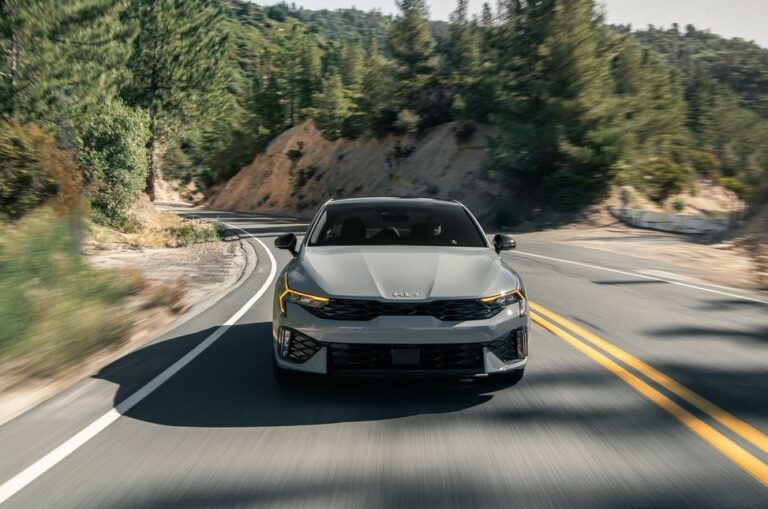
There’s a particular kind of thrill reserved for the driver who enjoys being underestimated. A sleeper sedan duel isn’t about grand entrances—it’s about quiet confidence, sudden torque, and the moment a tailgater realizes the gap they assumed was theirs has already vanished. In this corner: the 2026 Kia K5 GT, a modern midsize machine that feels designed for everyday life yet tuned for sharper consequences. In the other: the Mazda3 Turbo, a compact sport sedan that wears refinement like armor and delivers acceleration with a disciplined, almost surgical efficiency.
Both cars court the same driver: one who wants a daily commuter that can turn into a weekend escape route without changing clothes. But they reach that goal through different philosophies—Kia with expressive performance packaging and generous substance, Mazda with compact precision and a reputation for driver-first dynamics. Let’s walk through what to expect across performance, driving feel, interior atmosphere, technology, practicality, ownership considerations, and the subtle cues that decide which one fits your definition of “sleeper.”
1) The Concept of “Sleeper”: Who Tries Harder?
A sleeper sedan duel begins with appearances, but it doesn’t end there. The 2026 Kia K5 GT can look composed even when it’s eager. Its design language leans into sleek proportion rather than theatrical aggression, which is exactly how a sleeper earns its keep. You can imagine it rolling past a stoplight looking normal—until the throttle opens and the car demonstrates that “normal” was merely a façade.
The Mazda3 Turbo, meanwhile, is already wearing a more compact athletic posture. It doesn’t pretend to be slow; it simply disguises its seriousness behind Mazda’s natural sense of restraint. The deception here is subtler. It’s the calm demeanor—tight steering, cohesive responses, and that sense of “this is controlled” even when the engine is working.
So the question becomes: do you prefer sleeper energy that arrives suddenly, or performance restraint that reveals itself through precision?
2) Power Delivery and Acceleration Character
Acceleration isn’t just a number on a spec sheet; it’s a narrative the car writes through throttle response, traction behavior, and how quickly it recovers after a shift event. The 2026 Kia K5 GT aims for an assertive, ready-to-pounce personality. Expect a punch that feels eager rather than reluctant. Even before the car reaches peak output, it tends to exhibit momentum—an eagerness that builds confidence in merge situations and passing lanes.
The Mazda3 Turbo tends to deliver its thrust with a different rhythm. Turbo performance often shines when it’s harnessed to a well-calibrated drivetrain strategy, and Mazda has historically been good at making the turbo feel integrated rather than abrupt. The result can be a sensation of forward motion that feels purposeful, not frantic. Where the K5 GT may feel like it’s “launching,” the Mazda3 Turbo can feel like it’s “accelerating with intent.”
On the road, this means roll-on performance and midrange behavior can feel dramatically different. One might win the first impression at a stoplight; the other might make highway overtakes feel like a routine, repeatable procedure.
3) Drivetrain Feel: Transmission, Traction, and Cohesion
A sleeper needs to stay composed when the driver decides to turn the day into a test. Kia’s approach with the K5 GT generally emphasizes confident composure—stable traction management and predictable behavior that lets you push without constantly re-learning the car each time you change conditions. That matters in rain, in construction zones, and on those roads where the pavement texture seems to shift every ten miles.
Mazda’s driving dynamics often prioritize cohesion: the sensation that steering, braking, and power delivery speak the same language. In a duel, cohesion can be more decisive than raw output because it determines how confidently you can chain maneuvers—corner entry to throttle application to exit. If you’ve ever felt a car “separate” its systems during hard driving, you’ll appreciate a drivetrain that stays unified under load.
In real terms: both cars can be quick, but the driver’s best experience may hinge on whether the power feels seamlessly connected to the chassis or delivered as a distinct event.
4) Chassis and Handling: The Art of Staying Calm
Handling in a sleeper sedan duel is less about dramatic slides and more about the quiet discipline of grip and balance. The 2026 Kia K5 GT, being a midsize sedan, can offer a planted, comfortable foundation while still delivering a sportier attitude when asked. Larger-body stability often shines on long drives and at higher speeds, where the car seems to settle into the lane with minimal drama.
The Mazda3 Turbo fights from a different angle. Its compact stance encourages agility. Smaller dimensions can translate into sharper turn-in and a more immediate sense of feedback at the steering wheel. That agility makes it easier to enjoy backroads without needing a huge stretch of roadway to work with.
In corners, the real difference may show up in how quickly you can change your mind. The Mazda3 Turbo may encourage rapid adjustments; the K5 GT may reward steady, confident lines with an unshakeable calm.
5) Interior Atmosphere: Driver Focus vs Everyday Luxury
Both cars must serve the daily routine—commutes, errands, and the occasional “I didn’t plan on staying out this late.” The 2026 Kia K5 GT typically leans toward a modern, comfortable interior with a sense of substance. It feels like a place designed for hours, not just for launching into a spirited drive. Materials, seating position, and overall ergonomic flow contribute to a relaxed cockpit—still sporty, but not brittle.
The Mazda3 Turbo, known for its design sensibilities, often brings a higher priority to cockpit harmony. It can feel slightly more driver-oriented in how controls fall to hand and how the cabin frames the road ahead. Even when the acceleration is impressive, the interior experience can remain composed and minimalistic.
This duel is partly a preference test: do you want midsize comfort that cushions the ride, or compact charm that keeps you closely tethered to the driving rhythm?
6) Technology and Infotainment: Real Use Matters
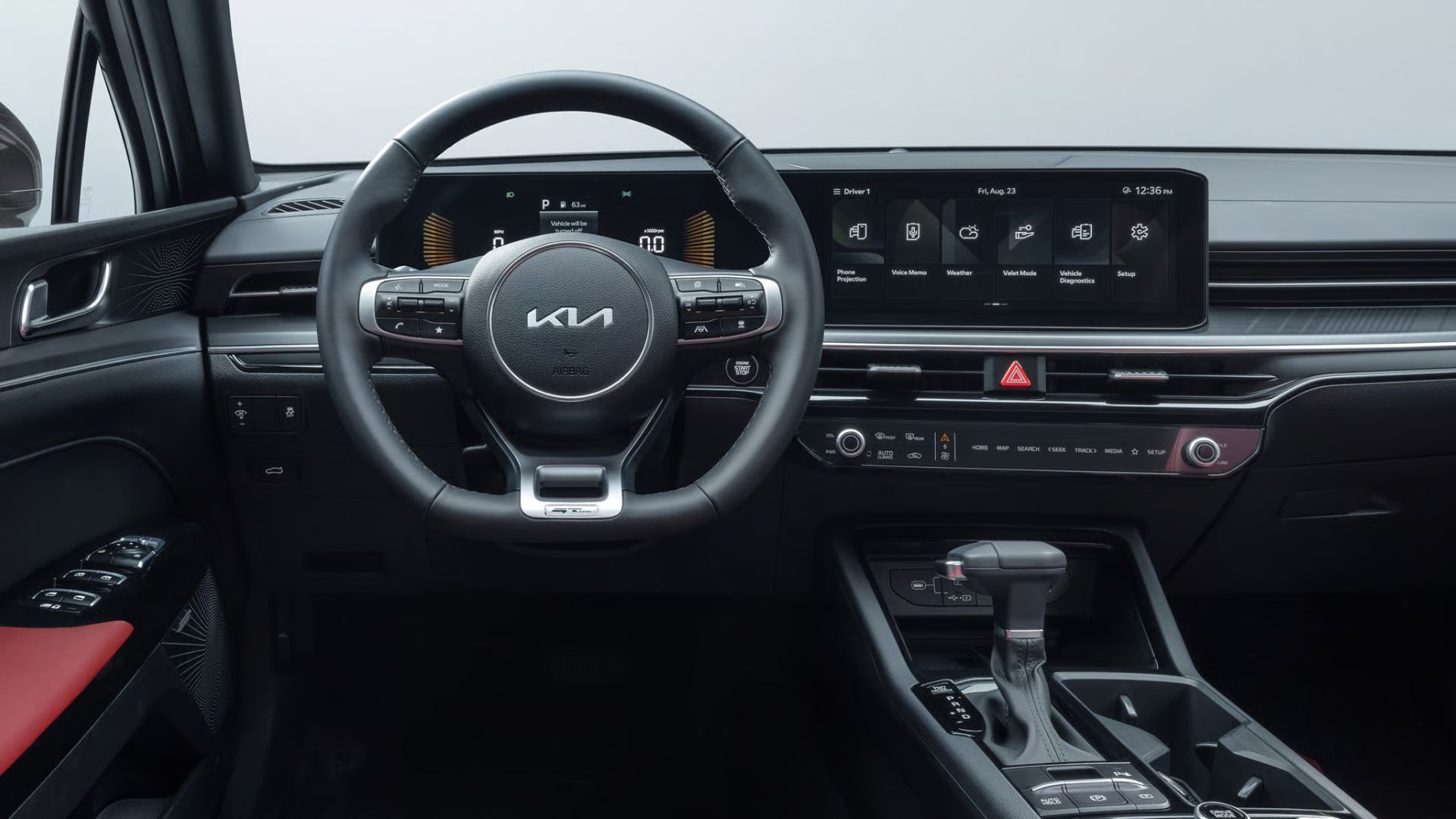
Technology should help you navigate life, not distract you from it. Expect the Kia K5 GT to emphasize a streamlined infotainment experience with readily accessible controls and a layout that prioritizes quick interaction. The goal is to keep your attention on the road while still offering connectivity features and modern driver aids.
The Mazda3 Turbo may lean into a more driver-centric interface philosophy. Mazda has a knack for presenting information in a way that feels orderly, even when the vehicle offers plenty of capability. In a sleeper duel, tech matters most in moments you’ll actually use: quick pairing, reliable navigation prompts, and a user experience that doesn’t require a manual to interpret.
Look for practical details—response speed, the clarity of screens in sunlight, and the intuitiveness of audio and climate adjustments. Those are the “hidden wins” that determine daily enjoyment.
7) Practicality: Space, Comfort, and Long-Distance Credibility
A sleeper sedan should be more than a weekend fantasy. The 2026 Kia K5 GT’s midsize form factor can translate into stronger rear-seat comfort and a more generous trunk demeanor—useful for road trips, grocery hauls, and the random assortment of life’s cargo. It’s the kind of practicality that makes spirited driving feel less like an occasional indulgence and more like a lifestyle.
The Mazda3 Turbo’s compact footprint can be a blessing in urban environments. Parking ease, quicker maneuvers, and a more manageable size for tight streets can become a daily advantage. If your commute is city-heavy, the Mazda’s compact agility may feel like an underrated superpower.
In the real world, practicality is a question of where you spend your time. Long highway drives often favor the K5 GT’s comfort baseline. Dense city living can make the Mazda3 Turbo’s compact nature feel tailor-made.
8) Sound, Styling Cues, and the “Point of View” of Performance
Performance presence isn’t only visuals—it’s sensory. The K5 GT can deliver a sporty stance without making the car look like it’s trying too hard. That restraint is part of the sleeper appeal: subtle styling cues that don’t scream, yet hint at capability.
The Mazda3 Turbo, in contrast, often feels more purposefully athletic from the outset. Styling can look more immediately connected to driving intent. It’s a different type of deception: not hiding performance, but packaging it into a refined overall look.
Even the way the car sounds at different throttle positions can shape your perception of speed. A sleeper should feel satisfying when it’s accelerating, but also believable when it’s cruising.
9) Ownership and Long-Term Confidence
Ownership is where dreams either become realities or fade into frustration. Consider how each vehicle fits your expected routine: mileage patterns, local weather, road conditions, and the way you maintain vehicles. The Kia K5 GT’s appeal often includes a value-driven ownership perspective, with the kind of warranty and support mindset that reduces anxiety over the long arc.
Mazda’s ownership experience frequently centers on perceived build quality and a balanced approach to components and driving longevity. A turbo vehicle can be rewarding, but it also benefits from consistent maintenance and smart driving habits—especially around warm-up and cooldown routines.
In a sleeper duel, long-term confidence is an invisible contender. The best performance car is the one you’re excited to drive repeatedly, not just the one that wins a single spirited run.
10) Choosing Your Winner: What Kind of Sleeper Are You?
If your idea of a sleeper sedan duel is quiet presence, comfortable substance, and a midsize platform that feels stable when the pace rises, the 2026 Kia K5 GT is built for that storyline. It’s a car that can blend into the stream and still rewrite the script the moment the throttle is pressed.
If you crave compact precision, driver-forward feedback, and a turbo character that feels integrated into the driving rhythm, the Mazda3 Turbo may be the sharper fit. It’s the kind of car that keeps you engaged through steering clarity and a more immediate sense of motion control.
Ultimately, the duel’s outcome depends on your preferences. Do you want the sleeper to be deceptive through comfort and composure, or through compact agility and disciplined responsiveness?
Conclusion: A Duel Worth Repeating
The 2026 Kia K5 GT vs Mazda3 Turbo isn’t merely a comparison of speed—it’s a comparison of character. One leans into midsize stability and confident momentum. The other leans into compact agility and refined turbo behavior. Both can satisfy drivers who want everyday practicality with a surprising performance edge.
In a sleeper sedan duel, the real prize isn’t just who accelerates faster. It’s who makes you want to take the scenic route, who keeps the cabin calm during spirited intent, and who turns ordinary drives into small acts of personal triumph. Choose the car that matches your sense of stealth—and then enjoy the moment everyone else learns the truth a little too late.