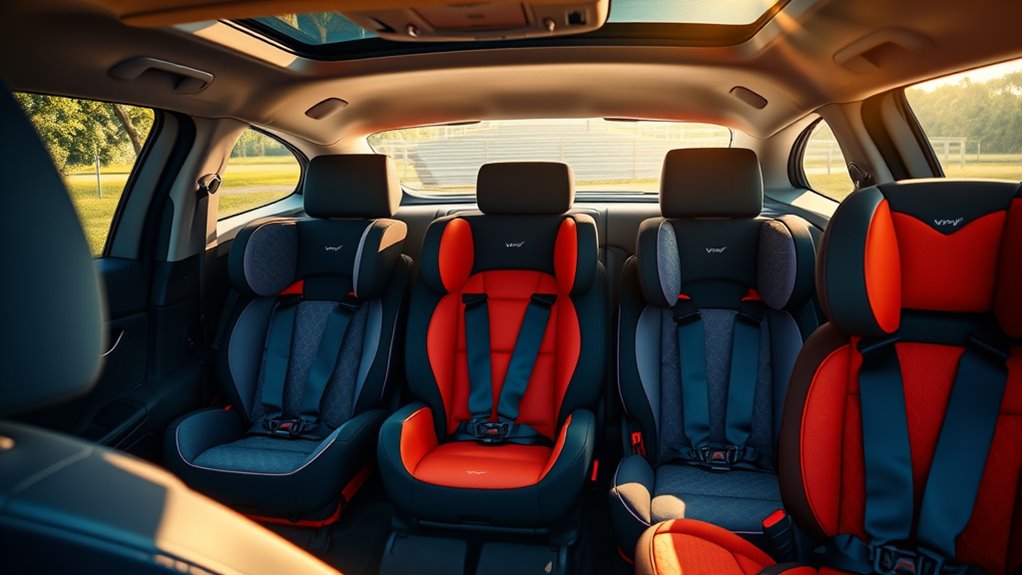
Finding the right family car in 2025 is no longer only about horsepower or mileage. For many households, the real test is far more intimate: how comfortably car seats can be installed, adjusted, and lived with every single day. A family vehicle becomes more than transport—it becomes a mobile nursery, a school-run cockpit, and sometimes, a weekend escape pod.
When you prioritize ease of installation, you’re valuing a different kind of convenience: fewer misalignments, simpler harness routing, more intuitive anchor points, and reduced frustration when you’re juggling diaper bags, backpacks, and timing. Below is a curated look at seven of the best 2025 family cars for car seats, emphasizing design traits that make seating installation and daily use feel less like a chore and more like a workflow you can trust.
What “Ease of Installation” Actually Means for Car Seats
Before exploring models, it helps to decode the practical criteria that separate merely “compatible” vehicles from genuinely car-seat-friendly ones. Ease of installation usually shows up in several places: seat geometry, accessibility, and the predictability of mounting systems. Some cars make every step feel obvious, while others turn each install into a small engineering project.
In most family setups, you’ll evaluate:
1) LATCH/ISOFIX-style anchor positioning (or equivalents): anchors that are visible and reachable reduce time dramatically.
2) Seat belt routing clarity: lock-offs, belt path guides, and low-twist retraction help prevent slack and improper tension.
3) Seat base stability: firm seat bottoms and minimal padding “squish” are essential for accurate angle setup.
4) Recline and headrest interaction: car seats often need specific headrest clearance and predictable recline behavior.
5) Space for rear-facing access: when parents install and adjust frequently, reachability matters as much as brute space.
In 2025, many mainstream models have improved ergonomics and tolerances. Still, installation feel can vary widely depending on trim, seat orientation, and whether the family uses one seat or multiple seats across the row.
2025 Toyota Innova Crysta: The Art of Practical Access
The Toyota Innova Crysta has long been a favorite because it behaves like a dependable tool. For car seats, that “tool behavior” matters. The cabin layout is typically intuitive, and rear passenger entry is usually uncomplicated. This makes it easier to install seats without contorting your body into awkward angles.
Families often appreciate how the second-row space supports frequent adjustments—especially when a rear-facing seat requires periodic tightening checks. Additionally, the seat structure generally offers a stable mounting surface, which can help maintain consistent install angles.
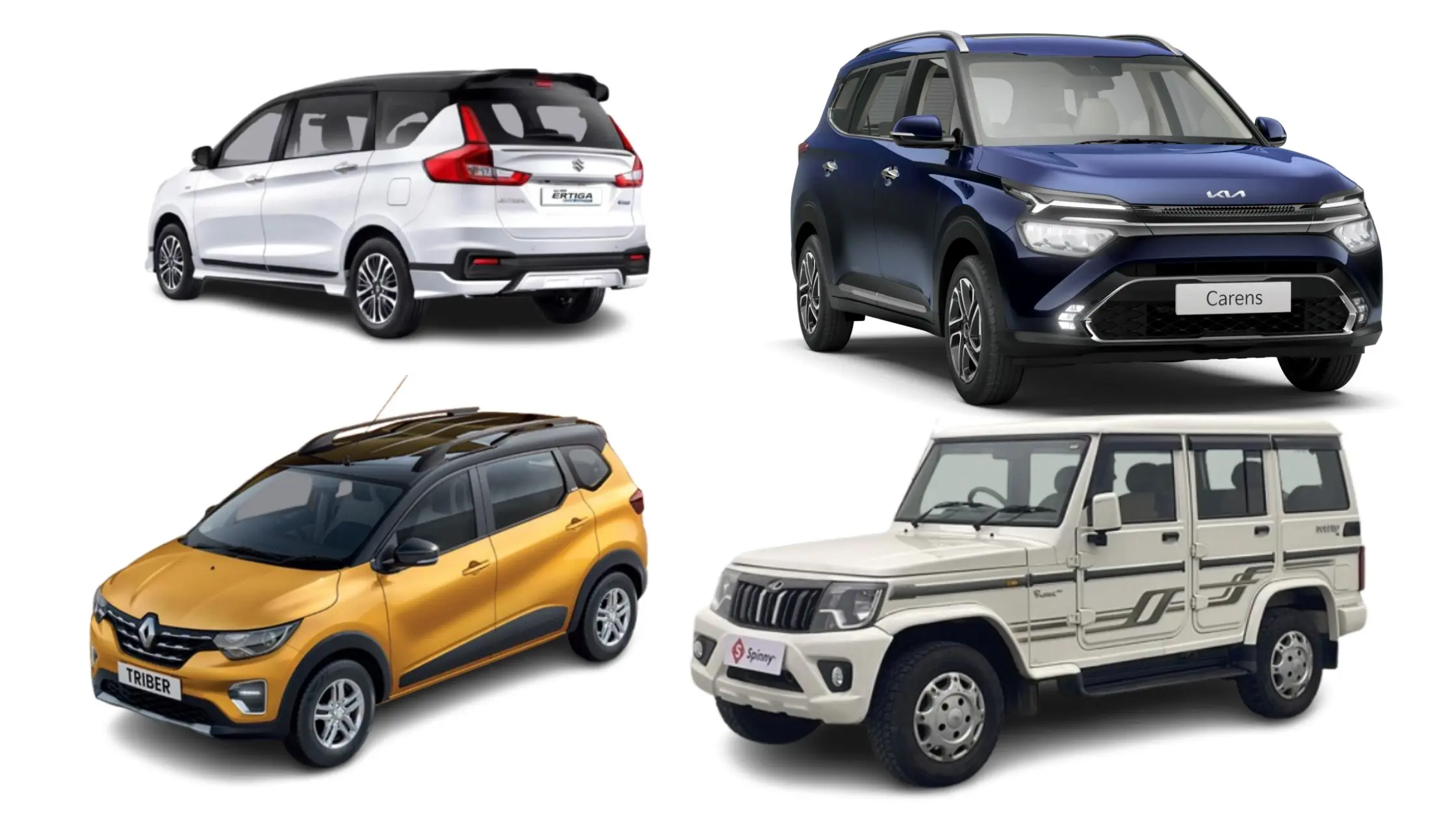
Content readers can expect: real-world practicality notes, guidance on rear-row access, and a look at how multi-seat arrangements tend to behave in MPV-like interiors.
2025 Hyundai Alcazar: Modern Seat Ergonomics With Family Logic
Hyundai has a knack for designing cabins that feel calm and logical. The Alcazar, positioned as a family-forward SUV, typically offers a combination of supportive seating surfaces and accessible anchor points depending on configuration. When installing car seats, this kind of ergonomic clarity can reduce the “trial-and-error loop.”
What stands out is often the balance between spaciousness and usability. If you’re moving between installing a base, adjusting the tether, and checking harness height, the Alcazar’s cabin layout can feel less claustrophobic than many similarly sized rivals. That translates to fewer installation interruptions and less hassle during routine safety checks.
Content readers can expect: a focus on harness routing comfort, tether accessibility, and daily adjustment rhythms.
2025 Kia Carens: Rear-Row Flexibility for Multi-Seat Households
Car seats rarely live alone. A growing number of households use combinations—infant seat plus convertible seat, or two convertible seats plus booster readiness. The 2025 Kia Carens is designed to handle this reality with a flexible, family-oriented cabin.
For ease of installation, the key is how the rear row accommodates reaching, aligning, and tightening. A car that allows comfortable access to the belt path and anchor points can make you less dependent on mirrors and contortion. When installation is easier, re-checking becomes more likely—an underrated safety habit.
In day-to-day use, families also value whether the seat adjustments interfere with door closure or whether rear-row occupants can still move without fighting the seat footprint. Carens tends to score well for those practical frictions.
Content readers can expect: discussion around multi-car-seat placement, rear-row access angles, and how family workflows evolve when seats are installed correctly.
2025 Mahindra XUV700: Big-Cabin Confidence for Safety Setups
Some cars make you feel confident before you even tighten the straps. The Mahindra XUV700 often provides that sense of cabin steadiness, which can matter when installing car seats that need firm base contact. Installation can be unforgiving if the vehicle seat cushion feels overly soft or if belt paths are hard to locate.
With the XUV700, families frequently appreciate the roomy rear compartment and the general usability of interior touchpoints. When rear-facing seats need periodic checks—after temperature changes, after frequent use, after a new child milestone—the ability to adjust without fighting the cabin becomes a true advantage.
Content readers can expect: an emphasis on practical stability, reachability for tether/belt adjustments, and the difference between theoretical fit and lived fit.
2025 Skoda Kushaq: Compact Dimensions, Smart Interface
Not every family wants a large vehicle. Some prefer a more agile footprint that’s easier to park and maneuver. The Skoda Kushaq offers that compact practicality while still aiming for thoughtful cabin interfaces. For car seats, the question is whether “compact” becomes cramped in the wrong ways.
Installation ease often hinges on whether the belt path is straightforward and whether anchor points are easy to access from the right side angles. In the Kushaq, many families find the cabin layout helps reduce ambiguity. Even if rear-row space isn’t the largest category, smart ergonomics can make installs feel less stressful.
Content readers can expect: guidance for families who need compact convenience without sacrificing the reliability of installation steps.
2025 Renault Triber: City-Friendly, Car-Seat Focused Reality Checks
The Renault Triber belongs to the “practical city life” family of vehicles. When your everyday reality includes narrow parking bays and short trips, car seat installation still has to be easy—even more so. You want fewer steps, quick checks, and minimal frustration when you’re rushing.
For car seat compatibility, the most important element is whether rear access is usable enough to get hands where they need to go. Triber’s interior design generally supports everyday family tasks, and that can make installation feel manageable. Families often use it for smaller households or the first stage of car seat ownership, where ease of repeated installs matters.
Content readers can expect: a city-oriented perspective on installs, practical checklists, and how to think about frequent in-and-out routines.
2025 Maruti Suzuki XL6: Comfort-First Seating and Familiar Adjustability
Comfort is not a luxury when you’re transporting children. The Maruti Suzuki XL6 tends to deliver an atmosphere that feels relaxed, which can reduce the stress of frequent seating adjustments. When car seats are installed properly, the cabin should support both safety and day-to-day calm.
Installation ease often improves when seat surfaces are predictable and when anchoring points are not buried behind confusing geometry. XL6’s family-friendly layout typically offers enough accessibility to make harness routing and tether fastening feel less like a puzzle.
Content readers can expect: discussion of comfort-linked practicality, plus notes on how families validate installation integrity over time.
How to Choose the Best 2025 Car Seat Setup for Your Car
Once you’ve narrowed down the vehicle, the next step is selecting the seat type and installation strategy. A rear-facing seat usually demands more space and angle attention. A forward-facing seat often adds tether management. Booster use shifts the focus toward belt fit and head support.
To make your choice smarter, consider these decision points:
1) Your children’s stages: infant, convertible, or booster—each changes installation needs.
2) The number of seats: two or three seats can turn a “fit” into a “flow” problem.
3) Your routine: frequent installations at home versus one-time setups in the car.
4) Your tolerance for re-checking: easy installs encourage safety habits.
5) Your installation style: prefer belt routing or base anchors—use the vehicle that matches your preferred method.
Installation Tips That Keep Safety Intact (Even After the First Drive)
After choosing a family car, the work isn’t over at the first installation. Temperature changes can affect how snug straps feel. Seat fabric can compress over time. And a child’s growing proportions mean harness height must be re-evaluated.
Make it a routine:
• Verify angle indicators (especially for rear-facing seats).
• Re-check tightness every time you move the seat.
• Confirm tether tension if your seat design uses it.
• Inspect belt twist and ensure belt path alignment matches the seat manual.
• Test your “pull” check as recommended by the seat manufacturer.
Even the best 2025 family car can’t compensate for an install that’s off by a few crucial millimeters. Yet an installation-friendly cabin can make the correct setup repeatable, which is often the difference between “installed once” and “installed right.”
Conclusion: The Best Family Car Is the One You’ll Install Correctly
The most family-friendly vehicle isn’t defined only by size, style, or tech. It’s defined by how smoothly you can build a safe seating system—again and again—without wrestling with unclear mounting points or awkward access.
In 2025, the best choices for car-seat ease tend to share certain traits: stable seat geometry, approachable anchor access, and a cabin layout that supports real hands doing real adjustments. Whether you’re navigating school runs, weekend drives, or the daily ballet of family logistics, prioritize installation clarity. When it’s easier to set up properly, safety becomes less of a decision and more of a habit.