There’s a peculiar kind of electricity in the air whenever a major automaker hints at a smaller, cheaper vehicle—one that doesn’t require a mortgage-sized down payment or a life reshuffle just to make the numbers work. Tesla’s rumored Model 2 is stirring that feeling. Not as a headline, not as a promise carved in stone, but as a quiet, persistent question: what if an EV could finally move from the realm of novelty into the realm of habit?
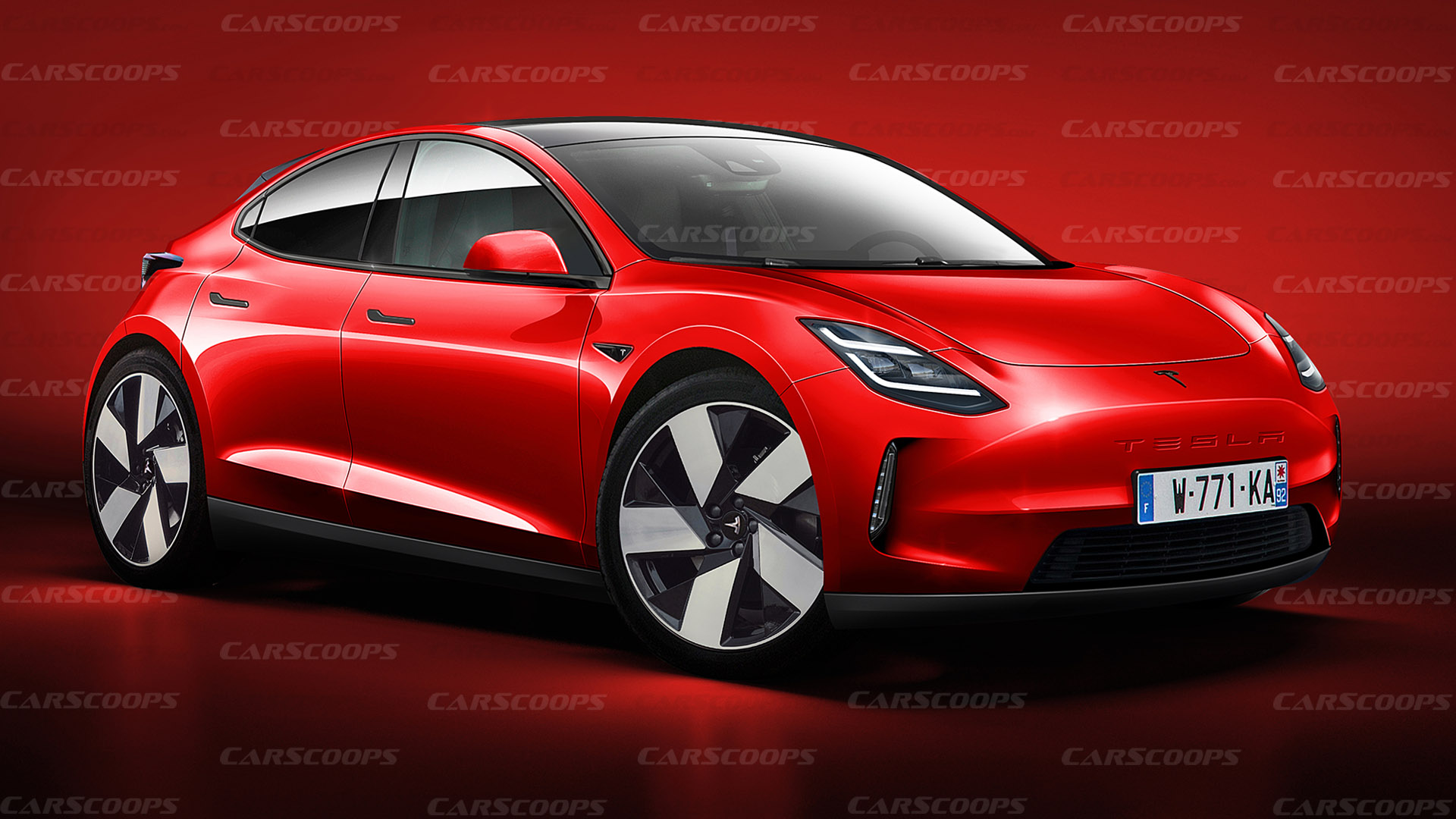
For years, the conversation around electric vehicles has revolved around trade-offs—range versus price, charging convenience versus everyday simplicity, software flexibility versus the stubborn reality of ownership. Tesla, with its talent for shifting expectations, appears poised to challenge that balance again. The Model 2, often described as an affordable compact EV, carries the weight of a simple ambition: make electric driving feel less like an event and more like the default setting.
And yet, the real intrigue isn’t just the potential sticker price. It’s the perspective change. This is where the story begins to evolve from speculation into a design philosophy: a vehicle that could invite millions into a cleaner future without demanding that they sacrifice comfort, clarity, or confidence.
A Vehicle Built for the “Everyday” Mind
Most EV discussions begin with technology, but the Model 2’s appeal would likely start with something more human—space, practicality, and cost predictability. Compact cars aren’t merely smaller. They’re calibrated for city rhythms, quick errands, narrow parking spots, and the kind of daily routine where time is always in short supply.
A cheaper Tesla could recalibrate what “EV” means. Instead of picturing a premium gadget on wheels, people might start imagining a familiar machine—one that fits into life without making life rearrange itself around it. That shift is subtle. It’s also profound. When transportation becomes less complicated, adoption stops feeling like a leap and starts feeling like a natural progression.
The Model 2’s rumored positioning suggests Tesla is targeting a segment that has historically been underserved by electrification efforts. Small but essential cars are the vehicles that quietly accumulate miles, carry groceries, ferry kids, and endure stop-and-go traffic. If Tesla can electrify that reality with a disciplined approach to cost, the implications spread outward like ripples.
Price isn’t just a number; it’s a psychological gatekeeper. A $25,000 EV—if that vision holds—would represent a dramatic re-centering of the market. Lowering the barrier changes everything: it enlarges the pool of potential buyers, reshapes competitive pressure, and forces the entire industry to re-evaluate its pricing logic.
But affordability in EV terms is a tightrope. Batteries, supply chains, and manufacturing complexity can turn optimism into arithmetic. The curiosity, then, lies in how Tesla would engineer that balance—through streamlined design, efficiency-first manufacturing, and software that eliminates some hardware redundancy.
In other words, the Model 2 wouldn’t just need to be cheaper. It would need to feel rational—cost-effective without becoming compromised in the ways that matter most to drivers. The market doesn’t just want less money. It wants less regret.
Compact doesn’t have to mean cramped. In fact, modern packaging techniques allow smaller vehicles to feel surprisingly generous—when the engineering is intentional. Tesla’s potential bet with the Model 2 appears to be that space can be optimized without inflating the footprint.
Expect the cabin concept to follow the modern Tesla language: a clean interior, minimal visual noise, and a focus on ergonomics rather than extravagance. The goal would be to maximize usability—legroom where it counts, visibility where it matters, and a layout that supports daily motion rather than weekend performance theater.
Meanwhile, the exterior could follow a familiar aerodynamic sensibility, trading flamboyance for efficiency. It’s an approach that often ages well. Simple forms reduce manufacturing variability and keep the vehicle from feeling dated before the paint dries.
Range is the first metric people ask about, but confidence is the real metric people remember. The Model 2’s challenge isn’t simply hitting a certain number on a spec sheet. It’s convincing drivers that charging can be handled without anxiety—during commutes, weekends, and those occasional longer trips that test a vehicle’s practical competence.
Charging infrastructure continues to expand, and Tesla’s ecosystem tends to set a baseline of reliability—especially for drivers who already understand the rhythm of EV charging. If Tesla can maintain that ease-of-use while scaling down the vehicle and trimming the price, the Model 2 could become a “set it and forget it” companion for urban and suburban life.
Longer journeys might still require planning. But the experience could be framed more like logistics than a chore. That difference matters. When the process feels manageable, drivers stop questioning whether they bought the “right” car and start trusting it.
One of Tesla’s enduring strengths is the belief that the vehicle is more than hardware. It’s a software platform, evolving quietly over time. If the Model 2 arrives with the same philosophy—updated interfaces, driver-assistance features that can improve, and a consistent user experience—it could help make affordability compatible with longevity.
There’s an almost philosophical element here: a car that can grow smarter after purchase. It’s not only about features. It’s about reducing the fear of obsolescence. Consumers don’t want to buy into a technology that feels temporary. They want a product that remains relevant as the world changes around it.
At the same time, there’s an expectation that software should be intuitive. A mass-market Tesla needs frictionless onboarding, clear menus, and minimal confusion. The best technology disappears into usability. If the Model 2 nails that, it could create a new kind of loyalty—one built on calm certainty rather than flashy performance.
Behind every “affordable” EV is a complicated choreography of manufacturing. Tesla’s rumored strategy suggests the company may pursue simpler production steps, standardized parts, and efficiencies that reduce costs without sacrificing quality. The story of affordability is often a story of process.
Here, curiosity deepens: will the Model 2 lean on scalable platforms designed for rapid iteration? Will it use a design language that supports faster assembly and reduced waste? Will supply chains be engineered like a symphony—tight, coordinated, and resilient to disruptions?
These questions matter because they determine whether the Model 2’s affordability can survive reality. A low price that can’t be sustained doesn’t empower buyers—it merely delays disappointment. But if Tesla achieves the right manufacturing cadence, the Model 2 could become less of a promise and more of a system.
Most early adopters of EVs were drawn by novelty, tech curiosity, environmental concern, or a mix of all three. The Model 2, if it truly targets affordability, would likely court a different kind of buyer—someone who wants a dependable car, a predictable budget, and a vehicle that feels sensible.
That creates a cultural shift. The EV conversation stops sounding like an ideology and starts sounding like arithmetic: lower operating costs, fewer maintenance worries, and a smoother day-to-day experience. When a technology becomes ordinary, it becomes powerful.
This is where Tesla’s “shift in perspective” becomes more than marketing. If the Model 2 makes EV ownership approachable, it can redefine what people expect from transportation. Suddenly, electric driving isn’t an identity. It’s a practicality.
Even as excitement builds, the sensible approach is to hold curiosity without assuming every detail will land exactly as imagined. The Model 2 will need to satisfy a wide array of priorities: value, reliability, real-world usability, charging confidence, and software maturity. Those aren’t minor tasks. They’re the pillars of acceptance.
Still, the momentum is intriguing. A compact, affordable Tesla would not only broaden the market—it would intensify competition and accelerate electrification across the mainstream. That ripple effect could be as significant as the vehicle itself.
In the meantime, the best way to prepare is simple: stay alert to developments, observe how Tesla translates ambition into engineering, and watch for signs that affordability can be made durable, not fragile.
Conclusion: The Arrival of a Different Kind of EV
The Tesla Model 2, described as an affordable compact EV coming soon, carries a promise that goes beyond cost. It suggests a future where electric driving becomes less intimidating—where buyers don’t need to be pioneers to choose a cleaner alternative.
If Tesla can blend compact practicality with a confident charging experience and a software-forward approach that feels intuitive, the Model 2 could become a quiet revolution. Not the kind that explodes into headlines, but the kind that changes habits.
And that’s the most compelling part of the story: not whether the Model 2 will be impressive, but whether it will be normal—in the best possible way.