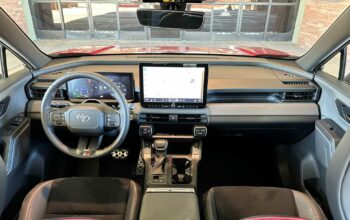
Subaru Wilderness SUVs tend to draw attention for reasons that go beyond mere badge engineering. Two names frequently rise to the surface—Forester and Outback. Both are celebrated for weather readiness, confident visibility, and a kind of practical charm that feels almost stubbornly human. Yet, a common observation persists: people often assume these models differ only in size or personality. The truth is more layered. Under the sheet metal, the choices Subaru makes—about packaging, driveline behavior, ride character, and daily usability—produce subtly different forms of fascination.
Think of it like comparing two trails that share the same horizon but take different slopes. On paper the divide can look minor. In lived experience, it becomes vivid: how your body feels at a stoplight, how the car settles on a washboard road, how it carries your weekend life, and how it invites you to keep going when the destination grows distant.
Why “Wilderness” Feels Like More Than a Trim
Before the Forester-versus-Outback debate even begins, there’s the question of what “Wilderness” actually implies. It’s not simply a visual costume. Wilderness styling typically signals rugged underpinnings: a more insistent grip mindset, ground-clearance confidence, and the kind of tactile resilience that makes you trust the vehicle on imperfect surfaces. The fascination often starts with the promise of friction—literal tire contact and metaphorical assurance.
And yet, deeper reasons emerge once you live with the vehicle. A Subaru Wilderness SUV doesn’t just respond to obstacles; it seems to anticipate them. That anticipation is psychological as much as mechanical. You notice it when the steering steadies on loose gravel. You notice it when the cabin remains calm, even as the road turns chaotic. Calmness in uncertainty is a rare commodity.
Forester Wilderness: Compact Confidence and Everyday Flexibility
The Forester Wilderness often earns admiration for being compact without becoming cramped. It has a can-do stance in urban corridors and a confident posture once pavement ends. Shorter overhangs and a higher seating position create an intuitive sense of clearance—one that reduces the mental overhead of navigating tight parking spaces, curbs, and crowded trailheads.
Inside, the Forester’s charm frequently lies in its flexible geometry. Rear cargo access, the practicality of rear-seat usability, and the ease of loading gear contribute to a feeling that your plans don’t need to be carefully curated. The Forester seems to invite spontaneity. That invitation is not superficial; it’s embodied in how easily you convert the cabin into a utility space.
On winding roads, the Forester’s handling character can feel composed, with steering that supports quick correction without making the driver work too hard. Short and long sentences both apply here: it’s responsive, but not twitchy. It’s agile, but not skittish. Over time, this balance builds a form of trust that’s hard to fake.
Outback Wilderness: Long-Distance Poise and Adventure Carry Capacity
The Outback Wilderness tends to attract a different kind of loyalty—the kind formed by distance. It has the air of a vehicle designed for lingering. The cabin often feels more expansive, and the overall package suggests that your weekends may be longer than you originally planned.
Where the Forester can feel like a nimble companion, the Outback can feel like a settled base camp. That impression often translates into how the vehicle carries bulky gear, how the rear area accommodates awkward cargo, and how the road noise and ride composure hold up when you’ve been driving for hours. Long-range comfort is not merely a comfort feature; it’s a performance philosophy. A vehicle that doesn’t fatigue you allows you to stay curious longer.
It’s also worth noting how the Outback’s proportions influence perception. The larger footprint can provide stability cues, smoothing the driver’s mental map. When visibility and stance align, the act of driving feels less like concentration and more like flow.
Common Observation: “They’re Both Subaru—So What’s the Real Difference?”
People often point out that both models share Subaru DNA: all-wheel-drive capability, a safety-forward mindset, and the familiar confidence of a well-sorted chassis. That observation is reasonable. However, it misses the deeper truth: similarity in drivetrain principles does not automatically mean similarity in life. Differences in size, ground clearance behavior, turning dynamics, cargo layout, and ride tuning change the way each SUV interacts with your routine.
In other words, the real comparison is not just “Forester vs Outback.” It’s “Which kind of adventure fits your body and your schedule?” A common trap is to compare specifications only. The more revealing comparisons are the small ones: ease of loading, ease of parking, ease of commuting without compromising the desire for dirt-road detours.
Both can be wilderness-capable. Yet one may feel like the vehicle you actually use more often—and that frequency can matter as much as hardware.
Ground Clearance, Traction Mindset, and Real-World Confidence
Wilderness SUVs tend to be judged by how they behave when roads become negotiateable rather than predictable. Ground clearance matters, but it’s not the entire story. Tire choice, tread pattern intent, and how the suspension manages impact loads create a more complete impression of traction. The vehicle’s willingness to stay composed over uneven terrain is what turns “capable” into “trustworthy.”
Both Forester and Outback Wilderness models aim for that trustworthy feeling, yet their mass and geometry can influence how they absorb bumps. The Forester may feel more agile in tight off-road scenes, where maneuverability is more valuable than brute stability. The Outback may feel steadier in long, rough stretches where composure and momentum help reduce the sensation of being tossed around.
Suspension tuning is a subtle storyteller. Even when both SUVs can crawl over obstacles, one may make you feel braced and protected, while the other makes you feel cradled and patient.
Interior Layout and the Art of Carrying Life
Cargo capacity is often discussed in numbers, but the more meaningful detail is usability. How often do you load the SUV? Do you carry bicycles, camping gear, tools, or oversized groceries? The Forester’s compact practicality can make it easier to load and rearrange frequently changing items. Its rear access can feel like a quick pivot rather than a chore.
The Outback’s layout frequently suits longer lists—gear that doesn’t compress neatly into bins. The roofline and trunk geometry can make it easier to manage bulk. When you’re towing, traveling, or assembling a temporary household for the weekend, that carry capacity becomes less of an advantage and more of a creative enabler.
There’s also the cabin feel: how the seats support you during long drives, and how the visibility encourages calm scanning. A vehicle that helps you see clearly reduces stress, and reduced stress often leads to better decision-making. That’s an unglamorous advantage, but it’s a durable one.
Driving Character: City Intuition vs Highway Serenity
Forester Wilderness tends to shine when the drive includes mixed environments—commuting that unexpectedly turns into trailhead exploration. Shorter turning radius characteristics and a more upright stance can make it easier to interpret tight spaces. Quick directional changes feel more manageable, and the overall presence can feel less intimidating.
Outback Wilderness leans into highway serenity. Its pacing often feels more deliberate, especially when traffic patterns stretch into long intervals. Over time, the cabin’s composure can become a quiet partner. You may start a trip with “just a quick drive” energy and end it with “let’s keep going.” That shift isn’t magic. It’s the SUV’s ability to reduce fatigue.
In both cases, the steering and suspension tuning shape the emotional tone of driving—how you feel when you press the pedal, how you react to sudden road irregularities, and how the vehicle communicates grip through the chassis.
Which One Fits Your Fascination?
Choosing between Forester and Outback Wilderness is less about being right and more about being resonant. If your fascination is built around frequent, spontaneous detours—city streets, trailheads, roadside markets—the Forester Wilderness often feels like a natural extension of your daily life.
If your fascination is built around longer arcs—extended trips, layered itineraries, journeys where comfort and cargo matter—you’ll likely gravitate toward the Outback Wilderness. It can feel like the vehicle that supports ambition without demanding constant corrections.
Either path can be compelling. The deeper reasons for fascination often come down to what you repeat. The best SUV is the one you’re excited to drive again.
Final Thoughts: The Trail You Actually Take
Forester Wilderness and Outback Wilderness both carry the promise of adventure. Yet they do it with different emotional signatures. One leans toward nimble confidence and everyday adaptability; the other leans toward long-distance poise and generous carry capacity. The common observation that “they’re both Subarus” is true, but incomplete. The fascination lives in the details—how each SUV meets your body, your gear, and your expectations at the moments that matter.
In the end, the choice becomes a question you can answer with clarity: which vehicle will you choose when the map looks a little uncertain and the road ahead starts to whisper, go on?