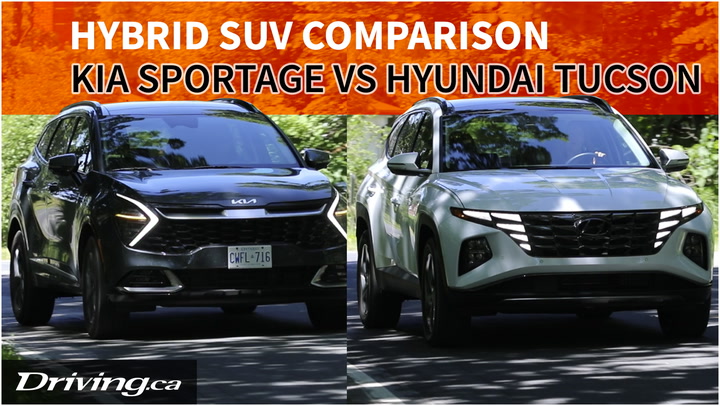
The modern hybrid crossover battlefield is heating up, and two titans stand poised to rewrite the rules of fuel efficiency. The Kia Sportage Hybrid and Hyundai Tucson Hybrid aren’t just siblings in spirit—they’re direct descendants of the same evolutionary tree, each vying to claim the crown of the most frugal family hauler. But here’s the twist: while both promise remarkable MPG numbers, the real question isn’t *if* they can sip fuel like a fine wine, but *how* they go about it. And more importantly—can either one outmaneuver the other in the daily grind of stop-and-go traffic, highway cruising, or that dreaded school-run gauntlet? Buckle up. We’re about to dissect this hybrid showdown with the precision of a surgeon and the flair of a race commentator.

The Hybrid Heartbeat: What’s Pulsing Beneath the Hood?
At the core of this duel lies a shared genetic advantage: both the Sportage Hybrid and Tucson Hybrid are powered by a 1.6-liter turbocharged four-cylinder engine mated to a 6-speed dual-clutch transmission and an electric motor. But here’s where the plot thickens. The Sportage Hybrid delivers a combined 227 horsepower and a claimed 42 MPG in the city, while the Tucson Hybrid counters with 232 horsepower and a slightly more conservative 38 MPG city rating. Wait—more power but less efficiency? That’s the first wrinkle in our tale. It’s like showing up to a marathon with a jetpack… and then realizing you’re still expected to pace yourself.
The Sportage’s edge in MPG isn’t just happenstance. Kia’s engineers have fine-tuned the hybrid system to prioritize electric-only driving at low speeds, a boon for urban commuters dodging red lights and potholes. The Tucson, while no slouch, leans slightly more on the gasoline engine during acceleration, which can translate to higher fuel consumption in stop-and-go scenarios. But don’t count the Tucson out just yet—its hybrid battery is slightly larger, offering a bit more electric-only range on paper. It’s a classic case of quantity versus efficiency, where one sibling hoards more toys while the other plays smarter.
Real-World Cruising: When the Rubber Meets the Road
Now, let’s talk about the elephant in the room: real-world MPG rarely aligns with EPA estimates. Your daily commute isn’t a lab. It’s a symphony of traffic jams, detours, and that one aggressive driver who treats every green light like the Indy 500. In mixed driving conditions—think 60% city, 40% highway—the Sportage Hybrid often edges ahead, returning figures closer to 38–40 MPG, while the Tucson Hybrid hovers around 35–37 MPG. But here’s the kicker: on long highway stretches, the Tucson’s slightly larger battery allows it to coast more frequently on electric power, especially when cruising at steady speeds. It’s the tortoise and hare scenario in hybrid form.
What about towing? Both vehicles can handle light loads, but neither is a heavy-duty workhorse. The Sportage tops out at 2,000 pounds, while the Tucson manages 2,200. If you’re hauling a small trailer or a couple of jet skis, the Tucson’s extra muscle might give it a slight advantage. But let’s be real—if you’re towing regularly, you’re probably not chasing MPG records anyway.
The Tech Tussle: Who’s Got the Smarter Hybrid Brain?
Both crossovers come equipped with regenerative braking systems, but Kia’s setup allows for adjustable levels of energy recapture—something the Tucson lacks. Want to maximize energy recovery during downhill coasts? The Sportage lets you toggle between D (Drive), B (Brake), and even a pseudo-manual mode that mimics paddle shifters. It’s like giving your hybrid a PhD in energy conservation. The Tucson, while still efficient, plays it safe with a more conventional regenerative system, which may feel less engaging to enthusiasts.
Then there’s the driving experience. The Sportage Hybrid’s dual-clutch transmission is quick and responsive, but it can feel a bit jerky in slow traffic. The Tucson, with its more refined tuning, offers a smoother ride, especially on uneven pavement. It’s the difference between a sprinter and a marathoner—one excels in bursts of speed, the other in endurance. And let’s not forget the interior ambiance. The Sportage leans into a sportier, more angular design, while the Tucson favors a softer, more premium aesthetic. It’s not just about MPG; it’s about how the journey *feels*.
Cost and Convenience: The Hidden Fuel for the Hybrid War
Let’s talk dollars and sense. The Sportage Hybrid starts at around $32,000, while the Tucson Hybrid begins near $35,000. That’s a $3,000 premium for the Tucson, which may or may not be justified depending on your priorities. Factor in potential tax credits (both qualify for federal incentives, though amounts vary by state), and the gap narrows. But here’s the real wildcard: resale value. Hyundais have historically held their value better than Kias, which could offset the initial price difference over time. It’s a gamble, but one worth considering if you plan to keep your crossover for the long haul.
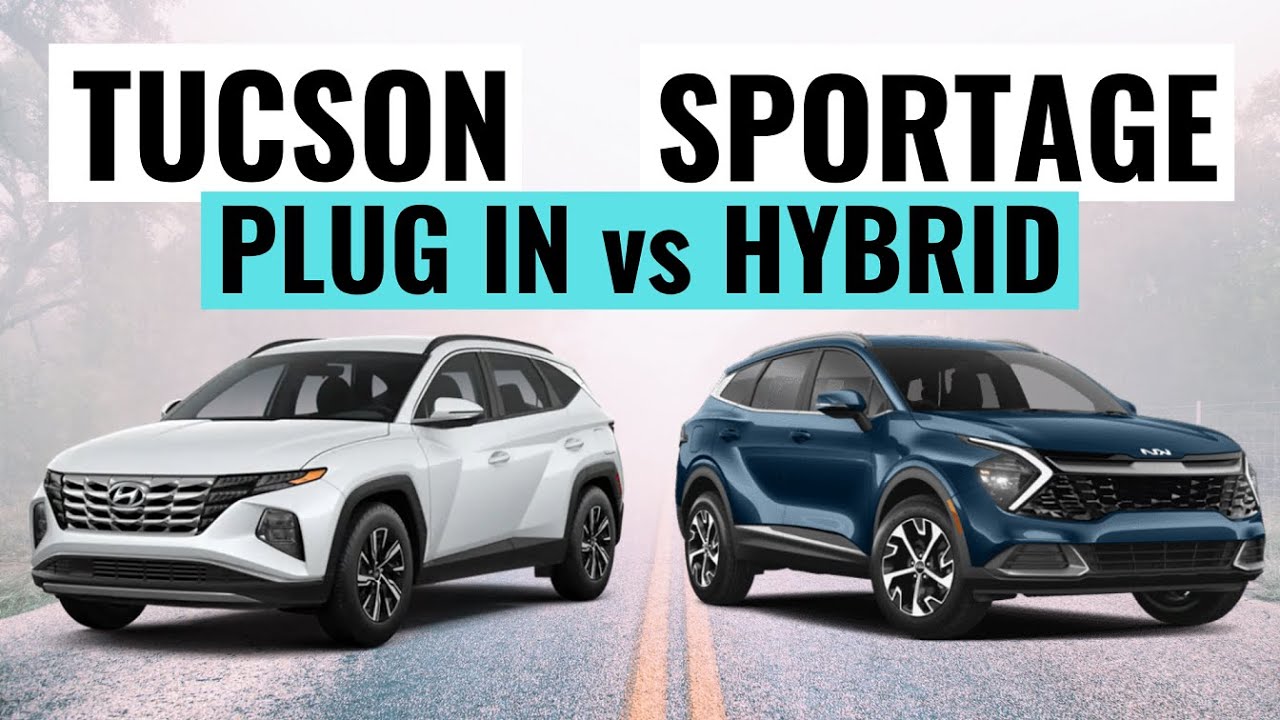
Then there’s the matter of charging. Both vehicles are self-charging hybrids, meaning you don’t need to plug them in. But if you’re curious about plug-in potential, the Tucson offers a Plug-In Hybrid variant with a larger battery and an EPA-estimated 60 MPG combined. The Sportage, for now, sticks to the traditional hybrid route. It’s a classic case of specialization—one sibling plays the long game, while the other keeps its options open.
The Verdict: Who Wins the MPG Marathon?
So, who emerges victorious in this hybrid showdown? The answer, as with most things in life, is: it depends. If your daily life is a whirlwind of city traffic, short hops, and errands that never seem to end, the Kia Sportage Hybrid’s superior city MPG and adjustable regenerative braking make it the clear frontrunner. It’s the crossover equivalent of a caffeine-fueled overachiever—always ready to sprint ahead when the lights turn green.
But if your commute is a mix of highway cruising and occasional long-distance jaunts, the Hyundai Tucson Hybrid’s blend of power, comfort, and highway efficiency gives it the edge. It’s the steady tortoise that outlasts the hare, especially when the road stretches endlessly before you. And let’s not forget the Tucson’s slightly larger battery, which offers a bit more electric-only range when you need it most.
Ultimately, the choice isn’t just about MPG—it’s about personality. Do you want a crossover that feels alive, responsive, and a little bit rebellious? The Sportage Hybrid is your partner in crime. Or do you prefer a refined, composed companion that excels in both comfort and efficiency? The Tucson Hybrid might just steal your heart.
One thing’s for sure: in a world where every gallon counts, both of these hybrids prove that you don’t have to sacrifice fun for frugality. They’re the proof that efficiency and excitement can coexist—like peanut butter and jelly, or a perfectly brewed cup of coffee. So, which side are you on? The Sportage’s quick reflexes or the Tucson’s steady hand? The battlefield is set. The hybrids are revving. It’s time to choose your champion.