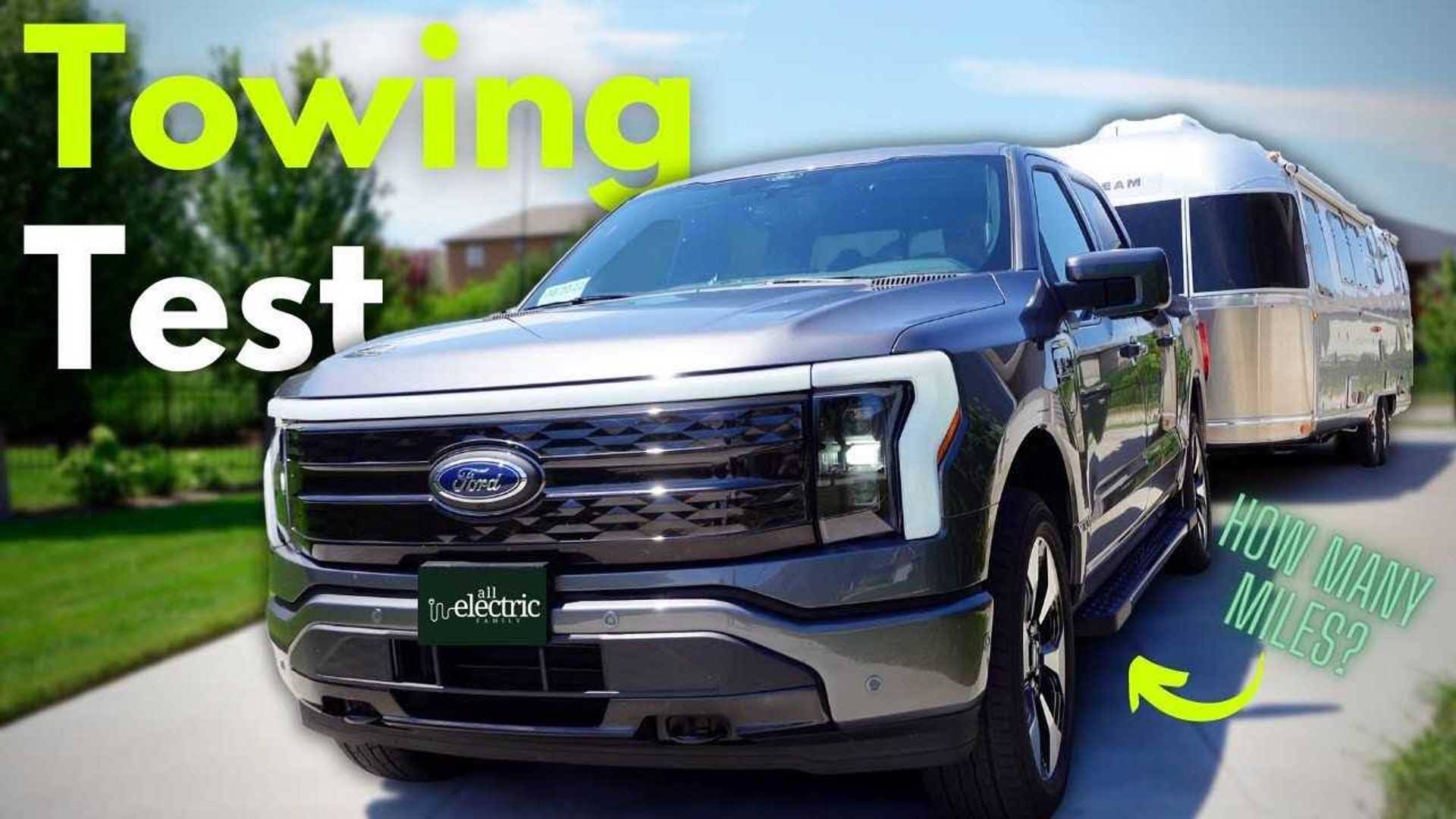
The first time you hook up a trailer, the world feels wider. Mirrors widen. Distances feel longer. Even the air seems thicker. The promise of the electric era, though, is not merely speed or silence—it’s consistency. With the Ford F-150 Lightning, the question shifts from “Can it tow?” to “How far can it go while towing, and how honestly does it manage expectations?” That’s where the towing-and-range narrative becomes more than a spec sheet. It becomes a weathered, real-world vignette: hills rise, headwinds intrude, and the battery answers back—sometimes with reassuring calm, sometimes with a pointed reminder that physics never negotiates.
This review leans into that tension. It invites a different perspective: not “How impressive is the truck on paper?” but “How trustable is it when you’re actually responsible for the journey?” The Lightning’s character is shaped by torque availability, regenerative behavior, and thermal management. But its true temperament reveals itself during the unromantic stretches—steady throttle, loaded grades, and the stop-and-go moments where energy is gained or surrendered.
Initial Impressions: A Truck That Reframes Towing
When the Lightning comes into view, it still looks like a full-size pickup with intent. Yet the moment you climb in, the sensation changes. The cabin quiets the usual drivetrain clatter, and that shift can be disorienting. You don’t hear the engine working; you feel the tug of acceleration arriving instantly, as if the truck has been waiting for your command. That immediacy matters when towing because throttle inputs become more delicate. A fraction too much is no longer a “soft mistake.” It’s an efficiency bruise.
Then there’s the mental recalibration. Conventional towing is often tied to engine rpm and gear selection. The Lightning operates on a different clock. Torque is instantly present, and the truck modulates output with control sophistication. That means the towing feel is confident—clean starts, predictable pull, and fewer mechanical theatrics. Still, the battery’s response is the heartbeat you learn to respect.
Trailer Setup and Tow Readiness: Making the System Behave
Before range can be discussed meaningfully, the towing apparatus must be properly configured. The Lightning’s trailer electronics bring a sense of order. Hitching up is straightforward, and once connected, the truck treats the trailer like a deliberate extension of the vehicle rather than an afterthought.
Pay attention to brake controller behavior and power delivery. A well-matched setup reduces the “effort” the truck expends to stay stable. When sway control and braking coordination work as intended, confidence rises. Confidence is important because towing range isn’t only about consumption—it’s also about driving style under pressure.
One often-overlooked aspect is how quickly you establish a rhythm. If you accelerate aggressively out of stops to “get back to speed,” you may feel fast, but the battery won’t share that sentiment. The Lightning’s best towing posture is composed and deliberate, with smoother ramping and an anticipation of slowing zones.
Powertrain Behavior Under Load: Torque, Control, and Consequence
The Lightning’s electric propulsion is, in towing terms, almost ruthlessly capable. It doesn’t need to “find” torque; it is torque. Climbing a grade becomes less about waiting for the engine and more about modulating how much power you demand. That’s the emotional upside: the truck rarely feels underpowered. It simply asks, quietly but firmly, for efficiency tradeoffs.
At highway speeds, aerodynamic drag dominates. A trailer turns the air into a stubborn adversary. Even with robust torque, the truck can’t outrun drag with sheer enthusiasm. You can feel this in sustained cruising: the battery works consistently to maintain speed, and consumption becomes a function of wind, temperature, and speed steadiness.
Regenerative braking adds another layer of nuance. On descents, energy recovery can soften the blow of earlier heavy throttle. But regeneration has limits. The faster you drive, the more you demand, and the less time you have to harvest energy during deceleration. The Lightning rewards anticipation; it punishes late braking.
Range Test Methodology: The Real Question Is How You Use It
Range testing is where perspective becomes essential. You can’t treat towing range like a laboratory measurement. A towing run is a chain of variables: speed changes, grade transitions, stop frequency, and even how often you second-guess route choices. The useful takeaway is not just the final number—it’s the pattern of consumption.
When you begin towing with a full battery, the first segment often feels surprisingly optimistic. Efficiency declines as the system settles into load conditions. Then, the truck enters a more disciplined mode: maintaining speed with careful thermal regulation and power management.
As the route introduces elevation, the narrative thickens. Climbing consumes energy quickly, while descending recovers less than many drivers hope. The gap between “recovery” and “consumption” is where range reality lives.
Real-World Towing Performance: The Drive That Builds Trust
On the road, the Lightning doesn’t feel like it’s dragging. It feels like it’s integrating the trailer into its movement. That integration is a major part of why electric towing feels different. The truck stays stable, steering response is composed, and acceleration remains confident—even when you ask for it mid-grade.
But stability doesn’t eliminate consequence. With a loaded trailer, efficiency becomes more sensitive to speed. The truck can move quickly, yet the battery becomes more “transparent” in its demands. You may notice how the indicated range can shift in a hurry after high-power moments. That’s not a flaw; it’s a real-time dialogue between your decisions and the battery’s willingness to continue.
One of the most intriguing moments comes after a long stretch of effort. The regenerative braking events—especially with smooth deceleration—can bring a modest buoyancy to the remaining range. It feels like the truck is briefly exhaling.
Charging Strategy While Towing: Planning Beats Hope
Charging while towing is not merely a convenience—it’s a discipline. The Lightning’s fast-charging capability can be compelling, but towing changes the equation. Battery temperature management matters, and the power you can draw may vary based on conditions.
To make charging feel predictable, the route plan must be intentional. Instead of chasing the “minimum required” number of miles, build a buffer. Stops that align with charging constraints create a smoother experience. Waiting until the battery is nearly spent under heavy load can turn a trip into an anxious negotiation.
Charging sessions also have an emotional rhythm. While the truck may fill energy quickly, the best strategy avoids long, speculative pauses. Think of charging as scheduled reprieve: short enough to maintain momentum, frequent enough to keep the battery in a favorable zone.
Efficiency Levers: How to Get More From the Same Battery
If towing range feels tight, it’s rarely because the Lightning can’t do it. It’s because efficiency is a system, and you can influence the system. Speed is the loudest lever. Even a small increase can produce a disproportionate consumption shift at highway loads, due to aerodynamic drag.
Next comes throttle modulation. Gentle acceleration reduces peak power draw and keeps energy demand within a more efficient operating band. Steering clear of aggressive passing maneuvers helps, too—not for comfort, but for the energy bill.
Finally, use regeneration strategically. Don’t treat deceleration as something to tolerate. Treat it as an opportunity to re-harvest energy. The truck’s behavior becomes almost educational when you drive with foresight: you learn where to ease off, when to coast, and when to let the system recapture.
Comfort, Handling, and Driver Confidence: A Towing Companion
Even under load, the Lightning maintains a driver-focused composure. The cabin remains calm. The steering feels steady, and the truck communicates its limits without dramatics. That matters when towing because fatigue comes from constant vigilance.
Visibility and mirrors play a role, especially during lane changes and merges where trailer length demands precision. The Lightning’s interface and driver assistance help reduce workload. Yet the emotional core is simpler: when the truck feels stable, you drive smoother, and smoother driving extends range.
Where It Excels—and Where to Be Honest
The Lightning excels when towing is frequent enough to justify planning but not so chaotic that charging logistics become impossible. It shines on routes where charging stops are foreseeable and where driving style can remain steady. Its electric torque makes it feel capable on grades, and its integrated towing systems enhance confidence.
Still, honesty is essential. Towing range is not unlimited, and heavy trailers don’t politely ignore aerodynamics. High speeds, headwinds, and frequent acceleration can compress the remaining battery reserve faster than you expect. If you approach towing as a set of assumptions—“it should be fine”—the truck will eventually correct the story.
Final Verdict: A New Kind of Towing Confidence
The Ford F-150 Lightning doesn’t ask you to change everything. It asks you to change how you perceive energy. Instead of treating range as a static promise, it becomes a dynamic narrative shaped by speed, terrain, and throttle discipline. The towing-and-range test underscores a central truth: the truck can tow with authority, and the experience feels modern and composed. Yet it also rewards planning with almost gratifying clarity.
When you accept that electric towing is less about brute endurance and more about intelligent pacing, the Lightning turns into a surprisingly dependable partner. It doesn’t merely carry a trailer; it carries your intent. And when you drive with that intent—steady, anticipatory, and prepared—the journey stops feeling like a gamble and starts feeling like a well-choreographed exchange between power and restraint.