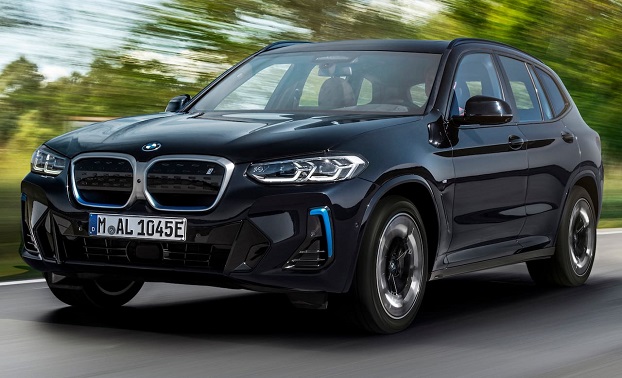
What does it feel like to drive a coupé that wakes up quietly—without the throat-clear of an engine, without the drama of shifting gears? Imagine a car that glides forward like a thought, yet lands with the confidence of a Grand Tourer. Meet the BMW i4, an electric gran coupé that tries to answer a deceptively playful question: Can electrification keep its soul, or does it simply swap the soundtrack? Then comes the potential challenge—one many buyers will recognize instantly. How do you enjoy instant torque and silky efficiency while still expecting everyday practicality, long-trip composure, and charging logistics that don’t feel like a chore?
The i4 doesn’t approach these questions like a checklist. It approaches them like a personality. Even at rest, it hints at momentum. The silhouette is purposeful, the proportions deliberate, and the stance has that unmistakable BMW clarity—sharp but not stiff. Step closer, and the details read like a conversation between technology and taste: aerodynamic restraint, purposeful surfaces, and the kind of design discipline that makes you look twice, then again.
Electric Gran Coupé Identity: The i4’s Design Philosophy
The BMW i4 wears its “gran coupé” role with conviction. It’s not trying to masquerade as something it isn’t. The fastback roofline flows into a rear that feels sculpted rather than assembled. Lines sweep with intention, and the front end carries a signature BMW presence—refined, bold, and unmistakably modern.
One of the most compelling parts of this design is how it balances sportiness with restraint. The i4 doesn’t shout. It suggests. That’s the strange magic of a well-done aerodynamic shape: it looks like speed even when you’re barely moving. And in an electric car, where silence can make motion feel unreal, that visual suggestion becomes a form of reassurance.
Cabin Atmosphere: Comfort, Tech, and a Touch of Theatrical Calm
Inside, the i4 aims for a cockpit-like experience without trapping you in a cockpit. The driver’s area feels arranged for focus—buttons and controls make sense, and the overall layout supports intuitive movement. Materials are chosen to feel substantial, not flimsy. Surfaces appear smooth, and the cabin mood tends toward calm competence.
Technology is present in a way that feels integrated rather than intrusive. The interface supports the driver with clarity, and the cabin’s ambient feel makes long drives less exhausting. Short trips still feel satisfying, because the car is quick to respond and the ergonomics work with you, not against you.
But here’s the playful tension: in a quiet electric cabin, every sound becomes more noticeable. Road texture, tire behavior, and wind noise can either become soothing background ambience—or suddenly feel like they’re paying attention. The i4 generally keeps things composed, yet the challenge for some drivers is learning to listen for the details the engine used to mask.
Performance and Drive Feel: Instant Torque Meets BMW Poise
The i4’s electric power delivers that familiar sensation—push the accelerator, and the car responds with a kind of immediacy that feels almost mischievous. This isn’t torque that arrives slowly like a polite guest. It’s torque that shows up early, stands near the center of the room, and gently insists that you’re going to have fun.
BMW doesn’t abandon the traditional driving character in the shift to electric. Steering feel remains communicative. The chassis is tuned for balance, and the car tends to behave predictably when you ask for spirited cornering. Weight distribution is part of the story, and so is the tuning philosophy—there’s effort put into making the i4 feel agile rather than merely quick.
Still, performance is only half the equation. Electric power can encourage habits. The i4 tempts you to drive harder than you planned. That’s fun—until range calculations start looking less “optimistic” and more realistic. A potential challenge appears when you realize that playful driving can be range-hungry in a way that gasoline owners rarely notice.
Ride Quality and Handling: When Silence Meets Suspension Discipline
Ride quality is where the i4 earns trust. The suspension works to smooth out irregularities, and the cabin remains settled through typical city interruptions—potholes, patched roads, and the kind of stop-start driving that turns a commute into a test.
On faster stretches, the i4 feels composed, and it holds its composure during changes in road elevation. There’s a sense of stability that makes you feel confident, as if the car is quietly forecasting your next move.
The challenge is subtle: electric cars often reveal imperfections more honestly because there’s no engine vibration to distract you. If your roads are rough, you’ll feel more. If your roads are well-kept, the i4’s smoothness can feel downright luxurious.
Range, Efficiency, and the Reality of Everyday Use
Range is the electric car’s headline topic, and the i4 does its best to make the conversation practical rather than speculative. Efficiency comes from aerodynamic design and electric drivetrain refinement, and the car’s real-world behavior tends to reward steady driving.
City driving can be especially kind to electric efficiency. Regenerative braking helps slow the car while recovering energy, turning everyday deceleration into a form of energy recycling. On highways, the story shifts toward speed management. Faster cruising increases energy consumption, as physics always has the final word.
Here’s the potential challenge framed in plain language: you may need to recalibrate your expectations. Instead of “tank-to-tank” thinking, it becomes “charge-to-charge” planning. That can feel empowering—like you’re orchestrating your trip—or it can feel restrictive, particularly on days with unpredictable schedules.
Charging Experience: Convenience, Planning, and a Bit of Strategy
Charging is where ownership becomes a daily ritual rather than a periodic event. The i4 benefits from modern charging options, and having access to convenient charging—at home or via reliable public stations—can transform the experience from mildly stressful to genuinely effortless.
Home charging is often the easiest path. Plug in, wake up, repeat. It’s routine-friendly. Public charging is where strategy matters. Queue times, station reliability, connector availability, and charging speed variations can introduce a learning curve.
And that brings back the earlier playful challenge: will you enjoy the choreography of charging, or will it feel like an obstacle? The i4 can make charging manageable, but the experience ultimately depends on the ecosystem around you.
Safety, Driver Support, and Confidence on the Road
BMW’s approach to safety emphasizes both structure and assistance. The i4’s driver support features help reduce fatigue and improve confidence in traffic. Adaptive systems can assist with maintaining speed and distance, while lane guidance adds a layer of reassurance during long stretches.
However, driver assistance is not autopilot fairy dust. It’s meant to support attention, not replace it. The challenge for some owners is adopting the right mental model: treat assistance as a helpful co-pilot, not a substitute for awareness.
In practice, when these features are correctly used, they make commutes smoother and longer drives less taxing. The car feels intent on reducing strain, not merely delivering speed.
Practicality: Seating, Storage, and the Gran Coupé Compromise
As a gran coupé, the i4 isn’t trying to be a boxy utility vehicle. It’s shaped to look aerodynamic and sporty, and that naturally influences storage and rear-seat ergonomics.
Still, it remains usable for daily life. Front space is comfortable and supportive. Rear seats can work for short to medium trips, and the cabin layout helps keep the feel airy rather than cramped. Trunk capacity is sufficient for typical errands, weekend bags, and the everyday items that define real ownership.
The challenge is balance: you may gain style and aerodynamic grace, but you give up some of the flexibility that taller vehicles offer. It’s a trade you’ll understand quickly once you start packing.
Ownership Experience: Costs, Maintenance Mindset, and Long-Term Appeal
Owning an electric BMW changes your maintenance mindset. With fewer moving parts in the drivetrain, many routine tasks shift away from traditional engine-centric service patterns. That can reduce complexity over time.
Then there’s the cost ecosystem: electricity pricing, charging station fees, and potential incentives can meaningfully affect total ownership costs. Your experience may be favorable if home charging is available and affordable.
Yet electric ownership has its own challenges—software updates, battery care habits, and the importance of charging infrastructure. The i4’s appeal is strongest when you’re willing to embrace the electric rhythm.
Verdict: A Quiet Coupé With a Loud Personality
The BMW i4 is electric gran coupé brilliance wrapped in BMW poise. It offers a confident design, a comfortable cabin, and a driving experience that stays engaging even without the traditional engine theatrics. Its efficiency and performance create a sense of momentum you can feel instantly.
But the question lingers in the background, playful and persistent: can you accept the trade-offs that come with electrification? If you have reliable charging access and you’re ready to plan around charge intervals, the i4 can feel effortless in daily life. If charging logistics feel uncertain, the i4’s charm may come with a little added friction.
In the end, the i4 doesn’t just ask you to drive it—it asks you to rethink how the journey unfolds. And once you learn its rhythm, that silence becomes more than absence. It becomes presence.