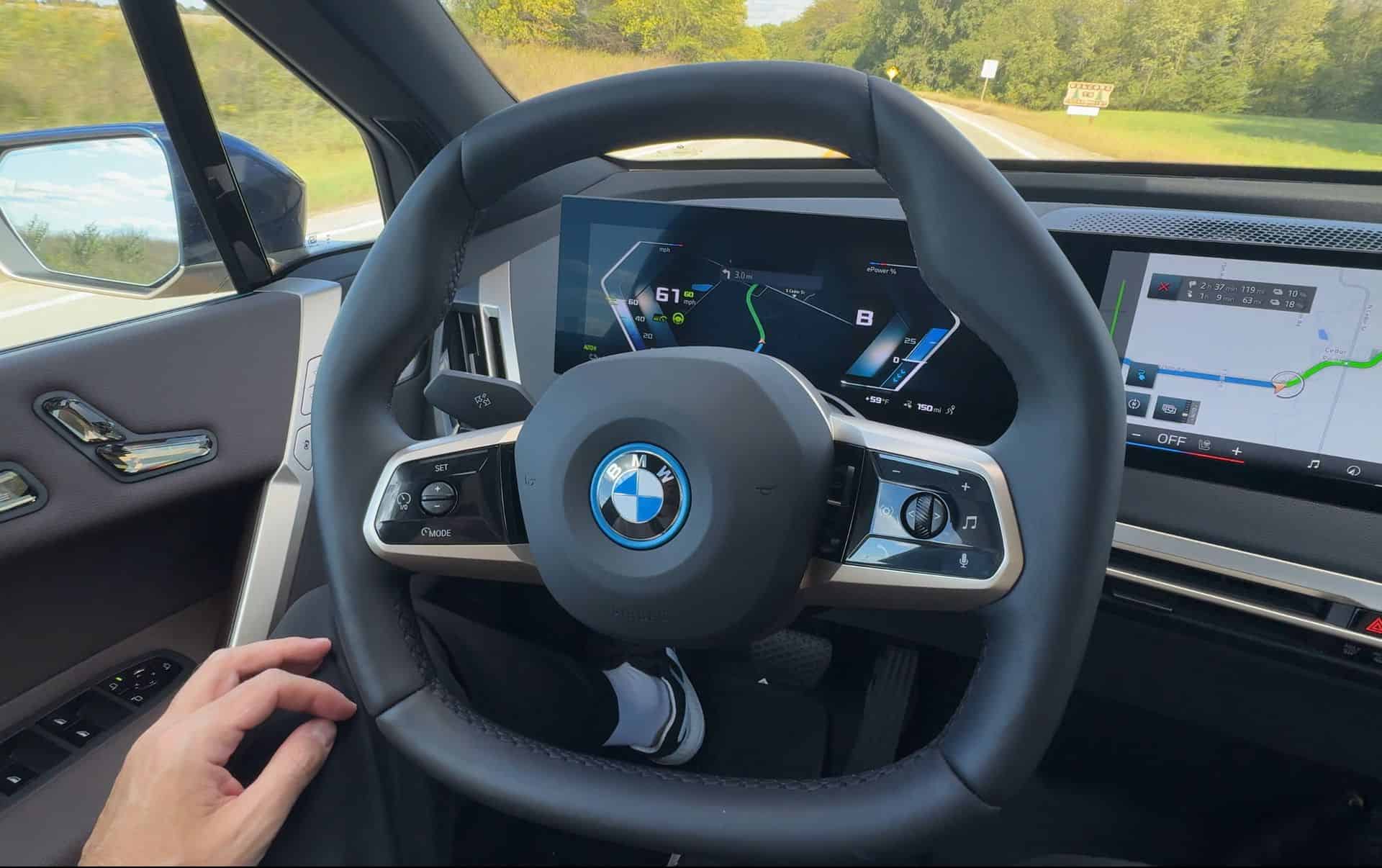
The first time you experience the BMW Highway Assistant, it feels less like adopting a feature and more like entering a new rhythm of travel. The road stops demanding constant attention and begins offering choreography—lane, speed, and spacing shifting with a calm precision. It’s hands-free driving as a kind of cinematic editing: the driver remains present, but the scene moves with steady intent.
Think of the highway as a long, luminous river. Most drivers are paddlers, correcting the current with every stroke. The Highway Assistant, however, becomes a river guide—quietly adjusting the boat’s angle, maintaining distance, and helping you glide through the stream. The appeal isn’t simply convenience. It’s the way the system transforms stress into a more spacious awareness of the journey ahead.
Still, no technology deserves worship. The true test is how gracefully it handles complexity—construction zones, variable traffic density, and the subtle human unpredictability that lives inside every commute.
What the Highway Assistant Really Does: A Digital Co-Pilot for the Straight and Narrow
The Highway Assistant is designed for driving scenarios where the road behaves like a disciplined script: multi-lane highways, clear lane markings, and predictable traffic flow. In those conditions, the system assumes a supportive role—helping with lateral guidance and longitudinal control so the vehicle can stay centered and maintain an appropriate pace.
Picture a conductor holding two batons at once: one for lateral placement, another for speed moderation. The driver is not erased from the orchestra. Instead, the driver becomes the observer of the performance—keeping readiness, watching the environment, and staying prepared to retake authority instantly.
With the right configuration and consistent infrastructure, the assistant reduces the mental load that typically accumulates over long stretches. Your hands may remain off the wheel, but your attention should remain on the road. The system is a steward, not a sovereign.
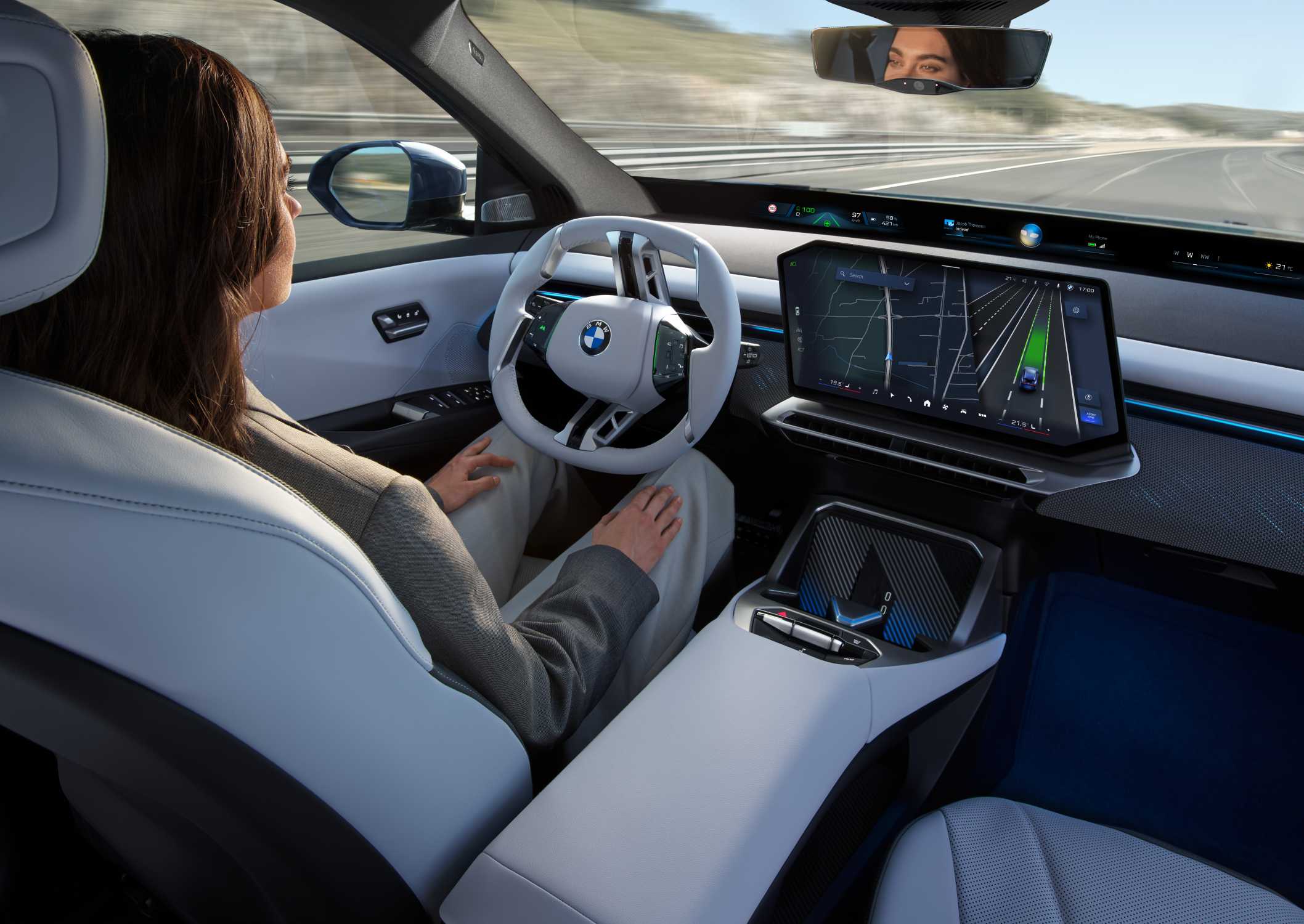
“Hands-Free” in Practice: Where Calm Meets Responsibility
Hands-free driving has a particular psychological effect. It loosens the grip that most people instinctively keep on steering inputs during freeway travel. But the best experiences come when the transition feels intuitive—when the car’s behavior is smooth enough that your confidence isn’t brittle.
BMW’s approach emphasizes continuity. Acceleration and deceleration tend to feel blended rather than abrupt. Lane centering aims to be gentle, reducing the sensation of being jerked from correction to correction. Short sentences help here: it’s steady. It’s composed. It’s remarkably unhurried.
Yet the driver’s role remains active. The system’s authority is conditional, and conditions can shift fast—poor lane visibility, sudden merges, or weather that blurs boundaries. Hands-free is not a vacation from vigilance. It’s a different distribution of effort.
Traffic Adaptation: Following Like a Shadow, Not a Hammer
Most highways are not empty stages. They’re crowded ecosystems. The Highway Assistant must handle the spacing dance between vehicles—maintaining distance, responding to braking in adjacent lanes, and adjusting speed when traffic compresses and expands.
One metaphor fits particularly well: the car becomes a well-trained heron stalking along a riverbank. It moves with measured patience, never lunging, never hesitating excessively. When the leading vehicle slows, the BMW follows with restraint—seeking compliance rather than aggression.
In stop-and-go situations, the experience can feel like an elastic band. The vehicle stretches the gap slightly, then relaxes it as flow returns. The system’s ability to smooth those transitions is often what separates a “technically capable” feature from a genuinely relaxing companion.
Lane Guidance and Comfort: Centering Without the Jolt
Lateral control is where the human brain becomes most sensitive. Even a small wobble can trigger alarm. A great highway assistant therefore doesn’t only “stay in lane.” It must also communicate stability through motion quality—how the car drifts, how it corrects, and how it re-centers after curves.
When lane markings are crisp and the environment is cooperative, the vehicle can track the centerline with a composure that feels almost effortless. Short-lived corrections should look like micro-adjustments rather than mechanical wrestling.
Longer highway arcs become a test of confidence. The better the system, the less you feel like you’re riding on top of algorithms. You feel like you’re riding on top of physics—smooth, predictable, and aligned with the road’s intent.
How It Handles Complexity: Merges, Curvature, and the Unexpected
The highway is full of interruptions: a driver cutting in half a lane, a sudden slowdown from the far shoulder, a construction flare where lane markings thin out like fading ink. A robust assistant doesn’t panic in those moments. It adapts—or it disengages responsibly—so the transition back to the driver is clear.
Curvature matters too. Entering and exiting bends requires the system to interpret the road geometry while maintaining safe spacing. When curvature is moderate and markings are consistent, the assistant often feels surprisingly natural. When the environment becomes ambiguous, the system’s behavior should become more conservative, prompting the driver to take over.
This is where the unique appeal emerges. The assistant doesn’t promise omniscience. It offers assistance that respects uncertainty.

Driver Experience: The Subtle Shift From Control to Oversight
Driving normally is a loop of inputs and corrections. With the Highway Assistant, the loop becomes monitoring. Your posture may change. Your attention becomes more panoramic—rearview mirrors, lane boundaries, and the rhythm of surrounding vehicles.
It’s a different kind of engagement, like switching from playing an instrument to conducting an ensemble. You are still responsible, but the vehicle performs a larger portion of the mechanical labor. The steering effort becomes optional rather than mandatory.
Long trips gain special significance here. Fatigue is not only physical. It’s cognitive. By reducing repetitive steering and speed management, the system can help preserve focus for the moments that truly require human judgment—exits, complex interchanges, and any situation where road clarity fails.
Safety Boundaries: When Assistance Should Become a Reminder
No review of hands-free driving is complete without acknowledging boundaries. The Highway Assistant operates best under specific conditions. Lane markings, lighting, and road design influence performance. Weather can turn certainty into guesswork. And guesswork is not where safety should be negotiated.
Disengagement behavior is therefore crucial. A trustworthy system should transition in a way that is both timely and comprehensible. You should feel the shift—like a sail catching wind—rather than stumbling into it. That clarity is part of the premium experience.
Ultimately, the assistant works best when the driver treats it as an intelligent assistant: supportive, attentive, but never entirely unaccountable.
Unique Appeal: The Highway Assistant as a Technology of Trust
The most intriguing aspect of the Highway Assistant isn’t spectacle. It’s trust, earned through consistency. The system’s value becomes most visible during ordinary drives—commutes, errands, and late-night highways when monotony tries to steal your attention.
Instead of forcing you into constant corrections, it offers an atmosphere of steadiness. The road feels like it’s being smoothed under the tires, the way a photograph sharpens as the focus ring turns. You experience fewer micro-stresses. You notice the journey more.
And that’s why it stands out. It doesn’t only automate driving. It rebalances the relationship between people and machines, turning a task into an experience.
Conclusion: A New Kind of Highway Presence
The BMW Highway Assistant delivers hands-free driving that feels less like surrender and more like collaboration. When conditions cooperate—clear lanes, stable traffic, cooperative weather—it can create a calm, composed flow that makes the highway seem briefly tame. Not perfect. Not magical. But genuinely easier to inhabit.
So the review’s final image is not of a car that drives itself. It’s of a car that helps you drive with less strain, more awareness, and a steadier sense of direction. The highway becomes a corridor of continuity, and your role shifts from constant control to confident oversight—an evolution worth paying attention to.