The question “Which SUV is safest?” sounds straightforward—until you start asking what “safe” truly means in real-world driving. It’s not only about avoiding collisions. It’s about how a vehicle behaves in those split-second moments when physics takes the steering wheel, when visibility narrows, when metal, glass, and human intent are forced into the same story. With the 2026 model year approaching, the safest 2026 Chevrolet SUVs are increasingly defined by how they perform under rigorous crash testing and by the calm confidence their driver-assistance systems are designed to deliver. And here’s the twist: the most interesting safety conversations rarely begin with numbers. They begin with perspective—how you think about risk, how quickly the car understands danger, and how compassionously it protects people when outcomes can’t be fully controlled.
Let’s walk into that shift in perspective—one where safety is not a vague promise, but a tangible choreography of engineering decisions. Then we’ll circle back to what matters most when you’re choosing a Chevrolet SUV for 2026: IIHS-style safety credibility, crashworthiness, occupant protection, and the everyday technologies that make you feel less alone on the road.
Why IIHS Ratings Feel Different Than Basic Safety Labels
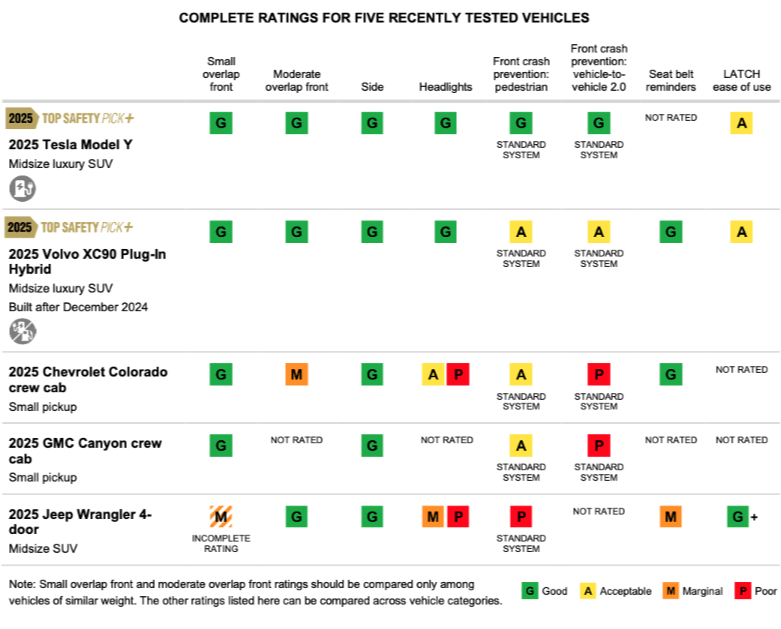
Most safety conversations live on the surface: “It has airbags,” “It has lane assist,” “It got a decent score.” Those details matter, of course. But IIHS ratings tend to change the emotional temperature of the discussion. They ask a harder question: How does the vehicle protect occupants across a variety of realistic and consequential crash scenarios?

That’s where your perspective begins to flip. Instead of assuming safety is a single attribute, you start seeing it as a portfolio. A vehicle might be strong in one category yet less convincing in another. IIHS-style evaluation reframes safety as robustness—how well the structure holds, how restraints manage movement, and how systems perform when “normal” driving becomes “incident mode.”
Crashworthiness: The Foundation of “Safest”
When people picture car safety, they often imagine what happens after impact—airbags, seatbelts, emergency response. But the most consequential work occurs before the crash fully concludes. The SUV’s structure must absorb and redirect energy rather than simply surrender to it.
In practice, crashworthiness involves multiple layers of engineering. Reinforced cabin geometry helps maintain occupant space. Energy-management zones can reduce sudden deceleration spikes. Door beams and roof structures play a quiet but vital role in preserving survival space. And restraint systems—seatbelts, pretensioners, and airbag deployment strategies—coordinate to keep occupants from becoming secondary projectiles.
If you’re evaluating the safest 2026 Chevrolet SUVs, this is the axis that deserves the most attention. Not because driver-assistance features aren’t important, but because they’re anticipatory. Crashworthiness is grounded. It’s what you can trust when anticipation fails and impact becomes inevitable.
Occupant Protection: Protecting People, Not Just Parts
Safety ratings become meaningful when they address the full cast of a vehicle: front occupants, rear passengers, children in child seats, and occupants of different sizes. An SUV can look imposing and feel stable, yet still struggle to manage occupant dynamics in certain collisions.
The IIHS approach emphasizes protection across conditions that test how well the vehicle controls head and torso movement. This matters because the body doesn’t experience a crash as a single event; it experiences it as a rapid sequence. If restraint forces are mistimed or if the cabin allows excessive intrusion, the consequences can compound.
Here’s where curiosity should deepen. The “safest” SUV is not simply the one with the most airbags. It’s the one whose protection strategy is orchestrated—where seatbelts cinch at the right moment, where airbag deployments avoid unnecessary risk, and where the vehicle’s interior geometry guides occupants toward survivable outcomes.
Front-End and Side-Impact Performance: Where Confidence Is Earned
Front-end and side-impact tests often reveal whether a vehicle’s safety is truly coherent. The front end must manage head-on collisions with controlled deformation and reliable restraint effectiveness. Meanwhile, side impacts challenge the integrity of doors, pillars, and side curtain systems—areas that can be overlooked by buyers focused on engine performance or infotainment gloss.
Consider how a passenger might be positioned at the moment of impact: seat posture, seatbelt geometry, window and pillar alignment, and the proximity of occupants to vulnerable surfaces. Strong side-impact protection is less about “crumpling” and more about maintaining a protective shell. That protective shell is a promise you feel only when you need it, which is why it deserves to be part of your criteria even before you’re faced with the unexpected.
Driver Assistance vs. Real Safety: The Subtle Distinction
Driver-assistance technologies are often marketed as guardians. But the healthiest mindset is slightly more nuanced. Assistance systems aim to prevent crashes—through braking support, collision warnings, and lane-keeping aids. That makes them proactive, but not infallible.
The safest 2026 Chevrolet SUVs should be evaluated as a combined system: crashworthiness plus competent assistance. Crash protection becomes your final barrier when prevention doesn’t fully succeed. Assistance becomes your first line of defense when danger is still a forecast rather than a certainty.
And that’s the perspective shift. Instead of asking, “Does it have safety tech?” you ask, “How does the tech behave during uncertainty?” Does it react smoothly? Does it communicate clearly? Does it reduce the workload when attention is stretched by traffic, glare, rain, or fatigue?
Family Readiness: Visibility, Ergonomics, and Everyday Risk
Safety isn’t only about crash tests; it’s also about the daily friction points that increase risk. Family SUVs spend countless hours in parking lots, school drop-offs, highway commutes, and long stretches where driver attention becomes a finite resource.
Visibility is a quiet determinant. Better sightlines help drivers detect hazards earlier—pedestrians at crosswalks, vehicles merging from blind angles, and obstacles near the curb. Ergonomics matter too. Controls that are reachable without distraction, mirror placement that supports quick checks, and seat comfort that reduces fatigue all contribute to safer behavior over time.
In that context, the “safest” Chevrolet SUV becomes less of a trophy and more of a reliable routine—an everyday vehicle that reduces the likelihood of mistakes compounding into incidents.
Technology That Builds Trust: Alerts, Automation, and Clarity
When driver-assistance systems are implemented well, they don’t just prevent crashes—they reduce mental load. A good system speaks in a clear language: warnings that are timely and not exhausting, assistance that feels predictable, and alerts that match the severity of the moment.
This is where curiosity is practical. The “safest” vehicle doesn’t bombard you with noise. It prioritizes. It chooses. It helps you stay present, not overwhelmed.
For 2026 Chevrolet SUV buyers, this means looking beyond checklists and observing how systems interact: how they handle braking in emergencies, how lane support manages drift, how collision alerts are presented, and how features coordinate at highway speeds. The goal isn’t to outsource driving. The goal is to strengthen your margin for error.
Choosing the Safest 2026 Chevrolet SUV: A Checklist That Matters
If you want a methodical way to narrow your options, treat safety as a layered decision. Start with independent crash-performance credibility, then confirm that vehicle safety tech aligns with your driving habits.
Consider these questions as you compare trims and models:
1) How consistently does the vehicle perform across categories? Safety should be resilient, not lopsided.
2) Does the vehicle protect occupants across seating positions? Family use means rear-seat protection matters.
3) How does the cabin structure support survivable outcomes? Look for a vehicle design philosophy focused on rigidity and energy management.
4) Does the driver-assistance suite feel coherent? Alerts should be clear; interventions should be predictable.
5) Are features tailored to real scenarios you face? Commuting traffic, nighttime driving, school zones, rain, and highways each stress different aspects of safety.
Safety becomes less abstract when you map features to your life. The safest SUV is the one that matches your specific environment—and still holds up under independent scrutiny.
The Road Ahead: Why 2026 Feels Like a Turning Point
As vehicles evolve, the safest SUVs increasingly resemble protective systems rather than machines. They sense. They interpret. They prepare. But the real progress is in integration—how crashworthiness and assistance work together instead of competing for attention.
That’s why the safest 2026 Chevrolet SUVs invite a new kind of confidence. Confidence isn’t bravado. It’s competence you can measure, and protection you can count on. In a world full of marketing language, the most persuasive safety story is the one that holds up when conditions grow hostile.
Final Thoughts: Safety as a Promise You Can Feel
When you choose a Chevrolet SUV for 2026, you’re not only choosing a vehicle. You’re choosing how your family—or your everyday life—will be shielded when the unexpected arrives. The IIHS-oriented perspective helps transform safety from a general claim into a concrete standard: crashworthiness that protects the cabin, occupant protection that addresses real dynamics, and driver-assistance technology that helps you navigate the unpredictable.
In the end, the safest SUV isn’t the one that looks most confident in a parking lot. It’s the one that earns trust under pressure—then continues to earn it every day, quietly, through clarity, restraint, and resilience.