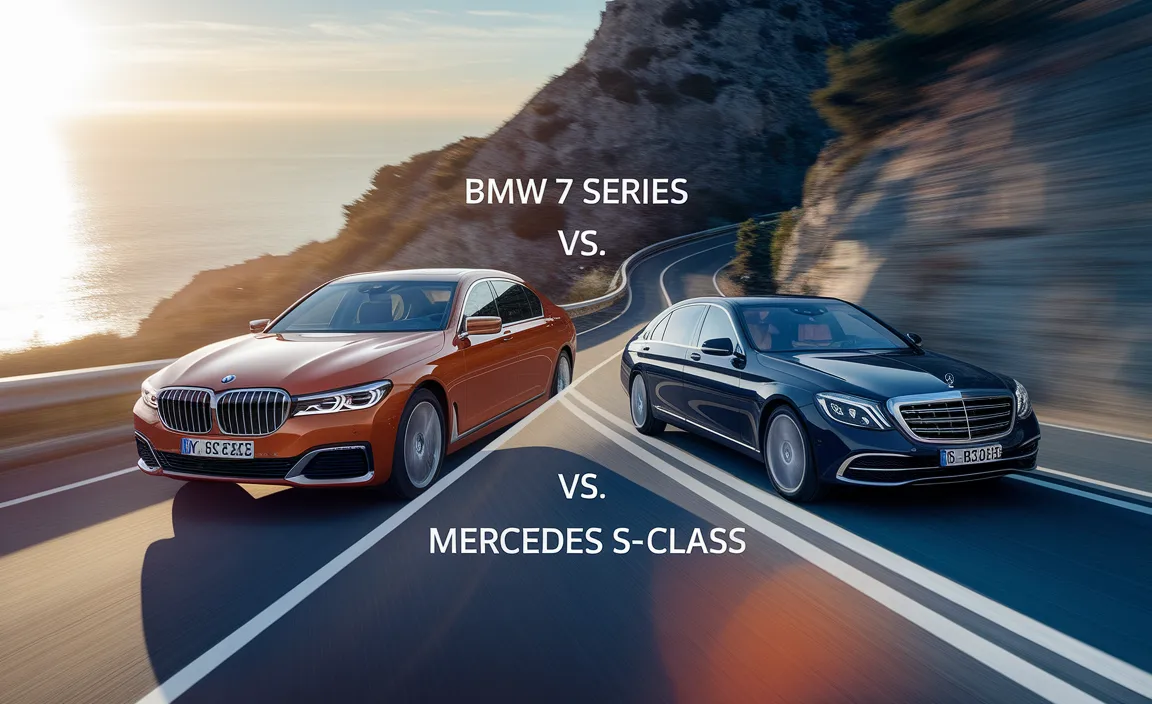
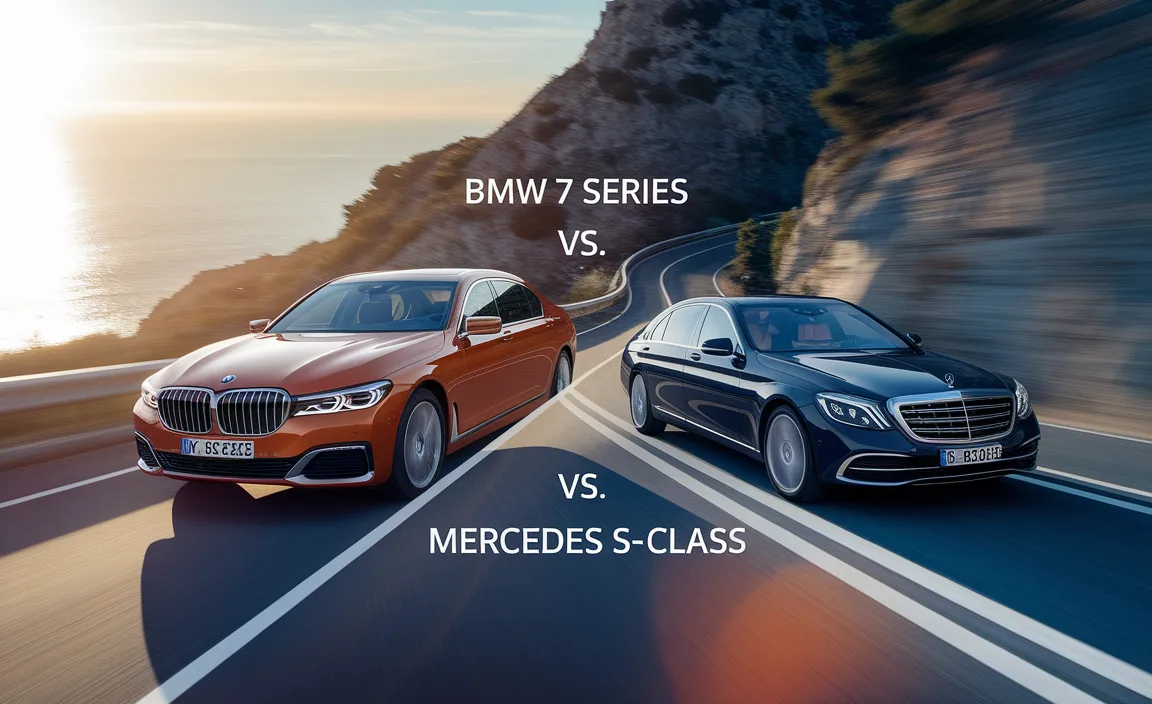
There’s a peculiar moment that plays out whenever the BMW 7 Series and Mercedes S-Class are placed side by side. It’s not merely a comparison of specifications; it’s a comparison of intent. Both are designed to be more than transportation—both are engineered to feel like a private room in motion, a moving declaration of taste. Yet the familiar observation arrives early: “They’re both flagships, so they’re basically the same.” That idea is tempting, especially from a distance where badge-swapping looks superficial and glossy photos flatten nuance. But step closer and the resemblance thins. The deeper reasons for fascination emerge—quietly at first, then unmistakably.
What follows is a flagship showdown told through the things drivers notice instinctively: how the cabin exhales, how the controls communicate, how each sedan treats silence, and how confidence is manufactured—one with Bavarian precision, the other with a distinctly southern German elegance of engineering and atmosphere. The result is two masterpieces that share a mission, yet diverge in philosophy.
Flagship by Purpose: Two Roads to the Same Destination
At the highest tier of luxury, the argument rarely begins with horsepower. It begins with psychology. The S-Class aims to soothe first and persuade second. The 7 Series aims to compose the experience with clarity, rhythm, and a driver-oriented logic—even when the car is at its most chauffeur-like.
The common misconception is that both simply compete to be “more comfortable” and “more powerful.” But comfort isn’t a single variable. It’s a philosophy of attention: what the car chooses to amplify, what it chooses to dampen, and what it decides you don’t need to think about. In that sense, the S-Class leans into an atmosphere that feels curated, almost theatrical in its calm. The 7 Series leans into poise—an effortless sense that every motion is anticipated, every surface tasked with reducing friction between you and the road.
Cabin Theater vs. Cabin Precision: Atmosphere and Ergonomics
One of the quickest differentiators is how each cabin “frames” your presence. The S-Class often feels like stepping into a lounge with intentional lighting cues—soft gradients, refined materials, and an interface that seems designed to disappear. Touchpoints are placed with the confidence of a company that understands the long pauses between decision and action.
The 7 Series, meanwhile, tends to feel more like a command center that also happens to be luxurious. Surfaces are arranged to support scanning and quick adjustments. The ergonomics can feel like a conversation: responsive, structured, and slightly more direct than the Mercedes approach. Even when the vehicle is being driven slowly—when speed is merely a rumor—the BMW communicates effortlessness through control layout and tactile feedback.
It’s tempting to call one “driver-focused” and the other “passenger-oriented,” but the deeper truth is subtler. Both cars are built to reduce cognitive load. They simply solve the problem with different personalities. One is a master of ambiance; the other is a master of orchestration.
Quiet as a Product: Noise, Isolation, and the Art of Silence
Luxury flagships don’t just aim for quiet—they aim for controlled silence. The difference shows up when you notice not only what you don’t hear, but how the cabin behaves when the outside world should be intruding: passing traffic, tire roar, wind chatter, and that faint sense of road texture.
The Mercedes S-Class typically leans into a serene soundscape. The cabin can feel cocooned, with sound attenuation engineered to prevent harshness from ever gaining momentum. The sensation is less “insulation” and more “curation.”
The BMW 7 Series often delivers quiet in a more mechanical way. You feel the car working to filter vibration and smooth transitions. The road becomes muted, but not hidden; the vehicle seems to maintain a kind of dignified clarity even while dampening noise. That distinction matters to people who notice everything. Silence is not just the absence of sound—it’s a texture, and each car paints it differently.
Digital Interface: Magic vs. Mastery
Modern flagships are living in the same timeline as smartphones, yet they remain automobiles—meaning the interface must not only be attractive, but also dependable under stress. A driver shouldn’t have to negotiate the car while merging, parking, or simply navigating rush-hour uncertainty.
The S-Class interface tends to cultivate a certain “calm intelligence.” Menus and functions feel like they were designed to reduce irritation. When voice control works in real-world conditions, it encourages spontaneity—less fiddling, more flow. The entire digital ecosystem can feel like a well-run hotel, delivering services with minimal friction.
The 7 Series often feels more like a system built for mastery. Menus can be structured in a way that appeals to methodical minds. The car invites engagement rather than merely accommodating it. And while both cars can be configured richly, the BMW’s digital experience can feel slightly more “technical,” slightly more direct. That difference is one reason enthusiasts remain loyal: not because the tech is flashier, but because it tends to reward familiarization.
Driving Dynamics: Effortless Power vs. Composed Authority
Both the S-Class and 7 Series can be quick—especially when equipped with powerful drivetrains and advanced transmission logic. But speed in a flagship isn’t the headline; it’s the method by which speed arrives.
The S-Class often delivers a sense of linear inevitability. Inputs feel digested and transformed into smooth progression. The car can feel like it’s gliding, not accelerating. That matters in stop-and-go traffic where refined torque delivery can reduce the sensation of strain—mechanical tasks turned into calm motion.
The 7 Series tends to feel more composed in the way it balances body control with responsiveness. Even when it’s not being driven aggressively, the chassis communicates readiness. The steering and suspension tuning can create an impression of connectedness that some luxury buyers crave. The fascination isn’t just that the car is fast. It’s that it feels intelligent while being fast.
Ride Comfort: Compliance, Not Softness
A common observation is that both cars are comfortable. True, but comfort has layers. There’s the surface-level softness—how the car treats small bumps—and there’s the deeper ability to manage larger irregularities: expansion joints, patched asphalt, and the kind of road that ruins lesser luxury sedans.
The Mercedes S-Class usually shines with a “gliding” ride character. Small imperfections can seem politely erased. Larger disturbances are often handled with an airy composure, keeping occupants feeling insulated from chaos.
The 7 Series frequently excels by balancing compliance with stability. It can feel cushioned without becoming vague. That’s an important distinction for long-distance driving: drivers want relaxation, yes, but also a confident sense that the car remains predictable when the road changes its tone.
In the end, both approaches are valid. The fascination lies in how subjective “comfort” becomes when you drive for hours and your body tells the truth.
Safety and Assistance: Confidence as a Design Feature
Flagships don’t just protect occupants; they protect attention. Driver-assistance systems are at their best when they reduce fatigue rather than create distraction. The best safety tech feels like a responsible co-pilot—present, not intrusive.
The S-Class typically emphasizes smooth, supportive interventions that prioritize predictability. Lane guidance and adaptive features often feel calibrated to preserve driver comfort. It’s safety designed to remain emotionally quiet.
The 7 Series often emphasizes responsiveness and clarity. The system’s behavior can feel more transparent, as if the car is explaining its intentions through consistent feedback. That difference can be meaningful for drivers who dislike surprises, even when those surprises are technically beneficial.
Technology for the Long Haul: Ownership Experience Matters
Luxury isn’t just the moment you press the start button. It’s the ownership arc: software updates, service planning, and the overall sense that the car will remain satisfying beyond the honeymoon period.
Both brands invest in connected services and in-car experiences that can evolve over time. Yet the deeper fascination is how each company frames “innovation.” Mercedes tends to treat the cabin experience as a living environment. BMW tends to treat it as a platform for coherent control. Either way, the goal is the same: keep the car feeling current without making it feel temperamental.
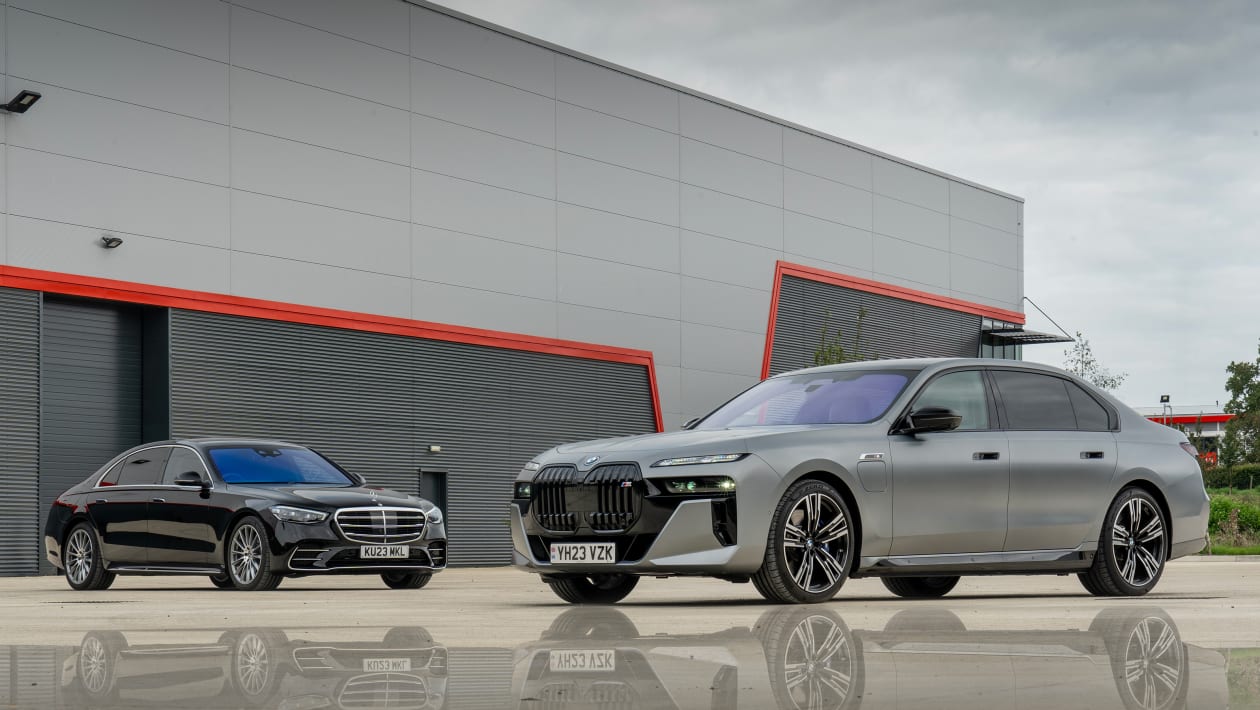
So Which One Wins? The Answer Depends on Your Definition of Luxury
If luxury means maximum serenity with a lounge-like atmosphere, the Mercedes S-Class has an undeniable gravitational pull. Its cabin often feels like it’s designed for emotional relief—less effort, more ease.
If luxury means composure with a subtle edge of driver involvement—if you want calm confidence without losing the feeling of direct control—the BMW 7 Series can feel more satisfying. It’s luxury that doesn’t just soothe; it organizes.
The real showdown isn’t which car has “more.” It’s which car aligns with your personal interpretation of refinement. That’s why people remain fascinated. These aren’t just two flagship sedans—they’re two interpretations of what it means to arrive.
Out of the Spotlight: Why the Fascination Lasts
The badges may carry the marketing, but the fascination persists because the cars communicate their identities through tiny details: the way sound fades into the background, the way the dashboard invites or ignores your attention, the way steering feel and suspension tuning create a sense of dignity. Every affluent buyer knows they’re paying for materials and performance. But the most compelling purchase decisions happen when the mind recognizes a pattern: a particular kind of calm, a particular kind of control, a particular kind of presence.
In the end, the BMW 7 Series vs Mercedes S-Class comparison is not about declaring a universal winner. It’s about discovering which philosophy of luxury feels more like home—only this home moves, glides, and impresses from the first mile onward.