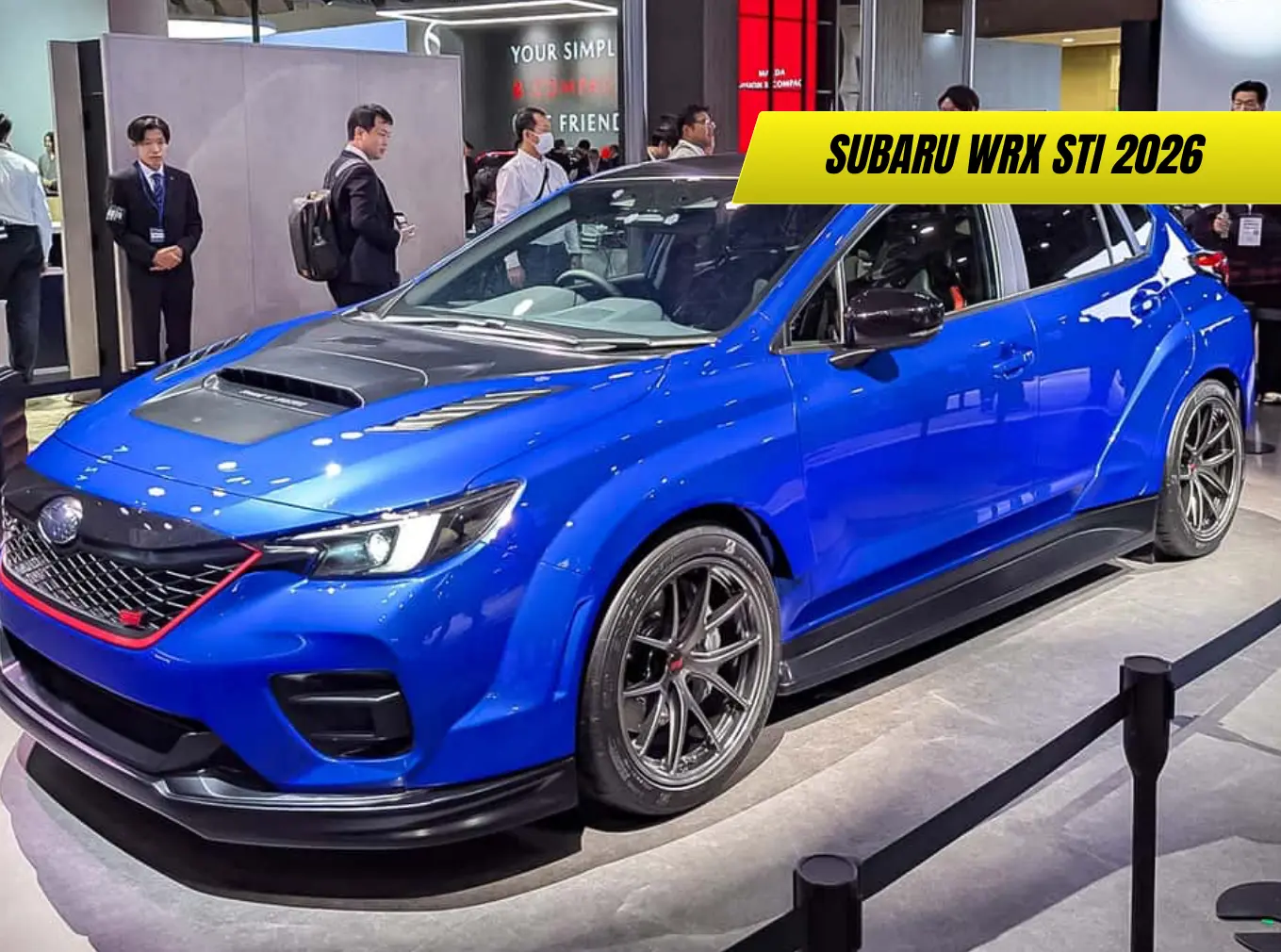
The question hanging over the 2026 Subaru WRX isn’t whether it can move quickly. It always has. The real curiosity is whether it can move differently—about the way you feel the car, the way it communicates with the driver, and the way its all-wheel-drive authority is packaged for the modern road. The WRX has long been a kind of compact weather system: always ready, always gripping, sometimes grumpy, frequently exhilarating. But 2026 arrives with a sharper intent. Not a reinvention so much as a recalibration. A shift in perspective, delivered through engineering choices that invite you to rethink what “performance” means in a daily-driven sedan.
Still the AWD king? The answer lives in the details—how traction is meted out, how steering blends precision with confidence, and how the car’s personality evolves as you move from stoplight choreography to twisty backroads. Let’s step closer, because the WRX’s magic has never been purely mechanical. It’s emotional. And the 2026 model seems determined to make that emotion more intelligible.
The WRX’s Core Promise: AWD That Doesn’t Backpedal
Subaru’s AWD philosophy has always been less about theatrics and more about continuity. It’s the belief that traction should feel like a partnership, not a negotiation. In the 2026 WRX, that idea remains the foundation—yet the experience is tuned to be more direct. The result is a drivetrain that continues to behave predictably even when the road gets mischievous. Wet paint. Cold asphalt. Uneven surfaces. The kind of unpredictable scenarios that can turn confident driving into cautious commuting.
What’s intriguing is how the WRX’s grip seems to arrive with less drama. You still get the sense of all-wheel-drive readiness, but now it reads more like instant comprehension than a sudden reaction. Short throttle inputs become cues rather than demands. Steering inputs become cleaner. And that clarity can make the car feel quicker even when the stopwatch says nothing particularly new.
AWD “king” isn’t just about acceleration. It’s about stability under load. It’s about confidence when cornering transitions from calm to charged. The 2026 WRX aims to keep that crown while making the ride feel more composed, more communicative, less prone to surprises.
Design Language: Familiar Attitude, Sharper Presence
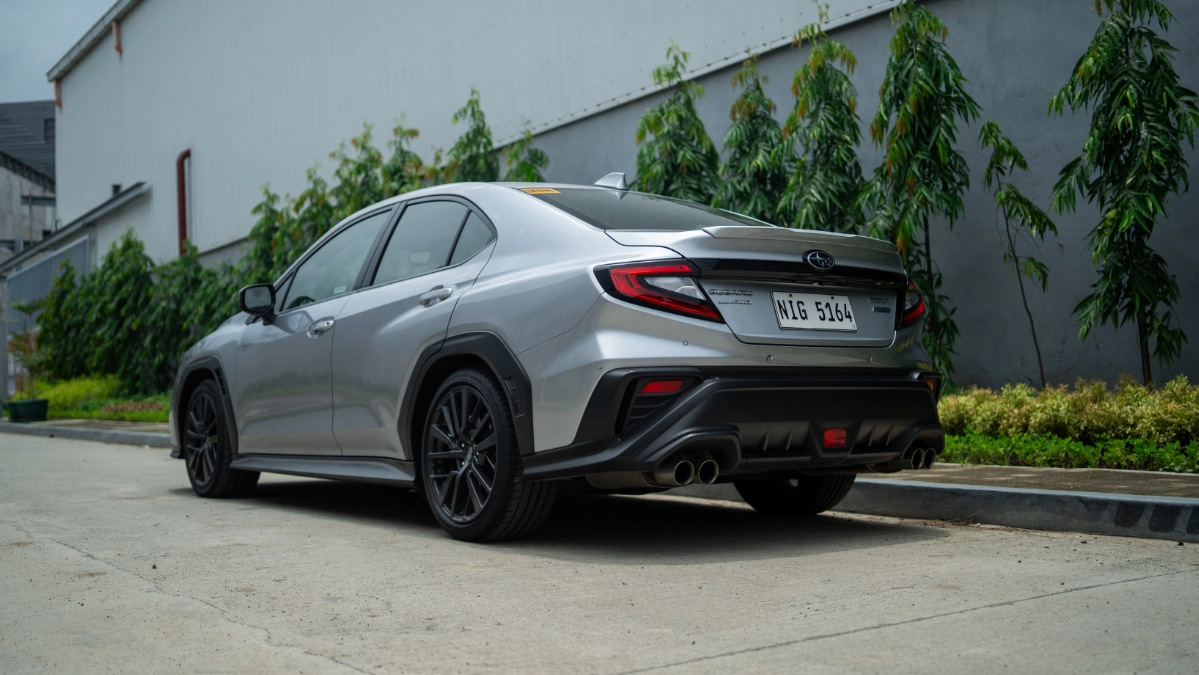
The WRX has never been subtle, but the 2026 interpretation leans into visual immediacy. Every angle looks like it’s ready to participate—headlight signatures that feel intentional, body lines that suggest rigidity, and stance cues that imply readiness for momentum. It’s the kind of styling that doesn’t beg for attention. It simply occupies space like it belongs there.
There’s also a faint sense of refinement, as if the designers asked themselves what the car should look like at a glance from the curb—and then again at speed. The front end reads with purpose. The sides carry a sense of tension. Even without discussing numbers, the bodywork suggests a vehicle that wants to be driven with momentum, not timidly paced.
Curiosity grows when a performance car manages to look aggressive and still coherent. The 2026 WRX appears to balance both, delivering an aesthetic that feels rally-bred but street-literate.

Engine Character and Throttle Behavior: Power With a Conscience
In a car like the WRX, the engine isn’t only about output. It’s about rhythm. It’s about how it responds to your right foot when you’re not trying to win a race—when you’re simply trying to merge, pass, or climb. The 2026 WRX retains that hallmark performance sensibility: eager, responsive, and ready to participate.
But the promise here is subtle: smoother delivery without losing the edge. Think of throttle response that feels less binary—less “on/off”—and more graduated. That matters because a performance car that behaves predictably at everyday speeds is often the one you actually enjoy the most. It becomes easier to modulate, easier to place on the road, easier to live with.
A strong engine character also influences the perception of handling. When power arrives cleanly, the chassis can stay composed. If power arrives abruptly, the car can feel busy. The 2026 WRX’s approach seems to aim for composure without dullness—an uncommon combination.
Chassis and Handling: The AWD King, Now With Better Manners
Handling is where curiosity turns to conviction. The WRX’s reputation was built on the way it can carve a line while keeping traction under control. In 2026, that carving seems refined by a more balanced feel at the limits of grip. Steering effort feels more legible, as if the car tells you what the front tires are thinking before they act.
There’s also an increased sense of stability during transitions—when you go from braking to turning, or from accelerating to coasting through a bend. Those moments can reveal whether AWD is working harmoniously or merely compensating. The 2026 WRX suggests the former.
Long sentence, short conclusion: it feels like a car that can be pushed without becoming unruly. That’s a valuable evolution. It turns the WRX from a “thrill when you’re brave” into a “thrill when you’re in command.”
Braking, Traction Control, and Confidence Under Pressure
Confidence isn’t only speed. It’s stopping power, pedal behavior, and stability when traction is compromised. The 2026 WRX aims to make braking feel consistent—so you can brake, turn, and re-accelerate with a more unified sense of control.
Traction management is the invisible choreography of AWD. It decides how power is distributed and how wheel slip is treated. The best systems feel almost invisible. They don’t interrupt your intent; they assist it. In the 2026 WRX, the sensation seems closer to assistance than interference.
What makes this important is how it translates to real-world driving. Slippery roads are common. Traffic is unpredictable. The ability to keep the car settled while conditions change transforms the WRX from an enthusiast object into a daily ally.
Interior and Tech: The Human Interface Gets Upgraded
Performance cars often hide behind driver-focused mechanics. Yet the daily experience is shaped by the interface between you and the machine. The 2026 WRX’s interior direction hints at modernization—more clarity, more purposeful layout, and a cabin that feels prepared for modern habits.
Materials and ergonomics matter. So does the way controls fall naturally under your hands. When an interior is well-resolved, it reduces cognitive load. That means you can focus on the road, not on figuring out where things are.
Tech features—infotainment responsiveness, connectivity, and driver information—become especially relevant for a car that’s meant to be used, not merely admired. The 2026 WRX’s appeal stretches beyond the weekend sprint. It wants to be the car that carries you through the whole week.
Ride Quality and Daily Usability: Still Ferocious, More Civil
The WRX’s ride has always been a balancing act between sporty stiffness and comfort. The 2026 model appears tuned to preserve the spirited foundation while reducing the sharp edges that can make rough surfaces feel more punishing than necessary. That doesn’t mean it has turned soft. It means the car can absorb imperfection without losing its poise.
This is where curiosity becomes practicality. A driver can only exploit performance when the car doesn’t fatigue them. The 2026 WRX seeks a more sustainable kind of excitement—one that keeps enthusiasm alive even on longer drives.
Who the 2026 Subaru WRX Is For: The AWD Believer and the Skeptic
The WRX has always attracted two types of people. First, the AWD believer—drivers who love traction confidence and want a car that feels ready for whatever weather arrives. Second, the skeptic—the person who thinks all-wheel-drive is overhyped, until they feel the composure for themselves.
For both groups, 2026 offers something interesting: it respects the legacy while nudging the personality toward clarity and control. The shift in perspective isn’t about turning the car into something else. It’s about making the existing strengths more accessible, more communicative, and more enjoyable across a wider range of situations.
Final Verdict: AWD King Status—Refined, Not Replaced
So, is the 2026 Subaru WRX still the AWD king? It feels like the crown hasn’t been thrown into a drawer. Instead, it’s been polished. The drivetrain confidence remains the headline. The chassis composure adds credibility. And the overall experience suggests the WRX is trying to be more than a performance device. It’s trying to be an instrument—precise, reactive, and remarkably human in how it responds to intent.
The 2026 WRX doesn’t merely promise speed. It promises understanding. And once you start seeing the car that way—less as a machine to tame, more as a partner you can trust—the question changes. You stop asking whether it’s the king. You start wondering how it ever felt this effortless before.