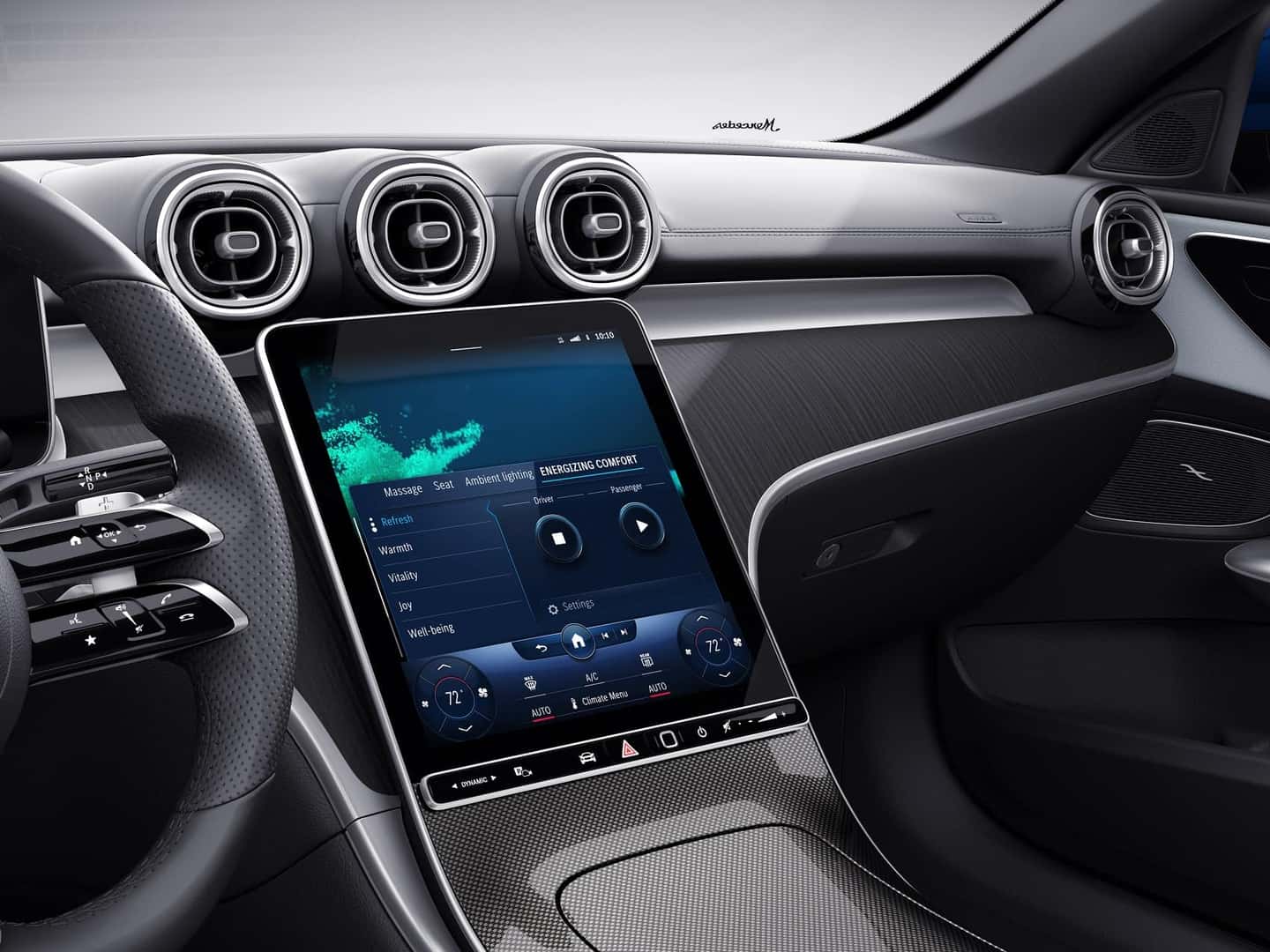
Picture this: you’re settling into the driver’s seat, coffee warming your palms, the cabin lights softly orchestrating the mood. Then—like a duel staged in velvet and chrome—two rivals spring to attention. In one corner, the 2026 Mercedes C-Class, famed for its tasteful tech minimalism. In the other, the Audi A4, notorious for wrapping every interface in crisp logic and driver-first ergonomics.
But here’s the playful question that also doubles as a potential challenge: Could you complete your morning routine using only the dashboards’ brains—no fumbling, no second-guessing, no “Where did that button go?”
Because in this Interior Tech Wars chapter, it’s not just about specs. It’s about how the car feels while performing everyday magic. Let’s open the doors and let the systems spar.
Cabin Atmosphere: The Stage Before the Software
Interior tech starts long before a touchscreen boots up. It begins with atmosphere—ambient lighting, material warmth, and the choreography of surfaces. Mercedes typically leans into a composed, almost artisanal cabin presence. The C-Class often makes you feel like the cockpit was designed to keep distractions at bay, letting driver focus remain the lead actor.
Audi, by contrast, tends to cultivate a more “engineered” confidence. The A4’s layout frequently emphasizes symmetry and clarity, so your eyes know where to land. That’s important, because tech works best when it’s discoverable without your conscious effort.
So the challenge begins immediately: during your first few minutes inside, do your hands find controls intuitively? That instinct is the invisible interface.
Digital Displays: Who Reads Faster, Who Feels Smarter?
Now we move to the dashboards—the command centers. The 2026 Mercedes C-Class frequently treats its digital instrumentation as a calm, readable gallery. Information is presented with a sense of restraint, making navigation prompts and driving data feel organized rather than crowded.
The Audi A4 tends to pursue a different kind of elegance: “information density with purposeful pacing.” Menus often reveal themselves with a logical flow, and visual hierarchy is designed to reduce cognitive load. In other words, the display wants you to drive—not to decode.
Try this micro-test: set navigation, change a climate setting, and adjust a driving screen. Who makes the steps feel shorter? Who feels more forgiving when you pause mid-action? That’s the difference between a display that looks impressive and one that truly helps you move through time.
Infotainment Interface: Touch, Voice, and the Art of Minimal Friction
Both brands now rely heavily on infotainment. The question is how the interface responds when you’re not fully paying attention. In real life, you’ll be juggling—slightly—between traffic, weather, and the human soundtrack of conversation.
Mercedes often shines with its voice interaction and its tendency to present common functions early. It’s the kind of system that tries to anticipate what you mean. When it works, it feels almost telepathic—light-years beyond the clunky days of “Press again to confirm.”
Audi typically brings a strong sense of control through its interface design philosophy. Shortcuts, logical grouping, and a consistent navigation rhythm can make the system feel like it’s cooperating with your habits rather than interrupting them.
Potential challenge: during a short drive, switch audio sources twice and update your destination once. If the system makes you “think about thinking,” it’s losing. Tech should feel like autopilot for your routine, not a quiz.
Smart Phone Integration: The Connectivity Tightrope
Modern interiors live and die by connectivity. Wireless projection, smartphone pairing reliability, and fast reconnection matter more than flashy splash screens. A seamless setup is practically invisible—which is exactly how it should be.
The Mercedes C-Class often aims for a smooth onboarding experience, where your phone becomes an extension of your dashboard. Once connected, the system tends to guide you through apps and media with minimal drama.
The Audi A4 typically emphasizes a structured integration approach—consistent menus, dependable media behavior, and a UI that stays coherent as apps come and go.
Try the endurance test: park the car, walk away, return, and reconnect. Does the system come back instantly, or does it make you repeat steps? The winner here is the car that respects your time—your actual time, not the theoretical time of a press event.
Climate Tech: Micro-Comfort, Macro-Impact
Climate control is where “interior tech” becomes “interior well-being.” A fast-to-adjust HVAC system can transform the cabin from stifling to soothing before you’ve even exhaled. Mercedes frequently offers an experience that feels tailored, with controls designed to quickly reach the desired comfort level. The cabin ambience often supports this with refined lighting and calm UI presentation.
Audi’s climate approach typically emphasizes clarity and directness. You may find it easy to dial in settings precisely without hunting through layers of menus. That precision matters if you’re sensitive to airflow direction, temperature gradients, or quick defogging during changing weather.
Challenge question: who makes it easier to go from “too cold” to “just right” in under thirty seconds? Comfort is the most honest tech scorecard.
Driver Assistance Interfaces: When Safety Becomes Legible
Interior tech isn’t only about entertainment. It’s also about safety systems presented in a way that feels understandable. Modern driver assistance can be powerful, but only if it’s rendered with clarity rather than panic.
Mercedes tends to present assistance cues in a composed manner—alerts are designed to be noticeable without becoming theatrical. The result can be fewer moments of “What does that mean?” and more moments of “Got it.”
Audi often focuses on crisp visual communication and intuitive warning behavior. The system communicates its intentions through consistent iconography and straightforward feedback.
Think like an anxious commuter for a moment. When a warning appears, is it instantly interpretable—or does it invite uncertainty? The interior that reduces uncertainty wins the trust battle.
Lighting and Ambient Personalization: Mood as a Feature
Ambient lighting is one of the most underrated tech experiences because it shapes your emotions before you consciously notice them. The 2026 Mercedes C-Class often excels at crafting a refined, ambient glow that feels elegant rather than gimmicky. The lighting integrates with the cabin’s overall design language, creating a cohesive visual rhythm.
The Audi A4 typically offers a strong sense of customization, with lighting themes that can match your mood. Even if the engineering is the same across industries, the execution differs—some cars feel like they’re decorating, while others feel like they’re tuning an environment.
Playful challenge: set your favorite lighting theme at home, then reselect it after a reset. Does the system remember you? Does it feel effortless, or like you’re negotiating with the interface?
Physical Controls vs Digital Depth: The Balance Debate
Every interior tech contest eventually reaches a philosophical question: should you rely on touchscreens, or should you keep some tactile sovereignty?
Mercedes usually blends touchscreen capability with thoughtful physical control points, aiming to reduce distraction. There’s an emphasis on keeping the driver’s path to essential functions short, which helps when conditions become complex.
Audi often aims for driver confidence through a combination of UI clarity and physical interface logic. The system can feel like it respects the hands as much as the eyes.
Challenge: try adjusting a key function—temperature or volume—without looking for the control. Which car invites muscle memory more naturally? That’s the difference between “feature-rich” and “habit-friendly.”
Rear Seat Tech and Usability: The Passenger Perspective
The front seats get the headlines, but the back seats hold the real-world verdict. Rear passengers experience tech as comfort, entertainment, and ease of control. A cabin can be impressive for the driver and still feel frustrating for everyone else.
Mercedes typically offers a thoughtful approach to rear convenience, with attention paid to how easily passengers can interact with media and comfort settings. The ambiance often supports a more relaxed ride.
Audi’s rear layout often emphasizes straightforward usability and ergonomic practicality, helping passengers stay oriented and comfortable during long trips.
Potential challenge: during a drive, hand your passenger the task of changing the climate or media. Which system guides them better? The answer may surprise you.
)
Boot-Tech Energy: Because Storage Is Part of the Experience
Even the trunk space has a tech-adjacent influence: power closing, smart access behavior, and practical usability shape how often you interact with the car’s systems beyond the cabin. It’s not “glam tech,” but it’s the tech that appears during real schedules—groceries, luggage, weekend escapes.
A good interior tech design extends into the car’s overall experience, and storage interaction is part of that continuity.
)
Who Wins the Interior Tech Wars?
Here’s the honest answer: the winner depends on your tech personality. If you value calm presentation, composed assistance cues, and an interface that tries to anticipate you, the 2026 Mercedes C-Class is likely to feel like a well-trained navigator.
If you prioritize clarity, logical menu flow, and a cockpit that feels engineered for straightforward control, the Audi A4 often delivers a satisfying sense of command.
But the most important verdict comes from your hands. Not from benchmarks. Not from marketing language. From small moments: pairing your phone, adjusting comfort quickly, and understanding alerts instantly.
Outro: Your Morning Routine, Your Verdict
So—back to that playful question. Could you complete your morning routine using only the dashboard’s brains? If you can do it smoothly, without hesitation, you’ll feel the true advantage: software that disappears into your day.
Take both interiors for a spin. Use them the way you actually live. Then decide which cabin makes technology feel like a co-pilot instead of a chore. In the end, the interior tech wars aren’t really about who has more features. They’re about who makes the drive feel simpler, clearer, and—yes—slightly more fun.