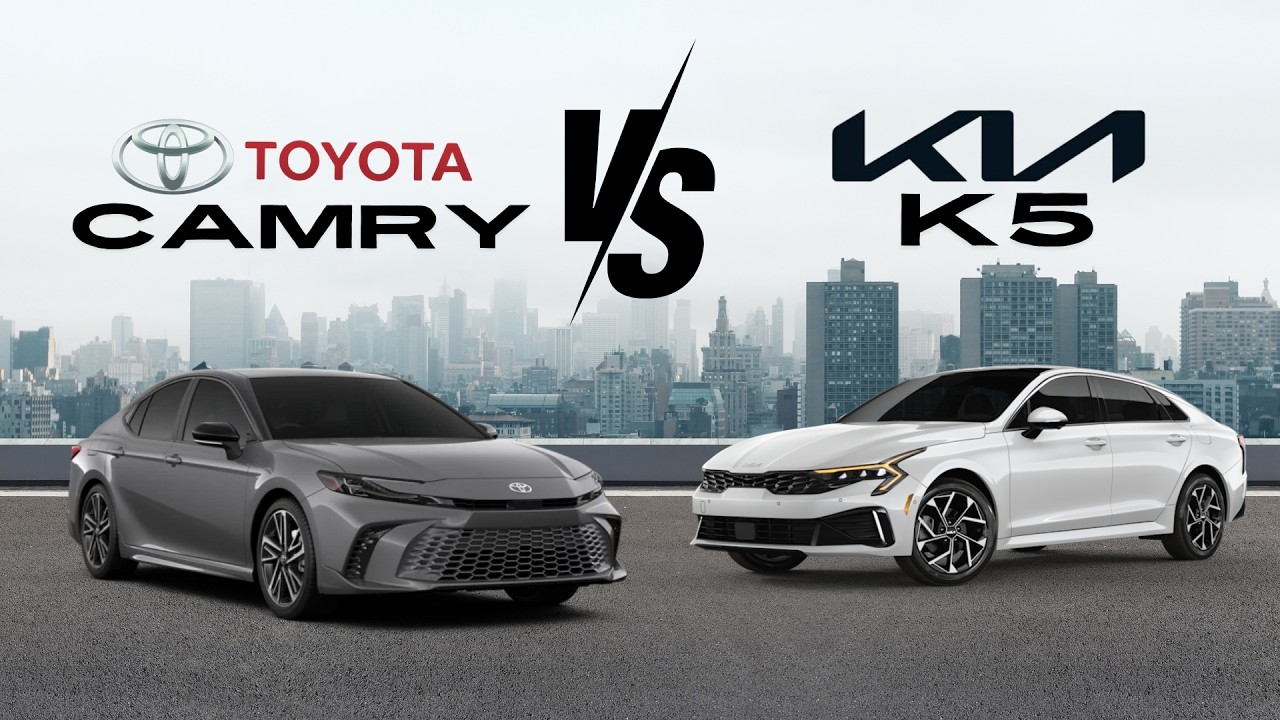
The Toyota Camry and Kia K5 stand as titans in the midsize sedan arena, each embodying a distinct philosophy of automotive excellence. One whispers of time-tested reliability and understated prestige; the other shouts of bold design and tech-laden innovation. Yet beneath their polished exteriors lies a deeper narrative—one that pits the Camry’s legacy of trust against the K5’s audacious reimagining of what a family sedan can be. This isn’t merely a clash of brands; it’s a collision of ideologies, where value and reputation duel for the hearts of drivers.
The Allure of the Familiar: Toyota Camry’s Reputation as a Benchmark
The Toyota Camry isn’t just a car; it’s a cultural touchstone. For decades, it has been the default choice for those who prioritize longevity over flash, dependability over drama. Its reputation isn’t built on viral moments or fleeting trends but on a foundation of relentless consistency. The Camry’s powertrains—whether the stalwart 4-cylinder or the more spirited V6—deliver power without pretense, while its interior cocoons occupants in a symphony of muted elegance. There’s a quiet confidence in the way the Camry glides down the highway, a testament to Toyota’s engineering philosophy: if it ain’t broke, don’t fix it.
Yet this very reliability can sometimes feel like a double-edged sword. The Camry’s understated nature risks blending into the asphalt, its virtues overshadowed by its ordinariness. It’s the automotive equivalent of a well-tailored suit—functional, impeccable, but rarely memorable. For those who crave distinction, the Camry’s reputation, while impeccable, may feel like a cage of expectations rather than a badge of honor.

The Kia K5’s Bold Gambit: Redefining the Midsize Sedan
Enter the Kia K5, a sedan that dares to defy convention. With its coupe-like silhouette and aggressive front fascia, the K5 doesn’t just challenge the Camry—it taunts it. Kia’s designers have crafted a vehicle that looks like it belongs on a racetrack rather than a suburban driveway, a deliberate departure from the Camry’s conservative contours. Inside, the K5’s cabin is a playground of digital interfaces and premium materials, where every button and screen feels like a nod to the future.
The K5’s appeal lies in its audacity. It doesn’t just offer value; it flaunts it. The turbocharged engine options provide a thrill that the Camry’s more measured powertrains can’t match, while the available Nappa leather and ventilated seats transform a mundane commute into a first-class experience. For drivers who view their car as an extension of their personality, the K5 is a siren song—a promise that practicality and panache can coexist.
Performance and Driving Dynamics: Where the Rubber Meets the Road
Under the hood, the Camry’s engines hum with the quiet efficiency of a well-oiled machine. The base 2.5-liter four-cylinder delivers a respectable 203 horsepower, while the V6 option cranks out 301 horsepower, offering a spine-tingling growl that belies its otherwise sedate demeanor. The Camry’s ride is tuned for comfort, its suspension soaking up imperfections with the grace of a seasoned diplomat. But this comes at a cost: the Camry’s steering feels artificially light, its handling more about isolation than engagement.
The K5, by contrast, is a dynamo. The 1.6-liter turbocharged engine, paired with a dual-clutch transmission, catapults the sedan from 0 to 60 mph in a brisk 7.8 seconds—numbers that would make many sports sedans blush. The K5’s chassis is taut, its steering responsive, and its brakes fade-resistant. It’s a car that rewards aggression, a far cry from the Camry’s genteel demeanor. Yet this sportiness comes with trade-offs: the K5’s ride can feel jarringly firm over rough pavement, and its fuel economy, while commendable, doesn’t quite match the Camry’s frugality.

Interior Luxury and Tech: A Tale of Two Philosophies
The Camry’s cabin is a masterclass in ergonomic efficiency. Every control is within arm’s reach, every surface wrapped in soft-touch materials that exude a tactile warmth. The infotainment system, while not as flashy as the K5’s, is intuitive and responsive, with Apple CarPlay and Android Auto standard across the lineup. The seats are supportive yet plush, cradling drivers and passengers alike in a cocoon of quietude. It’s a space designed for long drives, where the journey is as important as the destination.
The K5, however, is a tech evangelist’s dream. Its dual 12.3-inch displays—one for the instrument cluster, the other for the infotainment system—create a cockpit that feels ripped from a sci-fi film. The available Nappa leather and suede upholstery elevate the interior to near-luxury levels, while features like a Bose premium audio system and ventilated front seats transform the K5 into a rolling sanctuary. The K5’s cabin is less about comfort and more about immersion, a space where every drive feels like an event.
Value Proposition: The Numbers Don’t Lie
When it comes to sheer affordability, the Kia K5 holds a clear advantage. With a starting MSRP that undercuts the Camry by nearly $3,000, the K5 offers more standard features for less money. Even at higher trims, the K5’s pricing remains competitive, a testament to Kia’s aggressive marketing strategy. The Camry, while not exorbitantly priced, demands a premium for its nameplate—a premium that may not always translate to tangible benefits for the average buyer.
Yet value isn’t just about sticker price. It’s about cost of ownership, and here the Camry shines. Toyota’s resale values are legendary, with the Camry retaining a higher percentage of its original value than the K5. Maintenance costs are lower, too, thanks to Toyota’s widespread dealership network and reputation for bulletproof reliability. The K5, while backed by Kia’s impressive warranty, may incur higher long-term costs, particularly if owners opt for premium trims or performance-oriented packages.
The Deeper Allure: Why We’re Fascinated by the Clash
At its core, the rivalry between the Kia K5 and Toyota Camry is a microcosm of a larger cultural shift. The Camry represents the old guard—a bastion of reliability and reputation built over decades. The K5, meanwhile, embodies the new wave: a vehicle that dares to challenge the status quo, blending affordability with aspiration. This isn’t just a battle of sedans; it’s a clash of ideologies, where tradition squares off against innovation.
For some, the Camry’s steadfastness is its greatest strength. In a world of disposable everything, the Camry’s longevity is a rare commodity—a reminder that good things don’t always need to be flashy. For others, the K5’s boldness is intoxicating. It’s a car that refuses to be ignored, a statement that says, “I’m here to enjoy the ride.” The fascination with this rivalry lies in its duality: it’s a reminder that there’s no single “right” way to build a car, no universal formula for automotive perfection.
The choice between the Kia K5 and Toyota Camry isn’t just about specs or pricing—it’s about identity. Do you crave the quiet confidence of a Camry, or the bold exuberance of a K5? The answer says as much about you as it does about the cars themselves. One thing is certain: in this duel of value and reputation, there are no losers—only drivers who’ve found the perfect match for their driving spirit.