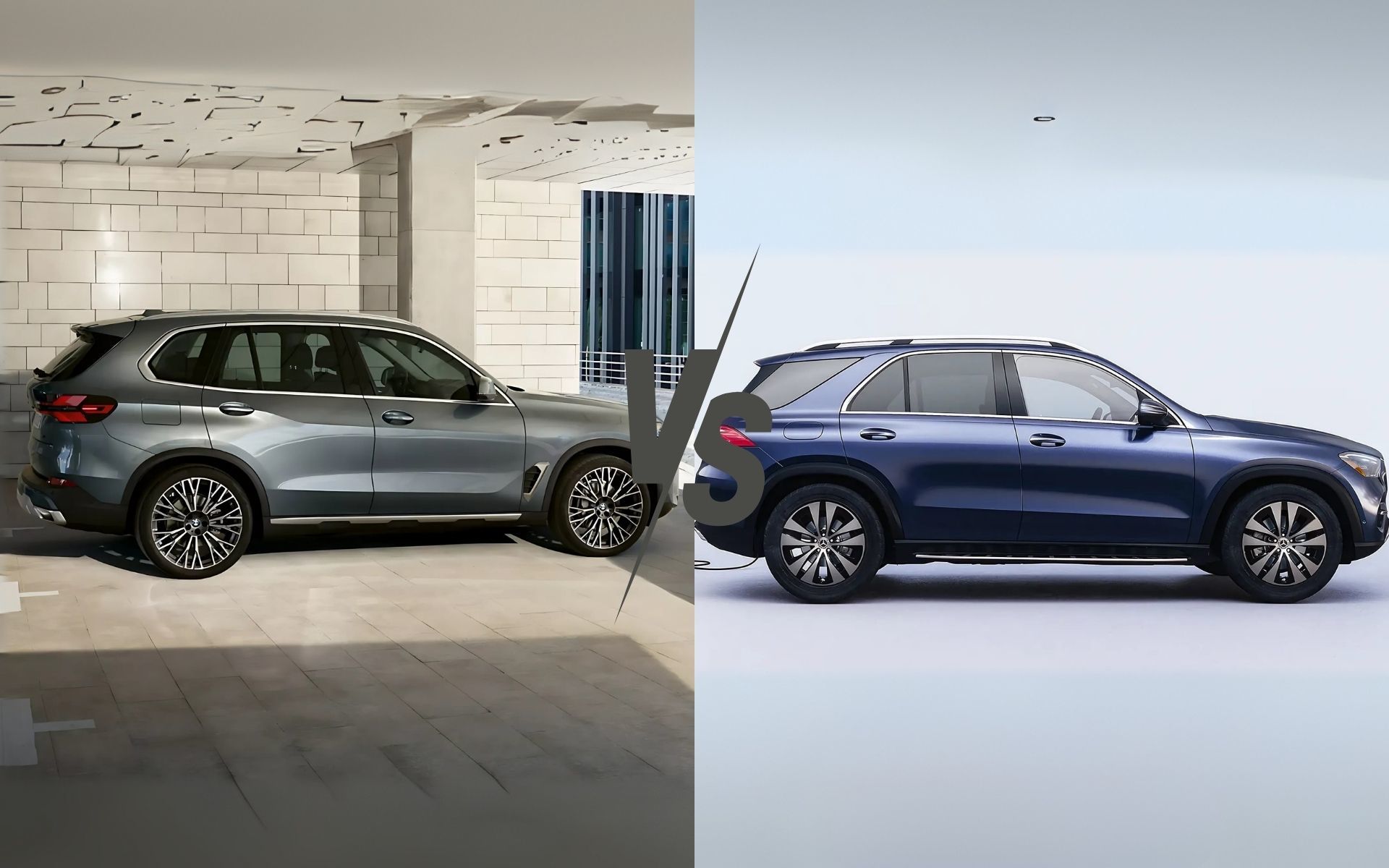
Two plug-in hybrids. Two German badges. One driveway, or at least one day’s worth of decisive comparisons. The 2025 BMW X5 xDrive50e and the 2025 Mercedes-Benz GLE 450e stand like dueling chess masters at the same board—both poised, both brilliantly engineered, yet each with a radically different rhythm. One hums with the calm confidence of a well-tuned inline six; the other arrives with the poised elegance of a V8’s shadow, even when electrification is doing the heavy lifting. This is not merely a spec-sheet showdown. It’s a story about how power can feel—how silence can be a feature, and how “green” can still sound expensive.
Below the surface, these PHEVs share a common philosophy: offer daily electric ease while preserving the long-haul comfort of a premium fuel-burning SUV. Yet their personalities diverge. The X5 xDrive50e leans into architectural clarity and driver-centric control. The GLE 450e leans into refinement, effortless thrust, and a sense of luxury that feels almost theatrical when the road tilts upward.
Let’s pull both vehicles into the spotlight and examine the duel from multiple angles—charging, performance, driving feel, interior atmosphere, technology, efficiency in real life, and the emotional “aftertaste” that lingers when the ignition is turned off.
First Impressions: Two Luxury Castles, Different Doorways
The BMW X5 xDrive50e greets you with a purposeful stance. It feels engineered for movement, even while standing still—like a drawn bow. The grille and lighting signature give it a composed intensity, while the proportions of the X5 platform translate into confidence at both city speeds and open-road horizons.
The Mercedes GLE 450e, by contrast, arrives with a softer gravitas. Its presence feels ceremonial, as if the cabin is already welcoming you before you even press the start button. The design language emphasizes calm authority. It doesn’t shout; it intrigues. When both vehicles are parked together, the contrast is vivid: BMW is the mathematician. Mercedes is the storyteller.
Powertrain Character: How Each PHEV Decides to Move
Both SUVs use a plug-in approach, but their torque delivery philosophies feel distinct. In a PHEV, the electric motor often acts like a backstage crew: invisible, but essential. The difference lies in how loudly each SUV brings that crew into the spotlight.
In the X5 xDrive50e, the powertrain strategy is typically associated with BMW’s inclination toward immediacy and controllability. The electric assistance can feel crisp and responsive, especially during low-speed maneuvers and initial acceleration. The sensation is often “direct”—less like a surge, more like a clean transfer of intent from your right foot to the road.
In the GLE 450e, the character tends to lean toward effortless momentum. The vehicle often feels like it’s always prepared, as if the engine and electric system are collaborating in a choreography rather than a negotiation. That can make highway merging feel unusually light for a vehicle this size—like threading a needle without tightening the thread.
Either way, you gain something valuable: instant thrust without waiting for a traditional powerband to awaken.
Efficiency and the Real-World Electric Advantage
PHEVs live or die by their daily routine. If charging is convenient—overnight at home, or regularly at work—electric driving becomes a realistic lifestyle rather than a theoretical goal. The question isn’t only range; it’s how predictably the system can be persuaded to prioritize battery energy when you want it.
The BMW’s approach typically encourages efficient use of its electrical capability, with drive modes and energy management that aim to keep you closer to electric-only driving during appropriate conditions. It feels like the system respects your patterns: stop-and-go, short trips, and errands that stack like neatly folded laundry.
Mercedes aims for similar outcomes but often wraps them in an ambience of smoothness. Efficiency isn’t just about numbers; it’s about whether the transitions between electric and gasoline power feel seamless. When they do, the vehicle feels “lighter” and quieter—despite carrying a substantial body and a premium drivetrain.
The duel here is subtle: BMW tends to reward drivers who enjoy actively steering the experience. Mercedes tends to reward drivers who prefer effortless continuity.
Charging Experience: The Habit That Makes the Advantage
Charging hardware and energy-management convenience can turn a PHEV into a daily shortcut—or into an occasional compromise. While charging infrastructure varies by region, the practical reality remains the same: the easier it is to plug in and the more reliably the vehicle remembers your intentions, the more you’ll actually use the electric power.
Both the X5 xDrive50e and GLE 450e are built for modern plug-in living, but their usability is where the personality shows. BMW often feels like it’s designed for drivers who like to understand what’s happening—an engineering-forward mindset. Mercedes often feels like it’s designed for drivers who want the car to handle the choreography—an experience-first mindset.
In short: the best PHEV is the one that fits your routine without friction.
On-Road Dynamics: Steering Feel vs. Comfort Gravitation
The BMW X5 xDrive50e typically carries a reputation for steering precision and confident composure. Even when the vehicle is pushing through corners at confident speeds, the sensation is structured: the chassis feels composed, the response is measured, and the SUV doesn’t lose its sense of purpose. It’s a luxury SUV that retains a faint tether to driving pleasure.
The Mercedes GLE 450e often prioritizes a kind of boulevard-smooth confidence. It may feel less “point-and-shoot” than the BMW, but it compensates with refined suspension tuning and a comfortable damping attitude. The result is a ride that can dissolve harsh pavement textures—especially at cruising speeds—while still offering adequate stability when the road becomes less polite.
Think of it this way: the BMW offers a more tactile argument with the asphalt. The Mercedes offers a velvet thesis, convincing you that comfort can be athletic in disguise.
Interior Atmosphere: Where Luxury Becomes a Sense
Both cabins are crafted to feel premium, but their luxuries land differently. BMW’s interior philosophy leans toward driver-oriented ergonomics—clear sightlines, purposeful controls, and a cockpit-like vibe that makes you feel synced with the vehicle. Materials and finishes emphasize craftsmanship with a touch of modern minimalism.
Mercedes, on the other hand, often makes luxury feel expansive. The cabin can feel more lounge-like, with design cues that guide you toward relaxation while still preserving command. The experience tends to be immersive—like stepping into a high-end boutique hotel that also happens to be capable of spirited driving.
Choose BMW if you want luxury that moves with you. Choose Mercedes if you want luxury that wraps around you.
Technology and Infotainment: Intuition vs. Immersion
Modern SUVs live in their screens, but the question is whether the interface feels like a tool or a distraction. The BMW’s tech approach is often associated with clarity—navigation, driver information, and controls presented in a way that feels cohesive and practical. It’s typically a system that encourages confident usage without constant explanation.
The Mercedes infotainment experience tends to emphasize immersion. Menus can feel more visually integrated, and the overall cockpit experience can be designed to feel more cinematic. It’s less about micro-optimization and more about creating an atmosphere where you want to stay engaged.
Both offer a premium suite of driver aids and connectivity. The decision often comes down to your preferred interaction style: direct and functional, or enveloping and expressive.
Practical Ownership: Who Each SUV Fits Best
The X5 xDrive50e often suits buyers who treat their SUV like a versatile instrument—capable of family duty, weekend trips, and the occasional spirited detour to a scenic overlook. If you value driver involvement, efficient energy management, and a more focused driving demeanor, BMW is often the more natural fit.
The GLE 450e frequently appeals to buyers who want a luxury environment with relaxed command. It’s a compelling choice for those who spend long stretches cruising, frequently carry passengers, and prioritize comfort, refinement, and seamless transitions between power sources.
Both are strong options for Canadian-style realities—weather, distance, and the need for confident traction. Yet their emotional center of gravity differs. BMW leans toward engagement. Mercedes leans toward ease.
The Verdict: A Duel Decided by Taste
In the 2025 BMW X5 xDrive50e vs Mercedes GLE 450e duel, there isn’t a single winner—only a more compatible soulmate. The BMW feels like precision with a plug. It turns electrification into a responsive, driver-minded extension of the vehicle’s character. The Mercedes feels like a luxury symphony with electrified support, where power arrives with grace and comfort remains king.
If you want your PHEV to feel like it’s speaking your driving language, the X5 xDrive50e will likely resonate. If you want your PHEV to feel like it’s smoothing the world for you—quietly, confidently, beautifully—the GLE 450e is hard to ignore.
Either way, this German duel is proof that the future doesn’t have to be dull. It can be thrilling, silent when it should be, and commanding when it must be.
Outro: Plug In, Then Choose Your Narrative
In the end, the best way to decide between these two PHEVs is to imagine your typical day. Think about the commute, the errand loop, the highway stretches, and the moments when you want the vehicle to feel alive—or when you want it to feel like a sanctuary.
The 2025 BMW X5 xDrive50e offers electrified precision and a sense of purposeful motion. The 2025 Mercedes GLE 450e offers electrified refinement and effortless propulsion. Choose the one whose character aligns with your life, and the duel becomes less of a comparison—and more of a promise kept every time you plug in.