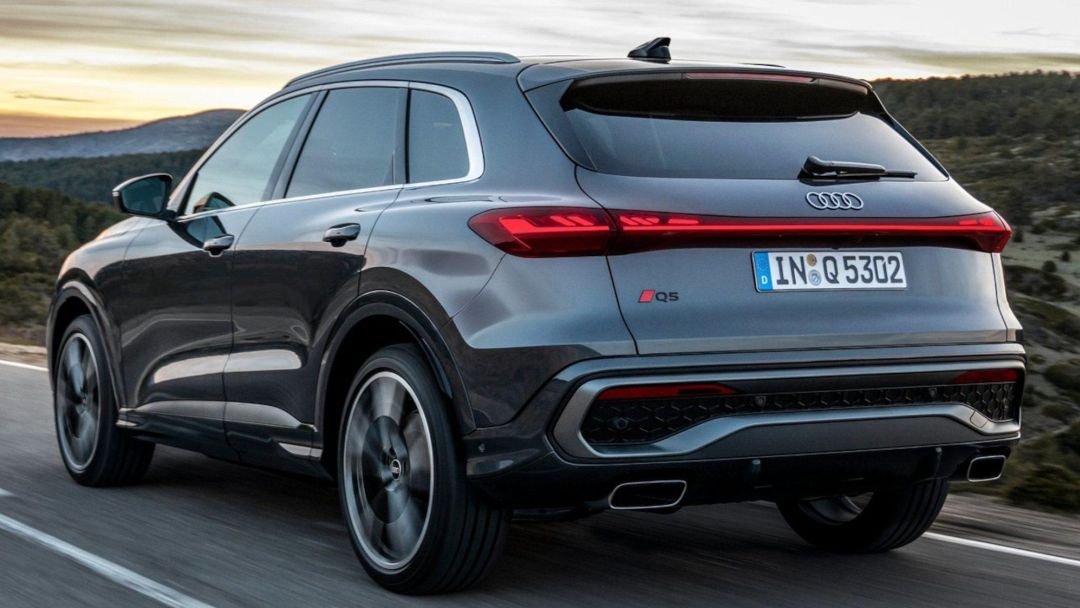
The 2025 Audi Q5 TFSI e arrives as a distinctly German proposition: not just an electrified crossover, but a carefully tuned act of compromise—range where it matters, refinement everywhere else, and the familiar Audi habit of making the mundane feel deliberate. “TFSI e” signals plug-in intent, yet the Q5’s essence remains unapologetically crossover—commanding visibility, composed road manners, and a cabin engineered to soothe attention rather than steal it.
For readers shopping in the PHEV (plug-in hybrid electric) segment, the 2025 Q5 TFSI e offers a spectrum of content worth exploring: what changes day-to-day, what you’ll notice on a highway merge, and how the tech landscape reshapes ownership. Expect a vehicle that is as much about software maturity and charging choreography as it is about hardware.
Design: The Electrified Q5’s Quiet Authority
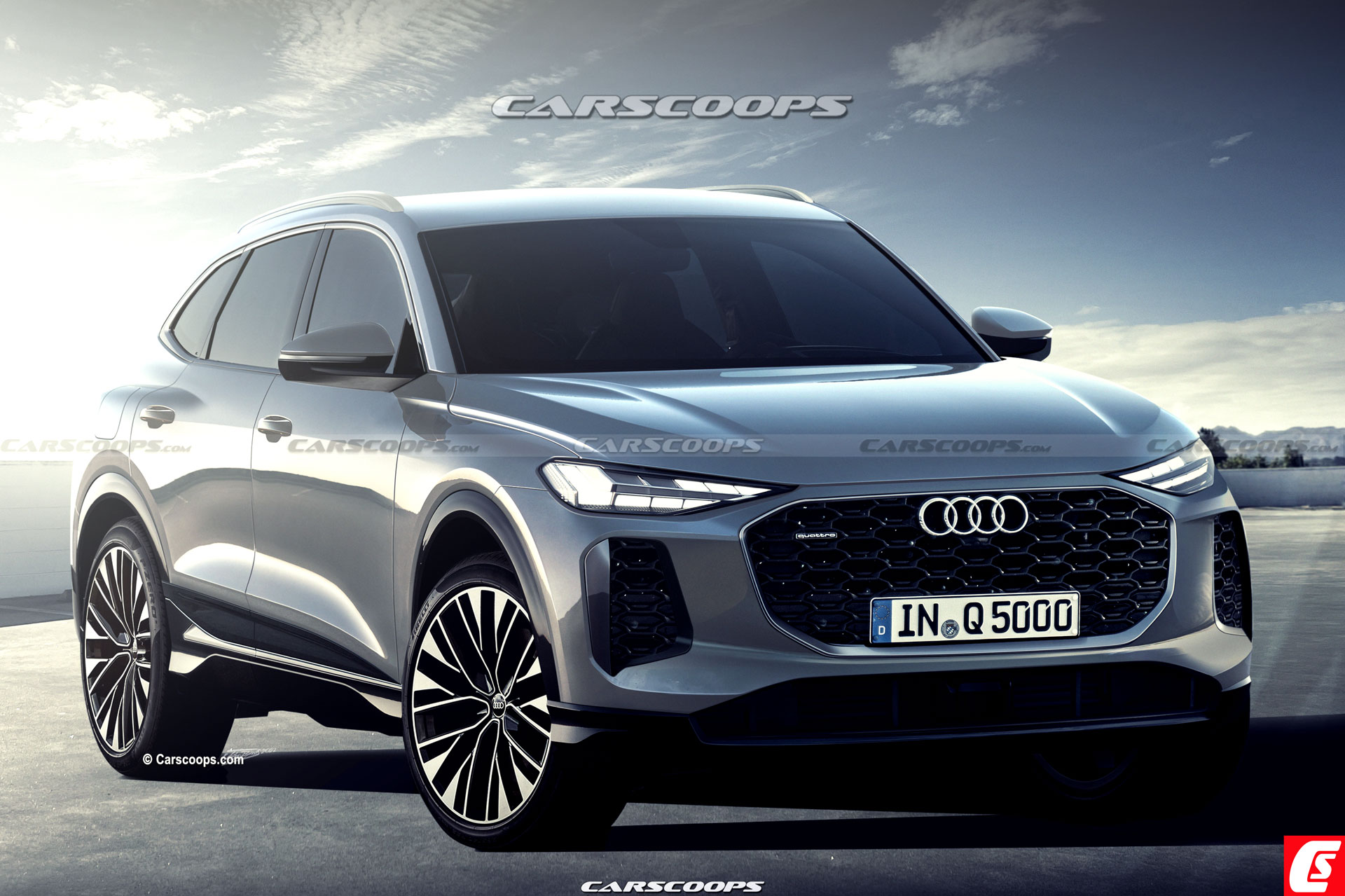
Audi rarely shouts. The 2025 Q5 TFSI e follows that philosophy with a confident, sculpted exterior—clean surfacing, purposeful grille geometry, and lighting signatures that feel precise rather than theatrical. The front fascia frames the vehicle like a gallery piece: aerodynamic details are blended into styling cues so naturally that the car seems to “belong” to the road.
Move your gaze across the fenders and you’ll see the crossover posture translated into a PHEV silhouette that doesn’t look like an afterthought. It’s the subtle continuity—proportions, wheel design language, and body sculpting—that helps the electrified drivetrain stay invisible to the casual observer.

Powertrain Philosophy: How TFSI e Blends Electricity and Engine Work
The core narrative of the 2025 Audi Q5 TFSI e is orchestration. Instead of forcing a single identity, the plug-in hybrid system modulates between electric drive and combustion power according to throttle demand, battery state, speed, and driver intent. In practice, that means smoother takeoffs when the battery is ready, and a more traditional surge when the engine joins the party.
The “TFSI” side brings Audi’s turbocharged heritage—power that arrives with restraint at low speeds and expands into confident acceleration. Meanwhile, the electric component handles the stop-and-go portion of life with a near-surgical smoothness, minimizing the jerkiness that can betray less refined hybrid systems.
One of the most interesting aspects for readers is how the vehicle communicates its strategy. Modern PHEVs are increasingly about transparency: the driver should feel the system’s logic rather than fight it. That’s where Audi’s approach tends to shine—predictable behavior, sensible transitions, and fewer surprises when you switch from city cruising to highway rhythm.
Driving Dynamics: Comfort, Traction, and the Audi Sense of Momentum
Whether you’re navigating a dense urban corridor or commuting across long, flat stretches, the Q5’s suspension tuning aims for composure. Steering feel is typically calibrated to remain reassuring rather than sporty-for-show. The crossover stance stays planted, and the chassis works to filter surface irregularities without turning the drive into a float.
Traction and stability become especially relevant when you consider hybrid weight distribution. Audi’s engineering mindset is to keep grip consistent so the vehicle doesn’t “announce” its electrified mass. In most scenarios, the result is traction that feels secure in everyday conditions—rain, early morning dew, and the sporadic surprise of road debris.
Short sentence, long effect: it simply feels put together. That’s a subtle but important content angle—many shoppers can read specs all day, but they buy based on the sensation of control.
Interior and Tech: A Cabin Designed for Cognitive Ease
Inside, the 2025 Q5 TFSI e leans into the Audi signature: crisp ergonomics, clean visual hierarchy, and materials that aim for tactile calm. The dashboard layout typically reduces mental overhead. Controls are where you expect them. Visibility is broad. Storage is practical. Nothing feels like a puzzle unless you want it to.
Because this is a PHEV, the interior’s biggest job is to help you understand—and then trust—the energy flow. Expect content to revolve around how the system displays battery status, how it forecasts driving modes, and how it encourages efficient habits without turning every drive into a lecture.
Long-range comfort matters too. Cabin noise management, seat support, and climate consistency shape how often a driver feels “fresh” after a commute. PHEV owners often discover that the most satisfying part isn’t just the electric launches—it’s the reduction in stress during everyday driving.
Charging and Ownership Experience: The Real-World Content Readers Care About
A plug-in hybrid is only as good as its charging routine. The 2025 Audi Q5 TFSI e invites a content focus on practical questions: Where will you charge—home, work, or public stations? How often will you need to plug in? What does the battery state mean for your commute the next morning?
Good PHEV content goes beyond “it charges.” It addresses time horizons and driver psychology. For example, a driver with short daily routes can often treat the car like an electric commuter, plugging in nightly and reserving combustion for longer trips or when the battery is depleted. Another driver may plug in less frequently, using hybrid modes to stretch efficiency across a mixed calendar.
Expect features and guidance centered on charging schedules, energy monitoring, and—crucially—predictability. The most persuasive ownership narrative includes scenarios: “If you charge while you sleep,” “If you forget once,” and “If you take a weekend road trip.” Those are the chapters that turn a brochure into a plan.
Efficiency and Performance: Where Numbers Meet Feelings
PHEV efficiency is rarely a single statistic. It’s a blend of battery utilization, driving style, ambient conditions, and how often you operate in electric mode. The 2025 Audi Q5 TFSI e is designed to capitalize on the typical pattern of human driving—frequent starts, moderate speeds, and repeated local errands.
Performance content should also address how quickly the vehicle adapts when the battery transitions out of electric drive. Drivers want to know whether acceleration remains seamless, whether sound changes feel intrusive, and whether the car’s character shifts abruptly. Audi’s goal is continuity: the powertrain should feel like one cohesive instrument rather than two competing systems.
Here’s the uncommon angle: energy efficiency can be emotionally efficient. When the car consistently behaves as expected—quiet in neighborhoods, confident on highways—drivers feel in control. That sensation is difficult to quantify, yet it’s often the reason owners speak enthusiastically.
Safety, Driver Assistance, and Daily Confidence
As electrification increases, the need for safety clarity becomes even more important. The Q5 TFSI e’s safety story typically includes a suite of driver assistance technologies aimed at reducing fatigue and preventing common mistakes: lane awareness, adaptive cruise behavior, and intelligent sensing for surroundings.
For readers, the best content is scenario-based. How does the vehicle react in traffic? What happens on a long straight with drifting lane markings? How does it behave during weather changes? When a system is well calibrated, it feels less like a robot and more like a conscientious co-pilot.
Trim, Options, and What Each Reader Should Prioritize
Not every buyer values the same details. Some readers care about creature comforts: seat quality, ambient lighting, audio refinement, and connectivity. Others focus on practical equipment: charging convenience, cargo flexibility, and driver assistance depth.
The 2025 Q5 TFSI e content landscape should therefore be structured around buyer archetypes. Choose the angle that matches your life:
• The commuter: maximize electric running, simplify charging routines, and prioritize daily efficiency.
• The family driver: emphasize space, visibility, and confidence-enhancing safety systems.
• The road-trip planner: discuss hybrid endurance when charging opportunities are limited.
This is how shoppers find alignment between expectations and reality.
Verdict: A German PHEV That Treats Electrification Like Craft
The 2025 Audi Q5 TFSI e is not merely a crossover with a plug. It’s a disciplined attempt to translate electric benefits into the rhythms of everyday life—smooth starts, quieter commutes, and a powertrain that feels coherent rather than contrived. Its strongest appeal is the way it hides complexity behind a calm, confident driving experience.
For readers who want both practicality and sophistication, this model offers a compelling narrative: the convenience of a plug-in, the reassurance of a hybrid safety net, and the refinement Audi is known for. If your routes include predictable daily distances and occasional longer stretches, the Q5 TFSI e has the character to make electrification feel less like a compromise and more like a choice.
In the end, the 2025 Audi Q5 TFSI e earns attention by doing something rare: it makes the future feel composed.