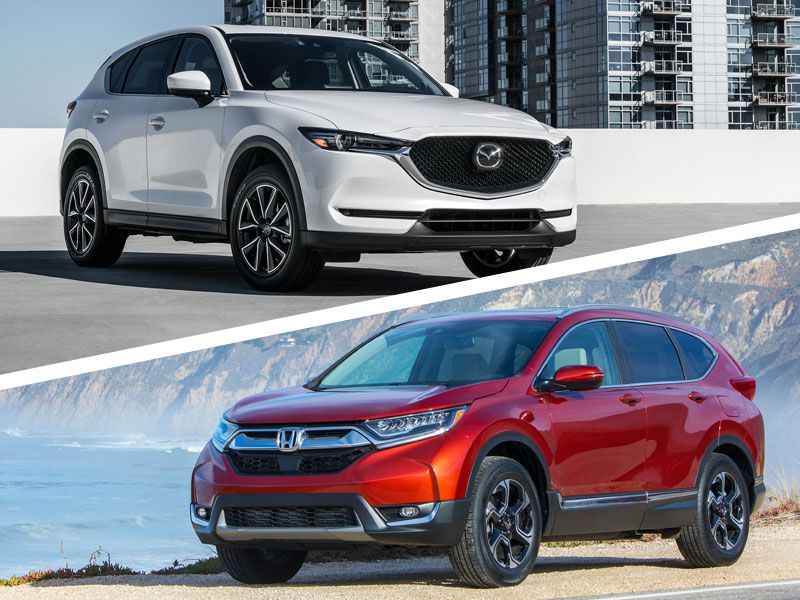
Choosing between the Honda CR-V and the Mazda CX-5 is less about picking a winner at first glance and more about sensing which kind of excitement best fits your life. Both are compact crossovers, both wear reputations like well-tailored jackets, and both tend to appear on the same shortlist when shoppers start comparing practicality against personality. Yet a common observation keeps repeating in showrooms and online forums: the CR-V feels like the sensible default, while the CX-5 feels like a decision with style. That perception is not merely marketing perfume. It hints at deeper reasons for fascination—different philosophies of comfort, different approaches to refinement, and different ways of translating everyday driving into something worth looking forward to.
Let’s walk through the comparison as if you were test-driving both vehicles back-to-back—first noticing the obvious, then listening for the subtler cues that make one crossover feel “right” long after the parking brake is released.
First Impressions: The Shape of Convenience vs. the Shape of Desire
The CR-V tends to greet you with an immediately logical layout. Everything appears where you expect it to be, and the driving position encourages a relaxed cadence. It doesn’t beg for attention. It earns trust.
The CX-5, by contrast, often feels like it arrived from a different design conversation. Its styling can look a touch more sculpted, a touch more restrained in the way it handles mass and shadow. In the cabin, that design intent tends to reappear. Controls can feel slightly more deliberate. Surfaces often look more “curated” than merely assembled.
Here’s the key observation many people stumble upon: the CR-V can feel like a tool you’d rather have than admire; the CX-5 can feel like an object you’d rather admire than ignore. Both viewpoints are valid. The difference is what you want your daily commute to communicate.
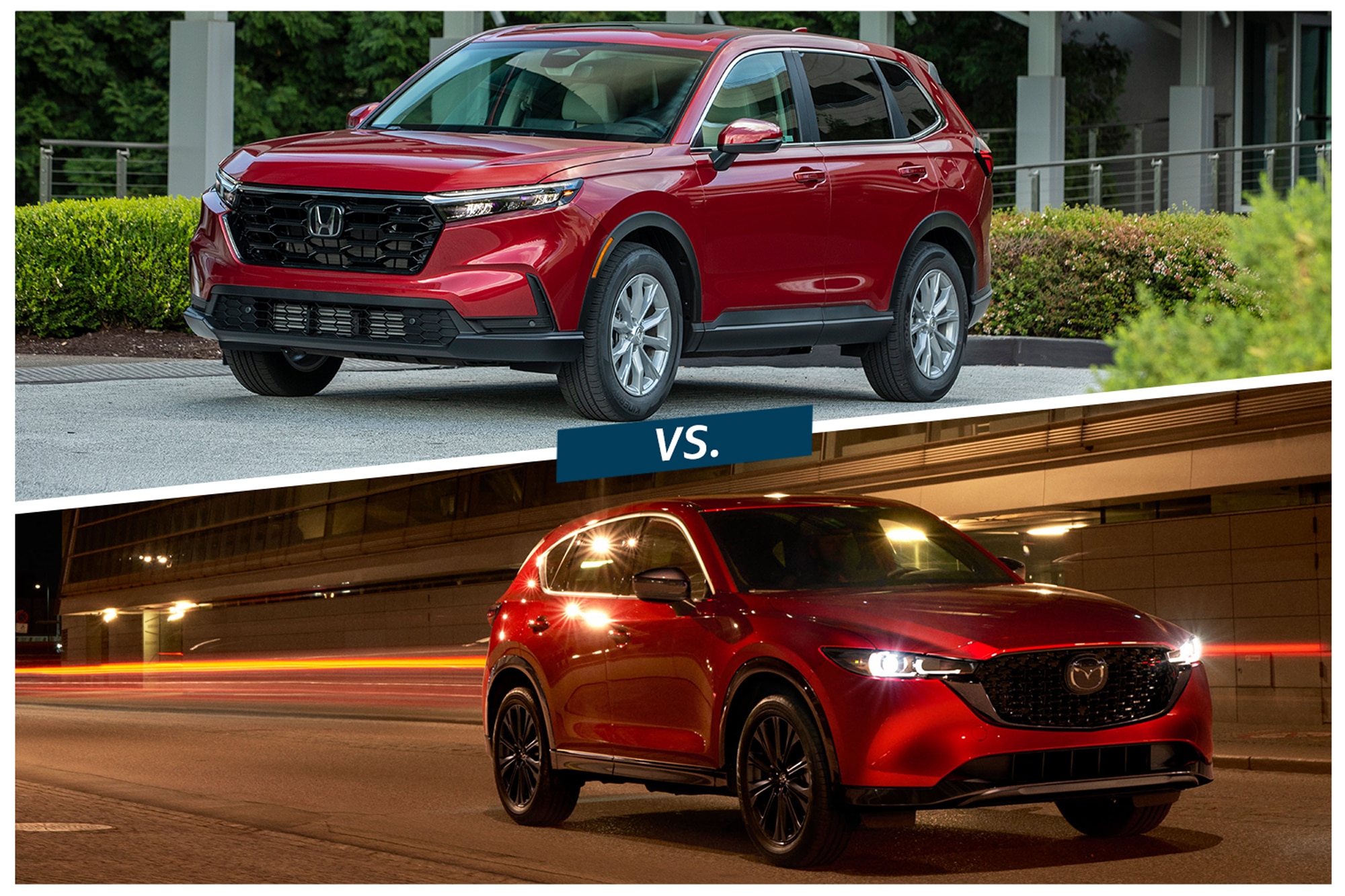
Interior Space and Practicality: How Each Brand Thinks About Real Life
Compact doesn’t mean cramped, but it does mean compromise is inevitable. The CR-V usually leans into practicality with an almost methodical mindset. The seating arrangement and cargo usability often feel optimized for routine tasks: groceries with awkward shapes, a child’s gear pile, a weekend duffel that refuses to fold itself neatly.
The CX-5 can still be comfortable and functional, but its practicality often arrives with a different flavor—more “zoned” and driver-focused. People who prioritize the sensation of being cocooned may find the CX-5’s layout more satisfying. Those who prioritize maximizing every inch may prefer the CR-V’s straightforward approach.
In other words, both can serve a family, but they may do it with different emotional math. The CR-V offers certainty. The CX-5 offers taste.
Comfort and Ride Quality: Quiet Confidence vs. Lyrical Motion
Ride quality is where the “common observation” becomes a story. The CR-V often delivers a calm, composed ride. Road imperfections can be filtered in a way that reduces fatigue. Long drives feel manageable, and city streets feel less like obstacles and more like a conversation you can ignore.
The CX-5 frequently aims for a more engaging rhythm. Depending on configuration, you may notice the steering and suspension tuning creating a subtly more connected driving feel. The vehicle can feel like it’s speaking back—sometimes gently, sometimes with a hint of enthusiasm.
Neither approach is objectively superior. The deeper fascination comes from your own temperament. Some drivers want the road softened into a blank canvas. Others want the road translated into feedback—an auditory-kinesthetic whisper that keeps attention alive.
Performance and Powertrains: Efficiency, Feel, and the Art of the Merge
In everyday driving, power isn’t only about peak numbers. It’s about how quickly the vehicle responds when you request motion. The CR-V typically emphasizes smoothness and dependable performance, often making passing and merging feel effortless rather than theatrical.
The CX-5 can lean into a more spirited sensation. Even when the performance is not dramatically different on paper, the driving feel can come across as more vivid. Throttle response may feel more immediate. Steering weighting may feel more communicative. It’s not just speed—it’s how speed is delivered.
If you frequently navigate traffic that demands constant micro-adjustments, the CR-V’s predictable demeanor may suit you. If you crave the sense that the car is alive—ready to turn a boring on-ramp into a small event—the CX-5 may resonate more strongly.
Handling and Steering: Composed Predictability vs. Zoomed-In Control
Compact crossovers can’t escape physics, but they can interpret it. The CR-V generally feels planted and balanced, with a steering feel that favors calm precision. It’s the kind of handling that lets you concentrate on traffic flow, not on correcting the steering wheel every few seconds.
The CX-5 often feels more intent. Its steering and chassis tuning can create a more direct connection between your inputs and the car’s behavior. This can be especially noticeable in winding roads, but also in quick lane changes where confidence matters.
A useful way to frame this: the CR-V may make you feel like you’re piloting from the background. The CX-5 can make you feel like you’re engaged in the foreground. Again, both are fascinating—just for different reasons.
Technology and Infotainment: Clean Interfaces vs. Polished Engagement
Modern compact crossovers live and die by their infotainment experiences. The CR-V tends to offer straightforward, user-friendly systems that are easy to learn and quick to operate while driving. That practicality often translates into less time fumbling with menus and more time enjoying the trip.
The CX-5 frequently impresses with how the cabin technology feels integrated into the environment. It can feel more “designed,” more cohesive. Some drivers care about that subtle coherence—the way controls are positioned, the way displays are presented, the way menus don’t intrude.
Here’s where deeper fascination hides: the best infotainment isn’t necessarily the one with the most features. It’s the one that reduces friction. And friction, in daily life, is a quiet enemy.
Safety and Driver Assistance: The Comfort of Fewer Surprises
Safety systems are often perceived as checkboxes, but the real question is how reliably they help. The CR-V and CX-5 both typically offer robust driver-assistance suites. The CR-V’s reputation often leans toward practical safety behaviors: smoothing the path, assisting with lane management, and supporting driver awareness without overwhelming the senses.
The CX-5 can provide similar peace of mind, with its own approach to calibration and interaction. The sensation can differ—some drivers prefer the assistive feel that feels more subtle, others prefer the one that feels more insistent.
In the end, it’s about trust. A system that feels coherent with your driving style is not merely “safe.” It’s psychologically restful.
Fuel Economy and Ownership: Efficiency That Builds Confidence
Fuel economy is where practicality becomes economics. The CR-V often draws attention for efficiency and for the predictability of its running costs. That matters because confidence isn’t only about reliability—it’s also about budgeting.
The CX-5 can also be efficient, and drivers may appreciate how it balances performance feel with day-to-day economy. Some people choose the CX-5 specifically because it doesn’t demand the “trade-off tax” that can come with more enthusiastic handling.
Ownership fascination usually grows after the purchase, when the car stops being a headline and starts being a routine. Both vehicles can play that long game, but they may do it with different emotional rewards.
Who Should Choose the CR-V? Who Should Choose the CX-5?
Choose the CR-V if you want a compact crossover that prioritizes ease—ease of living, ease of loading, ease of navigating daily logistics. If your priorities include straightforward usability, calm ride behavior, and a “set it and forget it” sense of dependability, the CR-V tends to fit like a dependable old key.
Choose the CX-5 if you want a crossover that feels more personality-forward. If you value a driver-centric layout, a more vivid sense of control, and a cabin that feels thoughtfully composed, the CX-5 can feel like a daily upgrade to your mood.
Neither is a compromise. They are just different answers to the same human question: what do you want your car to do for you—quietly support your life, or actively participate in it?
Final Verdict: Best Compact Crossover Depends on the Kind of “Best” You Mean
Calling one of these the best compact crossover is tempting, but the truest conclusion is more nuanced. The Honda CR-V often wins on practicality, comfort-minded refinement, and a reassuring approach to the mundane. The Mazda CX-5 often wins on aesthetic cohesiveness and a more engaged, driver-forward sensation behind the wheel.
If your days are filled with logistics—school runs, errands, unpredictable schedules—the CR-V’s steady competence may feel like relief. If your days still need a spark—winding roads, spirited merges, a cabin that feels like it has taste—the CX-5’s character can feel like an ongoing reward.
Ultimately, the best choice is the one that aligns with your driving narrative. Both crossovers offer more than transportation. They offer identity on four wheels, presented in two distinct dialects of compact convenience.