The Toyota Highlander and Kia Telluride stand as titans in the three-row SUV arena, each commanding respect for distinct reasons. Whether you’re a family juggling school runs and weekend adventures or a discerning buyer seeking a blend of refinement and practicality, this face-off promises to illuminate the path forward. Buckle up—we’re diving deep into the heart of these automotive heavyweights, dissecting their strengths, quirks, and everything in between.
The Design Duel: Aesthetic Appeal Meets Functional Flair
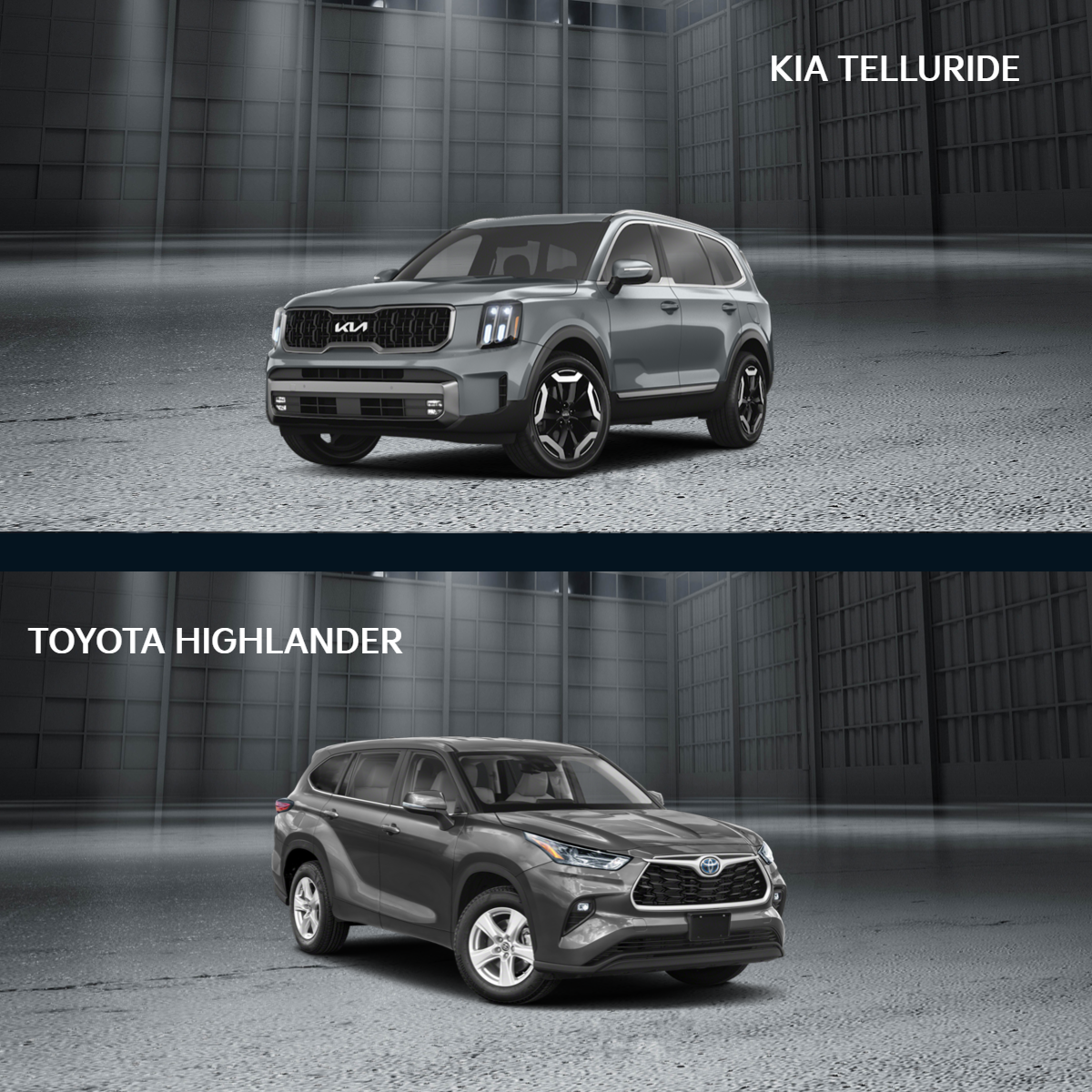
At first glance, the Toyota Highlander exudes a conservative elegance, its sharp creases and understated grille speaking to Toyota’s commitment to timeless design. The Highlander’s profile is sleek, with a roofline that tapers gently toward the rear, giving it an air of sophistication. Inside, the cabin is a study in minimalism, with high-quality materials and a layout that prioritizes ergonomics over flash. The dashboard, dominated by a digital instrument cluster and a central touchscreen, feels intuitive, though purists might lament the absence of physical buttons.
The Kia Telluride, on the other hand, is a head-turner. Its bold, cascading grille and angular headlights command attention, while the sculpted body lines lend it a dynamic presence. The Telluride’s cabin is a masterclass in space utilization, with a panoramic windshield that floods the interior with light and a three-row layout that doesn’t feel cramped. Kia’s designers have gone all out with premium finishes, from the available Nappa leather seats to the ambient lighting that transforms the cabin into a serene sanctuary. If the Highlander is the scholar, the Telluride is the showstopper.
Powertrain Prowess: Power, Efficiency, and the Great Debate
Under the hood, the Toyota Highlander offers a 3.5-liter V6 engine paired with an eight-speed automatic transmission, churning out 295 horsepower and 263 lb-ft of torque. This powertrain delivers smooth acceleration and ample towing capacity, making it a workhorse for families. The Highlander’s hybrid variant, available in select trims, pairs the V6 with an electric motor, boosting fuel efficiency to an impressive 36 mpg combined. For those who prioritize efficiency without sacrificing power, the hybrid is a compelling choice.
The Kia Telluride counters with a 3.8-liter V6 engine, also mated to an eight-speed automatic, producing 291 horsepower and 262 lb-ft of torque. While the numbers are close, the Telluride’s engine feels more responsive, especially during overtaking maneuvers. Kia’s transmission tuning is noticeably sportier, with quicker shifts that add a dash of excitement to daily driving. However, the Telluride lacks a hybrid option, which might give the Highlander an edge for eco-conscious buyers. That said, the Telluride’s standard all-wheel-drive system provides superior traction in adverse conditions, a feature the Highlander reserves for its higher trims.
Interior Ingenuity: Comfort, Tech, and the Little Extras
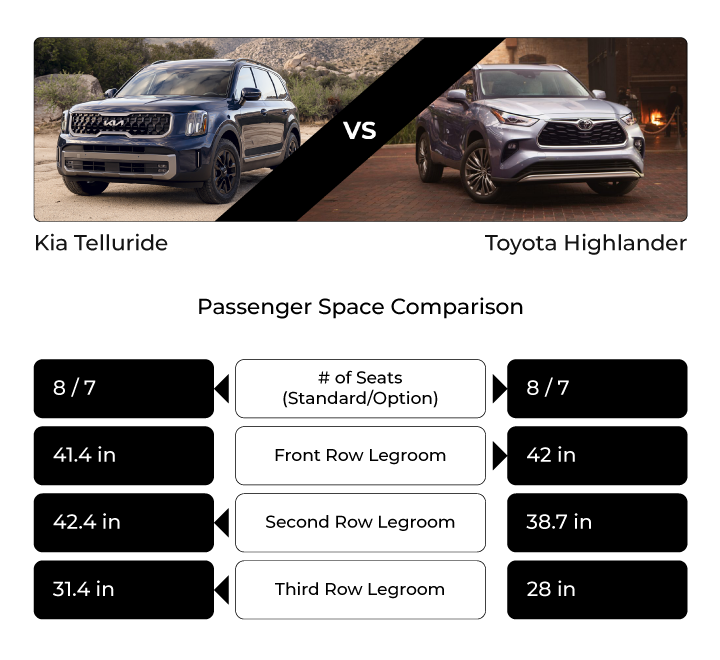
Step inside the Toyota Highlander, and you’re greeted by a cabin that’s all about comfort and functionality. The seats are plush, with ample legroom in all three rows, though the third row is best suited for children or occasional use. The Highlander’s infotainment system, while functional, can feel sluggish compared to competitors. Apple CarPlay and Android Auto are standard, but the lack of wireless connectivity in base trims is a minor letdown. On the bright side, Toyota Safety Sense 2.5+ comes standard, offering a suite of advanced driver-assistance systems that include adaptive cruise control and lane-keeping assist.
The Kia Telluride’s interior is a revelation. The cabin is spacious, with generous headroom and legroom in all rows, making it a standout for tall passengers. The second row is particularly noteworthy, with captain’s chairs that slide and recline, offering a range of seating configurations. The infotainment system is a highlight, featuring a 10.25-inch touchscreen and a 12.3-inch digital gauge cluster, both of which are crisp and responsive. Kia’s UVO link system supports wireless Apple CarPlay and Android Auto, a feature that’s becoming increasingly standard but still feels like a luxury. The Telluride also boasts a 12-speaker Harman Kardon audio system, turning every drive into a concert hall on wheels.
Driving Dynamics: The Road Ahead
Driving the Toyota Highlander is an exercise in comfort and predictability. The suspension soaks up bumps with ease, and the steering is light, making it ideal for long highway drives. The Highlander’s ride quality is impeccable, though the soft suspension can translate into body roll during sharp turns. The hybrid variant, with its electric motor assistance, feels more refined, but the V6 model’s lack of urgency might leave enthusiasts wanting more.
The Kia Telluride, by contrast, offers a more engaging driving experience. The steering is heavier and more communicative, providing better feedback on the road. The suspension strikes a balance between comfort and sportiness, absorbing imperfections without sacrificing agility. The Telluride’s all-wheel-drive system is a game-changer, offering confidence-inspiring traction in rain, snow, or off-the-beaten-path adventures. If you’re looking for a three-row SUV that doesn’t feel like a land yacht, the Telluride is the clear winner.
Value Proposition: Bang for Your Buck
Pricing is where the Toyota Highlander and Kia Telluride diverge significantly. The Highlander starts at a lower base price, making it an attractive option for budget-conscious buyers. Even in higher trims, the Highlander remains competitively priced, especially when considering its hybrid option. Toyota’s resale value is legendary, which means you’ll likely recoup more of your investment when it’s time to upgrade.
The Kia Telluride, while more expensive upfront, packs a wealth of standard features that justify its premium. From the panoramic sunroof to the advanced infotainment system, the Telluride feels like a luxury vehicle without the luxury price tag. Kia’s warranty coverage—10 years/100,000 miles for the powertrain—is also a major selling point, offering peace of mind that’s hard to match. For buyers who want more for their money, the Telluride is a compelling proposition.
Family-Friendly Features: The Ultimate Test
For families, the Toyota Highlander and Kia Telluride are both excellent choices, but they cater to slightly different needs. The Highlander’s hybrid option is a boon for eco-conscious parents, while its spacious cargo area (with the third row folded) is ideal for strollers, groceries, and sports equipment. The Highlander also offers a towing capacity of up to 3,500 pounds, making it a capable partner for road trips and camping adventures.
The Kia Telluride shines in the family department with its ultra-roomy third row, which is more accommodating than the Highlander’s. The second-row captain’s chairs add versatility, allowing for easy access to the third row or a more relaxed seating arrangement. The Telluride’s cargo space is generous, though slightly less than the Highlander’s when the third row is in use. However, Kia’s attention to detail—think rear-seat entertainment options and multiple USB ports—makes the Telluride a hit with kids and parents alike.
The Final Verdict: Which SUV Wins the Crown?
Choosing between the Toyota Highlander and Kia Telluride ultimately comes down to what you value most in a three-row SUV. If you prioritize fuel efficiency, resale value, and a refined driving experience, the Highlander is the way to go. Its hybrid option and Toyota’s reputation for reliability make it a safe bet for the long haul.
On the other hand, if you’re drawn to a more stylish, feature-packed SUV with a sportier driving dynamics and a warranty that’s second to none, the Telluride is the clear winner. Its bold design, spacious interior, and wealth of standard features make it a standout in its class.
Whichever you choose, you’re getting a three-row SUV that’s built to impress. The Highlander and Telluride may share the same segment, but they cater to different tastes and priorities. The question isn’t which one is better—it’s which one is better for you.