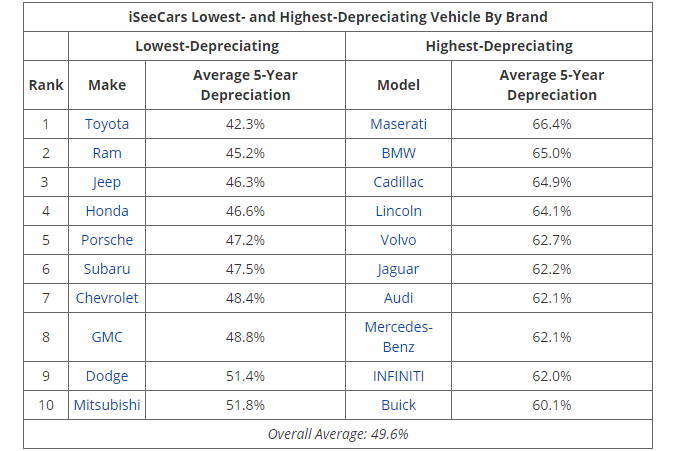
Toyota has long been synonymous with reliability, durability, and value retention in the automotive world. Unlike many brands that see their vehicles plummet in worth the moment they roll off the lot, Toyotas often defy depreciation trends, maintaining their value better than most competitors. But which models stand out as the true titans of value retention? And what factors contribute to their enduring appeal? Whether you’re a seasoned car enthusiast, a first-time buyer, or an investor eyeing the used market, understanding Toyota’s depreciation landscape can save you thousands and guide your next purchase. Let’s dive into the models that hold their value best, the reasons behind their resilience, and the surprises that might change how you view depreciation forever.
The Undisputed Champions: Toyota Trucks and SUVs
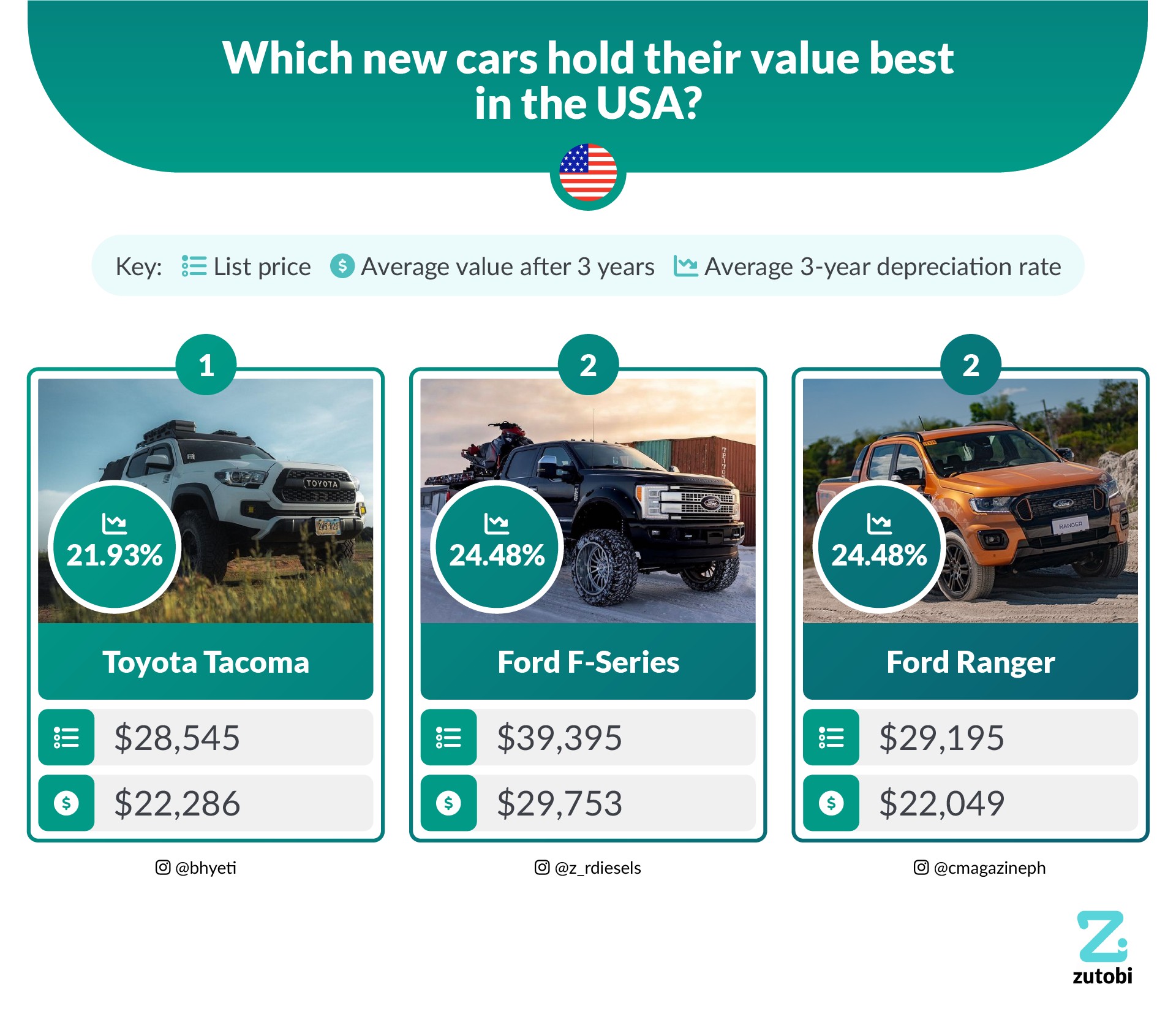
When it comes to holding value, Toyota’s trucks and SUVs are in a league of their own. The Toyota Tacoma, for instance, is legendary for its off-road prowess, rugged build, and minimal depreciation. Even after a decade of ownership, a well-maintained Tacoma can fetch upwards of 60% of its original MSRP—an astonishing feat in an industry where most vehicles lose 50% of their value within five years. The secret? A combination of bulletproof reliability, a loyal fanbase, and a design that ages like fine wine. The Tacoma’s body-on-frame construction and available TRD off-road packages ensure it remains desirable long after its peers have faded into obscurity.
The Toyota Tundra, though newer to the full-size truck segment, has already begun to carve out its niche as a value fortress. With its robust powertrain options and towing capacity that rivals heavyweights like the Ford F-150, the Tundra is proving that American-style utility doesn’t have to come at the cost of resale value. Early depreciation curves suggest that even base models retain over 55% of their value after three years, a testament to Toyota’s ability to blend American-style capability with Japanese precision.
For those seeking something more versatile, the Toyota 4Runner is a niche but unparalleled performer. This body-on-frame SUV, with its body-colored bumpers and available locking rear differential, is a favorite among overlanders and off-road purists. Its slow depreciation—often hovering around 50% after five years—is a direct result of its cult following and the fact that it’s one of the few SUVs still built with a traditional ladder frame. In a market where crossovers dominate, the 4Runner’s rarity and capability make it a depreciation-resistant gem.
Sedans That Defy the Odds: The Camry and Corolla Phenomenon
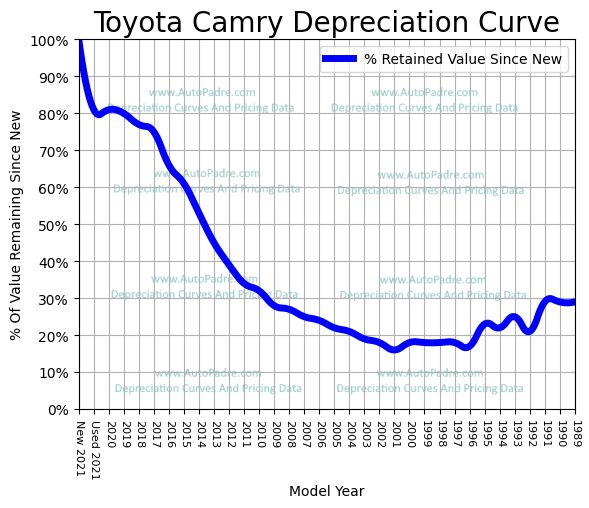
Toyota’s sedans may not command the same rugged allure as its trucks, but they are the unsung heroes of depreciation resistance. The Toyota Camry, often dismissed as a “boring” choice, is actually one of the best values in the used car market. Its depreciation curve is remarkably flat, with models from five years ago still selling for 40-45% of their original price. The Camry’s secret weapon? A reputation for longevity. With proper maintenance, many Camrys easily surpass 200,000 miles, making them a low-risk investment for budget-conscious buyers. The recent redesign, which introduced sharper styling and hybrid options, has only bolstered its resale appeal.
Then there’s the Toyota Corolla, the compact sedan that refuses to die. In an era where sedans are rapidly being replaced by crossovers, the Corolla’s depreciation remains stubbornly low. A ten-year-old Corolla can still be had for under $10,000, a price point that makes it a favorite among college students, rideshare drivers, and budget-minded families. Its simplicity, fuel efficiency, and Toyota’s legendary reliability ensure that it never becomes a financial burden. Even the hybrid version, with its stellar MPG ratings, holds its value better than most non-luxury hybrids on the market.
The Toyota Avalon, though discontinued after 2022, deserves a special mention for its near-luxury depreciation profile. As Toyota’s flagship sedan, the Avalon was positioned as a premium alternative to the Camry, yet it never suffered the same steep value drops as its German rivals. A well-equipped Avalon from three years ago can still command 50% of its original price, thanks to its spacious interior, smooth ride, and Toyota’s reputation for building cars that last. For buyers seeking a near-luxury experience without the luxury depreciation penalty, the Avalon was a rare find.
The Hybrid and Electric Wildcards: Prius, RAV4 Hybrid, and Beyond
Toyota’s hybrid lineup is a masterclass in depreciation mitigation, thanks to the brand’s early adoption of electrification and its ability to blend efficiency with practicality. The Toyota Prius, the pioneer of mass-market hybrids, remains one of the most value-retentive cars on the road. A 2015 Prius, for example, can still be purchased for around $12,000—less than half its original MSRP—while delivering fuel economy that most modern cars can only dream of. The Prius’s quirky design and stigma have done little to dampen its resale value, proving that efficiency and practicality will always win in the long run.
The Toyota RAV4 Hybrid is another standout, combining the brand’s SUV dominance with hybrid efficiency. With a depreciation rate that lags behind even the standard RAV4, the hybrid version offers buyers a way to future-proof their investment. As gas prices fluctuate and emissions regulations tighten, the RAV4 Hybrid’s ability to deliver 40+ MPG while retaining 60% of its value after three years makes it a no-brainer for eco-conscious buyers. Even the fully electric Toyota bZ4X, though still in its infancy, is expected to follow a similar trajectory, thanks to Toyota’s growing EV infrastructure and brand trust.
Factors That Make Toyota Depreciation a Non-Issue
So, what’s the secret sauce behind Toyota’s depreciation-defying prowess? Several key factors set the brand apart. First is brand trust. Toyota’s reputation for building cars that last is unmatched, with models like the Land Cruiser and Hilux achieving mythical status for their ability to survive decades of abuse. This trust translates into higher resale values, as buyers are willing to pay a premium for a vehicle with a proven track record.
Second is supply and demand. Toyota’s production consistency ensures that even older models remain in demand, particularly in markets where reliability is paramount. The used Toyota ecosystem is vast, with parts readily available and a thriving aftermarket, which further bolsters resale values. Unlike brands that struggle with parts shortages or declining dealer networks, Toyota’s global presence ensures that its vehicles never become obsolete.
Finally, there’s design philosophy. Toyota’s conservative approach to styling—favoring timeless designs over flashy trends—means its cars don’t look dated as quickly as their competitors. The Camry’s recent redesign, for instance, was met with praise for its modern yet understated aesthetic, a far cry from the overly aggressive styling of some rivals. This attention to longevity in design ensures that Toyotas don’t suffer the same “dated” stigma that plagues faster-styled vehicles.
Where Toyota Falls Short: The Models to Approach with Caution
While Toyota’s depreciation story is overwhelmingly positive, it’s not without its exceptions. Some models, particularly those in segments where Toyota has less dominance, can suffer from steeper value drops. The Toyota Yaris, for example, was discontinued in the U.S. due to low sales, and its resale values reflect that. A used Yaris can depreciate as quickly as any subcompact, making it a risky investment unless purchased at a significant discount.
The Toyota C-HR, with its polarizing styling, has also struggled to retain value. While its hybrid version offers decent fuel economy, the C-HR’s futuristic design hasn’t aged gracefully, and its niche appeal limits its resale market. Buyers who prioritize style over practicality may find themselves taking a bigger hit when it’s time to sell.
Even the Toyota Sienna, though a fantastic minivan, faces stiff competition from more luxurious or tech-laden alternatives. While it holds value better than most minivans, its depreciation can still outpace that of Toyota’s trucks and SUVs. For buyers seeking a minivan, the Sienna is a safe bet, but it won’t command the same premium as a Tacoma or 4Runner.
Investing in a Toyota: A Long-Term Strategy
For those looking to maximize their investment, Toyota offers a rare opportunity to buy a vehicle that not only serves you well but also appreciates in desirability. The key is to focus on models with proven track records, such as the Tacoma, 4Runner, Camry, and RAV4 Hybrid. Pairing these with proper maintenance—regular oil changes, timely recalls, and keeping the vehicle accident-free—can ensure that your Toyota retains its value better than 90% of the market.
Another strategy is to consider certified pre-owned (CPO) Toyotas. Toyota’s CPO program offers extended warranties and rigorous inspections, which can further boost resale value. A CPO Camry or RAV4, for instance, may command a higher price than a non-certified model, thanks to the added peace of mind.
For the truly adventurous, the used Toyota market is a treasure trove of underappreciated gems. Models like the Toyota FJ Cruiser or the Toyota Sequoia (pre-2023) can be found at bargain prices, only to appreciate as their scarcity grows. The FJ Cruiser, in particular, has developed a cult following, with prices for well-preserved examples climbing steadily in recent years.
Toyota’s depreciation story is one of quiet dominance—a testament to a brand that prioritizes substance over flash, reliability over trends, and longevity over short-term gains. Whether you’re eyeing a Tacoma for its off-road prowess, a Camry for its bulletproof dependability, or a Prius for its fuel-sipping efficiency, Toyota offers a path to ownership that minimizes financial regret. In a world where most cars lose value the moment they’re driven off the lot, Toyota stands as a rare exception: a brand that rewards loyalty, both on the road and in the resale market. So, the next time you’re in the market for a vehicle, ask yourself: Do you want to buy a car that depreciates like a rock, or one that holds its value like a diamond? With Toyota, the choice is clear.