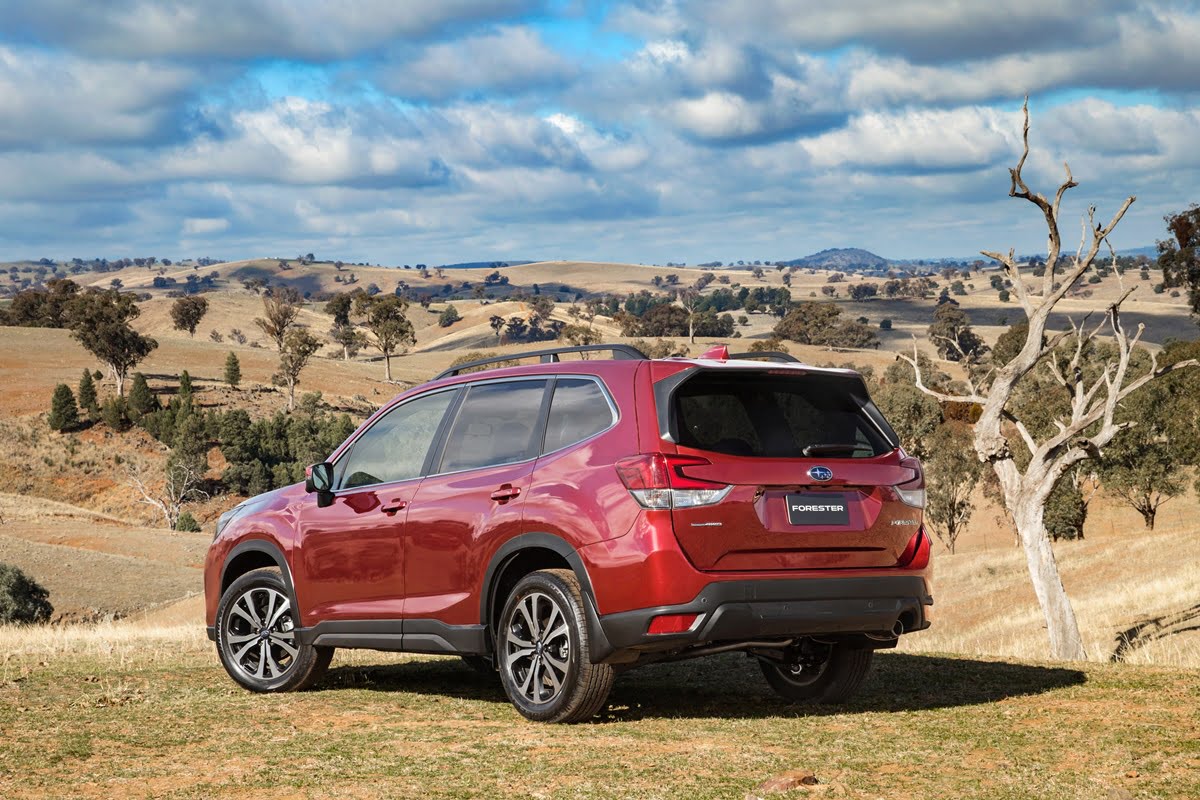
The Subaru Forester has a peculiar talent for staying in the conversation long after first impressions fade. People don’t just notice it—they keep looking back. One day it’s the stance: tall, deliberate, and ready for anything. The next day it’s the way it disappears into everyday life—quietly competent, never flamboyant. And then there’s the common observation that always returns when drivers talk about it: “It feels capable, even when you’re not trying.” That isn’t superstition. Standard AWD does much of the heavy lifting, but the deeper fascination is how the Forester turns ordinary roads into a more forgiving experience, as if the car is quietly adjusting the world’s rough edges for you.
This review focuses on the Standard AWD setup—tested with the kind of mixed driving that reality loves: city stop-and-go, highway drifts, and the occasional detour where traction becomes more than a specification. The result is a story about confidence, but also about calm engineering—the sort that doesn’t shout.
First Impressions: A Familiar Shape with Purposeful Proportions
The Forester’s design doesn’t chase novelty. Instead, it refines familiarity into something practical and enduring. The roofline is upright enough to feel airy, while the front fascia looks purposeful rather than aggressive. It carries an everyday integrity: the kind that invites use. You don’t have to squint to imagine it loaded for a weekend, then commuting on Monday with the same composure.
Stand over the vehicle and the proportions make sense immediately. Visibility is strong, and that matters. When you can see clearly—up, across, and through your peripheral vision—driving becomes less about vigilance and more about flow. That’s often where AWD confidence begins: not with electronics, but with awareness.

Standard AWD in the Real World: Traction That Doesn’t Need Drama
All-wheel drive is frequently discussed like a switch—on for bad weather, off for good. The Forester’s Standard AWD behaves more like a continuous conversation. It’s not merely about having grip; it’s about sustaining it through transitions. That might sound subtle, but it’s the difference between “I can handle this” and “I don’t have to think about this.”
During testing, traction felt particularly reassuring when surfaces changed unexpectedly. Fresh rain on dry asphalt can feel slippery for a moment, especially when tires are searching for a consistent coefficient of friction. In those moments, AWD becomes more than power distribution. It becomes an exercise in stability management. Power is routed with an intent to maintain composure, and the car’s attitude stays remarkably neutral.
Here’s the common observation drivers make: “It feels planted, even when it shouldn’t.” The deeper reason is that the Forester’s AWD logic prioritizes predictability. Instead of reacting with theatrical corrections, it supports smooth torque delivery. The vehicle feels less like it’s rescuing you and more like it’s preemptively steering the outcome.
Chassis Feel: Comfort with an Understated Athleticism
A common misconception is that family SUVs must choose between comfort and control. The Forester approaches it differently. The ride is composed over broken pavement, yet the chassis doesn’t dissolve into float. There’s a certain tautness to how it responds—an ability to absorb without losing direction.
On winding stretches, the vehicle’s body motions look measured rather than exaggerated. Steering doesn’t demand your attention every second, but it still provides enough information for confident lane placement. This balance helps explain why the Forester earns a second glance from drivers who weren’t initially searching for an SUV upgrade. It feels grown-up. Not slow—simply not frantic.
And while AWD is often credited for stability, the more interesting factor is the integration. Suspension geometry, tire behavior, and driveline coordination all work together to create a sensation of inevitability. That’s fascination, too—mechanical coherence that’s hard to notice until you compare it with cars that feel disjointed.
Power Delivery: Smooth Progression, Not Posturing
The Forester’s acceleration character is best described as steady. It doesn’t try to impress with sudden surges. Instead, it offers a consistent cadence—enough thrust for merging, passing, and climbing without making the cabin feel busy.
In city driving, the drivetrain’s smoothness reduces fatigue. Short trips aren’t punctuated by harsh shifts or abrupt throttle responses. Out on the highway, the car maintains pace with minimal drama. That matters more than people expect, because the most reliable performance isn’t always the fastest—it’s the one that keeps you relaxed.
When you push a little harder—climbing grades or threading into traffic—the driveline feels ready. Standard AWD contributes here, but the real nuance is traction management under load. The car’s behavior feels less like it’s recalculating and more like it’s maintaining a planned trajectory.

Interior Practicality: The Quiet Genius of Everyday Ergonomics
Spend a week in the Forester and the interior begins to feel like a utility. Controls are arranged with logic. Seating positions encourage a natural posture, and the driving seat supports long sessions without turning comfort into a compromise.
Cargo space is more than a number—it’s a system. The ability to load bulky items without wrestling with awkward angles gives the Forester an unglamorous advantage. A vehicle becomes lovable when it reduces friction, and this one does that consistently.
Storage cubbies, rear-seat usability, and the ease of loading gear all contribute to the same psychological effect: you begin to treat the car as an ally. That’s the deeper fascination behind the observation that it “just feels capable.” Capacity isn’t only about power; it’s about how effortlessly the Forester organizes your day.
Safety and Driver Assistance: Confidence Through Clarity
Modern driver aids are often evaluated like gadgets. Yet the best systems don’t feel like add-ons. They feel like a safety net—subtle, present, and easy to trust.
In testing, attention to road markings, lane centering behavior, and braking support contributed to a calmer driving rhythm. When the car communicates clearly—when alerts are timed sensibly rather than constantly—it reduces cognitive load. That’s crucial in long commutes and monotonous highways, where alertness can erode.
With AWD handling available, these systems amplify the sense of security. Not because they replace driving skill, but because they help maintain stability during moments of uncertainty.
Fuel Economy and Efficiency: Sensible Rather Than Heroic
Efficiency shouldn’t be judged as a trophy. The Forester aims for sensible consumption, not hypermiling artistry. In everyday conditions, the vehicle’s economy feels reasonable for what it accomplishes: reliable AWD traction, comfortable touring geometry, and a practical cabin.
The deeper takeaway is that efficiency remains stable because the car doesn’t encourage wasteful behavior. When driving feels composed, you tend to accelerate with restraint. That’s an overlooked benefit—an engineered calm that influences your habits.
Who This Forester Fits: The Buyers Who Keep Driving It
The Forester appeals to a particular kind of driver: someone who values preparedness over spectacle. These are people who want a car that can handle weather surprises, family logistics, and weekend detours without requiring a second set of coping mechanisms.
It also fits drivers who don’t chase maximum numbers. The Forester’s appeal is its repeatable competence. It’s the sort of vehicle that earns trust through repetition—every commute, every grocery run, every muddy road taken “just in case.”
Final Verdict: Standard AWD Tested, Confidence Proven
After testing the Subaru Forester with its Standard AWD, the fascination becomes clearer. The common observation—that it feels capable even when you aren’t pushing—arises from a well-orchestrated blend of traction logic, chassis coherence, and predictable power delivery. It’s not magic. It’s integration.
Ultimately, the Forester isn’t trying to be the loudest solution. It’s designed to be the one you reach for automatically. The AWD gives traction where it counts, but the real charm lies in how the car maintains composure across the everyday messiness of real roads. That’s why drivers don’t just buy the Forester—they keep noticing it, returning to it, and appreciating it long after the test route ends.