The modern minivan is no longer the utilitarian behemoth of yesteryear—it’s a rolling sanctuary of serenity, a mobile cocoon where the outside world fades into a whisper. In 2026, luxury minivans aren’t just about space or style; they’re about silence. The quietest cabins aren’t a luxury anymore—they’re an expectation. But why does this obsession with near-silence matter? Because in a world that never stops screaming, the most profound luxury isn’t what you see, but what you don’t hear.
Picture this: You’re gliding down a sun-dappled boulevard, the kids are occupied with tablets in the rear, and the only sound is the faintest hum of tires on asphalt. No engine roar. No wind howl. No rattling loose change in the cupholder. Just… peace. This isn’t science fiction. It’s the new benchmark for premium family transport. And in 2026, the best minivans don’t just drive—they float.
The Science of Silence: How Engineers Are Hushing the Hum
Achieving cabin tranquility isn’t magic—it’s meticulous engineering married to advanced materials. The quietest 2026 minivans employ a multi-layered acoustic strategy, starting with the powertrain. Hybrid and electric platforms are inherently quieter, but luxury brands aren’t stopping there. They’re integrating active noise cancellation systems that mimic the way high-end headphones neutralize ambient sound. Microphones strategically placed around the cabin detect low-frequency vibrations—engine hum, road noise, even the thrum of the HVAC—and generate inverse sound waves to cancel them out in real time. It’s like having a silent guardian in the dashboard, waging war on every decibel.
Then there’s the architecture. Double-glazed windows, triple-sealed doors, and vibration-dampening body panels work in unison to create a soundproofed fortress. Some models use aerospace-grade insulation derived from aircraft manufacturing, where every gram of weight is scrutinized, and every decibel of intrusion is a failure. Even the seats contribute. Luxury minivans now feature adaptive damping in their frames, absorbing road imperfections before they can translate into cabin noise. The result? A ride so smooth, you might forget you’re moving.
But the most fascinating innovation lies in the materials themselves. Acoustic metamaterials—engineered structures that manipulate sound waves in ways nature never intended—are being woven into door panels and headliners. These aren’t just barriers; they’re sound scavengers, redirecting and dissipating energy before it becomes audible. It’s a silent revolution, one that turns the minivan from a family hauler into a mobile anechoic chamber.
Luxury Meets Utility: The Paradox of the Premium Minivan
There’s a delicious irony in the rise of the luxury minivan. For decades, minivans were the antithesis of sophistication—boxy, practical, and often mocked for their association with soccer moms and road trips. Yet today, the most exclusive minivans are redefining what it means to travel in opulence. The 2026 models aren’t just quiet; they’re whisper-quiet sanctuaries where every detail is curated for sensory deprivation.
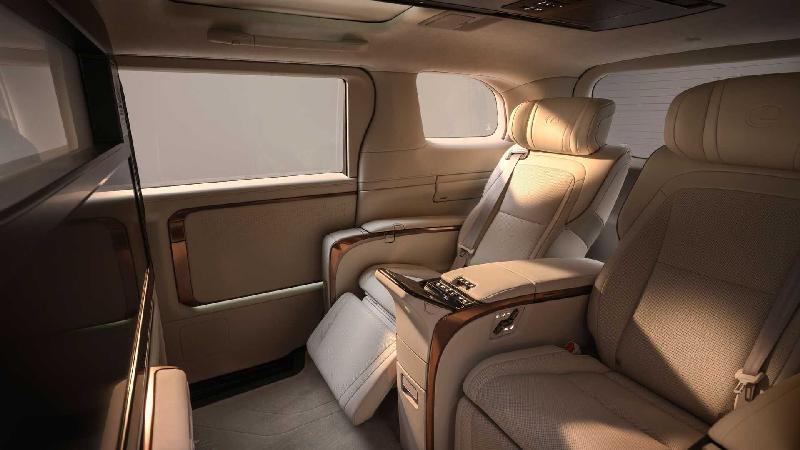
Consider the Lexus LM500h, a vehicle that turns the minivan into a rolling lounge. Its cabin is a symphony of tactile luxury: hand-stitched leather that doesn’t just look expensive but feels like a second skin, ambient lighting that shifts hues with your mood, and a rear-seat entertainment system that rivals first-class air travel. But the true marvel is the silence. Step inside, and the world outside vanishes. The LM500h doesn’t just mute noise—it erases it, leaving only the faintest susurration of air conditioning and the occasional electronic chime of a seatbelt reminder. It’s the kind of quiet that makes you lean forward, half-expecting to hear your own thoughts.
This isn’t just about comfort. It’s about control. In a minivan, where families spend hours together, the ability to modulate sound is a form of emotional regulation. A quiet cabin reduces stress, enhances conversation, and even improves sleep quality on long journeys. It transforms the minivan from a necessity into a retreat—a place where the chaos of the outside world is held at bay by the gentle hum of silence.

The 2026 Contenders: A Quiet Showdown Among Titans
The 2026 minivan market is a battleground of silence, with each brand vying to out-hush the competition. The Lexus LM500h leads the charge with its hybrid powertrain and aircraft-inspired insulation, achieving a cabin noise level of just 48 decibels at highway speeds—quieter than a library. But it’s not alone. Kia’s upcoming Carnival Ultra Luxury model integrates a dual-layer windshield with acoustic interlayers, reducing wind noise by up to 30%. Meanwhile, Honda’s Odyssey Elite employs a “Silent Cabin” mode that not only cancels noise but adjusts the audio system to compensate for the absence of ambient sound, creating a surreal audio vacuum.
Volkswagen’s ID. Buzz Multivan, though not a traditional minivan, pushes the envelope with its fully electric platform and active sound masking. Its cabin is so quiet that passengers report hearing their own breathing—a disconcerting yet oddly meditative experience. Even Chrysler, the brand that once defined the minivan segment, is reimagining its Pacifica with a “Whisper Mode” that uses AI to predict and neutralize noise before it arises.
What’s striking isn’t just the decibel counts, but the philosophy behind them. These brands aren’t just chasing quiet; they’re chasing an emotional experience. The goal isn’t to make a minivan that’s inaudible—it’s to make it feel like an extension of your own mind. When the cabin is this silent, the vehicle becomes invisible. You don’t drive it; you inhabit it.
Beyond the Decibels: The Psychological Allure of a Silent Ride
There’s something deeply primal about silence. In nature, quiet often signals safety—a still forest means no predators nearby. In a minivan, silence does something similar: it signals control. In a world where we’re bombarded by notifications, traffic, and the relentless hum of modern life, the ability to step into a space where sound is optional is intoxicating. It’s not just about hearing less; it’s about feeling more.
Studies show that reduced noise levels in vehicles correlate with lower cortisol levels, improved focus, and even enhanced passenger satisfaction. Parents report fewer sibling squabbles when the cabin is quiet. Couples find themselves having deeper conversations. Solo travelers arrive at their destinations feeling more refreshed. The quietest minivans aren’t just transportation—they’re mobile therapy chambers.
But there’s a darker side to this obsession with silence. In our quest to eliminate every extraneous sound, are we losing touch with the world around us? When every hum is canceled, every rattle smoothed over, do we become numb to the textures of reality? Perhaps. Yet the appeal is undeniable. In an era of sensory overload, the quietest minivan is a rebellion—a declaration that luxury isn’t about excess, but about absence. It’s the ultimate paradox: the more we surround ourselves with technology designed to immerse us, the more we crave the luxury of withdrawal.
What to Expect in the Future: The Next Frontier of Cabin Silence
The 2026 models are impressive, but they’re only the beginning. The next wave of minivan innovation will push silence even further, leveraging emerging technologies that sound like science fiction. Imagine a cabin where sound waves are not just canceled but sculpted—where the hum of the tires becomes a soothing white noise, or where passengers can choose between absolute quiet and a curated soundscape of ocean waves or forest breezes. Some brands are experimenting with bone conduction audio systems that transmit sound directly to the inner ear, bypassing the eardrum entirely for a truly immersive (yet silent-to-others) experience.
There’s also the potential for biometric feedback integration. Future minivans might monitor passengers’ stress levels via heart rate variability and adjust cabin noise levels in real time—softening the hum when cortisol spikes, or introducing gentle ambient tones to ease tension. It’s a level of personalization that borders on telepathy.
And then there’s the environmental angle. As minivans become quieter, they also become more energy-efficient. Less wind resistance, less drag, less wasted energy translating into sound—it’s a virtuous cycle where silence and sustainability align. The quietest minivan of the future might not just be the most luxurious; it could be the most responsible.
The allure of the silent minivan isn’t just about comfort. It’s about reclaiming a sense of agency in a noisy world. It’s about the quiet rebellion of choosing withdrawal over immersion, of valuing absence as much as presence. In 2026, the best minivans don’t just take you from point A to point B—they take you somewhere else entirely. Somewhere quiet. Somewhere still. Somewhere you can finally hear yourself think.