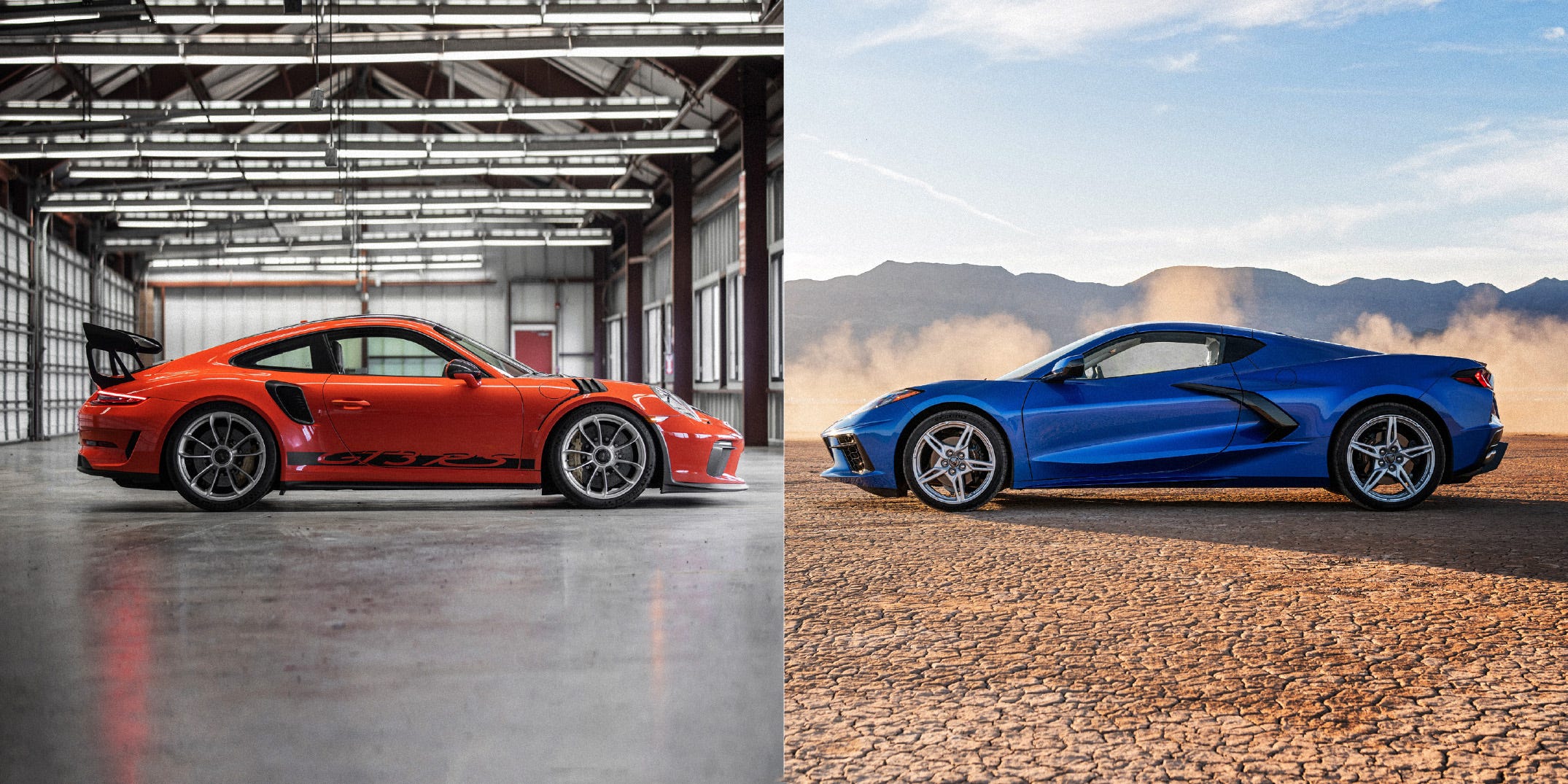
The allure of the Porsche 911 and the Chevrolet Corvette has long captivated enthusiasts, but few debates ignite passion quite like the comparison of their engine placements. The Porsche 911, with its iconic rear-engine layout, and the Corvette, a mid-engine titan in its modern iterations, represent two philosophies of automotive design. One whispers of tradition, the other roars of innovation. Yet, beneath the surface of this rivalry lies a deeper fascination—one that speaks to the very soul of what makes a sports car exhilarating.
At first glance, the distinction between rear and mid-engine configurations seems technical, even esoteric. But for those who feel the thrill of acceleration, the precision of handling, or the symphony of an engine singing at high revs, these differences are anything but trivial. They shape the character of each car, dictating not just performance but the very essence of the driving experience. To understand why one might favor the 911’s tail-heavy balance or the Corvette’s surgically precise weight distribution is to uncover what truly sets enthusiasts’ hearts racing.
The Porsche 911: A Legacy Carved in the Rear
The Porsche 911’s rear-engine layout is more than a design choice—it’s a statement of identity. Introduced in 1964, this configuration was born from necessity and refined into an art form. By placing the engine behind the rear axle, Porsche created a car that is instantly recognizable, its silhouette a silhouette of speed and purpose. But why does this arrangement endure, even as mid-engine layouts dominate in other high-performance machines?
The answer lies in the 911’s driving dynamics. A rear-engine car, when mastered, offers a unique blend of agility and drama. The weight bias toward the rear axle provides natural traction under acceleration, allowing the car to squat slightly and dig in its heels. This is the essence of the 911’s character—its ability to feel alive, almost sentient, as it responds to every input from the driver. The steering, though often described as heavy, rewards precision, offering a direct connection to the road that few other cars can match.
Yet, the rear-engine layout is not without its challenges. Oversteer, the tendency for the rear to break loose, is a constant companion, demanding respect and skill. This is where the 911’s magic lies—it doesn’t just drive; it teaches. It forces the driver to be engaged, to anticipate, and to correct. In an era where electronic stability control can tame even the most unruly of machines, the 911’s purity is a breath of fresh air. It is a car that rewards mastery, one that feels more alive with every lap or twist of the road.
But the rear-engine layout also shapes the 911’s aesthetic. The long hood, the sweeping roofline, the rear haunches—all are a direct result of packaging the engine where it is. This design language is unmistakable, a visual shorthand for performance that has been imitated but never truly duplicated. The 911’s silhouette is a testament to the idea that form follows function, and in this case, function is wrapped in a package that is as timeless as it is thrilling.
The Chevrolet Corvette: Mid-Engine Revolution in a Bowtie
If the Porsche 911 is a symphony of tradition, the Chevrolet Corvette’s mid-engine evolution is a bold, modern overture. For decades, the Corvette was a front-engine icon, a symbol of American muscle and affordability. But as performance expectations soared, so too did the need for a fundamental shift in design. Enter the mid-engine Corvette—a car that redefines what it means to be a supercar killer from the heartland of America.
The mid-engine layout, with the engine positioned between the driver and the rear axle, is the gold standard for high-performance cars. It offers a near-perfect 50/50 weight distribution, a balance that translates to razor-sharp handling and a sense of neutrality that is almost surgical in its precision. The Corvette’s transition to this configuration wasn’t just about chasing lap times; it was about redefining the Corvette’s identity. No longer just a muscle car with European aspirations, the mid-engine Corvette is a true supercar, one that can hold its own against the likes of Ferrari and Lamborghini.
But the benefits of a mid-engine layout extend beyond pure performance. The driving experience is transformed. The car feels more balanced, more predictable. The steering is lighter, the throttle response more immediate. There’s a sense of effortlessness, a feeling that the car is an extension of the driver rather than a force to be tamed. This is the Corvette’s newfound confidence—a confidence that comes from knowing that every input will be met with a predictable, exhilarating response.
Yet, the mid-engine Corvette is not without its critics. Some purists argue that the car has lost a piece of its soul, that the raw, tail-happy nature of the rear-engine 911 is something the Corvette can never replicate. But this misses the point. The Corvette’s mid-engine layout isn’t about abandoning tradition; it’s about embracing the future. It’s about proving that American ingenuity can still shock the world, that a car built in Bowling Green can stand toe-to-toe with the best that Europe has to offer.
The mid-engine Corvette also represents a shift in how we perceive performance. It’s no longer just about straight-line speed or the thrill of a tail-out drift. It’s about precision, about the kind of handling that makes every corner feel like a dance. The Corvette’s mid-engine layout is a declaration that performance can be both brutal and balletic, that a car can be a weapon on the track and a joy on the street.
The Battle of Philosophies: Why the Debate Endures
The rivalry between the Porsche 911 and the Chevrolet Corvette is more than a clash of specifications or lap times. It’s a battle of philosophies, a debate that cuts to the heart of what makes a sports car special. The 911’s rear-engine layout is a celebration of tradition, a reminder that sometimes the old ways are the best ways. The Corvette’s mid-engine evolution is a testament to progress, a bold step into a future where performance knows no bounds.
At the core of this debate is the question of what a sports car should be. Should it be a challenge, a machine that demands skill and rewards mastery? Or should it be an instrument of precision, a tool that responds to the slightest touch with balletic grace? The answer, of course, is that it depends on the driver. The 911 speaks to those who crave engagement, who want to feel every nuance of the road beneath them. The Corvette appeals to those who seek a more modern, more accessible form of performance, one that doesn’t require a degree in physics to appreciate.
But perhaps the real fascination lies in the fact that both cars can coexist, that there is room in the world for both the 911’s raw, unfiltered thrill and the Corvette’s polished, high-tech prowess. This is the beauty of the sports car world—it’s not about choosing sides, but about celebrating the diversity of what makes driving exciting. Whether it’s the 911’s tail-happy antics or the Corvette’s surgically precise handling, each car offers a unique window into the soul of performance.
And that, perhaps, is the deeper reason for our fascination. The Porsche 911 and the Chevrolet Corvette are more than just cars; they are symbols of two different approaches to the art of driving. One is a relic of a bygone era, a machine that has stood the test of time. The other is a bold leap into the future, a car that proves that innovation doesn’t have to come at the expense of character. Together, they represent the best of what the automotive world has to offer—a reminder that the pursuit of speed is as much about passion as it is about engineering.
The debate will rage on, as it always has. But in the end, it’s not about which car is better. It’s about the thrill of the drive, the joy of the open road, and the unshakable belief that the perfect sports car is the one that makes your heart race every time you turn the key.