There’s a particular kind of expectation that forms in the space behind the driver. Many people call it “comfort,” but that word is too clean, too polite. Real rear legroom comfort is physical. It’s the difference between settling in and negotiating with your own knees. It’s the quiet drama of a tall passenger easing into a seat that either feels accommodating—or feels like it has been designed for someone else’s proportions.
In recent years, midsize sedans have become an increasingly persuasive compromise: they promise a more composed ride than compact cars, more everyday practicality than larger vehicles, and—when engineered well—rear seating that doesn’t punish long legs. Yet a common observation persists: some sedans appear generous on paper while still feeling cramped in person. The fascination with this topic isn’t merely about measurements. It’s about the surprising ways packaging, geometry, and restraint of design choices can turn a back seat into a surprisingly luxurious lounge or a frustrating waiting room.
This article takes a narrative look at the midsize sedan experience through the lens of a tall passenger test. The goal isn’t to crown a single “winner” out of thin air. It’s to understand what separates merely adequate legroom from genuinely restorative space—especially when someone is 6’2″ and carrying the sort of body mass that makes minor gaps feel monumental.
Why rear legroom feels different from front-seat comfort
Front seats often get attention because they’re where drivers live. Ergonomics, reach, and visibility tend to be optimized for that single position. The rear seat, by contrast, is frequently treated as a secondary stage—an afterthought shaped around the first act.
Legroom isn’t only about distance between the seatback and the front. It’s about the angle of the seat base, the shape of the under-seat structure, and how the front seat’s backrest contour intrudes into the footwell. Tall passengers also encounter a vertical problem: headroom and the seat’s “drop” toward the floor can either stabilize posture or invite an uncomfortable slouch.
The fascination deepens because you can’t simply “add space” without consequences. Designers must manage floor height, battery placement (in hybrid models), exhaust routing, and even crash-structure requirements. Those constraints are invisible at a glance—but they quietly write the rules of comfort.
The tall passenger reality check: knees, thighs, and the choreography of space
A tall passenger test is not a gimmick. It reveals the subtle choreography inside the cabin. Knees don’t simply need clearance; they need clearance that doesn’t collapse the seating posture. Thigh support matters just as much as raw leg extension. If the seat base is too high or too far forward, the passenger’s hips rotate slightly, and that rotation can compress comfort even when “legroom inches” appear acceptable.
In a rear seat, the passenger’s movement is constrained. There’s no opportunity to adjust the front seat to a perfectly ideal position. So the test becomes a study in compromise: can the seatback stay supportive, can the footwell remain usable, and can the passenger remain relaxed instead of performing constant micro-adjustments?
One quick indicator is how the passenger’s lower legs interact with the floor and center tunnel. Another is whether the passenger must angle their knees toward the doors or whether they can keep their legs aligned forward. Those details are the difference between “space to sit” and “space to breathe.”
Seatback depth, recline behavior, and the illusion of availability
Many people assume that a taller car automatically offers better rear legroom. That’s only partly true. The more accurate question is how far the seatback sits from the front seat cushion and how the seatback profile changes under load.
Some sedans have deep seatbacks that feel supportive in normal use but limit leg room when the driver’s seat is positioned for a tall person. The problem is compounded by recline behavior: if the rear seatbacks are designed for a comfortable viewing angle rather than leg clearance, the lower portion of the seatback can still interfere.
There’s also a psychological illusion at play. Even when clearance exists, the space can feel “thick” rather than airy. Materials, carpet thickness, and the presence of storage compartments can create a sense of enclosure. The mind reads that enclosure as cramp—even if the ruler measurement says otherwise.

Footwell design: where comfort is either earned or lost
The footwell is the hidden handshake between driver positioning and rear passenger comfort. On many midsize sedans, the center tunnel shapes the available floor area. A deep tunnel may reduce usable width near the passenger’s feet. Meanwhile, the floor height changes the geometry of leg extension.
For tall passengers, this means the “best rear legroom” often comes from a well-balanced footwell rather than simply long distance to the seatback. Ideally, the floor remains relatively flat and the tunnel is not overly aggressive in height. Even a small improvement can make a dramatic difference for someone who needs to keep legs comfortable without shifting repeatedly.
There’s also the matter of storage and vents. If heat ducts or structural ribs intrude into the footwell, the passenger’s shoes may fit but their feet can’t settle into a relaxed position. A truly accommodating sedan lets the passenger park their feet with minimal friction—physical and mental.
Headroom and the tyranny of the roofline
Rear legroom is only half the equation. Tall passengers quickly learn that headroom can steal comfort even when knees are happy. A sedan’s roofline is carefully shaped for styling, aerodynamics, and structural strength. The result may be a cabin that looks graceful from the outside yet feels compressed at the back.
Headroom depends on seat cushion height, the slope of the seatback, and the distance from the top of the seat to the roof’s inner panel. When headroom is insufficient, the passenger doesn’t just feel cramped—they become hyperaware. That awareness changes posture, which then changes how legs rest, creating a domino effect of discomfort.
In many best-case designs, designers manage to protect headroom by using an efficient seat cushion thickness, thoughtful seat geometry, and a roof profile that doesn’t aggressively taper above the rear seating position.
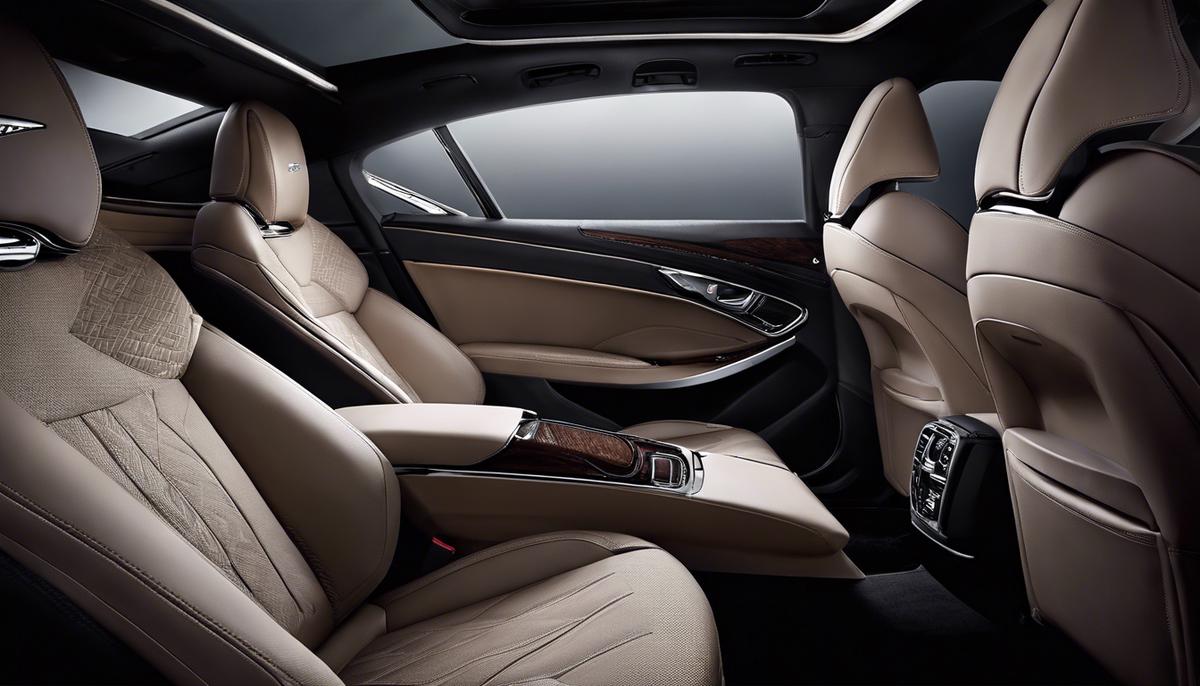
Weight, posture, and why “inches” don’t tell the whole story
It’s easy to reduce comfort to a list of numbers: inches of legroom, inches of headroom, maybe even a short checklist of seat thickness. But comfort isn’t merely linear. It’s volumetric. A tall passenger with substantial body mass experiences the cabin differently because their posture requires more stable contact surfaces.
Support points—seat base firmness, seatback contour, and the presence of side bolstering—determine whether the passenger can remain relaxed. If the seat is too firm, they feel fatigue sooner. If it’s too soft, they sink and their knees rise toward the front seat, narrowing the usable space.
This is where “best rear legroom” becomes a deeper phenomenon. The fascination isn’t about winning a spec sheet. It’s about noticing how engineering tradeoffs can quietly reshape everyday life, turning a commute into a calm stretch of time instead of an endurance test.
How to evaluate midsize sedans for tall passengers on a real test drive
Don’t judge solely from the driver’s seat. The rear seat is its own environment. Start with the driver’s seating position: set it as you would normally, then climb into the back and check for clearance without forcing a pose.
Look for three practical signals. First, can the knees remain comfortably forward without pressing into the seatback or the center console? Second, can the feet settle without scraping or hovering? Third, does the passenger feel visually boxed in—roof close, walls too near—or does the cabin feel open enough to forget the space constraints?
Also, pay attention to how the seatback behaves. Some sedans offer rear seats that feel supportive in the upright position but reduce legroom when the backrests are reclined. Others maintain consistent clearance, making the passenger feel free to shift into a more relaxed posture.
Finally, consider the “time factor.” A quick glance may hide discomfort. Let the passenger sit for a minute or two. Comfort often becomes obvious only when motion stops.
The broader appeal: rear legroom as a signal of thoughtful design
There’s a reason people get almost poetic about rear legroom. It’s a proxy for respect. A sedan that truly accommodates tall passengers reflects a design team willing to spend engineering effort where it isn’t always visible in marketing photos.
When a car earns rear comfort, the entire cabin feels more intentional. Doors open more smoothly because people aren’t trapped in awkward entry angles. Exits don’t require contortions. Even the act of waiting at a light feels different because posture remains stable and unstrained.
What looks like luxury from the outside becomes practicality on the inside. And that’s where fascination crystallizes: the rear seat reveals how well a manufacturer understands real humans—people with different proportions, different ways of sitting, and different definitions of “enough.”
Conclusion: choosing a midsize sedan that doesn’t compromise the back seat
The best midsize sedans for rear legroom aren’t defined only by maximum measurements. They’re defined by how space behaves under real conditions: how the footwell supports natural placement, how the seatback profile avoids intrusive pressure, and how headroom protects posture rather than punishing it.
A tall passenger test turns abstract specs into lived experience. It answers the question that matters most on long drives: will comfort stay consistent, or will it collapse the moment you settle in?
When a sedan succeeds, it doesn’t just provide room. It creates ease. It gives the back seat a sense of calm authority—an oasis where legs can rest, shoulders can drop, and the journey feels less like negotiation and more like arrival.