The driveway can feel like a courtroom. Every angle, every badge, every reflected highlight on the paint becomes evidence. And yet, the modern performance debate doesn’t always ask the traditional question—fast on a road, yes, but at what cost, with what compromise? Instead, it asks something stranger: what does “better” even mean when the powertrain itself refuses to behave like the ones we learned to love?
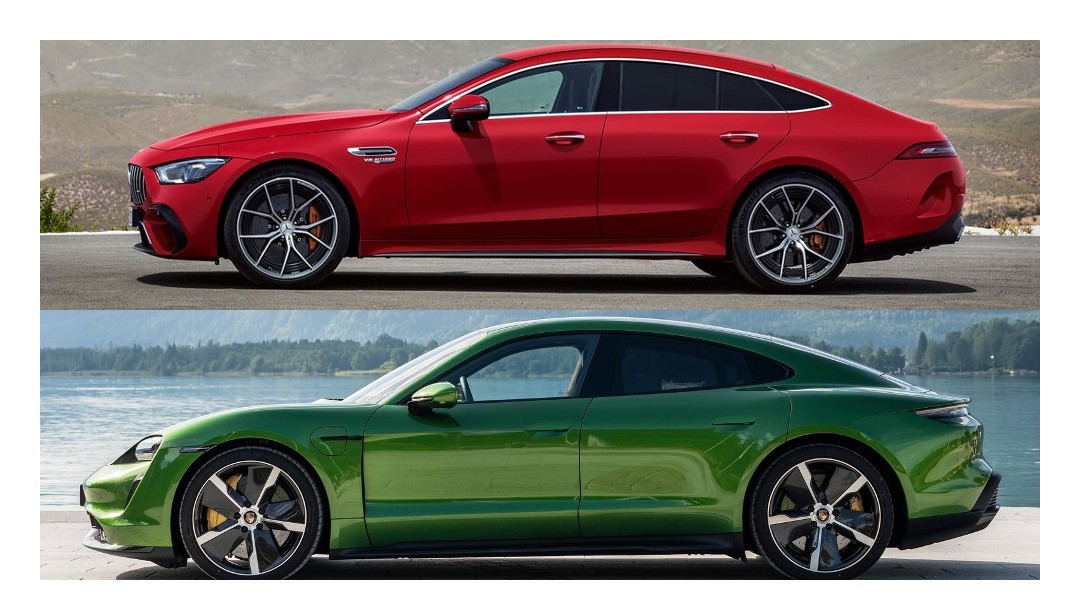
Step into that unresolved argument with two icons that don’t merely compete—they redefine the conversation. The Mercedes-AMG GT 63 brings muscle, drama, and combustion’s unfiltered attitude into the present moment. The Porsche Taycan Turbo, meanwhile, arrives as an engineered whisper that can suddenly become a thunderclap. Together they form a striking contrast: 4-door EV vs gas, each promising a different kind of certainty. The shift in perspective begins before you even press the throttle.
First Contact: Two Silhouettes, Two Philosophies
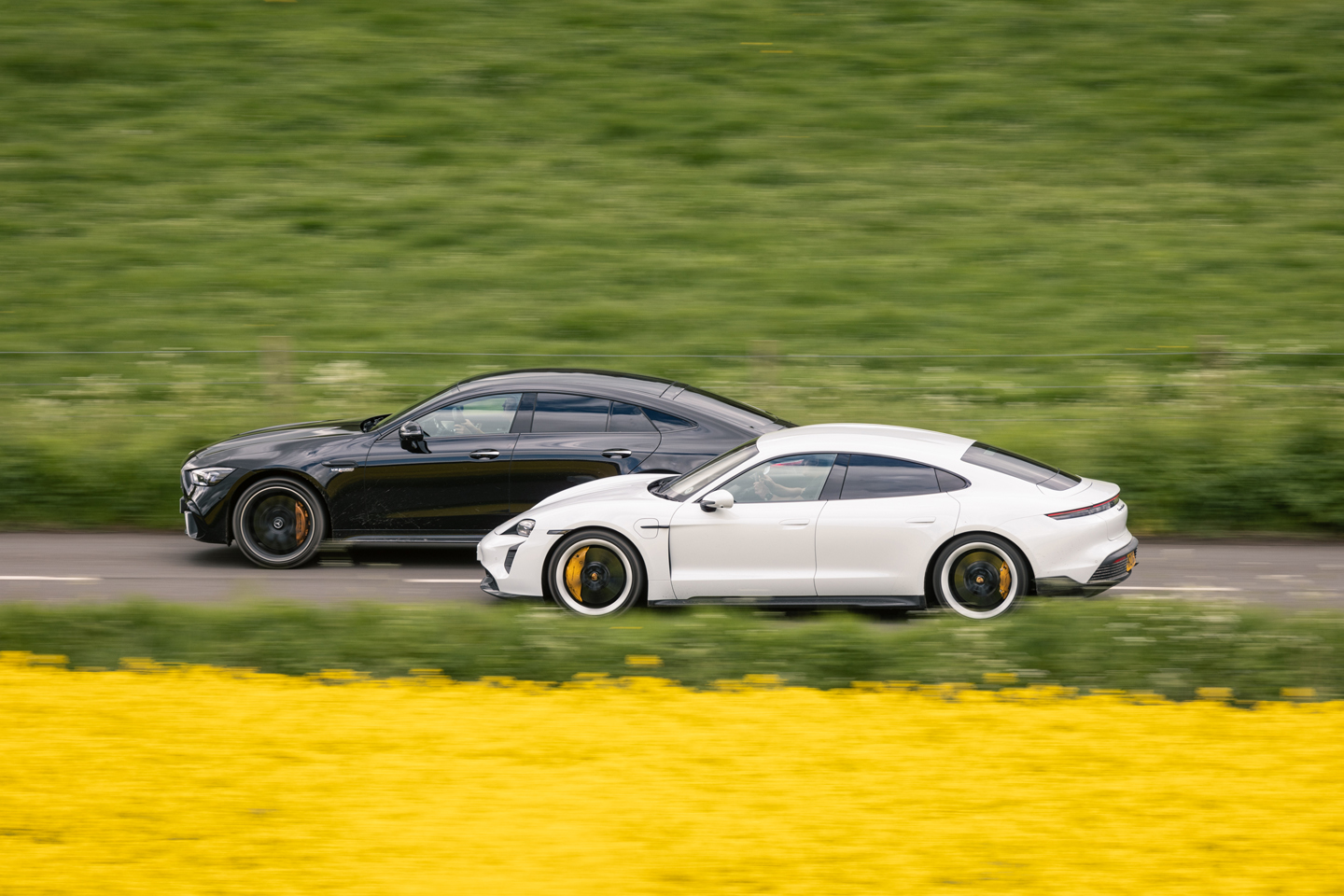
From a distance, both cars broadcast performance, but in different dialects. The AMG GT 63 speaks in broad gestures—stance, width, and an athletic aggression that looks engineered to lunge. The Taycan Turbo, sleeker and more purposeful, feels like a sculpture cut from intention. It doesn’t shout; it signals.
Open the door and the difference becomes tactile. The AMG GT 63 is classic in its theatre: controls placed like instruments waiting to be played. The Taycan is more digital in posture, as if the dashboard is a command center designed to prevent hesitation. Short sentences in the cabin. Long calculations behind the scenes.
This is where curiosity starts to sharpen. Are you seeking a car that reacts like a race-bred animal, or a machine that anticipates your request? Both can be exhilarating—but the path to that exhilaration diverges.
Power Delivery: The Weight of Instant vs the Promise of Noise
The Taycan Turbo leans into electricity’s central superpower: immediacy. Torque arrives like a thrown switch. No spool-up delay, no waiting for the engine to find its temperament. It’s the sensation of being propelled by certainty.
The AMG GT 63, in contrast, carries the romantic burden of combustion. Even when tuned for rapid response, it still belongs to the older family of motion—where sound and vibration aren’t side effects but emotional drivers. When it accelerates, it does so with a sort of cinematic momentum, like a camera dollying forward rather than snapping to a new angle.
In practice, the difference isn’t merely speed at one moment. It’s how each car invites you to drive. The EV can encourage smoother transitions because the response is so consistent. The gas-powered AMG can seduce you into theatrics—downshifts, throttle modulation, and the satisfaction of hearing effort made audible.
And that’s the pivot: one car makes the future feel effortless; the other makes the present feel alive.
4-Door Practicality: Performance, But Make It Livable
Four doors change everything, not because the rear seats suddenly become comfortable, but because the entire car is asked to do more than thrill. A good performance sedan must handle groceries, meetings, and the occasional “we’ll just go for a quick drive” that becomes a whole evening.
The Taycan’s rear packaging benefits from EV architecture, offering a sense of openness that can feel surprisingly airy at speed. The driving position is often described as planted, and that stability tends to travel through the car’s entire layout. You end up trusting it.
The AMG GT 63’s practicality is similarly persuasive, though it tends to feel more traditional in its logic. The cabin can be warmer in its human presence. It’s the difference between a showroom-clean cockpit and a tailored lounge where you can settle, then sprint.
Curiosity grows here too: will you value the EV’s efficiency-minded calm, or the AMG’s confident indulgence? The answer may depend less on specs and more on how your life actually unfolds.
Handling and Chassis: Confidence at the Edge of Adhesion
On paper, both cars chase grip and balance. On the road, they chase certainty differently. The Taycan Turbo often feels like it is managed by discipline—precision steering, composure through corners, and a composed electronic influence that reduces drama when drama might otherwise arrive.
The AMG GT 63 tends to feel more communicative in the classic sense. You sense weight transfer and tire load through the way the chassis moves and how the body reacts to steering inputs. Even when the car corrects itself, it can feel like the correction is happening with intention rather than purely computation.
Neither approach is inherently superior. One offers a kind of calculated calm. The other offers a performance dialogue, where you participate and the car answers back.
That’s the perspective shift: you stop asking which car is faster around a bend and start asking which one makes you feel more capable in the moment.
Braking Feel and Energy: The Different Language of Deceleration
Deceleration is where philosophies collide. The Taycan’s regenerative braking can be subtle or aggressive, but it’s always present—an ever-willing hand on the shoulder. You learn quickly that slowing down isn’t just about friction; it’s about harvesting momentum and reshaping the car’s energy economy.
The AMG GT 63 relies on conventional braking, delivering a more direct, familiar sensation. That can feel reassuring, especially if you grew up learning car control by feel rather than data. The brake pedal becomes a contract, not a suggestion.
In daily driving, the EV’s energy management can feel efficient in a way that quietly changes habits. In spirited driving, the AMG can feel more instinctive, encouraging you to treat the car like an extension of your body.
Curiosity turns again: are you drawn to technology that coaxes energy back, or to feedback that simply stops the car when asked?
Range, Charging, and the Myth of “One-Size-Approach”
EV ownership isn’t only about range numbers; it’s about behavior patterns. The Taycan Turbo turns planning into a kind of ritual—routes that make sense, charging sessions that fit your day, and a growing awareness of how speed and weather influence consumption.
But the most important point is psychological. EV drivers often describe a shift from anxiety to rhythm. The day becomes segmented by charging, and the car becomes less of a question mark and more of a schedule companion.
The AMG GT 63, by contrast, offers the comfort of familiar infrastructure. Refuel, resume, repeat. The gas world still has its ease: the simplicity of stopping, filling, and moving on without the same kind of time-slot thinking.
Yet, the modern twist is unavoidable. Even if you prefer gas, the EV discussion reframes how you think about energy, performance efficiency, and the future cost of speed.
Technology and Driver Experience: Who’s In Control?
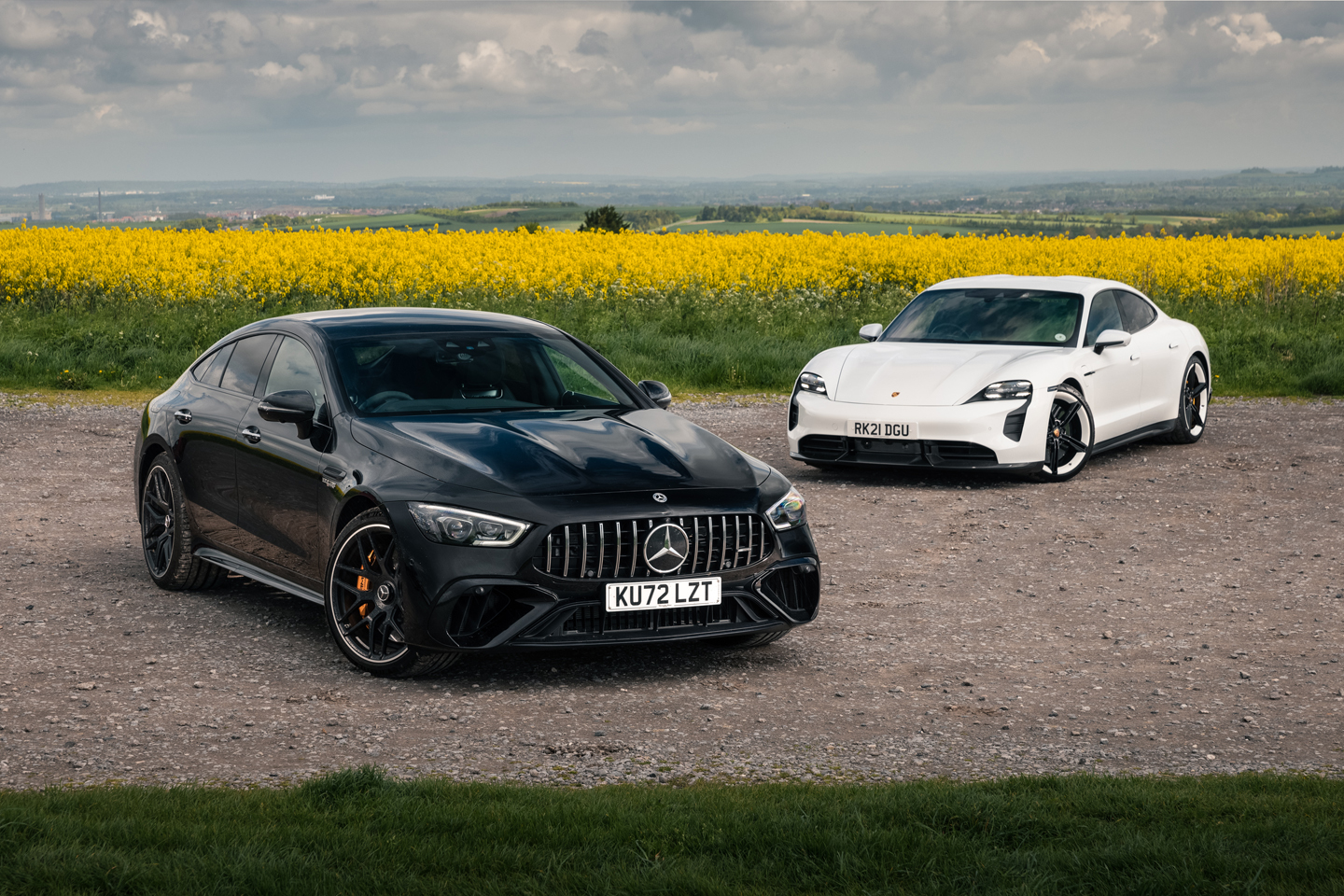
Both vehicles are technologically advanced, but their approaches can feel different. The Taycan Turbo can feel like it’s constantly refining your inputs, applying traction logic and torque distribution with a surgeon’s patience. It’s impressive—and sometimes so seamless that you wonder how much of the driving is truly yours.
The AMG GT 63 can feel more personal. Even with its electronic aids, it has a way of communicating effort. It can feel more “live,” less like the car is forecasting your intentions and more like it’s participating in your decisions.
Still, both reward attention. The EV rewards finesse through consistency. The gas rewards engagement through sensation. One car makes you reconsider what control means; the other reminds you what emotion in motion feels like.
The Verdict That Isn’t a Verdict: Choosing Your Kind of Thrill
If the argument were only about which is quicker or which handles better, the discussion would end quickly. But the real contest is psychological. The Taycan Turbo invites you to reframe performance as effortless thrust—controlled, instant, and cleanly delivered. The AMG GT 63 invites you to reframe performance as theatre—sound, vibration, and the satisfying immediacy of mechanical response.
So the shift in perspective isn’t just about EV versus gas. It’s about how you want to feel behind the wheel. Do you want the sensation of being accelerated by a silent grid of physics? Or do you want the muscular reassurance of combustion’s distinctive personality?
Both are capable of turning an ordinary street into a runway. The difference is the story each car tells while doing it.
Outro: Two Futures, One Decision
At the end of the drive, you’ll likely remember not only how fast each car went, but how each one made time behave. In one, torque arrives like a promise fulfilled instantly. In the other, performance unfolds like a scene you can hear and feel—an invitation to drive with your senses turned on.
The Mercedes-AMG GT 63 and the Porsche Taycan Turbo don’t simply compare. They challenge assumptions. They ask you to reconsider what “premium” means in a world where powertrains are no longer just engines—they’re philosophies.
And once that perspective shifts, the question stops being which car is better. It becomes: which kind of future do you want to live in, day after day?