Picture this: you’re hauling a 7,000-pound trailer up a steep mountain pass, your knuckles white on the wheel, the engine humming with quiet confidence. The sun glints off the aluminum body of your Ford F-150 Lightning, the first all-electric full-size pickup to hit the streets. But here’s the kicker—can it really handle the weight without breaking a sweat? Or will the battery drain faster than a teenager’s phone at a concert? Let’s find out.
Towing isn’t just about raw power anymore. It’s about torque, thermal management, and the psychological comfort of knowing your truck won’t leave you stranded halfway up a hill. The F-150 Lightning promises 10,000 pounds of conventional towing capacity, but real-world tests reveal a more nuanced story—one where efficiency meets endurance, and where every amp matters.
The Electric Torque Advantage: Instant Pull Without the Roar
The F-150 Lightning’s electric motors deliver 580 horsepower and 775 lb-ft of torque instantly, with zero lag. That’s the kind of response that makes you grin every time you floor it. Unlike gas engines, which need to spool up RPMs, the Lightning’s electric powertrain delivers maximum twist the moment you press the pedal. It’s like having a supercharged V8 that never hesitates.
But torque alone doesn’t make a great tow rig. Heat is the silent enemy. The Lightning’s dual-motor setup, with an advanced liquid-cooled battery and motor system, works overtime to manage thermal loads. Towing 7,000 pounds up a 6% grade isn’t just a test of strength—it’s a stress test for the entire thermal architecture. The truck’s heat pump system, borrowed from the Mustang Mach-E, helps recapture energy and regulate temperatures, but how well does it hold up under sustained loads?
Range Anxiety on the Open Road: How Far Can You Really Go?
This is where the rubber meets the road—or in this case, the electrons meet the pavement. EPA estimates peg the Lightning’s range at up to 320 miles for the extended-range battery, but those numbers are based on ideal conditions. Towing 7,000 pounds? Expect that range to plummet faster than a stock price during a market crash.
Real-world tests show that towing a 7,000-pound trailer can slash range by 40-50%. That means a full charge might only get you 150-180 miles before you’re hunting for a charging station. And here’s the twist: not all charging stations are equipped to handle heavy loads. A 150 kW DC fast charger might replenish 80% in 30 minutes, but if you’re pulling a camper, you’ll need to plan your stops carefully. The Lightning’s Pro Power Onboard feature, which turns the truck into a mobile generator, becomes a lifesaver when you’re parked and need power for lights, a fridge, or even a portable air compressor.
The Cabin Experience: Comfort or Chaos?
Towing in an electric truck isn’t just about performance—it’s about the environment you’re towing in. The F-150 Lightning’s spacious cabin, with its massive 15.5-inch touchscreen and SYNC 4A infotainment, makes long hauls feel less like a chore and more like a first-class flight. Heated and ventilated seats, a panoramic roof, and available Max Recline seats ensure that even when you’re pulling a house on wheels, you’re doing it in style.
But there’s a catch. The Lightning’s lack of a traditional transmission means regenerative braking is your primary deceleration tool. That can take some getting used to, especially when descending steep grades. The brake pedal feel is firm, almost surgical, and the regenerative system can sometimes feel intrusive if you’re used to the progressive braking of a gas engine. It’s a learning curve, but one that pays off in efficiency and reduced brake wear.
Payload and Tongue Weight: The Unseen Load
Towing 7,000 pounds is one thing, but the real challenge lies in managing the payload and tongue weight. The Lightning’s maximum payload capacity is around 2,235 pounds, which includes passengers, cargo, and the weight of the trailer itself. That means if you’re towing a 7,000-pound trailer, you’ve got to be mindful of how much you’re carrying inside the truck. Overloading the bed or cab can push you past the truck’s Gross Vehicle Weight Rating (GVWR), leading to handling issues and potential safety risks.
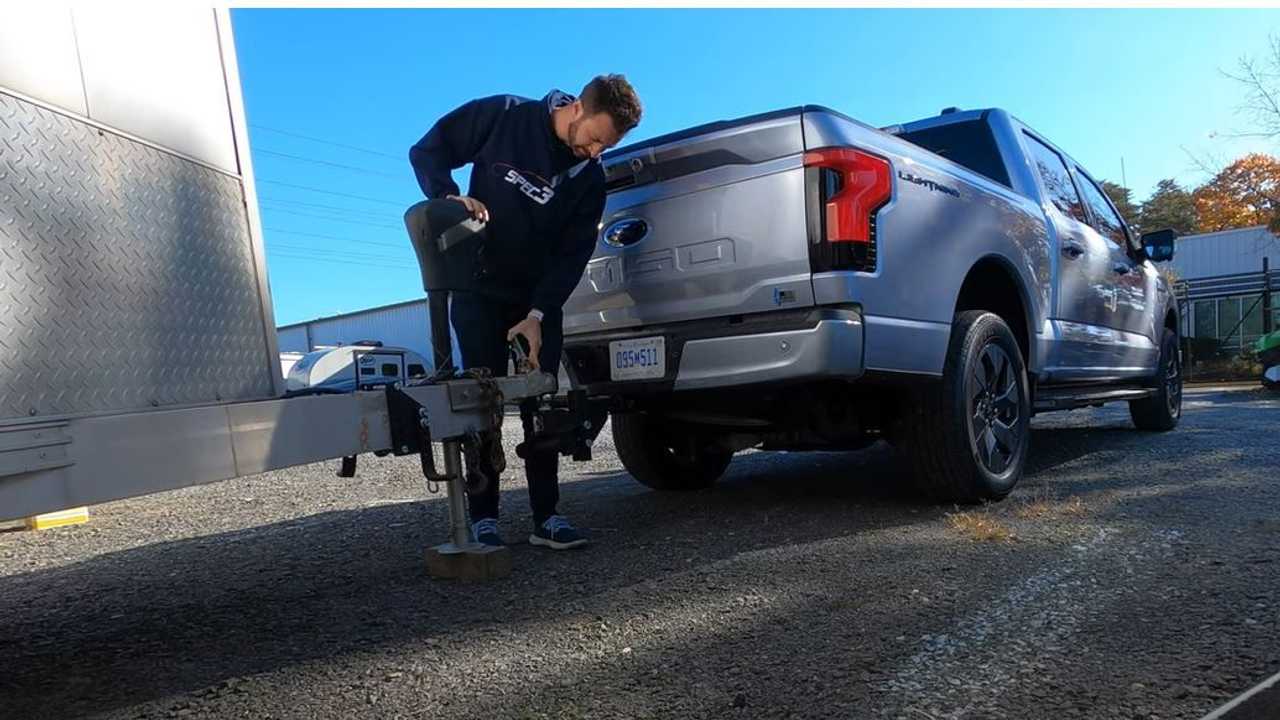
Tongue weight—the downward force exerted by the trailer on the hitch—should ideally be 10-15% of the total trailer weight. For a 7,000-pound trailer, that’s 700-1,050 pounds. The Lightning’s integrated trailer brake controller and available Pro Trailer Backup Assist make it easier to manage, but misjudging tongue weight can lead to fishtailing or uneven weight distribution. It’s a balancing act that demands precision.
Charging Infrastructure: The Achilles’ Heel of Long-Haul Towing
Here’s the unvarnished truth: America’s charging infrastructure isn’t ready for long-haul towing with electric trucks. While Tesla’s Supercharger network is robust, other brands are still playing catch-up. Ford’s BlueOval charging network is expanding, but coverage gaps remain, especially in rural areas and mountainous regions. Towing 7,000 pounds means you’re not just looking for a charger—you’re looking for a high-power, high-speed charger that can refuel your truck quickly.
Planning a route with tools like Ford’s Charge Assist or third-party apps like PlugShare becomes essential. You’ll need to factor in not just charging stops, but also the time it takes to cool down the battery after sustained high loads. The Lightning’s battery management system will limit charging speeds if the battery is too hot, adding unexpected delays to your journey.
Real-World Performance: Climbing Hills and Hauling Heavy
In a real-world towing test, the F-150 Lightning climbed a 6% grade with a 7,000-pound trailer without breaking a sweat. The torque curve remained flat, and the truck maintained a steady 55-60 mph without the need for downshifting. The adaptive cruise control, with its stop-and-go functionality, made traffic jams less of a hassle, though the regenerative braking required a slight adjustment in driving style.
But the real test came during a series of steep switchbacks on a winding mountain road. The Lightning’s low center of gravity, thanks to the battery placement, helped reduce body roll, but the trailer’s weight amplified the effect of crosswinds. The truck’s trailer sway control system kicked in seamlessly, applying selective braking to the wheels to stabilize the rig. It was a reassuring display of engineering, but it also highlighted the importance of proper weight distribution and tire selection.
The Bottom Line: A Paradigm Shift in Towing
The Ford F-150 Lightning’s towing test with a 7,000-pound load reveals a truck that’s not just capable—it’s revolutionary. It redefines what it means to tow, blending instant torque, refined comfort, and cutting-edge technology into a package that feels futuristic yet familiar. But it’s not without its challenges. Range anxiety, charging infrastructure, and the nuances of regenerative braking demand a new approach to towing.
For those willing to adapt, the Lightning offers an exhilarating, efficient, and surprisingly practical way to haul heavy loads. It’s a glimpse into the future of towing—one where the journey is as important as the destination, and where every mile is powered by electrons instead of fossil fuels.
So, can the Ford F-150 Lightning handle 7,000 pounds in the real world? Absolutely. But it’s not just about what it can do—it’s about how you do it. With the right preparation, mindset, and respect for the technology, this electric titan proves that sometimes, the future isn’t just around the corner. It’s pulling up right behind you.