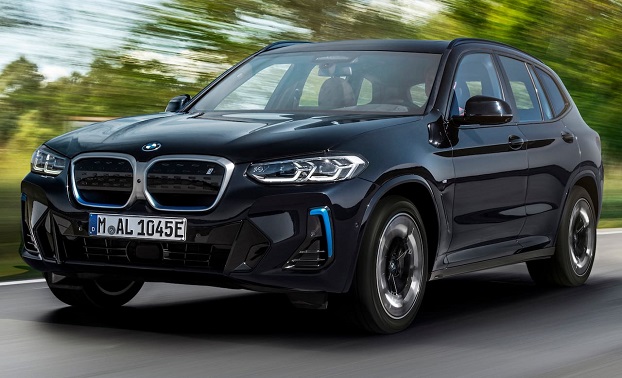
Luxury SUVs don’t merely transport you; they choreograph every mile. Between BMW’s X5 and Mercedes‑Benz’s GLE, the experience feels almost like choosing between two philosophies of comfort. One leans into sculpted athleticism, the other into stately composure. And yet, the most intriguing part isn’t what either vehicle advertises—it’s what you begin to notice once the everyday routine stops being the soundtrack and the road becomes the conversation.
Imagine the moment you press the start button. The cabin breathes with different intentions. The dash layout, the way controls fall beneath your fingertips, the tone of the driving modes—each detail seems to whisper a subtle promise: there’s a better angle to look at luxury than the one you already believe.
First Impressions: Design Language That Sets the Mood
BMW and Mercedes rarely chase the same aesthetic gravity. The BMW X5 arrives with a more taut presence, its bodywork suggesting readiness—like it’s always one glance away from taking the faster line. The grille and lighting signatures feel engineered for clarity, not nostalgia. Long, confident lines sweep back in a way that makes the SUV look composed even while stationary.
The Mercedes GLE, however, carries luxury with a more ceremonial cadence. Its design language tends to feel expansive and composed, with a focus on grandeur and visual symmetry. The front fascia often looks like it’s been shaped for presence—made to be seen from a distance and still admired at close range.
Neither is “better” in isolation. They simply invite you to respond differently. One asks you to engage. The other asks you to belong.
Cabin Atmosphere: Where Comfort Becomes a Signature
Enter the BMW X5 and you’re met with a cockpit-like driver focus. The layout feels purposeful, as if every element has a job to do, not merely an aesthetic role. Materials can feel crisp, and the overall ambiance often emphasizes ergonomic elegance. It’s comfort with a slight undertone of driver-centric intent.
Step into the Mercedes GLE and the cabin frequently reads like a private lounge. Softness is not only literal—seat comfort, insulation, and ambient lighting all contribute to a mood that feels deliberately curated. The sense of refinement is persistent, like a steady hum of certainty.
Here’s the shift in perspective: luxury isn’t just how soft the seats are. It’s the way sound is managed, how sightlines help you relax, how easily controls become second nature. Both vehicles can impress. The question is which kind of ease feels more like “you.”
Infotainment & Tech: Intuitive Control vs Conversational Sophistication
Modern SUVs are as much about software as they are about engineering. The X5 typically emphasizes a driver’s workflow: screens are arranged to feel accessible, and menus are designed to reduce cognitive friction. A sense of immediacy hovers over the experience—touch, glance, respond.
The GLE often leans into a more conversational style of tech interaction. The interface and connectivity features can feel more holistic, integrating comfort and convenience in a way that makes daily routines feel streamlined. Even if you’re not constantly “using” the technology, it tends to create the impression that the car is anticipating your next need.
This is where curiosity deepens. Spend time with the systems and you’ll learn that tech isn’t only about features—it’s about the psychological rhythm it creates. BMW frequently rewards active involvement. Mercedes often rewards relaxed trust.
Powertrains & Performance: Muscle With Different Attitudes
Both the BMW X5 and Mercedes GLE are built to deliver confidence, but they often communicate performance differently. The X5 tends to feel lively and responsive. Steering feedback and throttle mapping can make the vehicle feel alert, like it’s ready to adjust its temperament instantly.
The GLE frequently offers a more composed sensation of motion. It can feel smooth and effortless, with acceleration that feels sustained rather than hurried. The overall pacing may be more “grand travel” than “sporting sprint,” even when the performance numbers are impressive.
On winding roads, that difference becomes tangible. BMW’s chassis behavior can encourage you to lean into the drive—choose a line, feel the balance, then refine your approach. Mercedes can still feel athletic, but its default demeanor is serenity. It wants you to glide through motion rather than wrestle with it.
Ride Quality & Handling: The Art of Balance
Luxury isn’t the absence of movement—it’s the management of movement. The X5 often strikes a delicate equation: firmness where it improves control, compliance where it protects comfort. Even at higher speeds, the cabin may feel stable, and road imperfections can be subdued without turning the drive into marshmallow vagueness.
The GLE aims for refinement. Suspension tuning, noise suppression, and damping characteristics are frequently designed to filter harshness before it reaches your body. The result can feel soothing, like the car is translating the road into a language your nerves can digest.
So which is better? The answer depends on your definition of “smooth.” Some drivers interpret smooth as direct and responsive. Others interpret it as quiet and cushioned. The X5 tends to offer one kind of smoothness; the GLE offers another.
Interior Practicality: Room, Storage, and Real-World Ease
Luxury SUVs must do more than impress in parking lots. Consider the everyday details: how quickly you can stow bags, how convenient the rear seat access feels, how usable the cargo space is when life gets busy. Both vehicles are engineered with premium practicality, but their strengths can appear in different places.
The BMW X5 often emphasizes functional design that blends with sporty styling. Rear-seat comfort can be generous, and cargo capability can be tailored for real trips rather than showroom demonstrations.
The Mercedes GLE tends to focus on spaciousness and ease of movement inside the cabin. The rear seating experience often feels especially lounge-like, with a sense of openness that makes longer drives less taxing.
Curiosity pays off here. Try the door opening, note how the space feels when you stand behind the vehicle, then imagine a weekend packed for departure. The one that feels easiest will likely be the one you choose again.
Safety & Driver Assistance: Confidence You Can Feel
Safety technology has become less about novelty and more about reassurance. The X5 and GLE can both offer a suite of driver assistance features—adaptive assistance, monitoring systems, and enhanced awareness tools. But their value is felt differently.
BMW’s systems often feel integrated in a way that complements a more driver-involved style. You may notice how the vehicle communicates intent, nudges you toward better positioning, and supports you without overwhelming your decision-making.
The GLE’s systems often emphasize composure—making the driving experience feel steadier, especially in traffic or on long stretches. The promise here is simple: reduce stress, reduce workload, and keep you focused on the lane ahead.
Ownership Perspective: Cost, Value, and the Quiet Realities
Luxury isn’t only the purchase moment. It’s maintenance schedules, fuel economy expectations, insurance considerations, and how depreciation typically behaves in your region. While exact numbers vary, the general pattern for these premium marques is clear: both BMW and Mercedes prioritize engineering excellence, and that excellence can reflect in long-term expenses.
Where perspective shifts is in how you evaluate value. Consider resale desirability, availability of parts, and service network confidence. Also consider how often you use the features that differentiate each SUV. If you’ll rely on driver assistance daily, that becomes part of your practical value equation. If you’ll enjoy sporty dynamics frequently, that too becomes more than a “nice to have.”
The Decision: Choosing a Luxury Personality
Comparing the BMW X5 and Mercedes GLE can feel like comparing two ways of being comfortable. The X5 often invites engagement—an almost kinetic kind of luxury where control and responsiveness are part of the appeal. The GLE often invites relaxation—quiet refinement, an elegant sense of security, and a cabin that feels like a sanctuary.
Try this mental exercise: picture the drive you want most. Is it the road where you want to feel connected to the steering wheel and the chassis? Or is it the highway where you want the cabin to buffer the world until your destination arrives quietly?
Once you see that distinction clearly, the choice stops being purely technical. It becomes emotional. It becomes a fit between your expectations and the vehicle’s temperament.
Final Thoughts: A Better Angle on Luxury
BMW X5 and Mercedes GLE are both capable of luxury that feels expensive, but the most compelling difference is how they choreograph your attention. The X5 tends to sharpen the senses. The GLE tends to soften the edges. Either way, the promise is the same: a shift in perspective—toward a driving experience that doesn’t just satisfy your needs, but reshapes what you thought “premium” really meant.
When the keys turn and the miles begin, you’ll likely stop asking which SUV is objectively better. Instead, you’ll ask a more personal question: which one makes the journey feel like it was designed for you?