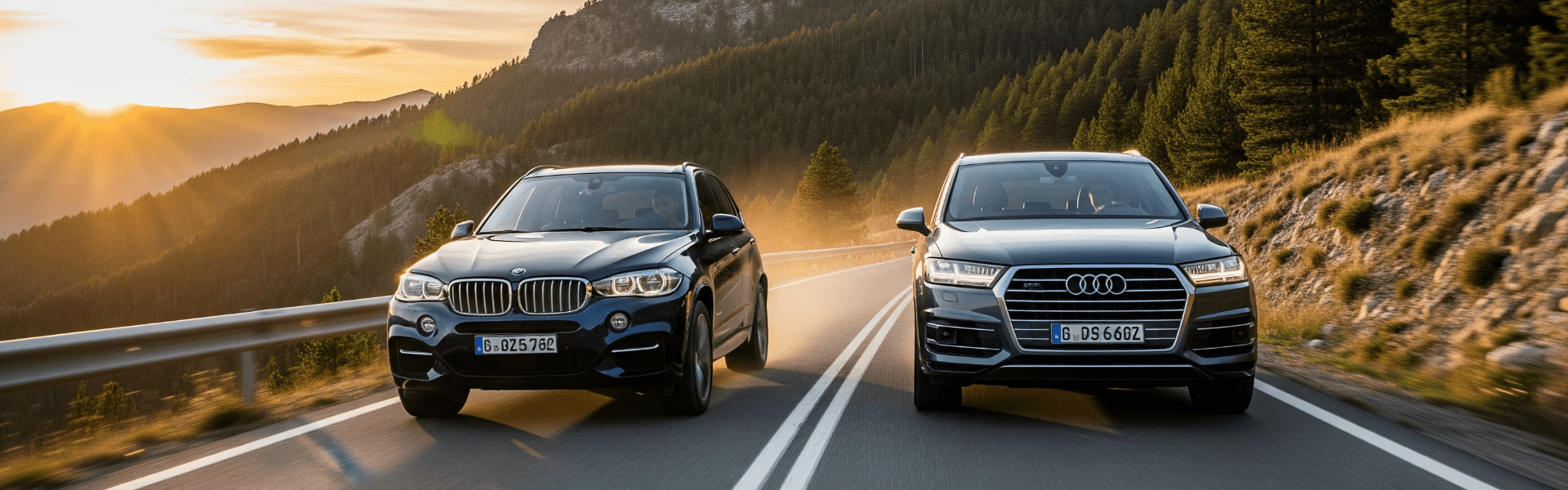
Two names. Two badges with their own gravitational pull. The BMW X5 and the Audi Q7 enter the midsize luxury SUV arena with a familiar promise—comfort, capability, and prestige. Yet the more you linger on the details, the more the surface tension breaks. The real question isn’t which one is “better” in a vacuum. It’s which one redefines the drive for you: the one that turns every commute into a private performance, or the one that wraps the world in a cocoon of composure and refinement.
Consider this a battle that begins long before the first turn of the steering wheel. It starts with the way the cabins invite you to sit. With the way the engines translate ambition into movement. With the subtle engineering choices that determine whether time feels quicker or slower behind the wheel. The X5 and Q7 may share the same broad mission—family-friendly luxury with serious road manners—but their personalities diverge like twin rivers after a fork in the landscape.
So, take a step back and let curiosity do the driving. By the end, you won’t just know the differences. You’ll feel the implications.
First Impressions: Presence, Proportions, and the Psychology of Design
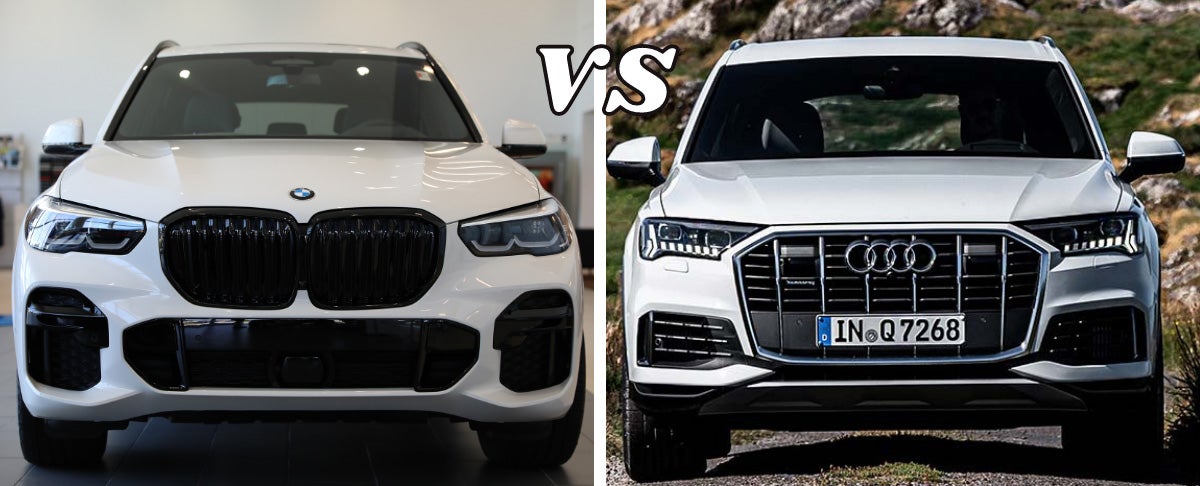
Design is often mistaken for decoration. In reality, it’s a negotiation between intention and perception. The BMW X5 tends to arrive with a poised, predatory elegance—lines that look like they’re already moving, even when the vehicle is still. The front fascia often reads as confident geometry, not mere styling. There’s an athletic tension to the stance, as if the SUV is holding a secret sprint in its stance.
The Audi Q7, on the other hand, frequently leans into a more deliberate, architectural calm. Its styling language can feel measured, like a well-edited sentence—nothing extraneous, everything purposeful. The grille and lighting signature may not shout as loudly as BMW’s, but they often create a “quiet authority” that grows on you with each glance.

Here’s the shift in perspective: you’re not choosing between two shapes—you’re choosing between two moods. The X5 tends to energize. The Q7 often steadies.
Cabin Atmosphere: Where Luxury Becomes a Habit
Spend ten minutes inside either cabin and you’ll notice how luxury expresses itself differently. The BMW X5 frequently prioritizes driver engagement through ergonomics that feel intuitive. Controls may feel angled toward you, encouraging a forward-leaning posture—both physically and emotionally. The overall vibe can feel “performance-adjacent,” even on normal errands.
The Audi Q7 often delivers luxury with an emphasis on serenity. Audi’s approach to interior design typically feels coordinated and refined, with an emphasis on material quality and an unhurried layout. The result is a cabin that can make road noise feel less intrusive, and long stretches of highway feel less demanding.
Comfort is not just softness. It’s the absence of friction—between you and the tasks of living. In one vehicle, you may find that the controls invite rapid decision-making. In the other, the environment encourages slow breathing and steady focus.
Tech and Interfaces: Intuition vs Immersion
Modern SUVs don’t merely transport. They mediate information and reduce mental overhead. This is where curiosity should sharpen into preference.
The BMW X5 often shines when it comes to driver-centered usability—systems that feel responsive, menus that tend to follow logical pathways, and an overall sense that the tech is there to complement motion. It can feel like a cockpit built for those who like to understand what the vehicle is doing while it’s doing it.
The Audi Q7 frequently emphasizes an immersive, holistic experience—technology that blends display, audio, and vehicle settings into a unified experience. There can be a “glance-and-go” calm to the setup, as though the system is gently anticipating what you want next.
When tech feels right, you don’t notice it. When it feels wrong, it becomes the loudest voice in the cabin. That distinction will matter more than the raw specifications ever could.
Powertrains and Driving Dynamics: The Soul of the SUV
Luxury is frequently advertised. Dynamics are frequently felt. The BMW X5 is often associated with a driving character that prioritizes balance—firmness without harshness, stability without dullness. Depending on configuration, the steering response can feel immediate, and the chassis can suggest confidence under spirited driving. It’s the kind of vehicle that invites you to test its boundaries, then rewards you for doing so responsibly.
The Audi Q7 often approaches driving with a different priority: composure. It can feel composed across varying road conditions, absorbing imperfections while maintaining poise. That “grown-up” demeanor is not about dullness—it’s about consistency. The vehicle may not always tempt you to chase the redline, but it can make you trust it when traffic tightens and weather turns.
Imagine two evenings: one where you take longer routes because the car makes the journey feel thrilling, and another where you arrive calmer because the SUV handled the road without asking for your attention.
Ride Quality and Handling: Firmness, Float, and the Art of Stability
Ride quality is where personal preference becomes a measurable reality. The X5 can lean toward a taut, controlled feel—especially when equipped with suspension setups tuned for sharper response. Even when it’s tuned for comfort, the chassis often retains a sense of purpose.
The Q7 frequently targets a smoother, more restful rhythm. It can feel especially refined on highways, where its stability can make the vehicle seem “unhurried.” For families, it’s the difference between arriving a little worn out versus arriving refreshed.
In this battle, the question becomes: do you want your SUV to feel like a sports sedan with more height, or like a luxury lounge that happens to move? Both are valid. Only one matches your personal tempo.
Space, Seating, and Practical Luxury
A midsize luxury SUV must juggle competing responsibilities. It must host passengers, swallow groceries, carry the week’s chaos, and still feel elegant doing it.
The BMW X5 typically offers a driver-focused layout that can still feel spacious and capable for occupants. Rear-seat comfort often competes strongly in this segment, with legroom and headroom that can satisfy both daily commuting and longer drives.
The Audi Q7 is widely associated with practicality, particularly when it comes to rear-seat accommodations and overall cabin usability. Many buyers gravitate toward its sense of spaciousness and straightforward comfort—features that matter when school schedules, carpool logistics, and weekend plans collide.
This is the place where luxury becomes tangible. Cupholders matter. Visibility matters. Door openings and storage nooks matter. The car that feels easiest to live with wins arguments that never appear on a spec sheet.
Safety and Driver Assistance: Confidence You Can Feel
Safety systems can become invisible, which is exactly how they should feel. Still, their behavior during critical moments—lane guidance, adaptive cruise coordination, collision mitigation—can influence how relaxed you are on the road.
The BMW X5 often pairs driver assistance features with a more driver-participatory style. It can feel like the vehicle supports your intent rather than replacing it.
The Audi Q7 typically emphasizes an assurance-first experience—systems that can feel measured and stable, designed to reduce stress in everyday driving scenarios.
Don’t underestimate how much calm matters. A safe SUV doesn’t just protect you; it changes how you experience the trip before anything ever goes wrong.
Performance for Real Life: Power, Efficiency, and Daily Usability
Performance isn’t only acceleration. It’s how the SUV behaves when you’re merging, climbing, or passing. It’s how quickly it responds when you need a confident burst and how smoothly it returns to cruise afterward.
The X5’s character often makes it feel eager and purposeful, turning normal driving moments into small victories. Its performance can feel connected—like the engine and chassis are synchronized under your command.
The Q7 can deliver strong everyday capability with a smoother, steadier temperament. It may not always feel as electrically stimulating, but it can feel dependable and effortless—an advantage when you’re balancing busy schedules.
Efficiency also shapes the ownership narrative. Less fuel consumption, fewer fuel stops, and predictable energy use can translate into a quieter life. The best performance is the kind that fits your habits, not the kind that only thrills on special occasions.
Ownership Considerations: The Quiet Decisions
Luxury SUV ownership is a long game. Maintenance schedules, service networks, tire wear patterns, and insurance costs all shape the experience after the initial excitement fades.
BMW and Audi both have dedicated ecosystems, but the specifics can vary by region and configuration. The wiser approach is to compare what you can actually predict: total expected service costs, the local availability of parts, and how your intended driving patterns will influence wear.
Then there’s resale value. Luxury brands often hold value differently depending on demand trends, model reputation, and option desirability. Choosing between the X5 and Q7 also means choosing the kind of story your SUV will tell in a few years—when it’s time to upgrade or when life asks for something new.
The Final Verdict: Match the SUV to Your Identity
The BMW X5 and Audi Q7 are both exceptional midsize luxury SUVs, but they appeal to different kinds of owners. The X5 tends to attract those who want their vehicle to engage them—to feel lively, responsive, and slightly addictive. It’s for the driver who likes to be part of the conversation between themselves and the road.
The Q7 tends to attract those who value serenity and refined stability—to enjoy the journey without feeling it demands performance theatrics. It’s for the person who wants the SUV to be a dependable sanctuary, ready for passengers, weather, and whatever the day throws at it.
Ultimately, this isn’t just a battle between two vehicles. It’s a decision about how you want your time to feel. Do you want the luxury of motion, or the luxury of composure? Either way, the ride will be impressive—because the real difference isn’t whether one is capable. It’s whether it resonates.
Choose the SUV that changes your perspective every time you climb in.
In the end, the X5 and Q7 aren’t simply competing for attention. They’re competing for a place in your routine—whether that routine is spirited, serene, or delightfully both.