There’s a particular kind of magnetism surrounding the BMW X1—not the loud, attention-seeking sort, but the quiet, persistent fascination that grows after the first glance. It’s easy to dismiss a subcompact luxury SUV as mere compromise: smaller than the “real” family crossovers, less commanding than larger BMWs, and often treated as an entry point rather than a destination. Yet the X1 has a different story. It’s the vehicle that asks you to notice details. The kind you feel at low speed, at highway merges, and in the moment you realize the dashboard isn’t just decorated—it’s engineered to steady you.
And yes, there’s a common observation people make: the X1 is “just” an entry-luxury SUV. That’s the surface. The deeper reason for its fascination lies in how it uses proportion, restraint, and precise dynamics to create an experience that feels unexpectedly complete. It doesn’t chase extravagance. It cultivates clarity.
First Impressions: Small Footprint, Intentional Presence
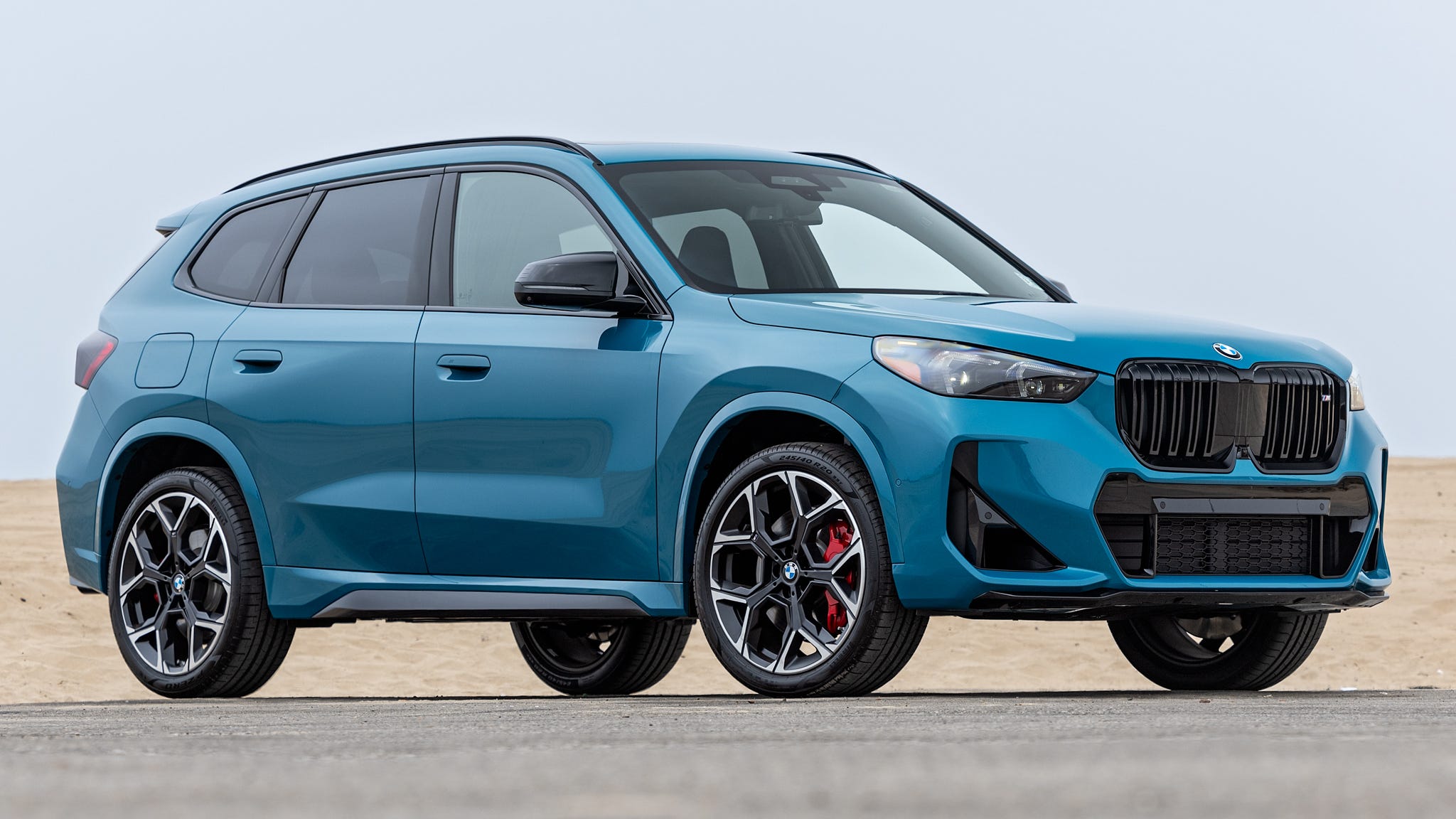
The X1 doesn’t arrive with the theatrical bulk of larger SUVs. Instead, it wears its dimensions like a tailored jacket. The stance is composed, the body lines are purposeful, and the front fascia communicates readiness without overstatement. At a glance, it can look like a simple evolution of prior designs—but the more you look, the more it reads as a carefully tuned blend of BMW form language and practical crossover geometry.
There’s also the way it frames the road ahead. Visibility is strong for its class, and the driver’s viewpoint feels calculated, not accidental. You don’t feel perched. You feel positioned. That distinction matters, because it shapes how confident you are before you even press the accelerator.

Cabin Philosophy: Modern Luxury with a Driver-Forward Bias
Step inside and the first thing you’ll likely notice is not luxury “for show,” but luxury “for function.” Materials feel considered, surfaces are arranged with ergonomic intent, and controls fall naturally under the driver’s fingertips. The atmosphere leans modern and clean rather than ornate. It’s a subtle form of comfort: a cabin that reduces visual noise and lets you focus on the task of driving.
The instrumentation is easy to read, and the center stack layout—whether you prefer a traditional perspective or a more digital-forward interface—keeps everything logically grouped. Short sentences don’t always tell the whole story, but in this case they fit: the cockpit is tidy, intuitive, and reassuring.
There’s a deeper fascination here too. Many entry-luxury SUVs feel like upscale copies. The X1 feels like it was designed by someone who expects the driver to stay engaged. That’s why the cabin doesn’t merely look premium—it behaves premium.
Room, Practicality, and Everyday Reality
In real-world terms, the X1 lives in that narrow zone between “city commuter” and “weekend errand machine.” It’s compact enough to maneuver with ease, yet spacious enough that your day doesn’t feel rationed. Rear-seat space is adequate for typical use, and the cargo area supports the rhythms of modern life: groceries, sports gear, and the occasional road-trip stash.
What makes it satisfying isn’t simply the numbers. It’s how the space is organized. The cabin’s openness reduces the sense of confinement that can plague smaller SUVs. Even when you’re carrying more than you planned, the X1 feels capable rather than compromised.
Consider the observation again—“entry.” The X1’s practical virtues are the kind that add up quietly: fold-and-go flexibility, straightforward loading, and storage points that don’t feel like afterthoughts. These are small decisions with cumulative impact.
Powertrains and Performance: Efficient Confidence, Not Posturing
BMW’s approach to the X1’s powertrain is generally about balance. The goal isn’t to turn every drive into a sprint; it’s to deliver eager responsiveness while keeping day-to-day efficiency in view. Acceleration feels purposeful, especially when you need to merge or pass with timing precision rather than brute force.
Depending on configuration, the driving experience emphasizes smoothness, with power delivered in a way that feels progressive rather than abrupt. That progression matters in traffic. It reduces fatigue. It makes the throttle feel like an instrument, not a switch.
Common drivers’ questions tend to revolve around whether the X1 is “enough.” The honest answer is that “enough” becomes “more than enough” once you experience its reflexes. Short bursts feel brisk. Longer stretches feel steady. The X1 rarely asks you to work for confidence.

Handling and Ride Quality: The BMW Detail That Changes Everything
The most enduring BMW trait is not horsepower—it’s composure. On the X1, composure shows up through steering feel, suspension calibration, and the way the vehicle manages small imperfections. Bumps become information rather than disruption. You still know the road is there, but it doesn’t intrude.
In city driving, the X1’s steering offers clarity at low speeds. The car seems to anticipate your intentions. On winding roads, it feels balanced and planted, with enough agility to keep your attention engaged. Long sentences can sometimes blur meaning, but in driving, clarity is everything—and the X1 provides it.
The fascination deepens when you realize the trick isn’t just sporty tuning. It’s how the vehicle communicates grip. You learn the car’s limits faster than you expect, which builds trust. Trust is an emotional attribute disguised as engineering.
Technology and Infotainment: Clarity Over Gimmicks
Modern BMW infotainment can be a subject of debate, but the core intent is clear: reduce friction between you and the information you need. Navigation, media, and connectivity are designed to be reachable quickly, not buried under menus. The system’s responsiveness helps keep the interface from feeling like a chore.
Driver-assistance features—where equipped—add another layer of reassurance. Lane support, adaptive elements, and collision-prevention systems work best when they feel unobtrusive. The X1’s approach typically leans toward supportive, not overly busy. It’s less “assist me constantly” and more “stand by when needed.”
This is where the entry-luxury label sometimes misleads. The X1 isn’t just wearing technology. It’s using it with discipline.
Safety and Confidence: The Quiet Architecture of Protection
Safety is often summarized as a list, but the lived experience is what matters. The X1’s safety systems aim to reduce the consequences of common mistakes—failed lane awareness, inattentive pacing, and delayed reactions to changing conditions. Even when you remain fully aware, the presence of these features can lower stress levels, especially during long commutes.
That calm is part of what makes the X1 feel complete. It doesn’t rely on intimidation or size to feel safe. It uses predictive assistance and stability characteristics to create a safety net you don’t have to think about every minute.
Who the X1 Is For: The Buyer Who Wants More Than “Good Enough”
The BMW X1 fits best for drivers who value efficiency, manageable dimensions, and premium refinement without the burden of excessive size. It’s ideal for city professionals, young families with limited space needs, and anyone who wants a luxury feel with everyday practicality.
It’s also for people who are tired of vehicles that only impress on paper. The X1 performs its best when the drive becomes routine. It makes routine feel intentional. It makes you pay attention to what you’re doing.
Common Observation Revisited: Why the “Entry” Label Misses the Point
Yes, the X1 sits near the entry end of BMW’s lineup. But entry points can also be the most meaningful places to begin. The X1’s fascination lies in how it captures BMW’s driving identity while staying aligned with real life. The result is a subcompact SUV that feels less like a compromise and more like a carefully chosen focus.
It’s not chasing status with size. It’s earning admiration through restraint, balance, and the kind of engineering that quietly rewards attention.
Final Verdict: A Subcompact SUV with Real Character
The BMW X1 is more than an upscale starting point. It’s a compact luxury SUV that blends composure, practical usability, and driver-centric design into a cohesive whole. If you’ve ever wondered whether an entry-luxury vehicle can still feel truly premium, the X1 offers a persuasive answer: it’s not about escalation—it’s about precision.
Get behind the wheel, and you’ll understand why the fascination lingers. The X1 doesn’t demand approval. It earns it.