In 2026, the luxury conversation in the United States is less about badge bragging and more about what the brands promise to deliver when the road turns unpredictable. The familiar triangle—BMW, Audi, and Mercedes-Benz—still dominates driveways and dealer lots, but the emotional center of gravity has shifted. Buyers now ask subtler questions: How does the car behave when life gets loud? Does comfort come from softness, or from composure? Can the technology feel effortless instead of performative?
What follows is a comparison written to change the way you look at these three marques. Not a spreadsheet. Not a scorecard. A reorientation—one that leaves curiosity humming behind your expectations.
And as you read, keep noticing the pattern: each brand sells luxury differently, and each approach has a cost… and a payoff.

The 2026 Buyer Mindset: Luxury as a Feeling, Not a Feature
In the US market, luxury has evolved into something almost cinematic. The modern buyer wants a sedan, SUV, or coupe that can play several roles: commuter confidence, weekend escape, and—when necessary—an executive retreat that still feels humane.
BMW tends to translate luxury as dynamic credibility. Audi leans into precision and quiet clarity. Mercedes-Benz pursues presence and effortless authority. These aren’t marketing slogans. They’re behavioral philosophies. And the philosophies show up in steering response, cabin acoustics, seat ergonomics, and the way each brand treats driver attention.
So the first pivot is this: don’t ask which brand is “better.” Ask which one aligns with your sense of control. That single question can reorganize an entire shopping journey.
Design Language: Three Ways to Look Expensive
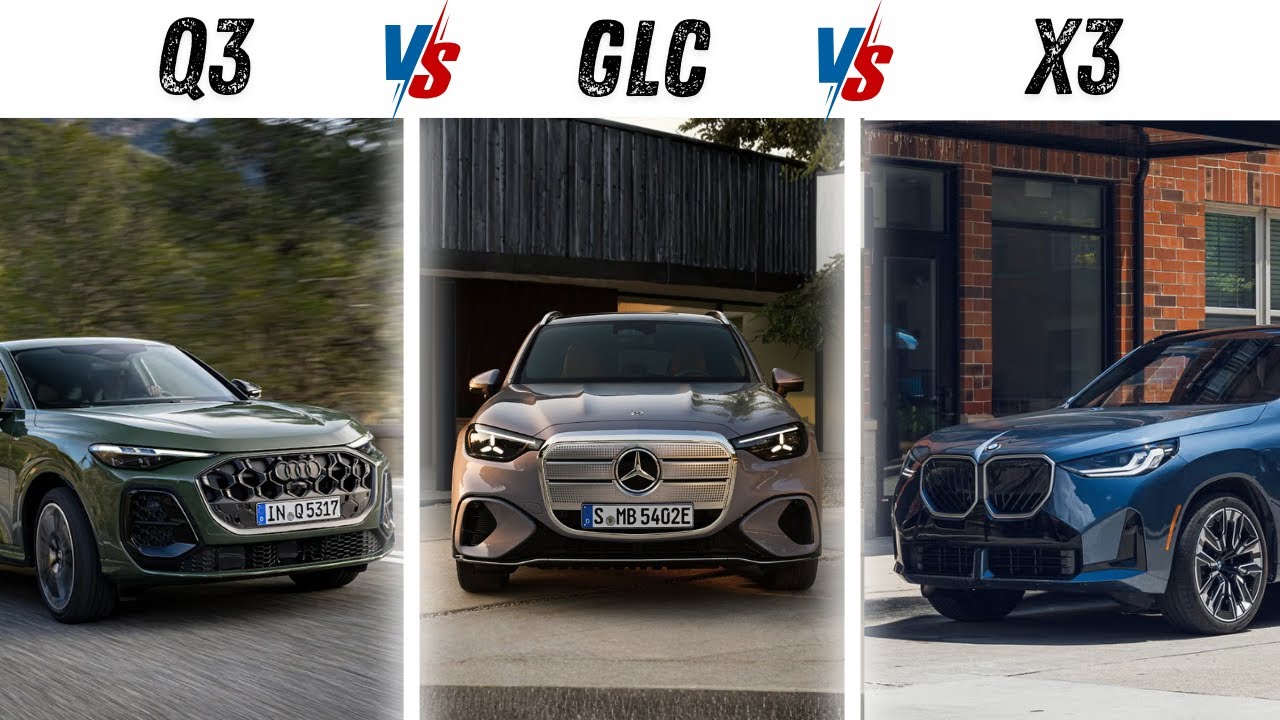
Design is where luxury begins—before the engine even wakes. BMW’s visual signature often carries tension: sharp surfaces, kinetic proportions, and details that suggest motion even at a standstill. Audi leans toward an architectural calm—clean lines, disciplined geometry, and an engineered elegance that reads like “intentional minimalism.” Mercedes-Benz frequently presents luxury as grandeur: bold front fascias, thick beltlines, and a stage-ready silhouette that communicates status without whispering.
In 2026, that difference matters more than ever because modern buyers evaluate design from multiple distances: quick glance at the street, close inspection at a dealership, and video scrutiny on social feeds. Each brand’s design DNA survives those contexts differently.
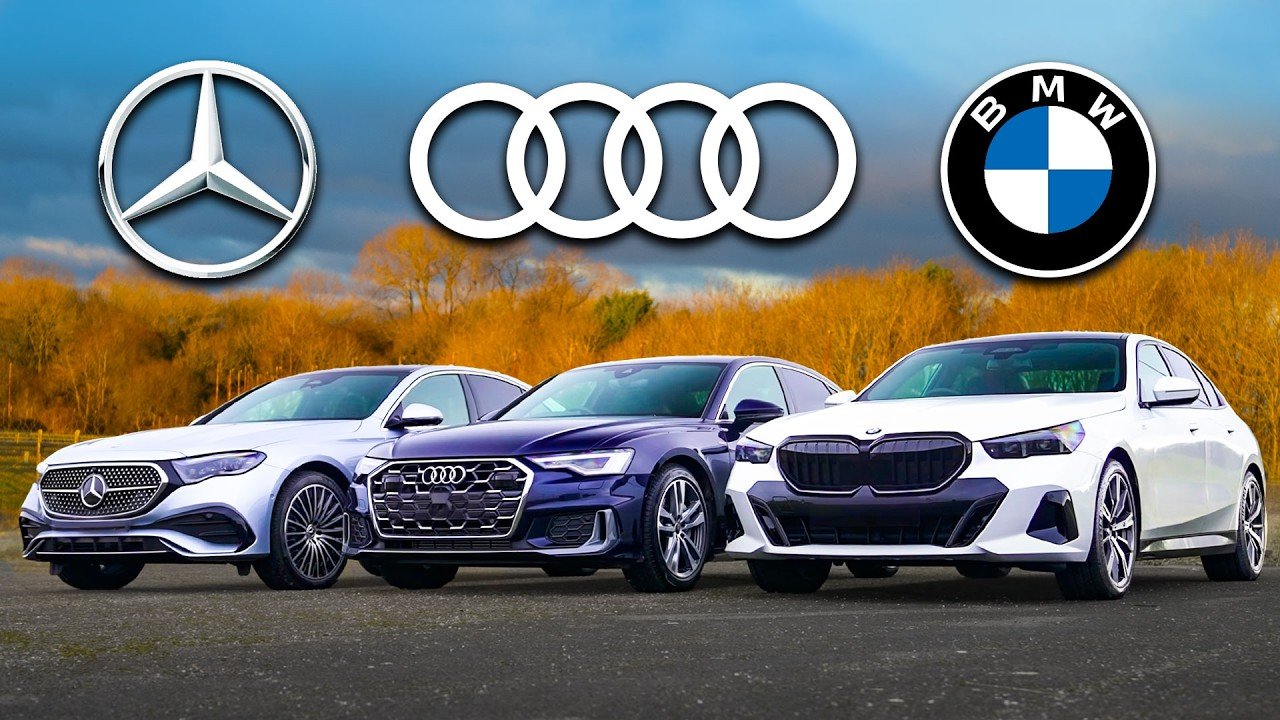
BMW buyers may feel rewarded by the car’s “grip on attention.” Audi owners often enjoy the feeling of being surrounded by thoughtful restraint. Mercedes drivers are typically drawn to the way the vehicle stands in place—confident, composed, and undeniably complete.
Driving Dynamics: Where Each Brand Places the Driver in the Equation
BMW’s road manners often feel like a negotiation with physics—precise, immediate, and willing to reveal nuance. The steering can feel talkative. The acceleration tends to arrive with a sense of urgency. Even when BMW models prioritize comfort, they rarely abandon the sensation of being connected.
Audi’s driving experience is frequently described as coherent and internally consistent. It can feel as though the car is reading the road and translating it into calm direction. The suspension and chassis tuning aim for a kind of measured poise, not theatrical dominance. You may notice fewer surprises, but the ride still carries a crispness that keeps you attentive.
Mercedes-Benz typically emphasizes smoothness that feels expensive. The chassis tends to mute harshness without flattening the driving experience. Braking and throttle response often feel “curated,” like the car is keeping your movements polished. The result is a driving posture that communicates serenity, even during spirited maneuvers.
Here is the curiosity hook: imagine two identical commutes. One car invites engagement; one car encourages calm; one car grants comfort that borders on dignity. Which one matches your daily mental weather?
Interior Atmosphere: Comfort, Ergonomics, and the Sound of Luxury
Cabins are where brand identities become almost emotional. BMW interiors often feel driver-centric—controls and ergonomics arranged with intention, and materials chosen to reflect performance heritage. Audi interiors usually project a sense of visual order; the design can feel like a cockpit with refined proportions. Mercedes-Benz cabins often prioritize softness, tactile richness, and an almost lounge-like ambiance—luxury that feels like it arrived before you did.
Sound insulation is a major differentiator in 2026. The best luxury experiences don’t just look premium; they remove friction from your senses. Wind noise, tire roar, and road texture can turn a “great car” into an “enduring car.”
Short trip or long road? If you crave a quiet cocoon, Mercedes often resonates. If you want clarity—where the cabin feels controlled rather than muffled—Audi frequently stands out. If you want the cabin to feel like an extension of your body, BMW often feels more immediate.
Technology and Infotainment: Convenience vs. Cognitive Load
In 2026, the question isn’t whether the vehicles have screens. Everyone has screens. The real question is whether the interface reduces cognitive load or increases it. Luxury should streamline decision-making, not complicate it.
BMW tends to emphasize driver-focused usability, with systems that aim to feel logical and responsive. Audi often approaches technology as a layer of informed assistance—helpful, sometimes subtle, sometimes remarkably precise. Mercedes-Benz typically strives for a polished “everything integrated” experience, with features that can feel elegantly orchestrated.
Yet there’s a catch: the more advanced the system, the more you should evaluate real-world behavior. Do menus respond instantly? Does voice control understand natural phrasing? Are updates seamless or intrusive? Does navigation feel intuitive during stress?
The shift in perspective here is simple: test the interface the way you test the brakes. Not once, not casually—simulate your real routine. That single habit prevents regret.
Powertrains and Efficiency: The New Meaning of Performance
Performance in 2026 is no longer only about horsepower. It’s about torque delivery, thermal management, smoothness under load, and efficiency that doesn’t feel like a compromise. Buyers are more aware of range, charging behavior, and the practicalities of electrification.
BMW often appeals to those who want performance with a sense of athletic identity, even as powertrains evolve. Audi tends to balance efficiency with responsive drivability, often with an emphasis on precision. Mercedes-Benz frequently focuses on a seamless transition between driving modes—making performance feel continuous rather than abrupt.
If you’re cross-shopping, consider how each brand handles power across everyday scenarios: stop-and-go traffic, highway merging, cold starts, and long downhill descents. Luxury performance is measured in consistency, not just peak numbers.
Safety and Driver Assistance: Confidence Through Restraint
Modern driver assistance systems can either calm you or distract you. The best systems don’t “take over.” They guide with restraint. In 2026, buyers increasingly value predictability over flash.
BMW, Audi, and Mercedes each offer advanced safety technologies, but the feel differs. One brand may prioritize lane-keeping confidence. Another may emphasize adaptive cruise behavior. Another may focus on collision avoidance precision and driver monitoring strategies.
When evaluating these systems, watch how they behave in imperfect conditions: faded lane markings, heavy rain, construction zones, and bright glare. Luxury safety is most valuable when it’s least convenient to rely on it.
Ownership Costs and Longevity: The Quiet Part of the Contract
Luxury is expensive to buy—but it’s also expensive to keep, and 2026 buyers want transparency. Routine maintenance, tire and brake wear, insurance premiums, and depreciation all play a role. Some drivers prioritize resale certainty. Others prioritize lower stress over time.
BMW ownership often attracts enthusiasts who are comfortable with performance maintenance cycles and value driving feel enough to accept occasional variability. Audi ownership can be appealing for those who prefer careful engineering and a refined daily experience, provided the service plan aligns with their expectations. Mercedes-Benz ownership frequently appeals to drivers who want an elevated comfort baseline and are willing to invest to maintain that baseline.
The key is to plan early: compare warranty coverage, scheduled service requirements, and common wear items based on your typical routes. Luxury should not become a long-term negotiation.
Which One Fits You? A Thought Experiment for 2026
Picture a week: one day is freeway commute, one day is back roads, one day is a late-night airport run, and one day is a family escape. Now ask yourself which brand “keeps up” emotionally.
Choose BMW if your definition of luxury is engagement without chaos—a feeling of command, responsiveness, and driver connection.
Choose Audi if your luxury identity is clarity and composure—precision that feels clean, restrained, and confident under scrutiny.
Choose Mercedes-Benz if your luxury identity is presence and serene authority—comfort that feels like it was designed for your body, your time, and your status.
None of these answers are permanent. But the exercise reveals what you actually value.
Final Take: The Real Comparison is How It Makes Your Life Feel
BMW vs Audi vs Mercedes in the US market isn’t merely an argument about which badge wins. It’s about selecting a luxury philosophy that matches your daily rhythm. When you shift perspective from “which is faster” to “which feels better in real moments,” the decision becomes less mysterious.
In 2026, the best purchase is the one that reduces friction—between you and the road, between technology and your attention, between comfort and endurance. Test-drive with intention. Listen for silence. Notice how the car handles uncertainty. Then let curiosity finish the story.
That’s the luxury comparison worth having.