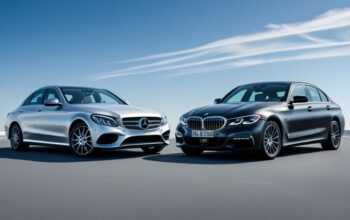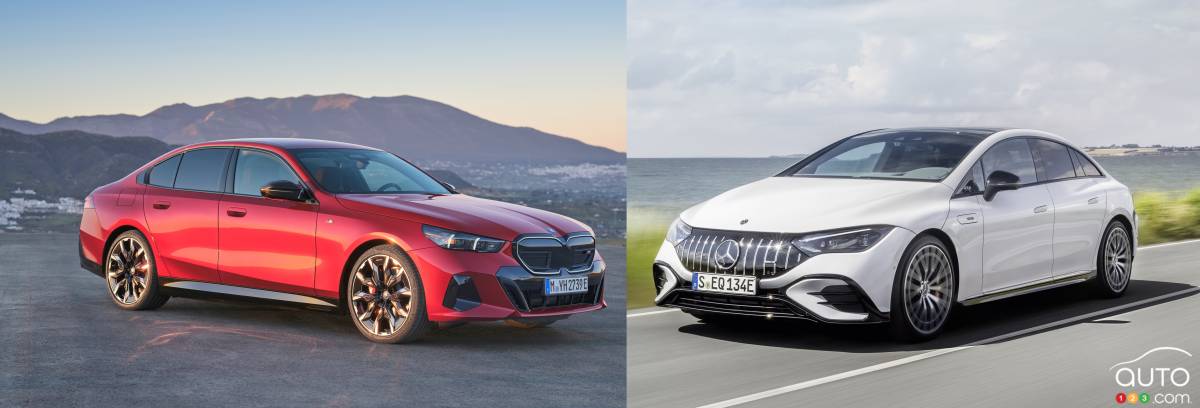
Picture the executive EV class like a chessboard at midnight: quiet, polished, and suddenly—unexpectedly—alive. Two stalwarts step onto the grid. On one side, the BMW i5, an exercise in precision and long-range confidence. On the other, the Mercedes-Benz EQE, composed luxury with a hint of theatrical grace. And then the question arrives, playful but not harmless: Which one truly earns the keys when your calendar is full, your expectations are higher than your curb height, and your next trip is already looming?
Before you decide, consider a challenge disguised as a coffee break. Imagine you’re scheduling a last-minute executive run: a commute with stop-and-go traffic, an afternoon highway sprint, and a late-evening return where acceleration matters less than silence. Now ask yourself—who handles the whole day with the most convincing poise? Let’s compare the BMW i5 and the Mercedes EQE across the dimensions that executive drivers actually feel.
First Impressions: Presence, Posture, and the Subtle Art of “Executive”
The BMW i5 greets the world with a deliberate stance—confident lines, a sense of momentum even when standing still. It’s not merely “sporty.” It’s engineered to look like it understands the future. The grille-less front, paired with crisp lighting signatures, gives it a clean, almost architectural clarity.
The Mercedes EQE, meanwhile, tends to arrive with a softer kind of authority. It’s more serene, more “lounge.” Its design language leans into aerodynamic refinement and quiet confidence, as if it’s already prepared for your next client meeting.

Now for the playful challenge: if your mirror shows you the car more often than the road, which one feels more flattering after a long day?
Cabin Atmosphere: Comfort as a Strategy, Not a Feature
Executive EVs live and die by their interiors. The BMW i5 typically leans into a driver-centric cockpit—tight feedback, crisp controls, and an overall sense of “you are in command.” The design often feels slightly more task-oriented: dashboards that organize your attention like a well-tuned symphony.
The Mercedes EQE tends to cultivate a different mood—comfort with a plush, cultured rhythm. Materials, ambient lighting, and the general “wrap-around” sensation are designed to reduce mental noise. It’s the kind of cabin that turns a commute into a decompressing ritual.
When you’re traveling for work, comfort becomes productivity. A good seat is not indulgence; it’s an operational tool. Ask yourself: which cabin makes you feel less tired after the same number of miles?
Tech and Interfaces: The Screen is Only the Beginning
Both vehicles bring modern infotainment systems, but their philosophies diverge. The BMW i5 often emphasizes how quickly you can act—navigation, driver assistance settings, and vehicle status arranged for fast comprehension. The interface aims to be efficient without being cold.
The Mercedes EQE can feel more “ambient”—technology that blends into the experience rather than dominating it. Controls, menus, and displays are often presented with a calmer cadence, letting you enjoy the ride rather than wrestling with the system.
Here’s the real test: can you complete a route change, adjust cabin climate, and manage media in less time than it takes to find your phone? In executive life, micro-friction adds up.
Performance and Drive Feel: How It Moves Matters More Than Numbers
Electric torque is immediate on both models, but the sensation differs. The BMW i5 typically communicates power with a more dynamic, responsive character—less delay, more “connected” acceleration. Steering feel can also encourage a slightly more engaged driving posture, even when you’re simply gliding down a boulevard.
The Mercedes EQE often prioritizes composure. It can accelerate briskly, yet it tends to smooth out the experience, making speed feel controlled rather than aggressive. The EQE’s strength is that it can deliver forward momentum while preserving a relaxed cabin atmosphere.
Playful challenge #2: on a route with frequent speed changes, which car makes the driving feel effortless—like the power is cooperating with your intentions?
Range, Efficiency, and the “Next Charging Stop” Anxiety
Range isn’t just a spec sheet value—it’s a mental weather report. When your schedule is tight, the best EV is the one that reduces uncertainty. Both cars benefit from modern battery management and efficiency-oriented design, including aerodynamic shaping and intelligent energy use.
Efficiency also depends on real-world behaviors: speed, temperature, traffic flow, and tire choices. The more consistent the consumption, the easier it is to plan. An executive EV should behave like a reliable assistant—never dramatic, never unpredictable.
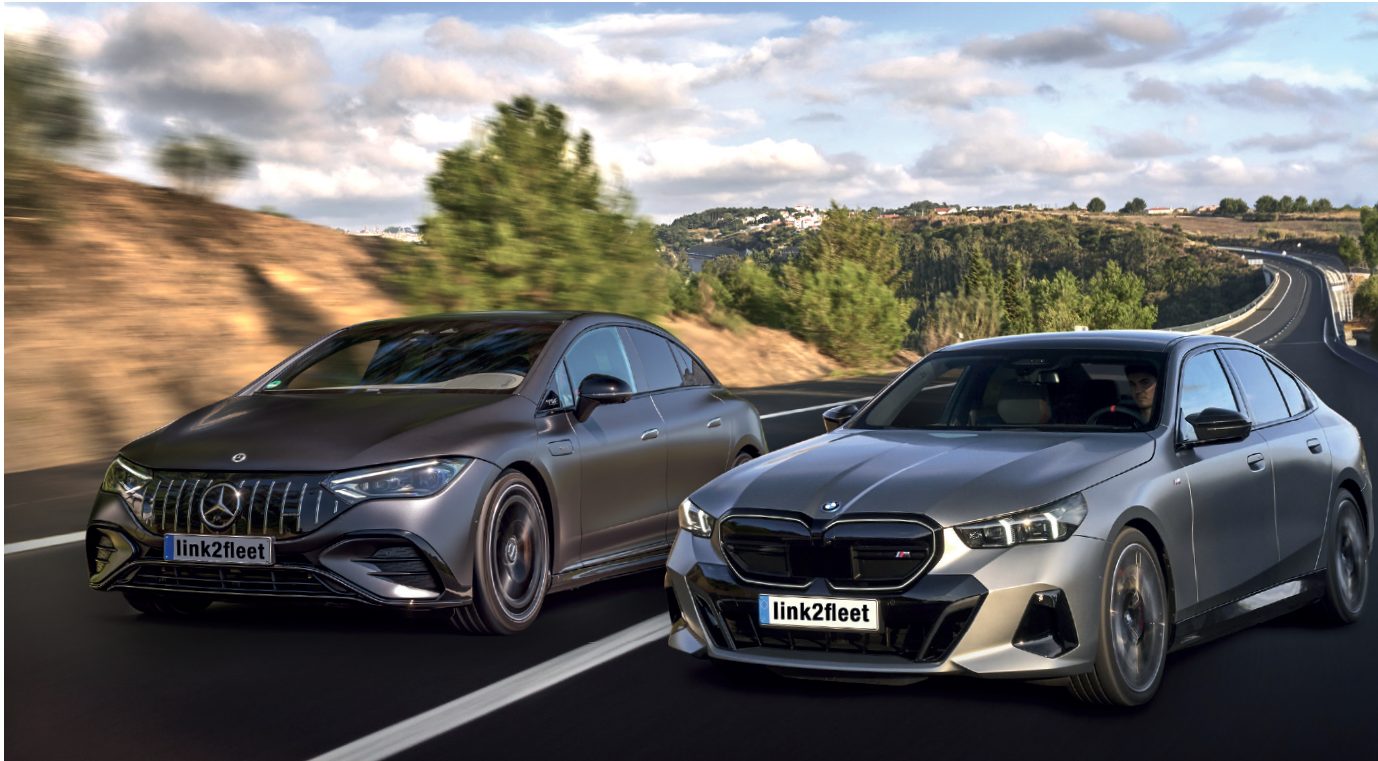
Try this: plan a “slightly too ambitious” trip. Then see which vehicle inspires confidence by offering realistic range projections that match your actual driving. Which one makes the next charging stop feel like an option, not a rescue?
Charging Experience: Convenience, Speed, and Real-World Readiness
Charging is where ambition meets infrastructure. The ideal scenario includes quick charging compatibility, thoughtful preconditioning, and a system that guides you without fuss. Both the BMW i5 and Mercedes EQE are engineered for contemporary EV travel, but the user experience can differ—especially in how intuitive charging planning feels.
Look beyond maximum theoretical speeds. Consider whether the vehicle helps you arrive at the charger with optimal battery conditions. Consider whether the navigation communicates charge point availability clearly. Consider how seamlessly the car transitions from route planning to charging logistics.
Executive truth: you don’t want to become a part-time technician. Which EV feels like it understands your time?
Driver Assistance and Safety: Calm Confidence on Busy Roads
Advanced driver assistance systems can be the difference between tense commutes and steady focus. The BMW i5 tends to deliver a driver-involved style—systems designed to assist without removing your sense of control. It often emphasizes clarity in how it communicates its actions and limits.
The Mercedes EQE typically prioritizes serene, confidence-building assistance. The goal is less “sporting alertness” and more “smooth guardianship,” especially in traffic where repeated lane changes and spacing decisions can drain attention.
The question here is disarmingly simple: do the systems feel like they help you think, or do they interrupt your thinking?
Ownership Costs and Practicality: The Spreadsheet Side of Romance
EV ownership becomes compelling when the math behaves. Cost considerations include energy use, charging habits, maintenance intervals, insurance tendencies, and long-term reliability. Electric drivetrains generally reduce certain maintenance tasks compared to internal combustion—yet tires, brakes (still used, even if less), and occasional cabin/thermal components remain part of the equation.
For executives, total cost of ownership is not a cold abstraction. It impacts fleet budgets, personal cash flow, and resale confidence. When comparing the BMW i5 and Mercedes EQE, it’s wise to evaluate charging patterns you’ll actually use and how each model aligns with your lifestyle.
Which one fits your routine—commute length, typical speeds, and likely charging locations—without forcing you into awkward detours?
Resale Value and Brand Gravity: The Future You Can’t Ignore
Resale is the echo of today’s choices. Luxury EVs often hold value according to demand, perceived quality, software maturity, and how well the vehicle’s experience stays current over time. BMW and Mercedes both carry strong brand gravity, but consumer perception and market timing can sway outcomes.
A practical approach is to consider how each car is expected to age: screen responsiveness, software updates, interior durability, and overall fit-and-finish. Executive drivers don’t just buy comfort; they buy continuity.
Final playful challenge: in three years, which one feels more “still desirable” from the driver’s seat?
Verdict: The Executive EV Duel, Decided by Your Day
So who wins the BMW i5 vs Mercedes EQE duel? The answer depends on what you need most when your time is scarce and your priorities are sharp.
If you crave a more driver-centric feel, sharper engagement, and a cabin that organizes your attention for quick action, the BMW i5 often feels like a well-prepared instrument—precise, responsive, and ready for performance disguised as normal commuting.
If you want executive comfort with a calmer emotional temperature, a lounge-like cabin presence, and driving assistance that feels like quiet stewardship, the Mercedes EQE may be the better fit—more relaxed, more elegant, and more focused on serenity.
In the end, neither is “just” a car. They are daily environments. The real decision is simple: Which executive mood matches your life—organized intensity, or serene confidence?
Take them both for a route that looks like your real week. Then let the steering, silence, and charging experience make the argument. That’s the duel that matters—because it’s played on your roads, at your pace, under your deadlines.