The first thing that surprised me about the BMW i5 during a week of daily driving wasn’t the headline number—range, efficiency, horsepower, anything you can plot in a table. It was the way the car rearranged my expectations about what “ordinary commuting” should feel like. A short drive to work, a detour for groceries, a late-afternoon errand that turned into a longer loop—by the end of the week, the i5 had made routine feel strangely ceremonial. That calm sense of inevitability is hard to explain at first. Then you notice the pattern: each day begins with the same quiet confidence, yet the car never feels mechanical or repetitive. It feels deliberate.
There’s a common observation people make about electric sedans: “It’s smooth, but is it inspiring?” The i5’s answer is quietly subversive. It doesn’t try to impress with theatrical noise or aggressive jerks of acceleration. Instead, it fascinates through orchestration—how power arrives, how road texture is filtered, how driver input turns into motion with a confident immediacy. Let’s spend a week inside that experience, from morning stillness to evening recharging, and uncover what’s really behind the fascination.
Day One: The Seduction of Silence
On the first morning, the BMW i5 greeted me with near-whispered momentum. The sedan rolled forward like it had already decided to be cooperative. There was no gearbox clatter to translate effort into sound. Instead, the acceleration felt like a decision executed in real time. Short and smooth bursts to merge into traffic were effortless, yet never dull. A light press on the accelerator didn’t merely move the car—it sculpted the pace.
Silence does more than reduce noise; it removes distractions. With fewer auditory cues, your attention shifts to steering feel, seat comfort, and the subtle visual rhythm of the road. The i5’s cabin becomes a calm antechamber where the day’s noise doesn’t fully enter. That, in turn, encourages a more deliberate driving cadence. You brake earlier, you anticipate junctions, you let the car’s momentum work like a silent ally.

Where “Real-World Range” Gets Misunderstood
Electric driving often comes with a mental spreadsheet. People estimate range based on ideal conditions, then feel disappointed when reality refuses to comply. Over the week, the i5’s range behavior became easier to understand—not because the numbers were magical, but because the car’s energy use felt coherent.
In daily driving, range is not a single figure; it’s a moving target shaped by how you drive, how fast you go, and even how you decide to treat corners and lights. The i5 encouraged a steadier throttle philosophy. When you accelerate smoothly and maintain flow, energy consumption becomes more predictable. When you repeatedly punch it, the consumption curve steepens quickly, as it should.
One of the deeper fascinations is how the i5 makes energy awareness feel less like math and more like intuition. As the days passed, I found myself “listening” for efficiency. Not with ears—rather with sensation. The car’s feedback nudged me toward a gentler rhythm without turning the drive into a chore. That’s the difference between a range display that merely informs and a vehicle that meaningfully trains your habits.
Charging on Schedule: The Art of Waiting
Charging is where electric cars can either feel restrictive or strangely liberating. During the week, my routine turned charging into a kind of domestic choreography. Instead of thinking “How much power is left?” I began thinking “When will I need the next burst of mobility?” That shift matters.
On days when errands stacked up, the i5 fit into the schedule naturally. The charging sessions were not interruptions; they were punctuation marks. The car’s predictability helped too. Once you trust the workflow—plug in, verify settings, move on with your day—the psychological friction drops dramatically.
There’s also an overlooked element: patience. Waiting is often framed as inconvenience, but it can become a grounding practice. The i5 made that easier by keeping the interface straightforward and reducing uncertainty. When the process feels clear, you don’t obsess. You simply plan.
Steering, Chassis Calm, and the Myth of “Too Smooth to Be Fun”
A common critique of electric sedans is that they’re too polished—too frictionless to be engaging. The i5 doesn’t deny the smoothness; it reframes it. Smoothness isn’t absence of character. It’s the absence of harshness.
City streets revealed the chassis discipline. Imperfections in the road surfaced with measured restraint, as if the car were politely translating rough asphalt into a quieter language. High-frequency vibrations faded before they could become fatiguing. That matters on longer commutes, but it also changes your emotional relationship to driving. You stop feeling assaulted by the environment.
When the road opened up, the i5 still offered pleasure—just not the pleasure of constant drama. The steering felt composed, encouraging confidence during lane changes. The car moved with a sense of continuity, like it had fewer physical surprises in its vocabulary. And because it responded cleanly, it made the driver’s decisions feel more consequential. That’s a form of fun: agency without chaos.
Daily Comfort: Ergonomics, Light, and the “Live-In” Feeling
Over one week, comfort became more than a feature—it became a memory trick. The longer I drove, the more familiar the cabin layout felt. Controls were intuitive enough that my attention didn’t constantly drift toward the interface. That freed mental bandwidth for the actual task: driving.
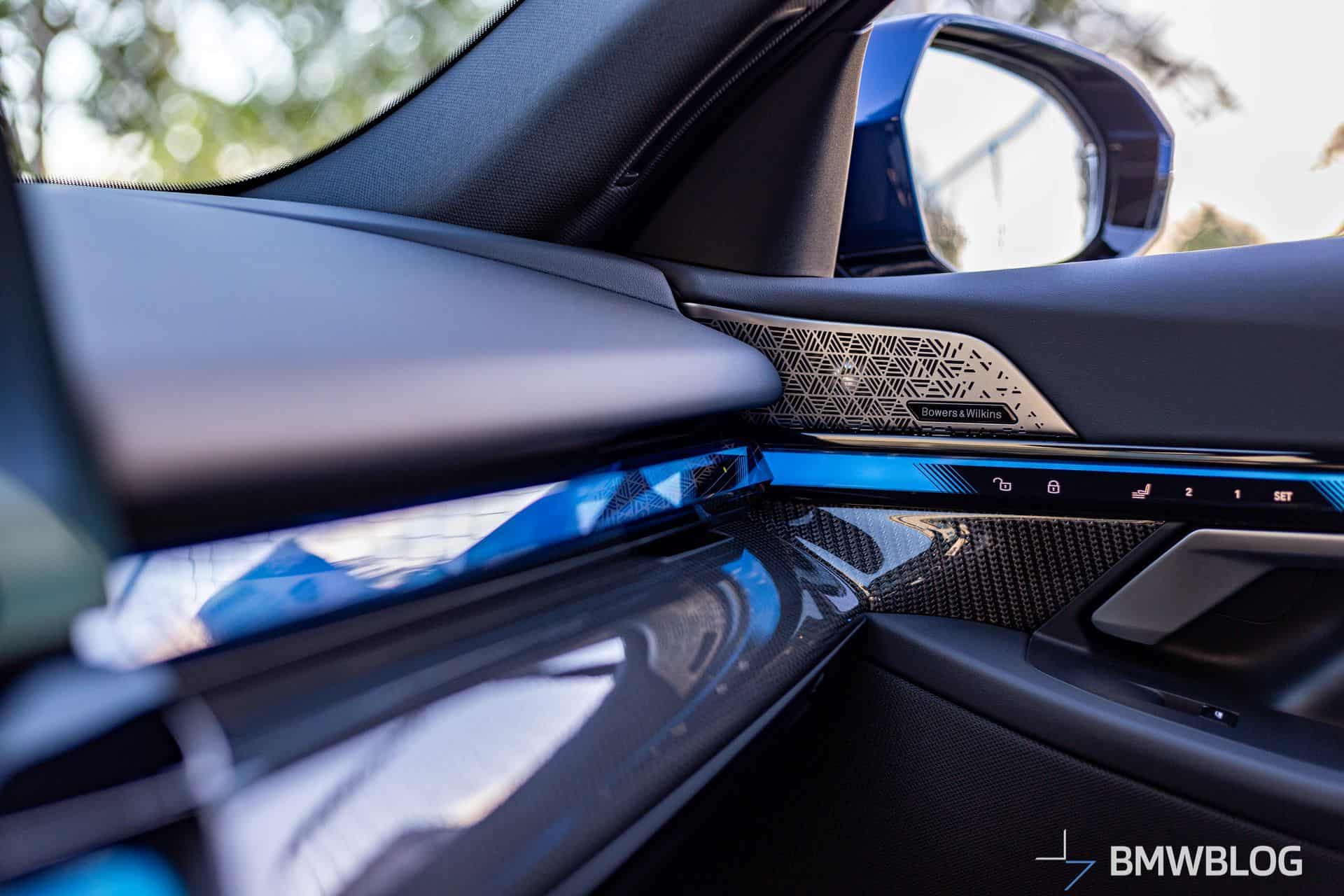
Longer seats, supportive cushioning, and stable body control reduced the tiny fatigue that usually accumulates in commuting. Even short trips felt tailored. The i5’s interior ambience—its ambient lighting, its sense of spatial coherence, its tidy visual hierarchy—helped the cabin feel less like a place you’re passing through and more like a place you inhabit, however briefly.
That’s where the deeper fascination emerges: electric driving can easily become utilitarian, but the i5 refuses to stay there. It makes daily life feel smoother, almost more coherent, as if the car is aligning your day with a quieter tempo.
Traffic Behavior and the Quiet Confidence of Instant Torque
Electric torque is often described as immediate. In practice, “immediate” doesn’t just mean fast. It means controllable. In stop-and-go traffic, the i5’s power delivery helped avoid the jerky transitions that can make EVs feel unsettling for some drivers.
The car’s calibration allowed fine adjustments: creeping forward when the gap opens, easing into merges without sudden surges, and modulating speed smoothly as brake lights ahead flicker. This is where the i5’s character becomes most evident. It doesn’t just move quickly; it moves intelligently, predicting the flow of urban movement rather than fighting it.
The result is an almost meditative experience in congestion—less stress, fewer abrupt corrections, and a calmer sense of control.
Week Two Thoughts: The Fascination Is Habit, Not Hype
By the end of the week, I realized the i5’s fascination isn’t rooted solely in performance metrics. It’s rooted in habit formation. Each day reinforced a set of expectations: smooth acceleration, quiet cabin, predictable charging workflow, and a driving rhythm that rewards patience.
That’s why the “common observation” about EVs being impressive but not compelling doesn’t fully hold here. The i5 doesn’t ask for excitement upfront. It builds fascination through consistency. It turns efficiency into a lifestyle behavior rather than a compromise.

Practical Takeaways for Daily Drivers
If you’re considering an electric sedan for everyday use, the i5 suggests a practical mindset: plan charging like you plan errands. Treat energy as a managed resource, not a score to defend. Drive in a way that feels natural, then observe how the car responds. Over time, your instincts adapt. That adaptation is where the real benefit appears.
Also, don’t ignore the emotional side of commuting. The i5’s quietness, comfort, and composure reduce fatigue in ways that aren’t always measured in official documentation. Less mental strain can mean better decision-making. Better decision-making means fewer last-minute detours and fewer unnecessary accelerations. Suddenly, range isn’t the villain—it’s a collaborator.
Outro: A Sedan That Makes the Week Feel Easier
One week with the BMW i5 reshaped how I define a “daily driver.” It’s not simply a vehicle that transports you. It’s a mechanism for smoothing friction—between you and the road, between you and traffic, between you and the routine choreography of charging.
The i5’s quiet fascination is more than smoothness or instant torque. It’s the sense that the car is tuned to human patterns: mornings that start slowly, afternoons that rearrange plans, evenings when the city’s energy fades but your day doesn’t have to feel heavier. By the final drive home, the electric experience didn’t feel experimental anymore. It felt resolved—like a new normal that quietly outperforms expectations.