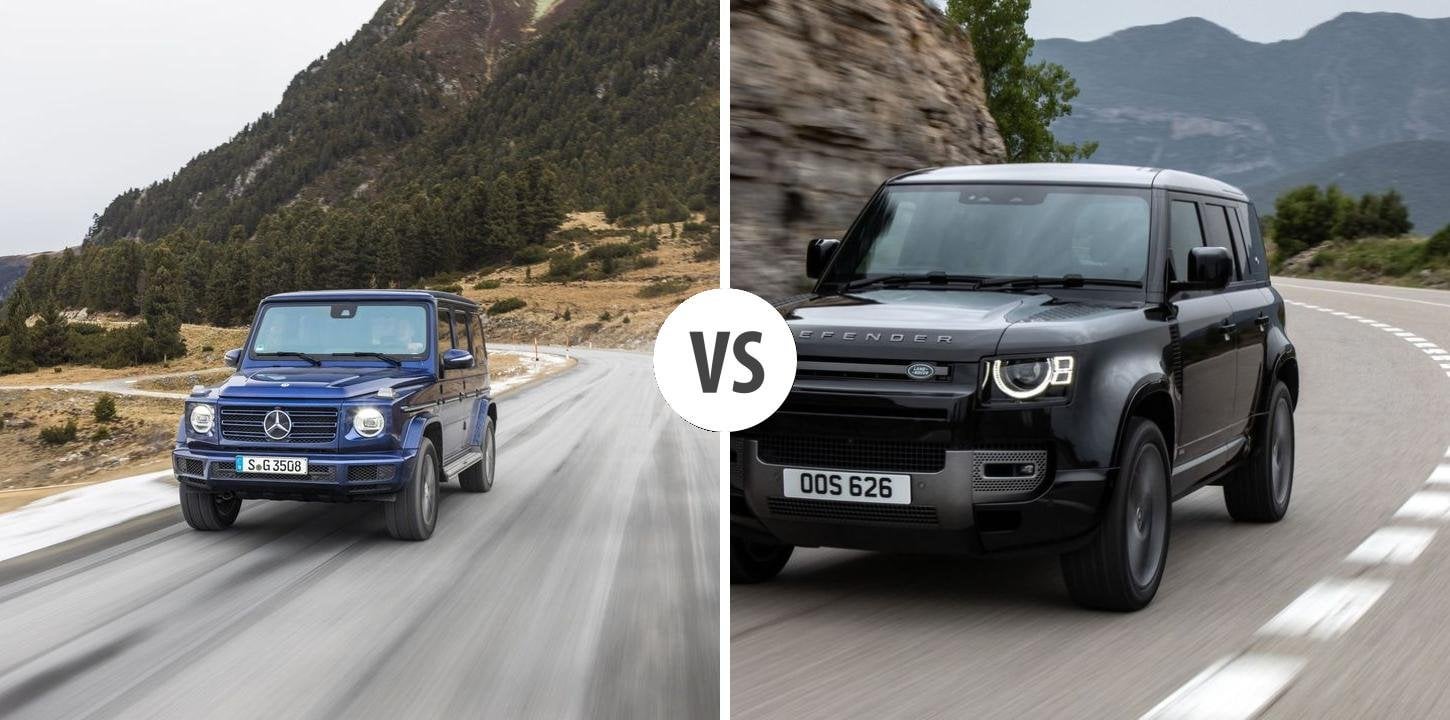
The off-road world has a peculiar habit of turning practical engineering into theater. A straight road becomes a stage, a gravel wash becomes an arena, and two names—Mercedes-Benz G-Class and Land Rover Defender—start to feel less like vehicles and more like rival icons. In 2026, the debate sharpens: which luxury machine truly belongs when the asphalt ends? The common observation is simple. People talk about ground clearance, lockable differentials, and the rugged look. Yet the deeper fascination is rarely technical on the surface. It’s about identity—about how each brand narrates capability through design, feel, and the subtle choreography of control.
This is not a contest of spec sheets alone. It’s a collision of philosophies. The G-Class arrives with a sense of fortress-minded permanence, an almost stubborn confidence. The Defender, by contrast, carries the spirit of exploration—an airy, purposeful stance that suggests you can keep going long after the map gives up. Let’s follow the thread from the surface impressions to the underlying reasons these trucks continue to cast a spell.
First Impressions: Iconography and the Psychology of “Ready”
At a glance, the G-Class and Defender each project dominance, but they do it with different body language. The G-Class typically reads as compact power—an orderly, armored silhouette with a heritage aura that feels meticulously preserved. Its stance says: approach cautiously; this is built to resist.

The Defender, meanwhile, tends to appear purposeful and open-ended. Even when stationary, it looks like it’s thinking ahead. Its proportions often communicate utility first, luxury second—though the cabin experience has evolved rapidly. In 2026, that duality becomes the hook. People don’t just admire the look; they recognize a character.

That’s the deeper reason for fascination: these vehicles function like wearable mythology. When you climb inside, you don’t just sit down—you step into a role. One is the disciplined sentinel; the other is the expedition companion.
Chassis Logic: How Each Platform Interprets Toughness
Off-road luxury isn’t only about how the vehicle looks once it’s dusted. It’s about how the architecture manages stress—how the body handles torsional input, how the drivetrain keeps composure, and how suspension geometry maintains traction without turning the ride into an earthquake.
The G-Class tradition emphasizes durability and a kind of mechanical clarity. Its systems are often perceived as straightforward—built to endure. Even the way controls feel tends to communicate certainty. There’s less drama in the response, more confidence in the outcome.
The Defender’s engineering personality is more about adaptability and ride calibration. It’s designed to feel capable without feeling harsh. That balance matters because luxury, in an off-road context, means maintaining driver confidence over time. Long trips ask for stamina—both for passengers and for the vehicle’s ability to stay predictable.
So when people claim one is “more planted” or the other is “more comfortable,” they are also sensing different interpretations of robustness.
Traction Systems: The Invisible Argument Beneath the Tread
Most drivers learn quickly that traction is not a single feature. It’s a chain reaction—electronic sensing, differential behavior, torque modulation, and wheel-speed logic working in tandem. Both trucks are engineered for this choreography, but they tend to feel different at the edge.
In the G-Class, the traction strategy often feels composed. When you request movement—whether climbing a ledge or creeping through ruts—the vehicle usually responds with a controlled, deliberate intent. The sensation is that the system is “listening” carefully, then committing decisively.
The Defender can feel similarly capable, yet the experience often reads as more fluid. It may present traction as a continuum rather than a series of hard transitions. That can be especially satisfying in mixed terrain—rock, sand, and uneven mud—where stability is as much about modulation as it is about maximum grip.
And this is where the fascination deepens: luxury off-roading is largely about trust. You want the vehicle to behave like it understands the terrain’s mood swings.
Low-Range Control and Off-Road Modes: The Art of Slow Precision
There’s a special kind of calm that comes with low-range driving. The world sharpens: tire roar becomes a texture, steering corrections become precise gestures, and every throttle input feels consequential. Both the G-Class and Defender target this realm, but their personalities differ.
The G-Class tends to encourage methodical driving. It often feels like a tool designed to be used with deliberate restraint. Long climbs and technical descents can feel almost ceremonial—step, pause, commit.
The Defender often feels more “expedition-friendly.” It can invite a broader style of driving, blending careful crawling with a more relaxed confidence once the trail settles. In practice, that means the cabin can remain civilized while you still command serious terrain.
In 2026, the real question is not whether you have modes—it’s how effortlessly you can transition between them without losing rhythm.
Suspension Feel: Comfort Without Sacrificing Credibility
Luxury off-roaders must solve a delicate equation. The ride must absorb impacts, yet the vehicle cannot become vague when you need accurate line-holding. Too soft and it turns wallowy. Too stiff and it becomes punishing, especially on corrugations.
The G-Class reputation often points to composure and structural confidence. On rough surfaces, it frequently feels controlled, with steering inputs staying coherent. That’s not just comfort—it’s the perception of control, which is a form of safety psychology.
The Defender’s ride evolution leans toward refinement. Even when the trail grows chaotic, it aims to keep the cabin experience hushed and composed. The best off-road comfort is unobtrusive; you feel protected without realizing exactly how the suspension is compensating.
Ultimately, the winner here depends on the kind of luxury you crave. Do you want fortress-like steadiness or polished expedition calm?
Interior Theatre: Technology, Materials, and Human Connection
Inside, both vehicles attempt to reconcile rugged duty with modern expectations. The G-Class interior often feels purposeful and premium in a way that echoes its exterior solidity. Materials and layout typically aim for an executive confidence—like a private lounge that happens to be built for mud.
The Defender’s interior tends to feel more contemporary, with a focus on usability and a calmer ergonomics philosophy. In 2026, that matters because off-road luxury is not only about looks; it’s about how quickly you can read terrain conditions, manage climate, and stay comfortable through long stretches of uneven road.
What makes people linger, though, is not the presence of screens. It’s the overall sense of human connection—how natural it feels to operate the vehicle while wearing the uncertainty of the trail. When the cockpit feels intuitive, the off-road experience becomes less stressful, more immersive.
Exterior Presence: Trail-Ready Authorship
There’s a reason these trucks photograph so well, and it’s more than marketing. Their exterior design language tells you what they are: high-clearance machines with a strong stance, built to be used, not only admired.
The G-Class exterior often reads as a sealed, enduring object. It’s the kind of design that doesn’t apologize for its shape. The Defender reads as functional elegance—still bold, but with an implied openness that suits winding roads, distant destinations, and the spontaneous decision to keep going.

That’s why these vehicles draw fascination beyond capability. They represent authorship. One feels like a signature in steel; the other feels like an invitation to the unknown.
Real-World Scenarios: Where the Debate Becomes Personal
Imagine three common situations. First: a weekend escape where roads vanish into washboard gravel. Second: a family trip that includes a sudden detour into a trailhead parking lot. Third: a destination that demands confidence—mud slicks after rain, rocky climbs under a low sun, and the need to arrive without drama.
In scenario one, comfort and refinement become decisive. You want stability over the steering wheel and calm control in the cabin. In scenario two, usability and everyday drivability matter more than raw bravado. In scenario three, you’ll notice traction behavior, low-range composure, and how firmly the vehicle communicates what it’s doing.
The fascinating part is that both trucks can succeed. The question becomes which success feels right to you—discipline or expedition, armored certainty or adaptable reassurance.
So, Which One Wins in 2026?
The G-Class versus Defender battle rarely ends with a simple answer, and that’s healthy. A vehicle is a relationship. The G-Class tends to win the hearts of drivers seeking fortress-grade presence, mechanical confidence, and a luxury identity that feels timeless. The Defender often wins those who want trail-ready sophistication with a sense of modern comfort—an SUV that stays lively, readable, and ready for long-distance uncertainty.
In the end, the fascination isn’t only about capability. It’s about how each vehicle translates the wild into something manageable—and how that translation makes you feel.
Outro: The True Luxury of Off-Road Confidence
Off-road luxury is often misunderstood as indulgence. But in 2026, the real luxury is confidence: the ability to trust the drivetrain, the chassis, and the cabin calm when conditions stop behaving. The Mercedes-Benz G-Class offers a guarded, storied strength. The Land Rover Defender offers an expedition-minded refinement with credible grit.
Choose the one that matches your rhythm. One will feel like a steadfast sentinel keeping watch over the trail. The other will feel like an invitation to roam, comfortable enough to keep the journey human. Either way, when the pavement releases you, the fascination becomes personal—and the argument turns into your own story.