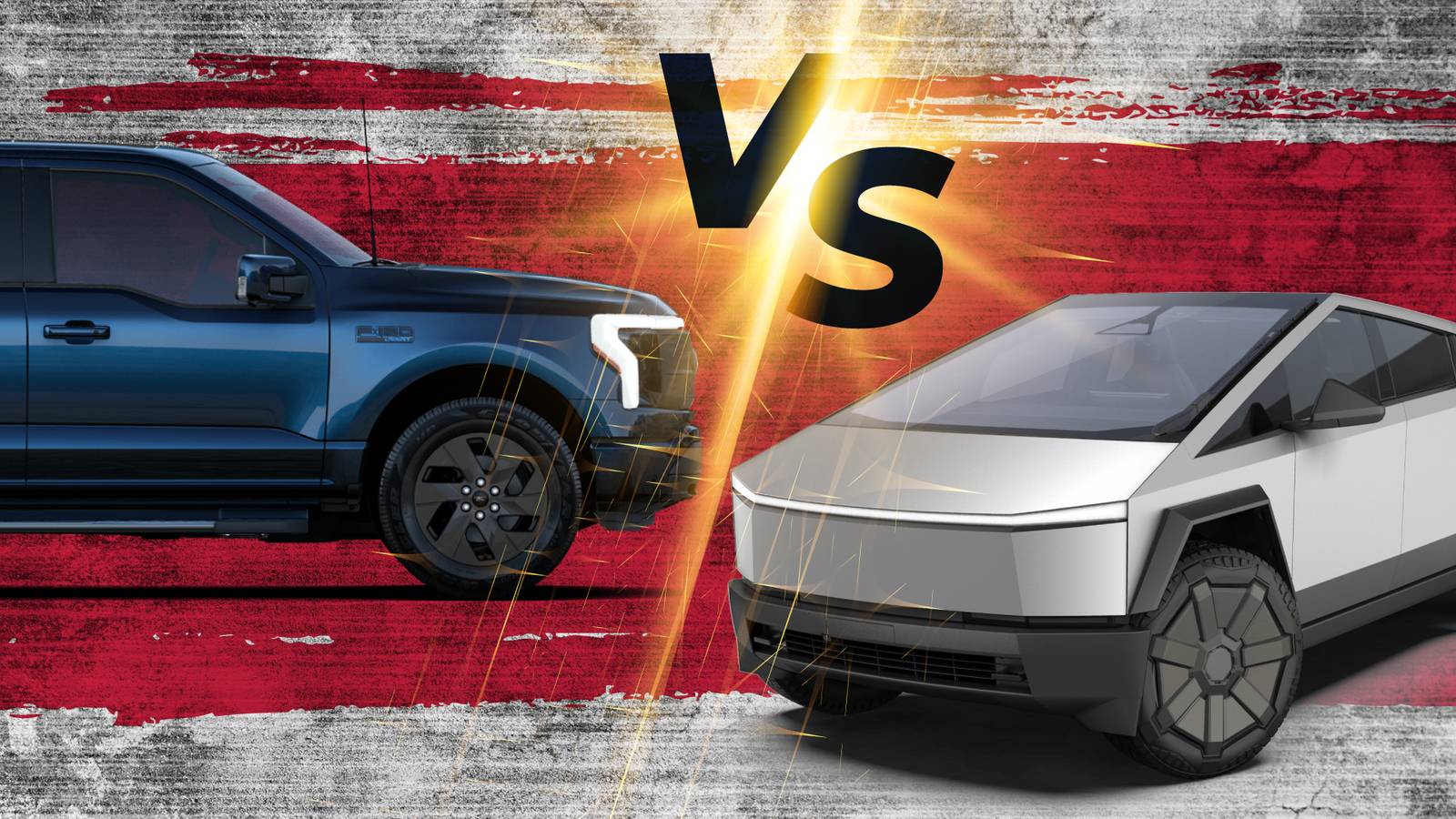
The electric truck revolution is not just arriving—it’s already here, and it’s reshaping the very foundations of what we expect from a pickup. Two titans now stand at the forefront of this transformation: Tesla’s Cybertruck, with its angular, almost alien design, and Ford’s F-150 Lightning, a more conventional yet thoroughly modern interpretation of a workhorse. This isn’t merely a clash of engineering or aesthetics; it’s a philosophical debate about the future of transportation itself. Why does the sight of these two trucks side by side evoke such fascination? Perhaps because they represent more than just vehicles—they are symbols of ambition, disruption, and the relentless march toward a sustainable yet powerful future.
The rivalry between the Tesla Cybertruck and the Ford F-150 Lightning transcends the usual consumer tech wars. It’s a collision of corporate philosophies, design ideologies, and consumer expectations. One is a radical departure from tradition, while the other is a refined evolution of a trusted icon. Together, they challenge our perceptions of what a truck should be—whether it’s a tool for labor, a statement of identity, or a technological marvel. To understand this rivalry is to peer into the heart of the automotive industry’s most profound shift in decades.
The Design Philosophy: Futurism vs. Familiarity
The Tesla Cybertruck is not just a vehicle; it’s a provocation. Its stainless-steel exoskeleton, sharp geometric lines, and absence of traditional curves make it instantly recognizable—and polarizing. Designed by Franz von Holzhausen, the Cybertruck embodies a “less is more” ethos, stripping away ornamentation in favor of raw, industrial minimalism. The angular silhouette isn’t merely aesthetic; it’s a statement about efficiency, aerodynamics, and the rejection of automotive conventions. Yet, this boldness comes with trade-offs. The flat panels, while visually striking, raise questions about aerodynamics at high speeds and the practicality of everyday use, such as loading items into the bed or dealing with the harsh realities of road debris.
In stark contrast, the Ford F-150 Lightning embraces familiarity. It retains the muscular, utilitarian silhouette that has made the F-150 the best-selling truck in America for over four decades. The Lightning’s design is evolutionary rather than revolutionary, with subtle nods to its electric underpinnings—like the flush door handles and aerodynamic refinements—but nothing that would alienate traditional truck buyers. This approach speaks to Ford’s strategy: to make electric trucks accessible to the masses by ensuring they look and feel like the trucks consumers already know and trust. The Lightning’s design is a bridge between the old and the new, offering reassurance in an era of rapid change.
The tension between these two design philosophies reveals a deeper cultural divide. The Cybertruck appeals to those who see vehicles as extensions of their identity, embracing the avant-garde as a form of self-expression. The F-150 Lightning, meanwhile, caters to those who prioritize functionality and practicality, viewing a truck as a tool rather than a statement. This dichotomy reflects broader societal shifts—between the desire for novelty and the comfort of tradition.
Performance and Power: Raw Speed vs. Refined Might
Under the hood—or rather, beneath the floor—the Tesla Cybertruck and Ford F-150 Lightning reveal their true natures. The Cybertruck, with its all-electric drivetrain, promises blistering acceleration and a towing capacity that challenges even the most robust diesel trucks. The tri-motor variant, for instance, boasts 800 horsepower and a 0-60 mph time of just 2.6 seconds, making it one of the quickest production vehicles on the planet. Tesla’s approach to performance is unapologetically aggressive, prioritizing straight-line speed and brute force over refinement. The Cybertruck’s air suspension system allows for adjustable ride height, enhancing both off-road capability and highway stability, but it also adds complexity to an already unconventional vehicle.
The Ford F-150 Lightning, on the other hand, offers a more measured but no less impressive performance profile. With up to 580 horsepower and 775 lb-ft of torque in its extended-range configuration, the Lightning delivers exhilarating acceleration while maintaining a focus on towing and payload capacity. Ford’s engineers have optimized the Lightning for real-world utility, ensuring that it can handle heavy loads without sacrificing ride comfort or drivability. The truck’s dual-motor all-wheel-drive system provides excellent traction, and its adaptive cruise control and advanced driver-assistance systems make it a compelling choice for both daily driving and work-related tasks.
Yet, the performance narrative extends beyond mere numbers. The Cybertruck’s lack of a traditional grille and its angular design contribute to a unique driving experience—one that feels almost otherworldly. The Lightning, with its more conventional layout, offers a driving experience that is familiar yet elevated, blending the responsiveness of electric power with the stability of a well-engineered chassis. The choice between these two trucks, then, is not just about power; it’s about the kind of experience the driver seeks—whether it’s the thrill of the unconventional or the reassurance of the tried-and-true.

Range and Charging: Endurance vs. Expediency
Range anxiety has long been the Achilles’ heel of electric vehicles, but both the Cybertruck and the F-150 Lightning aim to dispel those concerns—albeit in different ways. The Tesla Cybertruck, with its massive 123 kWh battery pack (in the tri-motor variant), offers an estimated range of up to 340 miles on the EPA cycle. Tesla’s Supercharger network, with its widespread availability and rapid charging speeds, further enhances the Cybertruck’s long-distance viability. The truck’s ability to charge from 10% to 80% in as little as 15 minutes makes it a practical choice for road trips and heavy-duty use. However, Tesla’s reliance on its proprietary charging infrastructure may limit its appeal in regions where Superchargers are sparse.
The Ford F-150 Lightning, with its standard-range battery offering up to 240 miles and extended-range variant pushing up to 320 miles, provides competitive range figures. Ford has partnered with Electrify America to offer fast-charging capabilities, ensuring that Lightning owners have access to a growing network of high-speed chargers. Additionally, the Lightning’s Pro Power Onboard feature turns the truck into a mobile generator, capable of powering tools, appliances, or even a home during an outage. This dual-purpose functionality adds a layer of utility that the Cybertruck, with its more specialized design, cannot match.
The contrast between these two approaches highlights a fundamental difference in their target audiences. The Cybertruck is designed for those who prioritize cutting-edge technology and long-distance travel, while the Lightning caters to both work and home needs, appealing to a broader demographic. The choice, then, hinges on whether the driver values sheer range and charging speed or the multifunctional versatility of a truck that can do more than just drive.
Practicality and Utility: Workhorse vs. Statement Piece
For all its futuristic allure, the Tesla Cybertruck raises practical questions. Its stainless-steel body, while durable, is prone to dents and scratches, a concern for those who use their trucks in rugged environments. The angular design also limits cargo space compared to more conventional pickups, and the lack of a traditional tailgate may frustrate those accustomed to easy access to the bed. Tesla has addressed some of these concerns with features like a reinforced bed and optional accessories, but the Cybertruck remains a niche choice for those who prioritize style over utility.
The Ford F-150 Lightning, by contrast, is a masterclass in practicality. Its bed dimensions are nearly identical to those of the gas-powered F-150, and the truck retains the F-150’s reputation for toughness and reliability. The Lightning’s frunk (front trunk) provides additional storage space, and its ability to power tools or a worksite makes it an invaluable asset for contractors and DIY enthusiasts. Ford’s extensive dealer network and service infrastructure also ensure that Lightning owners have access to support and maintenance, a critical factor for those who rely on their trucks for daily use.
Yet, the Cybertruck’s unconventional design isn’t without its advantages. Its low center of gravity, thanks to the battery placement, enhances stability, and its adaptive air suspension allows for greater ground clearance when needed. For those who view their truck as more than just a tool—perhaps as a rolling statement of innovation—the Cybertruck’s trade-offs may be worth it. The Lightning, meanwhile, offers a more balanced approach, blending the practicality of a traditional truck with the benefits of electric power.
The Cultural Impact: Redefining What a Truck Can Be
The rivalry between the Tesla Cybertruck and the Ford F-150 Lightning is more than a commercial competition; it’s a cultural phenomenon. The Cybertruck, with its radical design and Silicon Valley ethos, embodies the spirit of disruption that has defined Tesla’s rise. It challenges consumers to rethink what a truck should look like and how it should perform, pushing the boundaries of automotive design. The Lightning, on the other hand, represents the cautious yet determined embrace of electric power by an automotive giant with deep roots in tradition. It reassures consumers that progress doesn’t have to come at the expense of familiarity.
This cultural clash is reflected in the reactions these trucks elicit. The Cybertruck sparks debate, admiration, and even ridicule, but it undeniably commands attention. It’s a vehicle that invites conversation, whether in online forums or at truck stops. The Lightning, while less controversial, garners respect for its balance of innovation and practicality. It appeals to those who want to adopt electric trucks without sacrificing the utility and reliability they’ve come to expect from the F-150 brand.
Ultimately, the fascination with these two trucks stems from their ability to embody the tensions of our time: tradition vs. innovation, familiarity vs. novelty, utility vs. statement. They are not just vehicles; they are cultural artifacts, reflecting the hopes, fears, and aspirations of a society in transition. The electric truck war is far from over, but one thing is clear—these two trucks have already changed the game forever.
The electric truck revolution is not a fleeting trend; it’s a seismic shift that has only just begun. The Tesla Cybertruck and Ford F-150 Lightning are more than competitors—they are harbingers of a new era. One truck challenges us to embrace the future without reservation, while the other invites us to evolve without losing our way. Together, they represent the duality of progress: the relentless pursuit of the extraordinary and the steadfast commitment to the practical. As the automotive landscape continues to transform, these two trucks will stand as monuments to the choices we make—and the roads we choose to travel.