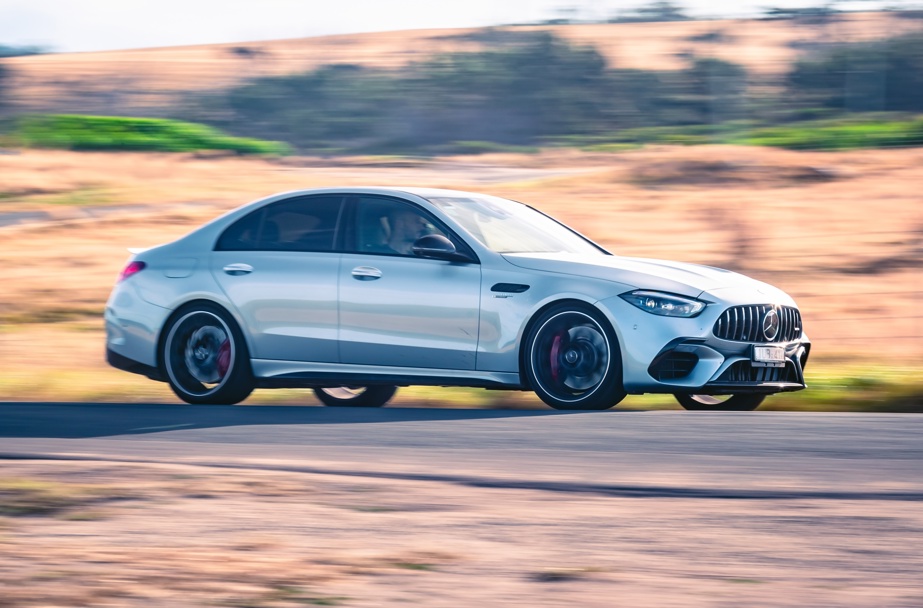
There are moments when a car’s headline feels like a paradox, and the Mercedes-AMG C63 is one of them. The legendary badge—once synonymous with an old-school V8 howl—now wears a four-cylinder plug-in hybrid powertrain. It sounds like compromise. It also turns out to be something stranger: a deliberate engineering gamble that tries to combine immediacy, performance theater, and everyday usability in a single, sharply tailored suit.
This is the Mercedes-AMG C63 review that tests the idea behind the 4-cylinder PHEV. Not with slogans, but with the kind of impressions that only arrive after you’ve lived with throttle response, listened to the sound design, watched the energy flow, and learned which driving moods make the car feel like its most believable self.
Design and Presence: Familiar Aggression, Modern Sculpting
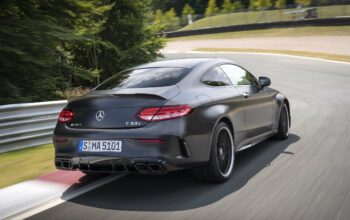
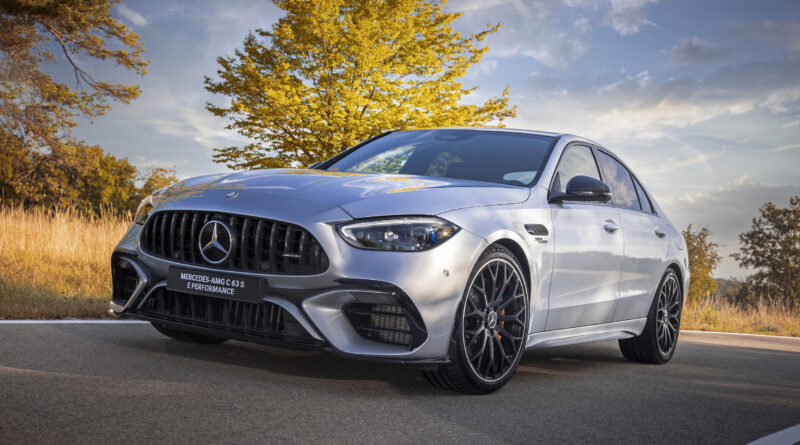
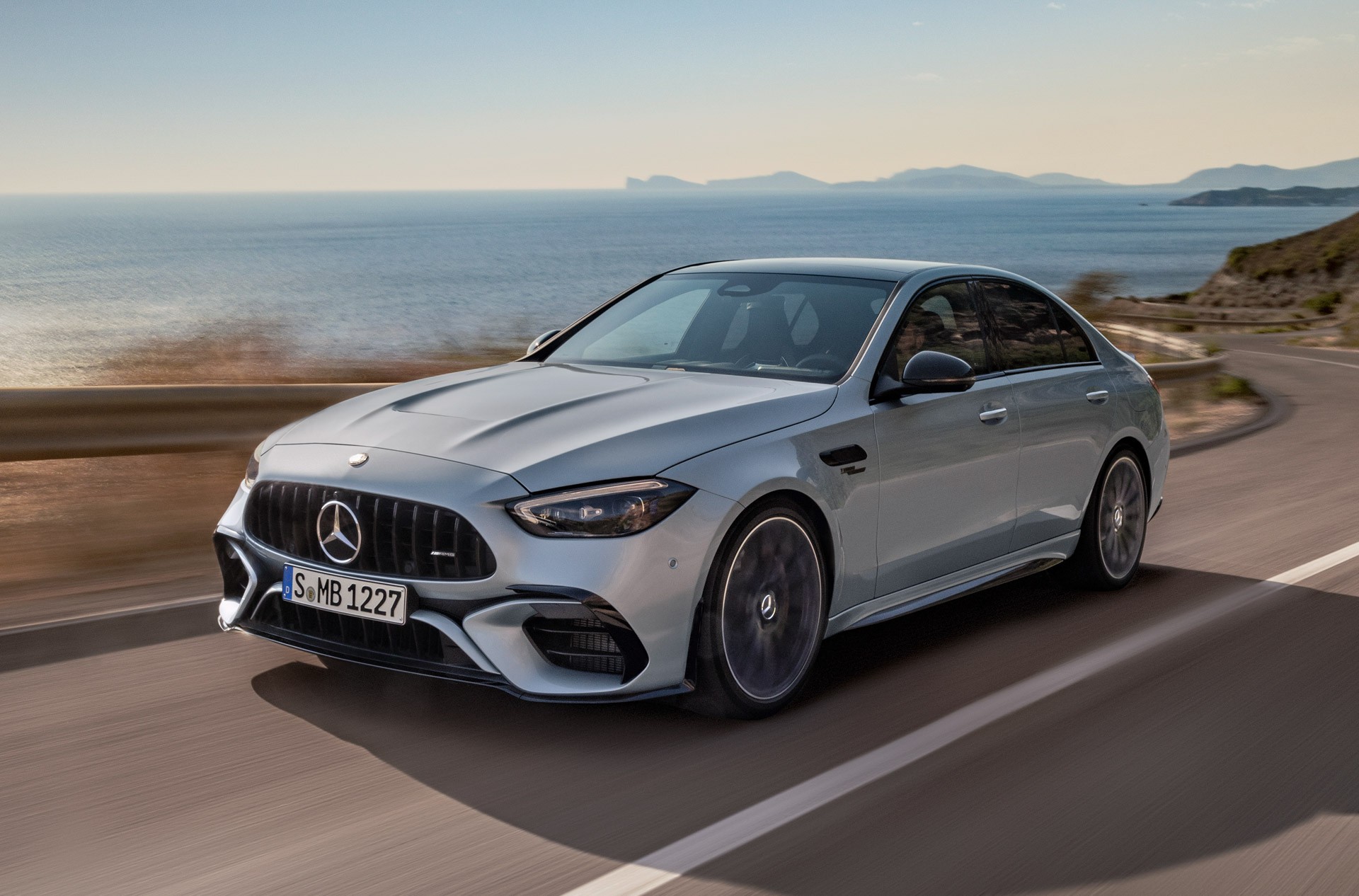
At a glance, the C63 doesn’t ask permission. Its stance is low and resolved, and the front end leans forward with purpose—like it’s already anticipating your next corner. The bodywork reads as purposeful aerodynamics rather than mere styling. Even in static framing, the proportions imply momentum.
Close up, details feel less like ornament and more like engineering shorthand. The vents, intakes, and aerodynamic surfaces are arranged to reduce drag and manage airflow, while the lighting signatures bring a sharper contrast to the dark evening streets. Some cars look fast. This one looks busy—as though the machine is already working.
Interior Ambience: Motorsport Cues, Daily-Life Comfort
Step inside and the atmosphere changes from external drama to cockpit clarity. The seating position feels planted, and the steering wheel invites immediate engagement. Controls are arranged with a subtle hierarchy—everything you need in a hurry remains reachable without forcing your hands into awkward angles.
Materials balance tactile quality and visual intensity. The cabin carries the kind of ambience that’s meant to be lived in, not merely photographed. Short sentences come naturally here: it’s tight, it’s purposeful, it’s composed. Yet the comfort does not vanish. Long-distance drives still feel plausible, especially when the hybrid system smooths out the rhythm of commuting.
Powertrain Reality Check: How a Four-Cylinder Becomes a Weapon
The most provocative question is also the simplest: can a four-cylinder PHEV deliver C63-level character? The answer is “yes,” but not in the way traditionalists might expect.
On paper, the logic is clear. A turbocharged four-cylinder provides thermal efficiency potential and packaging advantages, while the electric motor adds instant torque for launch and mid-range acceleration. Together, the system aims to create a punch that feels immediate, with the option for sustained performance when energy management is favorable.
In practice, the driving feel is less about engine rumble and more about a carefully staged push. The initial response can arrive like a switchflip—fast, forceful, and confident. Then, as the turbo spools and the internal combustion engine joins the party, the car builds momentum with fewer dips in immediacy than many purist engines can manage.
There’s a sense of orchestration. The car doesn’t just accelerate; it coordinates. That coordination shows up in throttle mapping, torque blending, and the way the vehicle chooses when to lean on battery energy versus engine output.
EV Mode Behavior: Quiet Efficiency or Convenient Theater?
Electric drive in a plug-in hybrid is where most drivers discover the temperament of a system. In EV mode, the C63 can operate with surprising discretion at low speeds. The sensation is smooth rather than theatrical. The vehicle moves with reduced vibration and less of the mechanical drama associated with pure performance engines.
Yet the “quiet” doesn’t feel submissive. It feels strategic. Electric-only driving makes city life easier—tight stop-and-go traffic becomes less of a constant negotiation. The car can creep, slide into normal speed transitions, and perform everyday maneuvers without announcing itself at every intersection.
However, there’s always the larger question: how quickly does it exhaust its available battery energy, and what happens afterward? The answer depends on your driving style and the system’s thermal priorities, but the overall feel is that the C63 uses battery energy like a skilled reserve—deployed when it matters and conserved when it doesn’t.
Performance Testing: Launch, Mid-Range Pull, and Stability Under Load
Acceleration isn’t one single event. It’s a sequence. The C63 performs best when you treat it like a momentum machine rather than a sprint-only tool.
Launches carry a distinct electric signature. The car can leap forward with urgent torque, and traction control manages the transfer of force with a level of composure that keeps the experience repeatable. Short bursts feel consistent, and the car doesn’t rely solely on spinning tires to make drama.
Mid-range pull is where the hybrid architecture becomes more obvious. Turbocharging alone can deliver strong power, but pairing it with electric torque smooths the transitions between low and mid engine speeds. The result is fewer “dead zones” and a more contiguous shove from one speed to the next.
Stability matters, too. High load cornering tests reveal how well the chassis and drivetrain communicate. The car holds its line with an intention that feels less like luck and more like engineering. Steering response is quick, and the feedback remains interpretable—rare for cars that blend multiple power sources.
Sound and Feel: Synthesized Drama, Genuine Impact
The soundscape is controversial by nature. When engines and electrics collaborate, the auditory experience becomes a design project. The C63’s acoustic output can be amplified and tailored, sometimes approaching the realm of theatrical performance. It’s not merely about volume—it’s about timing, pitch shaping, and the emotional cadence of acceleration.
Under hard throttle, the internal combustion engine contributes the familiar combustion character, while the electric motor fills in the instant torque. The “feel” is often richer than the pure sound alone would suggest. Steering and pedal response remain sharp, and the vehicle’s acceleration cadence stays intelligible.
In other words, it may not be the old V8 soundtrack, but it can still deliver an experience with purpose.
Handling Dynamics: Steering, Braking, and Chassis Control
The C63 is designed to behave like a performance sedan, not a vague sport car with good intentions. Steering is direct, and the car encourages confident inputs. When you turn in, the front end communicates what it’s doing rather than hiding behind understeer. There’s a sense of grip that appears progressively, not abruptly.
Braking inspires trust. Under repeated deceleration, the system resists fading in a way that suggests robust thermal management. Even when you’re not driving aggressively, the braking pedal feel remains predictable, which is as important for safety as it is for enjoyment.
Meanwhile, chassis control ties the hybrid’s torque delivery into the platform’s balance. The more you push, the more you notice how well the car manages torque distribution and traction stability.
Energy Management and Real-World Efficiency
Energy management is the invisible driver of the PHEV experience. The C63 doesn’t just consume fuel and charge in a vacuum; it constantly recalibrates based on driving style, battery state, and component temperatures.
In practical terms, expect efficiency gains when routes are mixed and stop-and-go traffic is common. EV miles depend on charging habits and how often the car gets to stay in electric drive long enough to build momentum before switching states.
On longer highway stretches, the story changes. The internal combustion engine becomes more dominant, and the battery is often preserved as a “boost bank” rather than a full-time propulsion source. Still, the hybrid architecture can soften fuel consumption by enabling smoother load management.
Charging Experience: Convenience vs. Commitment
Owning a plug-in performance car is a lifestyle choice, whether you acknowledge it or not. Charging requires planning, even if it’s easy planning. A well-timed home charge can transform the C63 from “hybrid that’s sometimes electric” into “electric enough to be genuinely useful.”
Short commutes can become mostly electric. Errands can be quiet. The car becomes less about using energy at the expense of availability and more about setting a daily rhythm.
If charging is inconsistent, the C63 still works as a performance vehicle, but the EV advantages fade. That’s not a flaw—just physics and energy economics.
Who This C63 Is For: The Buyers Who Will Actually Enjoy It
The Mercedes-AMG C63 with its 4-cylinder PHEV setup is not chasing the nostalgia of a V8 enthusiast. It’s courting a different kind of driver: one who wants performance without sacrificing daily livability.
It’s for commuters who crave torque on demand, for drivers who appreciate modern power electronics, and for anyone who wants a car that can be polished and practical without losing its capacity for theatrics. If you value repeatable response more than historical sound signatures, the C63 makes a strong case.
If you’re determined that only one engine layout earns the right to wear the badge, this review won’t rewrite your mind. But it will clarify the reality: this C63 is not pretending to be something else. It’s building a new performance language.
Conclusion: The C63’s Rebirth in Electric-Enabled Form
The Mercedes-AMG C63 review reaches a simple verdict. The 4-cylinder PHEV doesn’t dilute performance—it reframes it. Electric torque grants immediacy. The turbocharged engine supplies durable muscle. The chassis coordinates both with purposeful stability. Even the sound and feel, whether loved or questioned, contribute to a driving experience that remains intensely involving.
The C63 no longer depends on a V8 legacy to justify its existence. Instead, it leverages modern hybrid power delivery to create a new kind of urgency—one that works in cities, performs on roads, and scales into sport with surprising clarity.
In the end, the C63 isn’t a compromise. It’s an evolution—provocative, engineered, and undeniably quick.