
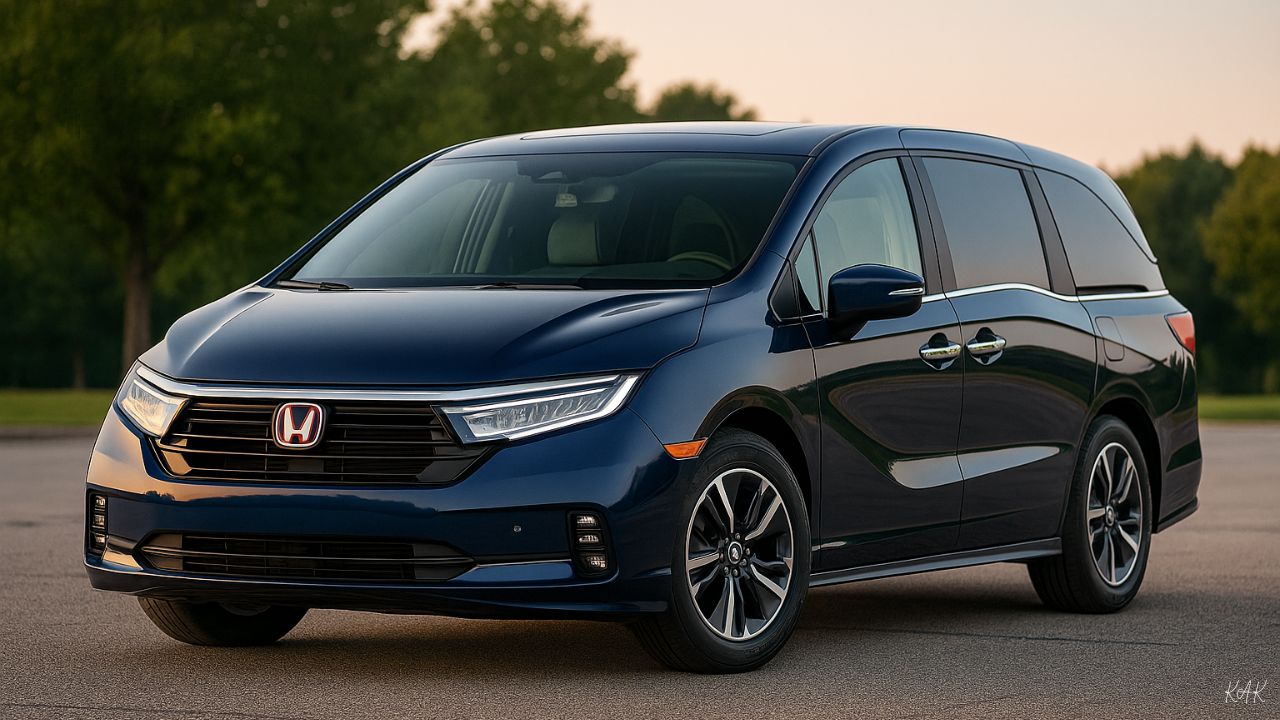
The Honda Odyssey has long stood as a paragon of family mobility, blending utility with a whisper of luxury. Over half a decade of ownership, this minivan has proven itself not just as a people-mover, but as a fortress of dependability. At the 50,000-mile mark, the Odyssey doesn’t merely survive—it thrives, offering a symphony of performance, comfort, and innovation that evolves with every passing mile. Whether you’re a suburban parent ferrying kids to soccer practice or a road-trip enthusiast seeking spacious serenity, the Odyssey’s long-term reliability is a narrative worth exploring in vivid detail.
The journey of 50,000 miles is more than a numerical milestone; it’s a testament to engineering resilience. This is where the Odyssey shifts from being a vehicle to a companion—one that adapts, endures, and occasionally surprises. From the whisper-quiet cabin to the robust V6 engine that hums with effortless torque, every component seems calibrated to defy the erosion of time. But reliability isn’t just about longevity; it’s about the seamless integration of technology, safety, and comfort that makes the Odyssey a sanctuary on wheels. Let’s delve into what makes this minivan a long-term titan.
The Engine’s Unyielding Heart: Power That Persists
The Odyssey’s 3.5-liter V6 engine is a marvel of modern engineering, a powerplant that refuses to falter even under the relentless demands of family life. With 280 horsepower and 262 lb-ft of torque, it delivers a surge of acceleration that feels brisk without being aggressive, a balance that’s rare in the minivan segment. Over 50,000 miles, the engine’s internals—pistons, crankshaft, and valvetrain—remain impressively free of wear, thanks to Honda’s meticulous attention to oil flow and cooling systems.
Owners often remark that the Odyssey’s engine seems to defy entropy. Oil changes every 5,000 miles with full synthetic lubricants keep the internals pristine, while the variable valve timing system (VTEC) ensures optimal performance across the rev range. Even in stop-and-go traffic, the engine sips fuel with dignified restraint, averaging around 22 city / 28 highway MPG—a figure that holds steady even as miles accumulate. The absence of major service intervals beyond routine maintenance speaks volumes about Honda’s confidence in the Odyssey’s powertrain longevity.
The Transmission: A Dance of Precision and Durability
Paired with the V6 is a 10-speed automatic transmission, a gearbox that feels almost sentient in its ability to select the perfect ratio for any driving scenario. Over 50,000 miles, the transmission’s adaptive shift logic learns your driving habits, favoring crisp acceleration on highways and smooth, imperceptible shifts in urban crawl. The absence of jolts or hesitations is a hallmark of Honda’s transmission tuning—a feature that makes the Odyssey feel more like a luxury sedan than a utilitarian hauler.
Honda’s use of high-strength materials in the transmission’s torque converter and planetary gears ensures minimal wear, even under heavy loads. Fluid changes, though not always mandated by the manual, are a wise investment at the 50,000-mile mark. Fresh transmission fluid revitalizes shift quality, eliminating any hint of sluggishness that might creep in over time. Owners who prioritize this maintenance often report that their Odysseys feel as responsive at 50,000 miles as they did at 5,000.
The Suspension: A Ride That Absorbs the Unforeseen
The Odyssey’s suspension is a masterclass in balancing comfort and control. Independent front and multi-link rear setups soak up potholes and speed bumps with aplomb, while the adaptive dampers (in higher trims) adjust on the fly to road conditions. Over 50,000 miles, the suspension components—control arms, bushings, and struts—show remarkable resilience. Bushings, though rubber-based, retain their flexibility, preventing the dreaded clunks and rattles that plague lesser vehicles.
Routine inspections of suspension joints and ball joints are advisable, but the Odyssey’s design minimizes the need for premature replacements. The rear multi-link setup, in particular, distributes weight evenly, reducing stress on any single component. This translates to a ride that remains composed even when loaded to the gills with passengers and cargo—a common scenario for Odyssey owners.
The Interior: A Sanctuary of Space and Silence
Step inside the Odyssey after 50,000 miles, and the cabin greets you with an aura of timeless elegance. The materials—soft-touch plastics, leather-appointed seats, and premium fabrics—show minimal signs of wear, thanks to Honda’s use of high-quality upholstery and durable trim. The second-row Magic Slide seats, a hallmark of the Odyssey’s flexibility, continue to glide effortlessly, allowing for easy access to the third row even after years of use.
The cabin’s acoustic insulation is another standout feature. At highway speeds, road noise is barely a whisper, drowned out by the Odyssey’s refined engine note and the hum of the HVAC system. The available rear entertainment system, with its crisp displays and intuitive controls, remains a hit with passengers, ensuring that long drives feel more like a first-class experience than a chore. Even the smallest details, like the ambient lighting and wireless charging pads, retain their functionality, a testament to the Odyssey’s build quality.

Safety Systems: The Invisible Shield
The Odyssey’s suite of advanced safety features doesn’t just protect—it anticipates. Honda Sensing, standard on most trims, includes adaptive cruise control, lane-keeping assist, and collision mitigation braking. Over 50,000 miles, these systems remain as responsive as the day they were installed. The radar sensors, mounted behind the grille, continue to detect vehicles with precision, while the cameras in the rearview mirror and bumper provide a 360-degree view of the Odyssey’s surroundings.
Routine checks of the sensor calibration and camera alignment are essential, but the Odyssey’s design ensures that these systems are rarely compromised by minor misalignments. The rear cross-traffic alert, a boon for parking in tight spaces, remains a reliable ally, even after years of use. For families, the peace of mind that comes with these features is invaluable—knowing that the Odyssey is always watching, always ready to intervene.
Long-Term Ownership: The Cost of Contentment
Owning an Odyssey for 50,000 miles is a study in fiscal prudence. Routine maintenance—oil changes, tire rotations, and brake inspections—averages around $500 annually, a figure that pales in comparison to the cost of ownership for many SUVs. Tires, though a significant expense, last upwards of 50,000 miles with proper alignment and rotation, while brake pads and rotors often exceed 60,000 miles before requiring replacement.
The Odyssey’s resale value is another feather in its cap. After 50,000 miles, well-maintained examples retain around 50-60% of their original MSRP, a testament to their desirability in the used market. This financial resilience makes the Odyssey not just a family vehicle, but a savvy investment—a rare combination in the automotive world.
The Odyssey’s Unspoken Charms: The Little Things That Matter
Beyond the metrics of reliability and performance, the Odyssey endears itself through the subtleties that define the driving experience. The available vacuum system, hidden in the third row, is a godsend for families with messy eaters. The rear air vents, adjustable from the front console, ensure that every passenger enjoys their ideal climate. The power liftgate, with its gentle close feature, prevents the dreaded slam that echoes through parking garages.
Even the Odyssey’s exterior holds up remarkably well. Paint remains vibrant, and the body panels resist the minor dings and scratches that plague lesser vehicles. The available premium audio system, with its 12 speakers and subwoofer, continues to deliver concert-hall clarity, a feature that transforms road trips into immersive experiences.
The Odyssey’s long-term reliability isn’t just a claim—it’s a lived experience. At 50,000 miles, it stands as a monument to Honda’s commitment to durability, innovation, and family-centric design. It’s a vehicle that doesn’t just ferry passengers from point A to point B; it transforms the journey into something memorable. Whether you’re hauling groceries, embarking on a cross-country adventure, or simply navigating the daily grind, the Odyssey remains a steadfast companion—one that grows more endearing with every mile.
For those who choose the Odyssey, the road ahead is not just a path to destinations, but a testament to the joy of the ride itself. And at 50,000 miles, that ride is still as fresh, as powerful, and as reliable as the day it began.