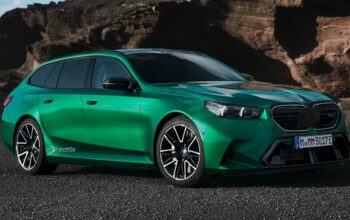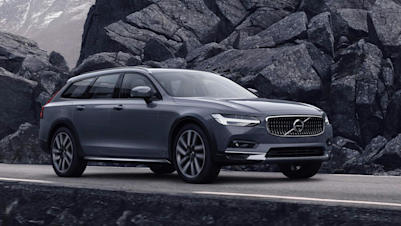
The modern luxury wagon isn’t just about hauling cargo with panache—it’s about commanding the road while your passengers are lost in the digital cosmos of infotainment. As we stand on the precipice of 2026, two titans of understated opulence, Volvo and Audi, are locked in a silent duel. Not over horsepower or torque, but over who can craft the most intoxicating cockpit of pixels and possibilities. Who, then, reigns supreme when the rubber meets the road and the screens come alive? The answer isn’t just about touchscreens and voice commands—it’s about crafting an experience that feels less like a tool and more like a co-pilot. Let’s buckle up and dive into the heart of this high-tech horsepower showdown.
The Infotainment Revolution: Where Luxury Meets the Cloud
Gone are the days when a premium wagon’s dashboard was a static tableau of analog dials and a single-line display. The 2026 models from Volvo and Audi are redefining what it means to be connected. Imagine sliding into the driver’s seat and being greeted not by a keyhole, but by a face—your face—on a 12.3-inch OLED touchscreen that wakes up with a flick of your wrist. This isn’t science fiction; it’s the new normal. Both brands have embraced the ambient intelligence paradigm, where the car learns your habits, anticipates your needs, and adapts its digital persona in real time.
Volvo’s approach leans into minimalism with a Nordic twist. The interface is clean, almost surgical in its precision, with a focus on reducing cognitive load. Audi, meanwhile, channels its quattro DNA into a more dynamic, almost theatrical display. The virtual cockpit in the A6 Avant doesn’t just show data—it narrates your journey, with 3D maps that feel like flying over a digital landscape. But which one feels less like a tool and more like an extension of yourself?
Touch vs. Gesture: The Battle for Intuitive Control
Touchscreens are now de rigueur, but not all touchscreens are created equal. Volvo’s latest infotainment system, codenamed Google Built-in, turns the center console into a responsive canvas. Tap, swipe, pinch—your gestures are met with immediate, tactile feedback. The system even integrates Google Assistant, so you can bark orders at it like a disgruntled captain barking into a ship’s intercom. “Hey Google, play my ‘Focus’ playlist,” you command, and the wagon obeys, its speakers thrumming with the precision of a metronome.
Audi’s MMI system, however, introduces a layer of sophistication with haptic feedback and gesture control. Wave your hand over the infotainment knob, and the system responds with a subtle vibration, as if acknowledging your presence. It’s a subtle power move—one that whispers, “I know you’re here, and I’m ready to serve.” But does this gimmick enhance usability, or does it risk feeling like a party trick in a world that values efficiency over theatrics?
The Software Symphony: Updates, Ecosystems, and the Cloud
A car’s infotainment system is only as good as its ability to evolve. Volvo’s reliance on Google’s ecosystem ensures that your wagon stays fresh with over-the-air updates that roll out like seasonal menu changes at a Michelin-starred restaurant. New apps, improved voice recognition, and even AI-driven personalization are just a Wi-Fi connection away. It’s the digital equivalent of a wardrobe refresh—except your car’s personality gets a glow-up instead of your closet.
Audi, ever the perfectionist, takes a more curated approach. Its myAudi platform is a walled garden of premium services, from satellite navigation that updates in real time to a concierge service that books your dinner reservations before you’ve even left the driveway. The downside? You’re locked into Audi’s ecosystem, which may feel restrictive to those who crave the open-ended freedom of Google’s playground. But for those who value exclusivity over flexibility, it’s a trade-off worth considering.
The User Experience: A Tale of Two Philosophies
Volvo’s infotainment system is a study in less is more. The menus are intuitive, the transitions are smooth, and the system never feels like it’s trying too hard. It’s the digital equivalent of a well-tailored suit—effortlessly elegant, never flashy. Audi, on the other hand, embraces the more is more ethos. The virtual cockpit can be customized to within an inch of its life, with themes that range from cyberpunk neon to serene Scandinavian minimalism. It’s a blank canvas, and you’re the artist.
But here’s the rub: customization is a double-edged sword. While Audi’s system offers unparalleled personalization, it can also feel overwhelming. Volvo’s approach, while less flashy, ensures that you’re never more than two taps away from what you need. Which philosophy resonates with you? Do you want a system that bends to your will, or one that quietly anticipates your every move?

The Hidden Challenges: Distraction, Overload, and the Human Factor
No infotainment system is perfect, and both Volvo and Audi have their Achilles’ heels. Volvo’s reliance on Google Assistant, while convenient, can sometimes feel like a chatterbox in the backseat. “I’m sorry, I didn’t catch that,” it chirps, as if you’ve just asked it to solve the Riemann hypothesis. Audi’s virtual cockpit, meanwhile, can be a victim of its own brilliance. With so many customization options, it’s easy to get lost in the digital weeds, tweaking settings until you’ve forgotten why you opened the menu in the first place.
Then there’s the elephant in the room: driver distraction. Both systems are designed to minimize glances away from the road, but no amount of haptic feedback or voice commands can eliminate the cognitive load of navigating a digital labyrinth. The real challenge isn’t just about who has the better tech—it’s about who can deliver an experience that feels seamless, not intrusive.
Final Verdict: Which Wagon Wins the Digital Crown?
Choosing between the 2026 Volvo V90 and the Audi A6 Avant isn’t just about picking a side—it’s about defining what luxury means to you. If you value a system that’s as unobtrusive as it is powerful, Volvo’s Google Built-in interface is a compelling choice. It’s the digital equivalent of a well-oiled machine: reliable, efficient, and quietly impressive.
Audi’s MMI system, on the other hand, is for those who see their car as a canvas for self-expression. It’s flashy, customizable, and unapologetically ambitious. But with great power comes great responsibility—and the risk of getting lost in the digital sauce.
Ultimately, the best infotainment system isn’t the one with the most features or the flashiest graphics. It’s the one that feels like an extension of you. So, ask yourself: Do you want a co-pilot that’s as subtle as a Scandinavian summer sunset, or one that dazzles like a Berlin nightclub? The choice, as they say, is yours.
The road ahead is paved with pixels and possibilities. The question isn’t whether you’ll be distracted—it’s whether your infotainment system will be the reason you arrive at your destination with a smile, or a headache. Choose wisely. The digital revolution is just getting started.