The Audi RS6 Avant has long been the automotive world’s answer to the question: “What if a family hauler could also outrun a sports car?” With its thunderous V8 growl and practical yet aggressive silhouette, the wagon has carved a niche for itself among enthusiasts who refuse to compromise. But whispers in the digital corridors of auto forums and CGI studios suggest that the next chapter for the RS6 Avant might not involve a single drop of gasoline. Could the 2026 Audi RS6 Avant be the first in a lineage to shed its internal combustion legacy entirely? And more intriguingly—what happens when a performance wagon trades thunder for torque in one fell swoop?
This isn’t just another rumor cycle. The digital renderings and leaked imagery hint at something far more radical than a mere powertrain swap. They suggest a reimagining of what an RS model can be—where brutal acceleration meets zero-emission efficiency, and where the familiar tail-happy dynamics of the RS6 are redefined through the silent fury of electric torque. But as thrilling as this sounds, it also raises a playful yet pressing question: Can a wagon that has always relied on visceral engine symphonies truly find its soul in electric silence?
From V8 Howl to Silent Torque: The Powertrain Revolution
The heart of the Audi RS6 Avant has always been its engine—a symphony of forced induction, mechanical grit, and the kind of power that makes traffic lights feel like personal challenges. But the automotive tide is turning, and the next-gen RS6 Avant appears poised to ride it. Reports indicate a shift from the traditional 4.0-liter twin-turbo V8 to a fully electric powertrain, possibly under the e-tron banner. This isn’t just a swap; it’s a reinvention.
Imagine, if you will, a wagon that accelerates from 0 to 60 mph in under 3 seconds—not with the mechanical crescendo of a V8, but with the instantaneous, silent surge of electric torque. The e-tron powertrain, already proven in models like the Audi e-tron GT, delivers not just speed, but an entirely new kind of driving experience. There’s no lag, no gear hunting—just a relentless, linear push that pins you to the seat with a force that feels almost alien to those accustomed to the RS6’s traditional soundtrack.
But here’s where the challenge begins. The RS6 Avant has never been just about straight-line speed. It’s about the art of tail-happy handling, the growl that thrums through your chest, and the visceral connection between driver and machine. Can an electric RS6 Avant replicate that emotional resonance? Or will it require a new kind of engagement—one defined by precision, weight distribution, and the hum of electric motors rather than the roar of cylinders?
Early digital renderings suggest Audi is banking on the latter. With a low-slung battery pack and a near-50:50 weight distribution, the next-gen RS6 Avant could redefine agility. The absence of a front-mounted engine might even allow for a more balanced chassis, where every input from the steering wheel translates into immediate, predictable response. The challenge, then, isn’t just about power—it’s about preserving the RS6’s soul in a format that has never known silence.

Design: Where Brutality Meets Futurism
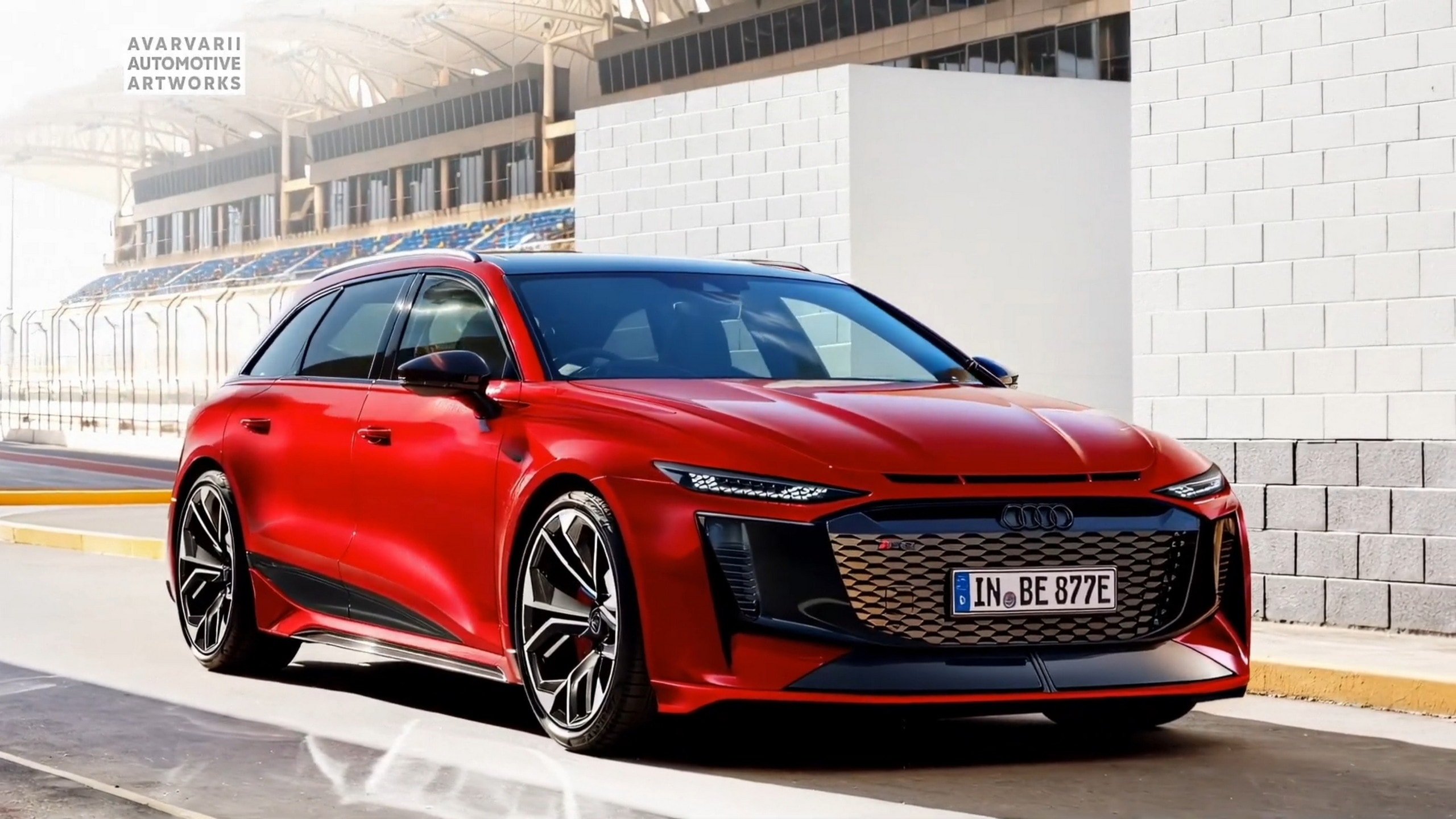
The RS6 Avant has always worn its performance credentials on its sleeve—aggressive front fascias, flared fenders, and a rear spoiler that could double as an airfoil. But the next-gen model appears to be taking a different approach. The digital renderings reveal a design language that blends Audi’s signature quattro grille with a more aerodynamic, almost stealth-like profile. The absence of a large front grille isn’t just a styling choice; it’s a nod to the efficiency demands of an electric powertrain.
The wagon’s silhouette remains unmistakably Avant, but the details tell a story of evolution. The headlights are sharper, more angular, and integrated with advanced LED technology that hints at future adaptive lighting systems. The body lines are smoother, reducing drag while maintaining the RS6’s muscular stance. Even the wheels—likely to be larger and more aerodynamic—are designed to minimize turbulence and maximize range.
But the most intriguing element? The tail. Digital sketches show a subtle but deliberate spoiler, not just for downforce, but as a visual cue to the wagon’s newfound electric prowess. It’s a playful nod to the RS6’s tail-happy heritage, now reimagined for a world where grip and stability are paramount. The challenge here is balancing the Avant’s practicality with the performance cues that enthusiasts crave. Can a wagon that prioritizes aerodynamics and efficiency still look like it’s ready to dominate a racetrack?
Audi seems to think so. The next-gen RS6 Avant might just prove that you can have your cake and eat it too—where futuristic design meets the raw, unapologetic energy of an RS model.
The Practicality Paradox: Can an EV RS6 Avant Still Be a Family Hauler?
Let’s address the elephant in the room. The RS6 Avant has always been a master of duality—a performance machine that could also ferry kids, groceries, and a week’s worth of luggage without breaking a sweat. But electric vehicles, with their heavy battery packs, have long struggled with this balance. So, how does Audi plan to square the circle?
The answer lies in packaging. By relocating the battery pack to the floor of the vehicle, Audi can lower the RS6 Avant’s center of gravity, improving handling while also maximizing interior space. The digital renderings suggest a cabin that retains the Avant’s hallmark practicality, with a focus on premium materials and cutting-edge technology. Expect a minimalist yet luxurious interior, where digital displays replace physical dials and haptic feedback systems redefine the driving experience.
But the real test will be range and charging. The RS6 Avant has never been about compromise, and an electric version won’t be either. With fast-charging capabilities and a battery pack designed for long-distance travel, Audi could position the next-gen model as a true grand tourer—one that combines the thrill of an RS with the convenience of an EV. The challenge, however, is ensuring that the wagon doesn’t become a one-trick pony. Can it still tow a trailer, haul a mountain bike, or fit a stroller without sacrificing performance?
Early indications suggest yes. The e-tron powertrain’s instant torque delivery could make towing feel effortless, while the low-slung battery pack might even free up more cargo space than the current model. The key will be in the details—how Audi integrates the battery, cooling systems, and charging infrastructure without compromising the Avant’s legendary versatility.
Driving Dynamics: Tail-Happy in Silence
The RS6 Avant has always been a master of controlled chaos—a car that could drift its tail with the flick of a wrist while still feeling planted and predictable. But electric powertrains introduce a new dynamic. Without the mechanical sympathy of a V8, how does the RS6 Avant maintain its signature handling characteristics?
The answer lies in software. Electric motors offer instantaneous torque vectoring, allowing the RS6 Avant to adjust power delivery to each wheel independently. This isn’t just about acceleration; it’s about cornering, stability, and the kind of tail-happy behavior that has made the RS6 a legend. Imagine entering a corner with the confidence of a quattro system, but with the added benefit of electric torque vectoring that can tighten the line or induce a controlled drift at the flick of a switch.
But here’s the rub: the lack of engine noise could make the driving experience feel sterile to purists. Audi has already addressed this in models like the e-tron GT, where artificial engine sounds and haptic feedback systems recreate the visceral experience of a combustion engine. The next-gen RS6 Avant might take this a step further, blending digital soundscapes with physical feedback to ensure that the driving experience remains engaging, even if it’s silent.
The challenge, then, is not just about performance—it’s about preserving the emotional connection that has defined the RS6 for decades. Can a car that relies on electrons instead of explosions still make your heart race? Audi seems determined to prove that it can.
The Audi RS6 Avant has always been a paradox—a car that defies categorization, blending brute force with practicality, aggression with elegance. The next-gen model, if the rumors are to be believed, will take this paradox to new heights. It will be a wagon that redefines performance, a machine that trades thunder for torque, and a vehicle that challenges our perceptions of what an RS model can be.
But as exciting as this evolution is, it also raises a tantalizing question: What happens when the RS6 Avant no longer sounds like a symphony of cylinders, but hums like a futuristic force of nature? The answer may well redefine the very essence of performance driving. And if Audi gets it right, the next-gen RS6 Avant won’t just be a new chapter in the wagon’s storied legacy—it might just be the beginning of a revolution.