There’s a particular kind of grin that arrives when the tach needle (or power-meter) starts dancing, when the steering feels alive, and when the cabin seems to shrink around the driver. That sensation is why hatchbacks continue to win hearts year after year. People often chalk it up to “they’re practical” or “they’re affordable,” but that’s only the surface gloss. The deeper fascination lives in how hatchbacks invite participation—how they reward small inputs, how they make momentum feel personal, and how they turn everyday errands into miniature driving adventures.
With 2026 models stepping up their chassis intelligence, torque delivery, and usability, the fun factor isn’t an accident. It’s engineered. Below are five of the most fun-to-drive hatchbacks for 2026, each with its own brand of delight—whether you chase sharp steering response, playful acceleration, or the quiet satisfaction of a chassis that feels glued together.
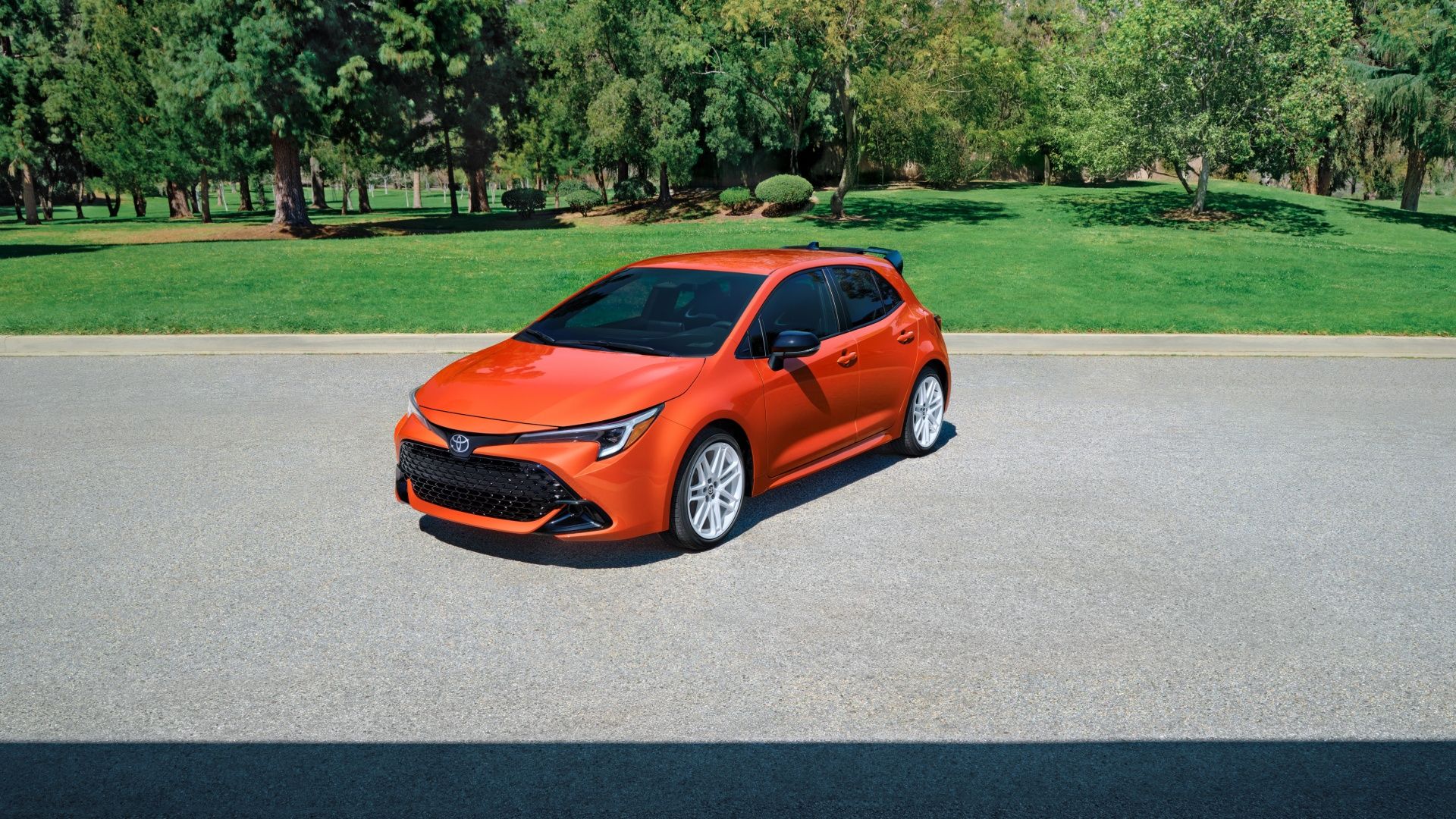
1) 2026 Toyota Corolla Hatchback: the “serious” fun that sneaks up on you
It’s easy to underestimate the Corolla Hatchback because it carries the badge of mainstream reliability and daily composure. Yet, that’s precisely why it’s so entertaining: it feels like a tuner’s secret, wrapped in an everyday suit. The common observation is that the Corolla is “nice to drive.” The deeper truth is that its balance is unusually coherent. Inputs land where you expect. Feedback arrives early enough to refine your next decision.
In motion, the hatchback body style works like a compact stage. You sit low, you look forward, and the car encourages a precise driving rhythm. That rhythm becomes addictive on twisty roads, where you can keep the car in its sweet spot without turning the commute into a cardio session. Even when the pace stays sensible, the steering effort and vehicle stability create a feeling of predictable mischief.
The reason this model feels fun isn’t only power. It’s the way the drivetrain harmonizes with the chassis—how acceleration doesn’t feel like a separate event from cornering. It’s one continuous conversation between traction, grip, and momentum.
2) 2026 Nissan Leaf: instant torque fun disguised as calm practicality
Many drivers assume an electric hatchback’s “fun” is limited to quiet launches and smartphone-like simplicity. That assumption misses the point. The 2026 Nissan Leaf carries a different kind of amusement: it’s the joy of immediate torque and the smoothness of power delivery. When you press the accelerator, the car responds now—not later. The sensation is less “rev-and-go” and more “push-and-glide,” like shifting from a gear-shaped mindset to a physics-shaped one.
Because torque is available at low speeds, the Leaf turns city driving into an effortless game. You can modulate speed precisely through traffic, and the car feels eager without demanding attention. That’s where the fascination deepens. It’s not just the speed. It’s the controllability—the confidence that comes from predictable response, gentle weight transitions, and strong traction behavior.
Even for drivers who don’t care about spreadsheets or range math, the Leaf is engaging because it changes what “driving feel” means. It trades the drama of engine noise for a cleaner, more transparent connection between your right foot and the road’s outcome.
There’s also a subtle psychological delight in owning an electrified hatchback. Every trip becomes an experiment: How smooth can you be? How efficiently can you drive? Can you maintain momentum like a magician? That curiosity keeps the experience lively far beyond the first week.

3) The “hot-hatch energy” that 2026 still promises (even when it’s not a track toy)
When people search for fun-to-drive hatchbacks, they often picture loud engines, aggressive body kits, and hard braking at the edge of confidence. Yet the most satisfying hatchbacks of 2026 don’t always chase maximum spectacle. They chase flow. They prioritize how the car feels through transitions—brake release, turn-in, mid-corner balance, and exit traction.
The deeper reason hatchbacks remain magnetic is their geometry. The short wheelbase (relative to sedans) can make steering feel quicker. The hatch cargo area also helps designers tune weight distribution and cabin packaging to improve driver visibility and confidence. In simple terms: you see more, the car feels smaller, and decisions come faster.
Even without a full race kit, the best 2026 hatchbacks lean into driver engagement—through smart stability calibration, strong torsional rigidity, and drivetrain mapping that respects how real people drive. You can be enthusiastic without being reckless. That balance—between spontaneity and composure—is where fun thrives.
In this category, you’ll notice a common theme: the steering isn’t just accurate; it’s communicative. The brake pedal has texture. The throttle has intent. And the suspension, rather than fighting the road, seems to listen to it.
4) Practical performance: how the hatchback format makes every drive feel like yours
Fun-to-drive cars can be surprisingly fragile concepts in real life. Many “performance” vehicles feel awkward when you actually have to go grocery shopping, pick up a friend, or parallel park during a rainstorm. Hatchbacks are different. They make performance compatible with errands, which means you drive them more often—and more frequent driving is where joy compounds.
That’s the observation. Here’s the deeper layer: hatchbacks lower the friction between intent and action. You don’t think, “I should drive something fun today.” Instead, the car simply invites fun whenever you choose to press a little harder into corners or enjoy a longer route.
Because the hatchback silhouette is both compact and versatile, it encourages brisk detours. You can take the curvy side street without mentally bargaining with parking space. You can stay after work for a second loop because the practicality won’t punish you afterward.
In 2026, that practicality pairs with better driver-assistance tuning and more refined infotainment usability. The result is not just convenience—it’s reduced cognitive load. Less mental clutter means you feel more connected to the act of driving.
5) The drivetrain personality: why 2026 hatchbacks feel distinct even when specs look similar
Two cars can share “similar” power numbers yet feel wildly different. The trick lies in drivetrain character: how power is metered, how traction is managed, how gear selection (or torque mapping) supports your chosen speed. In 2026, many hatchbacks refine these elements until the car begins to anticipate your rhythm.
Some models feel eager and elastic, like they’re ready to spring forward the moment you suggest it. Others feel steady and linear, building speed with a calm confidence that makes passing maneuvers feel civilized and effortless. Both can be fun. The fascination comes from learning the car’s personality and then exploiting it just a little—finding that sweet spot where acceleration and steering feel synchronized.
Also consider regenerative behavior in electrified models. Even when braking is gentle, the car’s deceleration feel can be tuned to help you carry speed smoothly into corners and reduce the need for heavy pedal changes. That transforms driving into a continuous, flowing activity rather than a sequence of starts and stops.
When you experience that kind of cohesion, fun becomes more than amusement. It becomes skillful enjoyment—the pleasure of becoming fluent in a machine’s tempo.
How to choose your most fun-to-drive 2026 hatchback
Choose based on what kind of fun you actually want. If you crave crisp steering and familiar daily practicality, look for a hatchback with a balanced chassis and consistent throttle response. If you want instant thrust and smooth control in stop-and-go life, prioritize the electrified torque delivery and refined regenerative calibration.
Also pay attention to seating position and visibility. Fun often starts with comfort. When you can see well and feel secure in the driving posture, your confidence rises. Confidence is a quiet multiplier—it makes every input feel safer, and safer inputs create more rewarding experiences.
Finally, test-drive with a route that includes real-world variety: a short stretch of city, a few turns, and one longer segment for steady acceleration. Fun doesn’t reveal itself only at one speed. It shows up across conditions, like a song that gets better as the verses change.
Outro: hatchbacks are fun because they’re brave enough to be human
In the end, the most fun-to-drive 2026 hatchbacks share a common philosophy: they treat driving like something you participate in, not something you merely experience. They respond quickly. They feel understandable. They offer delight in the spaces between corners and during the mundane moments that most cars tolerate.
So the next time someone says a hatchback is “just practical,” smile. Practical is the camouflage. Beneath it is a deeper enchantment—the kind that turns every drive into a small, repeatable adventure, one satisfying input at a time.