The Volkswagen Tiguan has always aimed for a particular kind of satisfaction: practical enough to live with daily, polished enough to feel composed on longer drives, and roomy in a way that doesn’t require compromise. This is where the Tiguan earns its reputation as a roomy compact option—an SUV that never seems to rush the moment you get in, and one that manages to keep the cabin calm even when the road gets busy.
In this review, expect to move through the essentials—space, comfort, performance, tech, safety, driving character, and real-world usability—while also exploring the details that many listings gloss over. Think of it as a guided stroll through the Tiguan’s strengths, followed by a thoughtful look at where expectations should be calibrated.
And yes, the Tiguan’s appeal is not only about being “good for the class.” It’s about how the whole package behaves: seats that feel welcoming, controls that make sense, and a driving position that’s high enough to relax you but grounded enough to keep you confident.
Room and practicality: where the Tiguan quietly wins
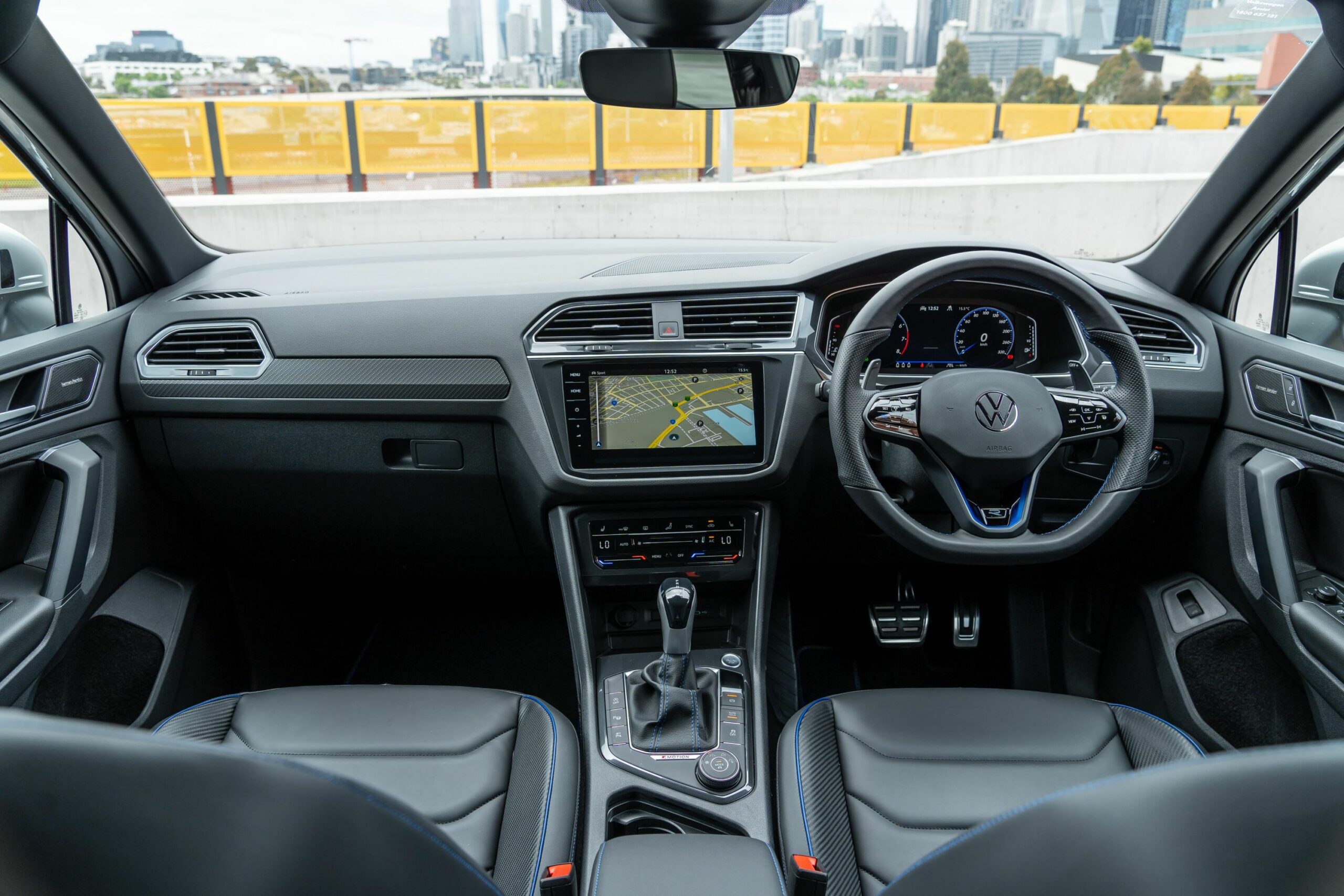
Roominess is often a headline claim, but the Tiguan treats space as an everyday instrument. The cabin layout prioritizes clear sightlines and supportive seating geometry. The front seats feel designed for long conversations and long commutes, with enough cushion to soften the edge of highway time. Even the way the dashboard frames the instruments contributes to that “everything within reach” sensation.
Step into the rear seats and the story continues. Legroom is notably generous for a compact SUV, and the floor feels thoughtfully shaped to avoid turning back-seat travel into a contortion exercise. There’s a sense of openness around the shoulders as well—useful when passengers bring along bags, jackets, or the occasional cargo that seems to multiply between home and the weekend destination.
Then there’s the cargo area. The Tiguan’s practicality is expressed through how easily it accommodates both routine errands and the occasional “we didn’t plan that” moment. A broad loading opening, sensible cargo height, and a layout that doesn’t fight you make it easier to live with. Fold the rear seats and the vehicle becomes a flexible hauler, capable of swallowing bulky items without requiring excessive choreography.
Altogether, the Tiguan’s interior volume doesn’t feel forced. It feels engineered—practical and accessible, with just enough refinement to keep it from feeling utilitarian.
Driving comfort: an SUV that stays composed
The Tiguan is at its best when it turns motion into steadiness. Its ride quality aims for a balance: it absorbs imperfections without isolating you from the road entirely. Short undulations don’t feel harsh; long stretches don’t feel tiring. The suspension works to keep the cabin environment cohesive, so conversations remain comfortable and the steering doesn’t demand constant attention.
Wind noise and road texture are handled with a deliberate calm. That matters more than many people think, because fatigue rarely announces itself dramatically. It accumulates. A quieter cabin delays the moment you start looking for an exit. The Tiguan does that job well.
Even at moderate speeds, the SUV feels planted. It doesn’t wallow, and it doesn’t feel brittle. Instead, it offers a confident rhythm—particularly on urban arterials where you’re frequently braking, accelerating, and negotiating lane changes.
Powertrain and efficiency: the engine’s personality
Volkswagen’s compact SUV approach generally pairs practical power with fuel-conscious behavior. In typical driving, the Tiguan’s powertrain offers sufficient response for merging, overtaking, and handling everyday workloads without drama. The acceleration may not be reckless or theatrical, but it is purposeful.
Efficiency tends to be one of the Tiguan’s defining advantages, particularly when traffic patterns are stop-and-go but not overly aggressive. The vehicle often feels like it’s designed to minimize waste—making smoothness part of the strategy rather than an afterthought. You get the sensation of using the throttle with intent rather than needing to compensate for sluggishness.
For drivers who like to live a step ahead of the curve, the transmission logic and throttle mapping are worth noting. They don’t simply chase speed; they coordinate with the moment. That coordination is what makes the driving feel effortless.
Trim character: from sensible daily driving to sporty intent
One of the Tiguan’s most interesting qualities is how its lineup can satisfy different temperaments. The mainstream approach focuses on comfort and efficiency, while higher-performance variants introduce a sharper attitude—more aggressive stance, sportier calibration, and an overall sense that the vehicle wants to be driven with enthusiasm.
On the sport-minded end, the Tiguan R stance signals its intentions visually and mechanically. The steering feel may become more immediate, the drivetrain response more urgent, and the vehicle’s body control more attentive when you push through bends. It’s not only about speed; it’s about feedback. The SUV becomes more communicative, less distant.

On the other hand, the conventional Tiguan remains a master of compromise-free living. It doesn’t feel stripped down. It feels deliberate. You can have a calm, roomy vehicle for daily life, then choose performance cues when you want a more spirited identity.
Infotainment and connectivity: technology without the tantrums
The infotainment experience in the Tiguan is designed to be straightforward. Menus are generally navigable, and common functions can be reached without turning the drive into a touchscreen seminar. The interface aims for usability rather than confusion, which is exactly what matters in an SUV—because you’re always balancing navigation, music, climate, and the immediate reality of traffic.
Smartphone integration is a key piece of the puzzle. The Tiguan typically supports the workflows people rely on most: streaming, maps, calls, and messages. The best systems are the ones that fade into the background. That’s the Tiguan’s sweet spot.
Audio quality is another area where the SUV’s character shows. Even when you’re not listening at concert volume, clarity tends to remain intact. That makes commutes more enjoyable and road trips feel less like logistics and more like travel.
Safety and driver assistance: confidence built into the routine
Safety in the Tiguan is expressed through both passive engineering and active driver assistance technologies. In daily driving, the most valuable systems are those that reduce workload rather than add complexity. Driver assistance can help maintain lane positioning, manage speed, and provide alerts when the unexpected arrives.
Forward-looking features—such as collision mitigation and adaptive cruise behavior—support long-distance calm. They encourage steadiness, and steadiness is a form of safety. Parking assistance also plays a practical role. In crowded lots, those extra cues can prevent minor frustrations from becoming real headaches.
It’s worth emphasizing that driver assistance is not a replacement for attention. Instead, it acts like a diligent co-pilot—watchful, responsive, and often remarkably helpful at the exact moments when fatigue or distraction might otherwise creep in.
Fuel, ownership, and everyday costs: what “roomy” really means
Owning a roomy SUV should feel like a sensible trade, not a financial burden. The Tiguan’s efficiency contributes to lower day-to-day running costs compared with thirstier larger vehicles. Fuel economy depends on driving style and terrain, but the underlying design intent supports respectable real-world results.
Beyond fuel, practical maintenance considerations matter. If you’re choosing the Tiguan as a long-term companion, the predictability of components, parts availability, and routine service scheduling influence overall satisfaction. A car becomes part of life, and life rarely tolerates surprises.
Warranty coverage and service schedules also shape ownership confidence. Many buyers value the reassurance that comes with structured coverage plans and clear servicing guidance.
Who the Tiguan suits best
The Tiguan is a persuasive choice for people who want SUV practicality without the bulk of a larger platform. Families benefit from the rear-seat space and the cargo versatility. Commuters appreciate the calm ride, manageable dimensions, and driver-friendly controls. Road-trippers get a cabin that stays pleasant and a driving demeanor that doesn’t punish long distances.
Even solo drivers may find the Tiguan compelling. The room makes everyday tasks easier—groceries, equipment, weekend gear, and the inevitable clutter that accumulates across seasons.
And if performance is part of the appeal, the Tiguan’s higher trims deliver a more urgent, engaging character that doesn’t erase comfort. It transforms the same roomy foundation into something more expressive.
Final verdict: a roomy compact option with grown-up manners
The Volkswagen Tiguan Review can be summarized in a single idea: it feels designed for real life. It offers the space you expect from an SUV, the comfort you need for daily use, and the composure that makes longer drives feel manageable. Its efficiency and practical versatility support ownership without turning driving into a constant calculation.
Whether you lean toward the sensible configuration or the more spirited variants, the Tiguan keeps delivering what matters—room, confidence, and a calm sense of control. In a market crowded with compromises, that combination stands out as quietly impressive.
Choose the Tiguan when you want a compact SUV that doesn’t just look capable. Choose it when you want capability that shows up every time you open the door and every time the road asks for your attention.