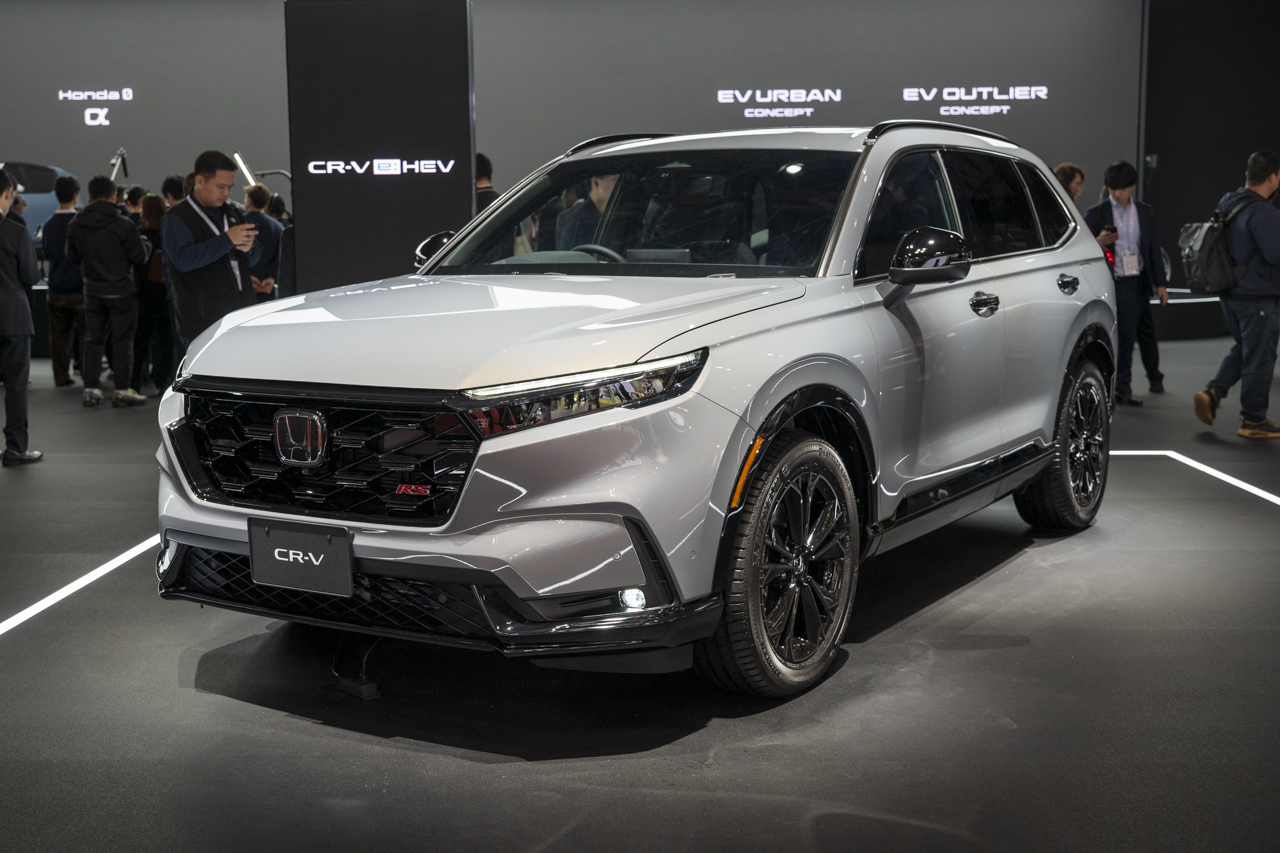
The Honda CR-V has always worn its practicality like a tailored jacket—quietly competent, never trying too hard, yet unmistakably composed. Now, the mid-cycle refresh looms like a familiar face stepping back into the spotlight with just enough polish to change the entire mood. Think of it as a tune-up for the soul of the compact crossover: refinement where it matters, restraint where it shouldn’t be loud, and a few intriguing surprises designed to keep the CR-V’s appeal feeling newly minted.
Predictions for the next CR-V facelift can be read like chapters in a well-loved novel—some details will land on the page, others will remain deliciously implied. Still, certain patterns are hard to ignore: the rhythm of Honda’s updates, the direction of hybrid-era design, and the evolving expectations of drivers who want comfort without compromise. Let’s walk through what a mid-cycle refresh could mean for the CR-V—where it may sharpen, where it may soften, and how it might keep its role as the everyday navigator for families, commuters, and weekend wanderers alike.
Exterior Updates: A Subtle Rewriting of the Front Page
A refresh rarely arrives like a storm. It’s more like the soft click of a well-made watch adjusting its tempo—small changes that make the whole piece feel more precise. For the CR-V, the front end is likely to receive the most visually immediate attention. Expect a refined grille treatment, perhaps reshaped for a more aerodynamic silhouette. The headlights may be recalibrated as well, with updated internal detailing that reads as cleaner and more modern at dusk.
Along the side, designers often preserve the core proportions—after all, the CR-V’s stance is part of its character. But mid-cycle changes can include updated wheel designs, subtle trim revisions, and paint or finish variations that enhance the “three-dimensional” look of the body lines. If the refresh follows recent trends, lighting signature and grille geometry could become more prominent, turning the CR-V’s face from friendly to confidently expressive.

Hybrid Focus: The Refresh as a Careful Optimization
For many shoppers, the CR-V isn’t just transportation—it’s an efficiency philosophy. In that context, a mid-cycle refresh can function like a mid-course correction in a long voyage. The drivetrain may remain fundamentally familiar, but updates often aim to reduce friction—both literal and metaphorical. That could translate into software refinements for the hybrid system, improved drivability transitions, or tweaks to energy management strategies.
One of the most compelling aspects of hybrid ownership is the way it changes the character of ordinary driving. Smoothness becomes a quiet superpower. If Honda leans into that strength, the refreshed CR-V may feel more seamless during throttle changes and offer a more composed blend of electric assistance and engine torque. Small improvements here can be surprisingly noticeable, especially in stop-and-go city rhythms.
Efficiency, too, is likely to receive attention. Even marginal gains can create outsized impact when a vehicle spends most of its life negotiating traffic lights and parking lots. A refresh may introduce calibrations that maximize regenerative braking effectiveness or optimize how the system decides when to recharge and when to coast.
Interior Ambiance: A Cabin That Feels Like a Deeper Breath
Where the exterior evolves through visual cues, the interior tends to evolve through atmosphere. Mid-cycle updates often aim to make the cabin feel more cohesive—like every surface belongs to the same conversation. Expect design refinements that elevate the sense of tactility: revised trim materials, updated stitching or accent patterns, and potentially new seat fabric options that feel more resistant to everyday wear while remaining inviting.
Technology is the other great lever. Most mid-cycle refreshes bring improvements to infotainment responsiveness, interface clarity, and connectivity features. The CR-V has long been a “user-friendly” vehicle in spirit, and a refresh can sharpen that identity—making it easier to navigate, easier to pair devices, and less likely to interrupt the flow of driving.
Comfort details may also receive upgrades: subtle seat adjustments, improved cabin noise management, or revised climate control tuning. These changes rarely make headlines, yet they can transform how long commutes feel. A cabin that is quieter by degrees can become a cabin that feels dramatically calmer.
Infotainment and Connectivity: From Convenient to Effortless
A good infotainment system doesn’t call attention to itself. It fades into the background and lets the road remain the protagonist. The mid-cycle CR-V could move closer to that ideal by refining software logic and improving the speed at which menus respond. Smoother transitions, clearer icons, and better integration with smartphone ecosystems are typical targets.
Drivers are increasingly particular about voice control accuracy, map legibility, and how quickly the system reacts to commands. If Honda updates the user interface during the refresh, the experience may feel more “elastic,” adapting naturally to different drivers and different scenarios—ranging from quick navigation taps to longer routes that require frequent recalculations.
Wireless functionality, charging efficiency, and charging placement are also areas that can be enhanced. The aim is simple: fewer interruptions. In practical terms, it means less juggling, fewer cables, and a cabin that supports the driver’s routine rather than complicating it.
Driver-Assist Suite: Reassurance That Works in the Real World
Modern driver assistance is less about replacing attention and more about extending it. With a refresh, Honda may recalibrate the sensing logic to improve the confidence of systems such as adaptive cruise control and lane-keeping support. The best driver-assist updates aren’t the ones that add flashy features; they are the ones that reduce uncertainty.
That could mean improved object detection in tricky lighting, more intuitive behavior in construction zones, and smoother responses when traffic patterns change. In the real world, these adjustments matter most during monotonous highway stretches and during cautious urban maneuvering.
Additionally, Honda might refine the user experience around safety features—clearer prompts, smarter warnings, and better coordination between different systems so drivers aren’t left deciphering what the car is trying to tell them. A reassurance system should feel like a steady hand, not a noisy alarm.
Chassis and Ride Quality: Keeping the Balance Between Confidence and Calm
The CR-V’s appeal often hinges on its ability to feel stable without becoming stiff. A mid-cycle refresh may include suspension tuning that better manages road irregularities—smoothing harsh impacts while preserving steering clarity. Even if the core hardware remains similar, recalibration can sharpen the car’s composure, especially when pavement switches from perfect to imperfect.
Steering response is another tuning frontier. Small changes to how the steering communicates effort and grip can significantly influence driver confidence. The best version of a refreshed CR-V would feel predictable—like reading familiar typography instead of guessing at new fonts.
Noise, vibration, and harshness (NVH) refinement is equally important. While passengers may not identify the source of every improvement, they often feel the result: a calmer cabin, a more grounded ride, and fewer distractions from the outside world.
Trim Strategy and Pricing: The Refresh as a Choice Architecture
A mid-cycle refresh usually comes with a reorganized trim lineup. That can mean new packages, revised standard equipment, and clearer distinctions between models. The goal is to help buyers match their priorities to the right configuration—whether that’s maximum comfort, enhanced tech, or a more adventurous look.
Pricing strategy also plays a role. Honda may keep core trims competitive while reserving the most compelling upgrades for higher tiers or specific option bundles. For shoppers, the refresh becomes a decision map: what you gain, what you can skip, and what’s likely to be worth paying for.
It’s this “choice architecture” that can make the refreshed CR-V feel especially attractive. A vehicle that offers tailored value doesn’t just sell; it earns trust.
Why the Mid-Cycle Refresh Matters: The CR-V’s Unique Appeal
The CR-V’s unique appeal is its quiet alchemy. It takes the complexity of modern life—errands, schedules, family routines—and compresses it into a vehicle that feels steady and forgiving. A refresh, at its best, doesn’t reinvent the CR-V. It sharpens the edges that drivers touch every day.
There’s an intriguing metaphor here: the mid-cycle refresh is like sharpening the lens of a familiar pair of glasses. The world doesn’t become entirely different, but suddenly it’s clearer—less hazy around the details that matter. That clarity can show up in the way the cabin feels at night, the way the drivetrain responds in traffic, or the way the safety systems communicate.
Ultimately, the CR-V refresh predictions point toward an overarching theme: refinement without disruption. A vehicle that grows more coherent, more comfortable, and more capable—without losing the approachable character that made it such a persistent favorite.
Closing Thoughts: The CR-V Evolves Without Losing Its Center
The next CR-V mid-cycle refresh, if these predictions align with reality, will likely feel less like a makeover and more like a maturation. It may bring updated styling cues, a more optimized hybrid experience, and interior enhancements that make daily life smoother and calmer. The best refreshes don’t just update a product. They strengthen a promise.
For drivers searching for a compact crossover that remains sensible yet quietly exciting, the CR-V has always delivered that balance. With a thoughtful mid-cycle evolution, it could arrive as an even more compelling companion—one that continues to meet the road with confidence, while keeping its charm gently, unmistakably intact.