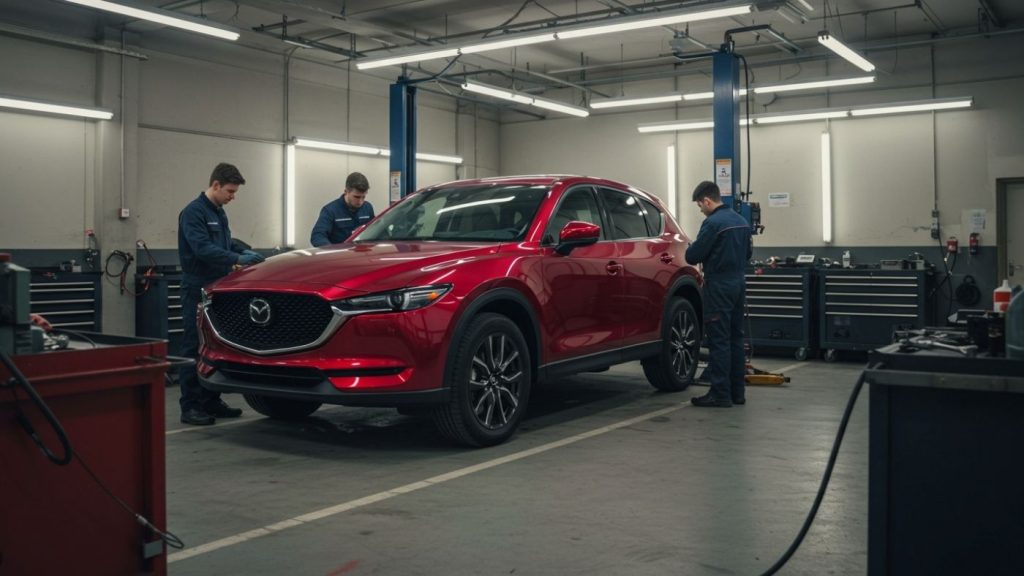
Ever wonder how a compact crossover holds up after the honeymoon phase—when the novelty fades and the miles start to behave like a slow, persistent tide? By the time a Mazda CX-5 reaches 20,000 miles, the story shifts from “it drives great” to “how consistently does it keep its composure?” This is the long-term reliability chapter: the part where owners notice small patterns, learn which habits matter, and discover whether the CX-5’s everyday confidence is more than marketing poetry.
Let’s set the scene. The steering still feels connected. The cabin remains remarkably composed. But somewhere around this milestone, a playful question begins to hover in the background: What if your daily routes are quietly demanding—stop-and-go traffic, short trips, hot starts, winter errands—and you don’t realize the strain building up? That’s the potential challenge. Not catastrophic failure—more like the creeping accumulation of wear, the kind you only sense when you check the details.
What “20k Mile Reliability” Really Means
At 20,000 miles, a vehicle transitions from early operational testing to practical durability. Reliability here isn’t just about whether something breaks. It’s about how the CX-5 manages the invisible chores: thermal cycling, vibration fatigue, lubrication performance, and the gradual settling of components after thousands of temperature shifts.
The CX-5’s reputation for reliability generally centers on disciplined engineering and a straightforward design approach—no theatrical gadgets that need frequent babysitting. Still, reliability is a partnership. Your maintenance cadence, driving style, and local conditions can either reinforce that foundation or stress it.
In plain terms: if the CX-5 feels solid at 20k, it’s usually because the system management—oil quality, tire condition, brake health, and fluid integrity—has stayed within reasonable boundaries.
Engine & Drivetrain: The Quiet Scorecard
The engine is the first place wear “writes its signature.” After 20k miles, owners typically want to know whether the power delivery remains smooth, whether fuel economy has drifted, and whether the drivetrain feels any less cohesive than it did at the start.
One common theme at this stage is whether oil has been maintained at the right intervals. Fresh oil and the correct specification don’t just reduce friction; they protect metal surfaces from micro-scoring—an issue that can grow teeth over time. If the maintenance schedule has been followed, the engine often feels reassuringly unchanged.
Transmission behavior is another part of the scorecard. Many drivers report that shift quality remains predictable, with no hint of hesitation. That predictability matters. It’s a sign that learning parameters and fluid condition are still aligned with real-world conditions.

Cooling System & Thermal Stress: The Winter-Ready Test
Reliability often hides in the margins—particularly where temperature is involved. Between summer heat, highway runs, and winter cold-soaks, the cooling system performs like a vigilant custodian. At 20k miles, it’s reasonable to check whether coolant level and condition remain healthy, and whether hoses and clamps show any early signs of seepage.
Here’s a potential challenge that surprises people: short-trip driving. If your commute includes frequent cold starts and short distances that don’t fully warm the engine, condensation and thermal cycling can become more intense. Over time, this can influence how clean the engine stays internally.
It doesn’t mean the CX-5 is fragile. It means habits matter. If you regularly take longer drives—say, once in a while—your engine benefits from more complete warm-up cycles, which can improve overall system stability.
Brakes, Tires, and Suspension: Where Feel Becomes Evidence
By 20,000 miles, brakes and tires often reveal the truth behind your driving profile. Are you a smooth coaster, or do you brake with urgency? Did you hit potholes, curbs, and rough pavement? The CX-5’s suspension can handle real roads, but it still reflects the stresses it receives.
Tires are especially telling. Uneven wear can hint at alignment drift, rotation neglect, or driving patterns that load one corner more than the others. A playful question becomes surprisingly practical here: Are you rotating your tires like a responsible co-pilot? If not, you may experience grip inconsistency—especially in wet conditions—without realizing why.
Brakes tell another story through pedal feel and noise. Light squeal occasionally can be normal in certain conditions, but persistent grinding, pulsation, or a spongy pedal suggests attention is needed. Reliability at 20k isn’t about perfection; it’s about responsiveness and maintenance decisions made before symptoms escalate.
Fluids & Filters: The Boring Stuff That Prevents Drama
Reliability frequently boils down to fluids and filters—the unsung librarians of the vehicle world. At 20k miles, the cabin air filter, engine air filter, and the condition of key fluids matter because they influence cleanliness, lubrication, and airflow.
Engine oil is the headline, but don’t overlook the secondary cast. Transmission fluid performance and brake fluid condition contribute to smoothness and consistent stopping. Meanwhile, clean filters help the engine breathe properly—reducing strain and supporting steady combustion efficiency.
Think of it like this: filters are the bouncers at a nightclub. When they get clogged, the party isn’t just less fun—it becomes harder for the entire system to do its job.
Electrical & Infotainment: Modern Comfort, Real-World Reliability
By this mileage, most owners care about whether the CX-5’s electronic systems behave as expected. The infotainment experience—navigation responsiveness, audio stability, Bluetooth pairing consistency—is where minor glitches can annoy you, even if they don’t represent mechanical failure.
Electrical reliability often depends on basic factors: battery health, clean power delivery, and the absence of repeated voltage stress. Cold climates can accelerate battery aging, while frequent short trips can strain it. If the CX-5 starts crisply and maintains stable accessory behavior, that’s a strong indicator that the electrical foundation is healthy.
Don’t ignore warning lights, even if they seem minor. A calm response early is a reliability superpower. In the long-term, small alerts prevent larger expenses.
Common “At 20k” Owner Questions (And What to Listen For)
Owners often ask about noise, consumption, and the subtle drift of vehicle feel. A few patterns are worth watching:
1) Does fuel economy gradually decline? It can be influenced by tire pressure, driving habits, and filter condition. Mechanical deterioration is not always the villain.
2) Are there new vibrations? That can point to tire balance, alignment drift, or suspension wear. Tires and wheels are frequent culprits, especially after uneven road contact.
3) Does the engine sound different? Some seasonal variation is normal. Persistent changes, unusual knocking, or consistent idling roughness deserve prompt attention.
And then there’s the real-world question: Is the CX-5 still a vehicle you trust without thinking? When reliability is solid, trust returns quickly after every stoplight and every parking maneuver.
How to Preserve Reliability After 20k Miles
Reliability isn’t a static label. It’s a practice. A few high-impact habits can keep the CX-5 calm and confident well beyond this milestone.
Maintain proper tire pressure (and check it cold). Underinflation can accelerate wear and reduce efficiency.
Rotate tires at recommended intervals to promote even tread depth.
Follow a disciplined service rhythm, especially for oil changes and filter replacements. When maintenance is consistent, surprises become rarer.
Be mindful of short trips. If possible, include occasional longer drives to help the engine run through full operating temperatures.
Address minor symptoms quickly. A “small” noise can be a warning sign, and early correction is usually cheaper than late repairs.
20k Mile Snapshot: The Overall Verdict
So, what’s the CX-5 like at 20,000 miles? Usually steady, usually composed. Reliability at this point tends to reflect whether the vehicle has been treated like a partner instead of a rental.
With proper maintenance, the CX-5 often continues delivering that familiar mix of everyday usability and long-drive comfort. The potential challenge—hidden strain from frequent short trips, neglected tire care, or delayed service—can be managed with simple, consistent attention.
Final Thoughts: Keep the Confidence Engine-Grounded
Twenty thousand miles isn’t the end of the story. It’s the point where the CX-5 proves its character under routine pressure. The playful question becomes the practical one: Will you meet the car at its milestone with smart care—or will you wait for discomfort to announce itself?
If you stay proactive—checking tires, respecting scheduled service, and listening to what the vehicle quietly communicates—the Mazda CX-5 can remain a dependable companion, not just for the next thousand miles, but for the chapters that follow.