The family-sedan conversation often gets reduced to a simple question: “Is it comfortable, dependable, and affordable enough to live with?” The 2025 Toyota Camry refuses to be merely convenient. It arrives with the poise of a steady caretaker, an all-hybrid philosophy that feels less like a sales pitch and more like a quiet commitment. Behind the badge, the Camry builds a kind of trust you can measure in daily rhythms—morning commutes, school runs, errand hops, and the long highway stretch that turns a weekend into a memory.
This is a review that treats the Camry as it truly is: a family tool with polish. Expect practical guidance, design observations, performance impressions, and a tour of what different types of readers will care about—drivers who want efficiency, parents who prioritize cabin space, and anyone who values a calm driving demeanor. Let’s start with the big picture and then move through the details that make or break a sedan’s reputation.
Design and First Impressions: Familiar, But Sharpened
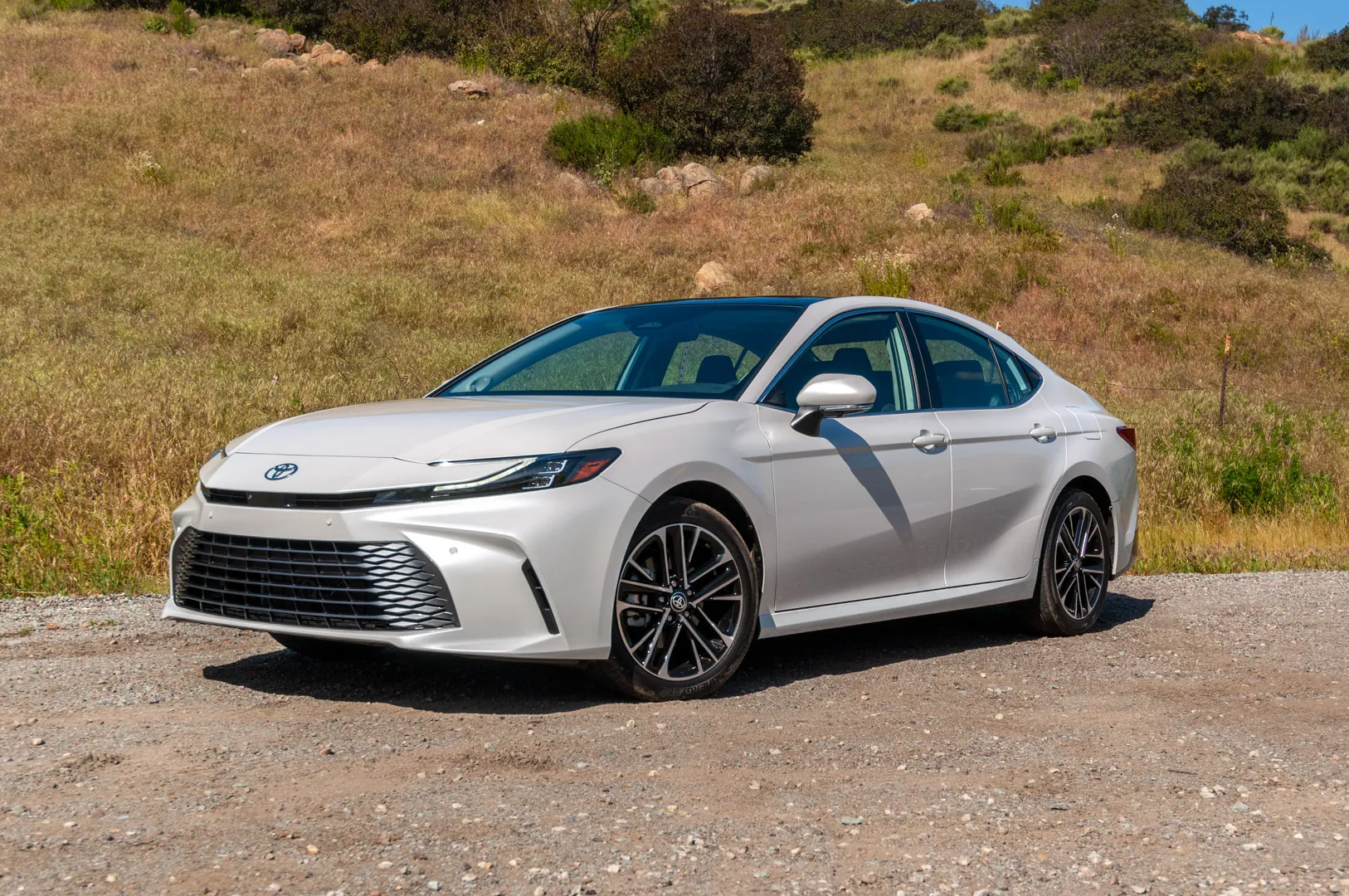
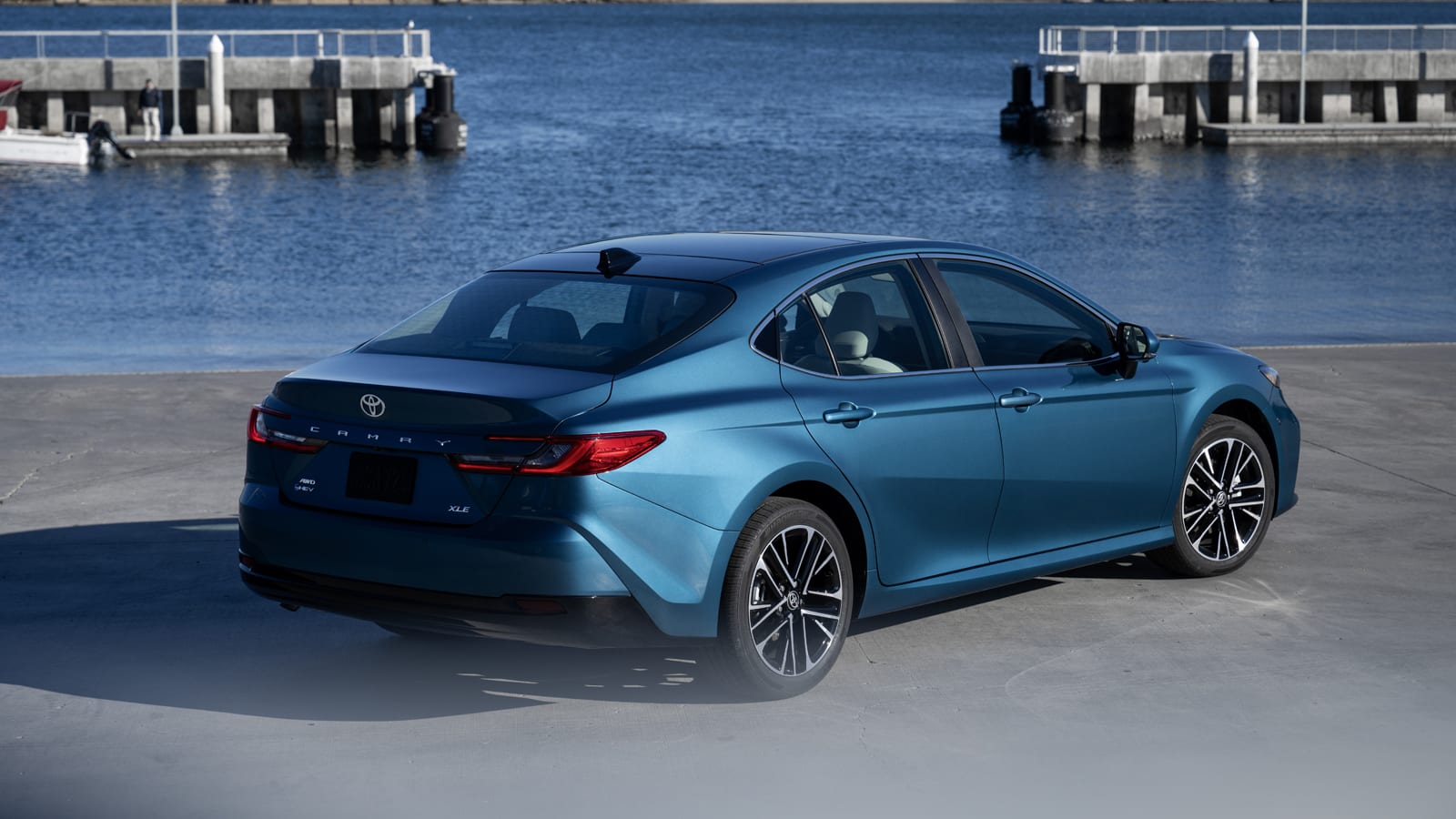
From a distance, the 2025 Camry wears a recognizable profile—clean lines, composed stance, and a sense of modern restraint. Up close, the sheet metal looks less like an exercise in trend-chasing and more like a refinement of proportions. The front end has a deliberate cadence: lighting elements that guide your eyes rather than shout for attention. In motion, it reads aerodynamic without attempting theatrics.
In the cabin, the atmosphere follows suit. Surfaces feel chosen rather than randomly assembled. That matters in a family sedan, where the car should remain visually soothing even after weeks of sticky fingers and backpack zippers. Materials are selected to balance comfort and durability, a pairing that keeps the interior from feeling fragile.
Cabin Comfort for Families: Space That Doesn’t Feel Borrowed
Rear-seat practicality is where many sedans quietly separate themselves. The Camry’s back seat is designed for real-world use: carpool arrangements, the occasional nap on the way to practice, and the subtle choreography of loading child seats. Seat contours encourage relaxation without promoting a “sinking” sensation. Even during longer drives, the layout aims to minimize fatigue.
Front-row comfort is similarly considerate. The driver’s area places controls within easy reach. This isn’t about luxury grandstanding; it’s about reducing cognitive load. When you’re driving in traffic, you shouldn’t have to mentally map where every knob lives. The Camry’s cockpit design supports a fluid routine.
Small storage details add up: places for phones, cups, and the everyday objects that clutter a vehicle if the interior lacks a plan. Families don’t need a minimalist shrine—they need organized utility that keeps the cabin livable.
All-Hybrid Experience: Power Delivery with a Calm Temperament
The 2025 Camry’s all-hybrid character defines its personality. This system doesn’t simply chase numbers on a spec sheet; it changes how the car feels at low speeds and in stop-and-go traffic. Acceleration tends to be smooth and immediate, with a kind of “elastic” responsiveness. It’s the difference between feeling like the car is catching up and feeling like it’s already present.
Highway driving brings a different sensation. The Camry’s hybrid setup can sustain pace with confidence, and it remains composed when the road opens up. Instead of feeling strained, the sedan often feels synchronized with the flow of traffic. That’s an underrated form of comfort.
For readers who commute frequently, hybrid drivability can become a daily perk rather than a one-time novelty. City driving becomes less about frequent gear shifts and more about steady progress. For parents, that translates into a less jerky experience—an important factor when passengers are settling in with snacks and school projects.
Ride Quality and Handling: Soft-Cushioned Confidence
A family sedan should absorb the road’s imperfections without drowning in them. The 2025 Camry aims for a balanced ride that filters harsh impacts while maintaining steering composure. The result is a sedan that feels settled on rough pavement, yet not vague when you need to thread between lanes.
Handling is tuned for predictability. It doesn’t chase the sharpness of a sport sedan, but it doesn’t feel indifferent either. The chassis communicates clearly enough that confident drivers can enjoy quick adjustments. Meanwhile, less experienced drivers get the steadiness they want—an easygoing behavior that discourages sudden overcorrections.
On longer drives, this stability becomes a quiet advantage. Fatigue doesn’t disappear, but it’s reduced when the car behaves consistently across varied pavement conditions.
Technology and Infotainment: Usability First, Flash Second
Modern family cars must do more than start reliably; they should coordinate your day. The Camry’s technology approach focuses on intuitive operation. Inputs should be legible and controls reachable while you’re driving. That sounds obvious, yet it’s often where vehicles fall short—especially when dashboards evolve too fast and menus become labyrinthine.
Expect a driver-centric interface with connectivity designed for everyday life. Navigation, media playback, and smartphone integration should feel like extensions of your routine rather than interruptions. For families, the most important tech is often the kind you don’t think about: it loads quickly, responds without drama, and keeps audio at a comfortable level.
For tech enthusiasts, optional features may add convenience layers—advanced driver assistance capabilities, upgraded audio, and additional cabin comfort settings. For safety-first families, the point is straightforward: technology should reduce workload, not add it.
Safety and Driver Assistance: Designed for Real-World Uncertainty
Family sedan safety isn’t just about avoiding accidents—it’s about minimizing the moments where human reaction has to compensate for uncertainty. The Camry’s suite of driver assistance systems aims to do that with tools such as collision mitigation, lane support, and adaptive awareness. These technologies can be especially valuable during long commutes, when attention naturally wanes.
What stands out is the intention behind the system design. The best driver-assistance features feel supportive rather than intrusive. They should enhance confidence while staying predictable. In a family vehicle, predictability is a form of reassurance.
Parents will also appreciate how these systems help during school-zone driving and highway merging—situations where workload stacks up quickly. When the road gets complicated, the Camry’s safety technology is meant to keep the task manageable.
Trim and Configuration: Choosing the Camry that Fits Your Life
The 2025 Camry comes with multiple configurations, each nudging the balance between comfort, tech, and style. Choosing the right trim is less about “having everything” and more about aligning features with how you actually use the car. If your family prioritizes convenience and modern cabin features, higher trims can feel like a natural upgrade. If your goal is efficiency and core comfort, more streamlined versions can be equally sensible.
Think in terms of daily scenarios. Commute length, parking realities, and passenger count should influence your decision. A car that feels perfect for a short weekday routine may be less inspiring on weekend road trips, so it helps to match the trim to the driving rhythm your family actually lives.
Fuel Economy and Ownership: A Sedan That Plays Long Games
Hybrid efficiency has a compounding effect. The more you drive in the patterns where hybrids excel—urban traffic, stoplights, short trips—the more the system rewards your routine. For budget-conscious families, that can mean fewer stops at the pump and a lower cost-per-mile over time.
Ownership also includes peace of mind: the expectation that routine service is straightforward, that parts availability is normal, and that the car remains a predictable partner years down the line. The Camry name carries weight for a reason—this is a model built to be lived with, not merely admired.
For shoppers comparing options, the Camry’s hybrid identity should be treated as a lifestyle variable. It isn’t only about today’s numbers; it’s about what kind of driving experience you want to repeat daily.
Who Should Buy the 2025 Toyota Camry?
The Camry fits families who want an unflashy excellence. It suits parents who value cabin calm, commuters who want efficiency without sacrificing highway confidence, and anyone who prefers a car that feels steady in every season—literally and figuratively.
If you’re shopping for a sedan because it’s practical, the Camry doesn’t just meet expectations. It elevates them with refined hybrid execution, comfortable seating geometry, and a driving demeanor that makes ordinary days feel smoother.
Final Verdict: Family Sedan King, Delivered with Restraint
The 2025 Toyota Camry earns its title through balance. It offers a comfortable cabin that accommodates real life. It pairs hybrid efficiency with a calm, confident temperament. It delivers a ride that steadies the journey, technology that prioritizes usability, and safety features that aim to reduce uncertainty.
In a world where cars often try to impress in one specific way, the Camry chooses a different path: consistency. That’s the kind of charisma families notice only after they’ve been behind the wheel for a while. The Camry doesn’t demand attention—it earns trust, mile by mile.